



The Spatial Dimension In Environmental and Resource Economics
Seiten
2026
Cambridge University Press (Verlag)
978-1-009-69439-1 (ISBN)
Cambridge University Press (Verlag)
978-1-009-69439-1 (ISBN)
- Noch nicht erschienen (ca. Januar 2026)
- Versandkostenfrei
- Auch auf Rechnung
- Artikel merken
While spatial factors are central to environmental economics, they're often missing from models, risking flawed policies. This Element explores how space can be integrated into environmental and resource economics and how it can shape policy, laying groundwork for future research.
Although the spatial dimension is embedded in most issues studied by environmental and resource economics, its incorporation into economic models is not widespread. As a result, significant aspects of important problems remain hidden, which could lead to policy failures. This Element fills this gap by exploring how space can be integrated into environmental and resource economics. The emergence of spatial patterns in economic models through Turing's mechanism is explained and an extension of Pontryagin's maximum principle under spatial dynamics is provided. Examples of the use of spatial dynamics serve to illustrate why space matters in environmental policy design. Moreover, the differentiation of policy when spatial transport mechanisms are considered is made clear. The tools presented, along with their applications, provide foundations for future research in spatial environmental and resource economics in which the underlying spatial dimension – which is very real – is fully taken into account.
Although the spatial dimension is embedded in most issues studied by environmental and resource economics, its incorporation into economic models is not widespread. As a result, significant aspects of important problems remain hidden, which could lead to policy failures. This Element fills this gap by exploring how space can be integrated into environmental and resource economics. The emergence of spatial patterns in economic models through Turing's mechanism is explained and an extension of Pontryagin's maximum principle under spatial dynamics is provided. Examples of the use of spatial dynamics serve to illustrate why space matters in environmental policy design. Moreover, the differentiation of policy when spatial transport mechanisms are considered is made clear. The tools presented, along with their applications, provide foundations for future research in spatial environmental and resource economics in which the underlying spatial dimension – which is very real – is fully taken into account.
1. Introduction; Part I. Theory: 2. Modeling Spatial Transport; 3. Dynamic Optimization in Space-Time: A Spatial Maximum Principle under Diffusion and Long- Range Transport; 4. Spatial Pattern Formation; Part II. Applications: 5. Environmental and Resource Management Policy under Spatial Dynamics; 6. Spatially Differentiated Regulation for Transboundary and Global Externalities; 7. Uncertainty and Space; 8. Concluding Remarks; 9. Appendix; References.
| Erscheint lt. Verlag | 31.1.2026 |
|---|---|
| Reihe/Serie | Environmental, Natural Resource and Sustainable Development Economics |
| Zusatzinfo | Worked examples or Exercises |
| Verlagsort | Cambridge |
| Sprache | englisch |
| Gewicht | 500 g |
| Themenwelt | Naturwissenschaften ► Biologie ► Ökologie / Naturschutz |
| Naturwissenschaften ► Geowissenschaften ► Geografie / Kartografie | |
| Wirtschaft ► Volkswirtschaftslehre | |
| ISBN-10 | 1-009-69439-1 / 1009694391 |
| ISBN-13 | 978-1-009-69439-1 / 9781009694391 |
| Zustand | Neuware |
| Informationen gemäß Produktsicherheitsverordnung (GPSR) | |
| Haben Sie eine Frage zum Produkt? |
Mehr entdecken
aus dem Bereich


aus dem Bereich
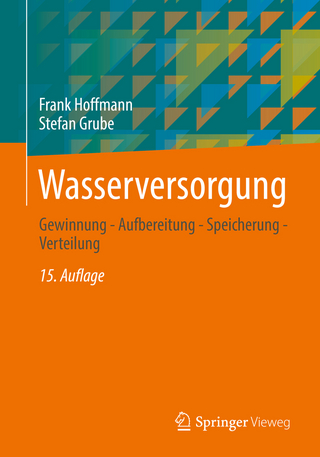
Gewinnung - Aufbereitung - Speicherung - Verteilung
Buch | Softcover (2022)
Springer Vieweg (Verlag)
CHF 55,95
das Leben unter unseren Füßen
Buch | Hardcover (2024)
Dölling und Galitz (Verlag)
CHF 44,90
Methoden – Lösungen – Anwendungen
Buch | Hardcover (2025)
Hanser (Verlag)
CHF 69,95


