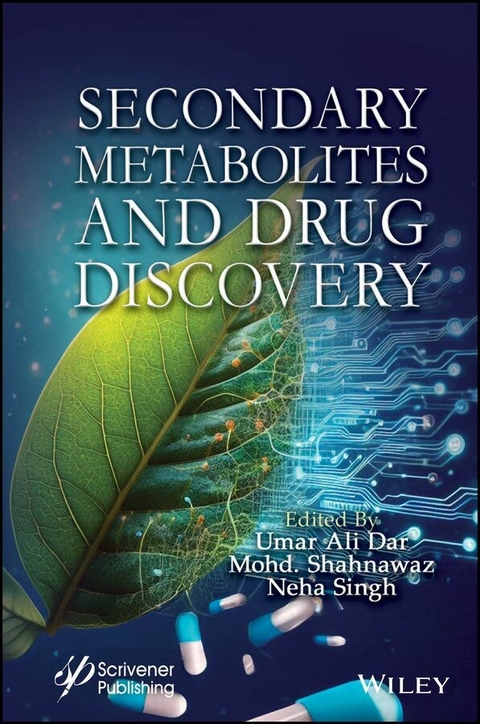
Secondary Metabolites and Drug Discovery (eBook)
Wiley-Scrivener (Verlag)
978-1-394-20457-1 (ISBN)
This book explores the promising potential of plant and microbe-derived compounds in drug discovery, offering insights into safer alternatives to synthetic drugs and highlighting the vital role of natural products in treating diseases with fewer side effects.
Plants and microbes are a promising source for natural products with the potential to play a major role in drug discovery. Due to advances in the fields of science, technology, engineering, and medicine, the commercial pharmaceutical industry is growing across the globe. Currently, allopathy uses synthetic pharmaceutical drugs for the treatment of diseases, but this practice also exposes patients to significant side effects. Since ancient times, other systems of medicine have been developed that utilize plant-based extracts and molecules to treat various diseases with fewer side effects. While changes in lifestyle, including diet, have had a significant impact on the increased risks of various diseases, there is substantial scientific evidence, both epidemiological and experimental, that vegetables and fruits are key features of diets associated with lower risks of diseases such as cancers and infections. These efforts to identify and create medications from plants are leading to increased manufacturing for larger clinical trials. The continuing scientific research of medicinal plants will undoubtedly provide a wealth of novel, structurally varied, bioactive chemicals. This edited volume provides an overview of various medical systems, with a special focus on microbial and plant-based drug molecules for treating communicable and non-communicable diseases, making it an invaluable resource for researchers, scientists, and practitioners interested in the potential of plant- and microbe-derived secondary metabolites in the ongoing search for innovative, effective, and safer medicines.
Readers will find this book:
- Provides an overview of different types of sources and drug molecules used in allopathic, homeopathic, ayurvedic, Chinese, and Unani systems of medicine;
- Highlights past and current methods of alternative, complementary, folklore, and integrative medicines;
- Discusses the benefits and side effects of the drug molecules used in different systems of medicine at the global level;
- Explores microbial and plant-based drug molecules for treating various communicable and non-communicable diseases.
Audience
Researchers, academics, industry, and governmental experts working in the fields of natural science, natural products, synthetic chemistry, pharmacology, and medicinal chemistry.
Umar Ali Dar, PhD is an assistant professor of Chemistry in the Department of Applied Sciences and Humanities at the Government College of Engineering and Technology in Ganderbal, India. He has authored and co-authored numerous peer-reviewed articles, books, and book chapters, demonstrating his commitment to advancing the understanding of complex chemical systems and their applications. His research interests include crystal engineering, materials science, energy applications, sensors, water treatment, secondary metabolites, pharmaceuticals, and drug discovery.
Mohd. Shahnawaz, PhD is an assistant professor at Government Degree College Drass, University of Ladakh. India. He has published 25 research articles, 19 book chapters, and 15 books of international repute. His research interests are in integrative medicine, ecology, microbiology, plant biotechnology, and bioremediation.
Neha Singh, PhD is a senior scientist at the Virology Lab in the Department of Microbiology at Pt. Jawahar Lal Nehru Memorial Medical College, India with over 11 years of research experience. She has published various research and review articles in reputed national and international journals, as well as books and book chapters related to her specialty. Her areas of interest are antimicrobial compounds, infectious diseases, and molecular virology.
1
Drug Discovery and Secondary Metabolites: An Overview
Arfa Ji1, Asfer Hamid2, Ehtishamul Haq1, Dar Murtaza3, Andleeb Amin4, Asma Hakak5 and Zubaid ul Khazir6*
1Department of Biotechnology, University of Kashmir, Hazratbal Srinagar, Kashmir, India
2Division of Soil Sciences, Sheri-Kashmir University of Agricultural Sciences and Technology Jammu (SKUAST J), Jammu and Kashmir, India
3Division of Plant Biotechnology, Sheri-Kashmir University of Agricultural Sciences and Technology Shalimar Srinagar (SKUAST K), Jammu and Kashmir, India
4Department of Chemistry, Lovely Professional University Jalandhar Punjab, Pagwara Jalandhar Punjab, India
5College of Temperate Sericulture, Mirgund, Sheri-Kashmir University of Agricultural Sciences and Technology Shalimar (SKUAST K), Jammu and Kashmir, India
6Department of Chemistry, National Institute of Technology Srinagar, Jammu and Kashmir, India
Abstract
Natural products, particularly those derived from plants, have been the cornerstone of traditional medicine for centuries and continue to play an indispensable role in modern pharmacotherapy and drug discovery. The vast chemical diversity found in nature offers unique opportunities for developing novel drugs and therapeutic agents. Living plants, in particular, are critical for the production of essential compounds that not only support human nutrition but also contribute to overall health and wellness. These compounds include primary metabolites, vital for basic physiological functions, and secondary metabolites, which are of special interest in pharmaceutical research due to their wide range of bioactive properties. Secondary metabolites, which are generated by diverse organisms as a component of their metabolic processes, have long been recognized as a source of bioactive compounds with promising possibilities for therapeutic applications. The intriguing correlation between drug discovery and secondary metabolites is a central focus of modern pharmaceutical research. This chapter provides insights on different secondary metabolites as well as their sources and their potential benefits vis-à-vis their role in drug discovery. By exploring these compounds in depth, the chapter underscores the continued relevance of natural products in addressing contemporary medical challenges and inspires further research into harnessing the full potential of secondary metabolites for innovative therapeutic solutions.
Keywords: Secondary metabolites, drug discovery, bioactive compounds, therapeutic applications, natural sources
1.1 Introduction
Living plants play a crucial role in generating essential compounds, encompassing primary metabolites like carbohydrates, amino acids, fatty acids, and more, serving as essential sustenance for humans. Furthermore, they also produce secondary metabolites of significant pharmaceutical value, such as glycosides, alkaloids, flavonoids, volatile oils, and others. The primary role of primary metabolites in plants is to facilitate the growth and development processes, whereas secondary metabolites primarily serve as a defense mechanism in plants. They contribute to various aspects such as imparting distinct colors, signaling responses, and regulating primary metabolic pathways, all of which aid plants in maintaining equilibrium with their external environment. Secondary metabolites found in plants serve as an excellent illustration that are responsible for producing color in plants, as the color in plant lures pollinators and also acts as a natural defense mechanism against potential threats from animals. A survey conducted by World Health Organization reported that nearly 65% of the population of the world depends on the medicines obtained from the plants for their primary health care (Kumar et al., 2019). Most of the recent studies on secondary plant metabolism have a focal point on the understanding of how the secondary metabolites are formed and synthesized in plants that too in large quantities. Secondary metabolites present an extensive and diverse array of benefits to humanity, emerging as a valuable natural resource due to their richness and variety. Research has indicated that secondary metabolites like alkaloids, saponins, phenols, phytosterols, steroids, terpenoids, flavonoids, carbohydrates, and proteins, as well as tannins, glycosides, and plobatanin, exhibit significant potential in combating a wide range of diseases. Their importance continues to grow as conventional therapeutic chemicals often fall short in addressing prevailing medical conditions. In the quest for novel and more effective treatment strategies, the utilization of secondary metabolites holds considerable promise for the betterment of humankind. Also, the good part is that Indians have a rich diversity of indigenous knowledge regarding the medicinal benefits of plants, and this is beneficial for the whole mankind (Ritismita and Sarma, 2021).
Natural products (NPs) are produced by living organisms with pharmacological properties, making it valuable for drug discovery and design. These compounds are found in raw materials obtained from medicinal plants, animals, microbes, or microorganism fermentation broths, and they possess a wide variety of unique chemical structures and have played a crucial role in the pharmaceutical and biotechnology sectors, with many modern medicines being derived from these naturally occurring molecules or their derivatives. Typically, the drugs administered through inhalation, ingestion, or injection consist of a combination of intricate therapeutic compounds. Nature has created astonishingly intricate molecules that are beyond the reach of synthetic chemists, and, for countless ages, medicinal plants have served as a wellspring of remedies in nearly every culture. Throughout history, NPs have been pivotal not only in the quest for new drugs, particularly in the realms of cancer and infectious disease treatment, but also in various other medical fields, such as cardiovascular diseases (like statins) and multiple sclerosis (as seen with fingolimod) (Tintore et al., 2019). Medicinal plants have played a crucial role in creating powerful therapeutic substances. Nature, as a remarkable source of molecules, has produced a vast array of bioactive compounds that can have both beneficial and harmful effects on humans and animals. These compounds, known as secondary plant metabolites, are essentially by products in plant cells, with no primary role in their basic life functions but rather serving various purposes like protection, attraction, or signaling within the plant kingdom. Virtually, all plant species have the capacity to produce such compounds. Plant-based drugs, particularly these secondary metabolites, have made significant contributions to modern medicine. For instance, Reserpine, an alkaloid isolated from the Rauwolfia serpentina root in 1952, revolutionized the treatment of hypertension. Aspirin, the world’s most famous and widely used medicine, has its origins in salicin, a natural glycoside found in various species of willow and poplar trees. Even the first billion-dollar anticancer drug, Taxol (Paclitaxel), is derived from the Yew tree. Beyond their direct use as medicines, many plant secondary metabolites can also serve as valuable templates for designing, synthesizing, and semi-synthesizing novel drugs. Therefore, it is essential to continue exploring the plant kingdom to uncover its hidden therapeutic potential. It is possible that solutions to emerging diseases like AIDS and other deadly ailments in the human population may also be concealed within plants. The potential for new medical breakthroughs from the plant world is vast and largely untapped (Rungsung et al., 2015).
1.2 Phytochemicals
Phytochemicals are distinct from vitamins and minerals, as they are bioactive compounds present in plant-based foods. They collaborate with nutrients and dietary fibers to offer protection against various diseases (Wulandari et al., 2021; P. Chakraborty, 2018; Patel and N. R. Modi, 2018). Table 1.1 shows list of phytochemicals with their dietary sources and potential health advantages.
Plant secondary metabolites can be categorized into distinct groups based on their biosynthetic origin, which includes compounds that do not contain nitrogen, nitrogen-containing compounds, and terpenoids (Figure 1.1).
Table 1.1 Examples of phytochemicals with their dietary sources and potential health advantages.
| Phytochemicals | Source | Benefits | References |
|---|
| Saponins | Garlic, onions, leguminous crops, and soybeans | Fatty diets can trigger the activation of oncogenes, but lowering the levels of circulating fats can help counteract this effect | Akihisa, 2016 |
| Protease inhibitors | All plants, especially soybeans | Mitigate arthritis associated inflammation, exhibit antimicrobial property, and inhibit the action of enzymes | Chakraborty, 2018 |
| Indoles | Cruciferous vegetables, such as broccoli, cabbage, and kale | Prevent cancercausing agents from harming cells by intercepting them | Palanichamy, 2018 |
| Lignans | Flax seeds, berries, and whole grains | Free radical scavengers and non-soluble fibers hinder or curb the development of cancerous alterations, with a... |
| Erscheint lt. Verlag | 22.8.2025 |
|---|---|
| Sprache | englisch |
| Themenwelt | Naturwissenschaften ► Chemie |
| ISBN-10 | 1-394-20457-4 / 1394204574 |
| ISBN-13 | 978-1-394-20457-1 / 9781394204571 |
| Informationen gemäß Produktsicherheitsverordnung (GPSR) | |
| Haben Sie eine Frage zum Produkt? |
 EPUB (Adobe DRM)
Kopierschutz: Adobe-DRM
Adobe-DRM ist ein Kopierschutz, der das eBook vor Mißbrauch schützen soll. Dabei wird das eBook bereits beim Download auf Ihre persönliche Adobe-ID autorisiert. Lesen können Sie das eBook dann nur auf den Geräten, welche ebenfalls auf Ihre Adobe-ID registriert sind.
Details zum Adobe-DRM
Dateiformat: EPUB (Electronic Publication)
EPUB ist ein offener Standard für eBooks und eignet sich besonders zur Darstellung von Belletristik und Sachbüchern. Der Fließtext wird dynamisch an die Display- und Schriftgröße angepasst. Auch für mobile Lesegeräte ist EPUB daher gut geeignet.
Systemvoraussetzungen:
PC/Mac: Mit einem PC oder Mac können Sie dieses eBook lesen. Sie benötigen eine
eReader: Dieses eBook kann mit (fast) allen eBook-Readern gelesen werden. Mit dem amazon-Kindle ist es aber nicht kompatibel.
Smartphone/Tablet: Egal ob Apple oder Android, dieses eBook können Sie lesen. Sie benötigen eine
Geräteliste und zusätzliche Hinweise
Buying eBooks from abroad
For tax law reasons we can sell eBooks just within Germany and Switzerland. Regrettably we cannot fulfill eBook-orders from other countries.
aus dem Bereich