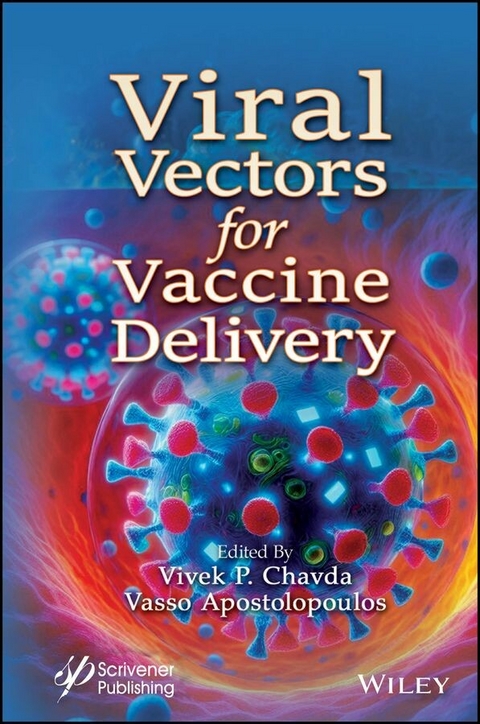
Viral Vectors for Vaccine Delivery (eBook)
542 Seiten
Wiley-Scrivener (Verlag)
978-1-394-27154-2 (ISBN)
The book is essential for anyone interested in vaccine development, as it highlights the unique advantages of viral vector vaccines in triggering robust, long-lasting immunity and provides an in-depth exploration of the technology and advancements shaping the future of healthcare.
Viral vector vaccines have several unique advantages when compared to other vaccine platforms. These powerful vaccines are capable of triggering long-lasting cellular responses, such as cytotoxic T-lymphocytes, that eradicate virus-infected cells. Viral vector-based vaccines use a harmless virus to smuggle the instructions for making antigens from the disease-causing virus into cells, triggering protective immunity against them. In contrast to conventional antigen-containing vaccines, these vaccines use the body's natural defense system to produce antigens by using a modified virus to deliver genetic code for an antigen. Viral Vectors for Vaccine Delivery provides a comprehensive overview of viral vectors and their applications in vaccine delivery. Its chapters explore various aspects of viral vector technology, from the basic principles of viral vector construction to the latest advancements in gene editing and manufacturing.
Readers will find that the book
- Offers a deep dive into the world of viral vectors, covering their principles, applications, and potential impact on healthcare;
- Explores how viral vectors are revolutionizing vaccine development, providing a more effective and targeted approach to disease prevention;
- Discusses the potential of viral vectors to address emerging health challenges and contribute to a healthier world.
Audience
Research scholars, pharma-process engineers, research scientists, pharmacy students and professionals from the pharmaceutical and biopharmaceutical industry interested in drug discovery, chemical biology, computational chemistry, medicinal chemistry, and bioinformatics
Vivek P. Chavda is an assistant professor in the Department of Pharmaceutics and Pharmaceutical Technology, L.M. College of Pharmacy, India with over eight years of experience in biologic research. He has over 250 peer-reviewed national and international publications, including 38 book chapters, seven edited books, ten book chapters, seven patents, and numerous newsletter articles to his credit. His research interests include the development of biologics processes and formulations, medical device development, nano-diagnostics, non-carrier formulations, long-acting parenteral formulations, and nano-vaccines.
Vasso Apostolopoulos, PhD, is the Vice-Chancellor's Distinguished Fellow and Director of the Immunology and Translational Research Group at Victoria University and the Immunology Program Director at the Australian Institute for Musculoskeletal Science. She has over 510 research publications and 22 patents to her credit and has received over 100 awards for her research work. Her research interests include vaccine and drug development for cancer, chronic, infectious, and autoimmune diseases.
The book is essential for anyone interested in vaccine development, as it highlights the unique advantages of viral vector vaccines in triggering robust, long-lasting immunity and provides an in-depth exploration of the technology and advancements shaping the future of healthcare. Viral vector vaccines have several unique advantages when compared to other vaccine platforms. These powerful vaccines are capable of triggering long-lasting cellular responses, such as cytotoxic T-lymphocytes, that eradicate virus-infected cells. Viral vector-based vaccines use a harmless virus to smuggle the instructions for making antigens from the disease-causing virus into cells, triggering protective immunity against them. In contrast to conventional antigen-containing vaccines, these vaccines use the body s natural defense system to produce antigens by using a modified virus to deliver genetic code for an antigen. Viral Vectors for Vaccine Delivery provides a comprehensive overview of viral vectors and their applications in vaccine delivery. Its chapters explore various aspects of viral vector technology, from the basic principles of viral vector construction to the latest advancements in gene editing and manufacturing. Readers will find that the book Offers a deep dive into the world of viral vectors, covering their principles, applications, and potential impact on healthcare; Explores how viral vectors are revolutionizing vaccine development, providing a more effective and targeted approach to disease prevention; Discusses the potential of viral vectors to address emerging health challenges and contribute to a healthier world. Audience Research scholars, pharma-process engineers, research scientists, pharmacy students and professionals from the pharmaceutical and biopharmaceutical industry interested in drug discovery, chemical biology, computational chemistry, medicinal chemistry, and bioinformatics
1
Introduction to Viral Vectors
Anjali P. Bedse1*, Suchita P. Dhamane2, Shilpa S. Raut1, Komal P. Mahajan3 and Kajal P. Baviskar4
1Department of Pharmaceutics, K K Wagh College of Pharmacy, Nashik, Maharashtra, India
2Department of Pharmaceutics, JSPM’s Jayawantrao Sawant College of Pharmacy & Research, Hadapsar, Pune, Maharashtra, India
3Department of Pharmacology, K K Wagh College of Pharmacy, Nashik, Maharashtra, India
4Department of Pharmaceutical Chemistry, K K Wagh College of Pharmacy, Nashik, Maharashtra, India
Abstract
Viral vector manipulation is the most effective way to transfer genes to modify a specific cell type or tissue. Therapeutic genes can also be expressed through this technique. Many virus species are currently being studied for their ability to introduce genes into cells for transgenic expression, which can be either temporary or permanent. These comprise herpes simplex viruses, baculoviruses, adeno-associated viruses, poxviruses, γ-retroviruses, lentiviruses, and adenoviruses (Ads). The selection of a virus for regular clinical usage depends upon several factors, including transgenic expression effectiveness, production ease, safety, toxicity, and stability. An introduction to the general properties of viral vectors frequently used in gene transfer, as well as their benefits and drawbacks for gene therapy applications, is given in this chapter.
Keywords: Viral vectors, gene transfer, transgene expression, adenoviruses, gene therapy
1.1 Introduction
For decades, traditional vaccination platforms such as live-attenuated or killed viral vaccines have been utilized effectively in inducing long-term immunity to various kinds of pathogenic human diseases. However, for many human infections, such vaccination platforms, especially liveattenuated vaccines, are unsuitable for human usage due to safety issues, low efficacy, or basic impracticality [1].
In a phase 1 clinical trial of a live-attenuated dengue virus vaccine, side effects produced by the vaccine virus strain’s under-attenuation were observed [2].
Certain infections, including the Ebola and Marburg viruses belonging to the Filoviridae family, are so deadly that live-attenuated vaccines are not even considered because the risk of the vaccine strain becoming under-attenuated or reverting to a pathogenic state would be too great. The persistent need for developing novel, safer, and more effective vaccine platforms has led researchers to explore alternate approaches for vaccine production, including DNA vaccines, viral-vectored immunizations, and recombinant protein subunit vaccines. One of the most promising platforms for recombinant vaccine research is the viral vector. A viral vector is comparable to a small delivery device that can transport genetic material to the cell nucleus. The viral vector has the genetic material loaded and packaged into it. The purpose of using viral vectors for vaccination is to introduce the target pathogen’s naturally existing antigens to the immune system without the infectious pathogen [1].
Viral vectors can be categorized into two main groups based on their genomic behavior within host cells: those that integrate into the host cellular chromatin, such as oncoretroviruses and lentiviruses, and those that primarily exist as extrachromosomal episomes within the cell nucleus, including adeno-associated viruses (AAV), adenoviruses (Ads), and herpesviruses. This classification is crucial for understanding their mechanisms of action and potential applications in gene therapy and vaccination. The selection of viral vectors for clinical use is influenced by several critical factors, including stability, toxicity, safety, ease of manufacturing, and the efficiency of transgene expression. These considerations ensure that the chosen vector is suitable for the intended therapeutic application while minimizing risks to the patient. Viral vectors encompass both RNA and DNA viruses, which can be further divided based on their genomic structure into single-stranded (ss) and double-stranded (ds) genomes. For instance, retroviruses typically possess an ssRNA genome that must be reverse-transcribed into dsDNA before integration into the host genome. In contrast, Ads are characterized by their dsDNA genomes and are known for their ability to transiently express genes without integrating into the host genome.
The distinct properties of each viral vector type contribute to their effectiveness in various therapeutic contexts. For example, retroviral vectors are particularly effective for stable gene integration in dividing cells, while AAVs are favored for their low immunogenicity and ability to transduce both dividing and nondividing cells. Ads offer high transduction efficiency and large packaging capacity, making them suitable for delivering larger genetic payloads [3, 4].
1.2 Baculovirus Vectors
A safe, nontoxic, non-integrative vector with a high replication capability is the baculovirus. Since baculoviruses may infect both latent and growing cells, they are also a highly versatile, inexpensive vector with a wide tissue and host tropism. Additionally, they are more biosafe since they only reproduce in insect cells—not in mammalian cells. Baculoviruses are a desirable choice for gene transfer due to their advantageous characteristics. Regenerative medicine, anticancer treatments, and vaccine development have all benefited greatly from the substantial advancements made in using baculoviruses in gene therapy. Nowadays, the main applications of baculoviruses are in the manufacture of vaccines and recombinant proteins. New avenues for the production of vaccines of the next generation have been made possible by the stimulation of mucosal and systemic immune responses by baculoviruses through oral or intranasal delivery. This human-friendly virus will undoubtedly be promoted as a viable vector for clinical applications if further knowledge about the biology of baculoviruses and their interactions with non-native hosts is obtained [5, 6].
The term “baculovirus” refers to the unique rod-shaped viral particles produced in infected insect cells, known as occlusion bodies. Baculoviruses are frequently employed in insect cell culture systems as expression vectors. The baculovirus can be modified to include foreign genes in its genome, which allows the virus to infect insect cells. This makes it possible to produce significant quantities of recombinant proteins for scientific or commercial uses.
Baculoviruses have been assessed as potential carriers of antigens to elicit immunological responses, making them attractive candidates for the production of vaccines [5].
1.3 Adenovirus Vectors
Adenoviral vectors (AdVs) have emerged as the most widely used vehicle for gene therapy in cancer treatment. These vectors are also employed in vaccination strategies to deliver foreign antigens and in various gene therapy applications. In many cases, AdVs are engineered to be replicationdefective; this involves the deletion of essential viral genes, which are then replaced with a genetic cassette that expresses a therapeutic gene. Such modifications allow for targeted gene delivery while minimizing the risk of viral replication in healthy tissues. In the context of cancer therapy, replicationcompetent AdVs, known as oncolytic vectors, have been developed. These vectors are specifically designed to replicate within cancer cells, utilizing the natural lytic cycle of the virus to induce cell death selectively. By exploiting the unique vulnerabilities of tumor cells, oncolytic Ads can effectively target and destroy malignant tissues while sparing normal cells.
Numerous clinical trials have demonstrated the safety and therapeutic efficacy of both replication-defective and replication-competent AdVs. For instance, studies have shown that these vectors can elicit robust immune responses against tumors, enhancing their potential as therapeutic agents. The ability of AdVs to infect a broad range of cell types and their capacity to induce strong cellular and humoral immune responses further support their utility in cancer treatment. Moreover, AdVs can be engineered to express immune-modulatory molecules or tumor-specific antigens, which can enhance antitumor immunity. This versatility makes them suitable not only for direct cancer therapies but also for combination strategies with existing treatments such as immune checkpoint inhibitors [7].
Although Ads have been used as gene delivery vehicles since the invention of gene therapy, Ad vaccines, like mRNA vaccines, are a more recent approach [8, 9]. The viral replication genes E1 and/or E3 are removed and substituted for the desired transgene, like an antigen, to form a vector. This prevents the virus from expressing the desired antigen and stops it from replicating its genome after infection. In comparison to mRNA vaccines, Ads have a number of advantages, such as the previously mentioned low cost and thermostability [10].
Ad vector vaccinations generally elicit robust transgenic antigen-specific cellular (specifically, CD8+ T cells) and/or humoral immune responses, making them immunogenic vaccines [11].
The potential of AdVs to elicit a potent and well-balanced immune response makes them ideal for use in the COVID-19 pandemic. These vectors have been studied as vaccine agents for a variety of infectious diseases [12, 13]. Early AdV systems faced biological challenges, but the distinct molecular...
| Erscheint lt. Verlag | 22.5.2025 |
|---|---|
| Sprache | englisch |
| Themenwelt | Naturwissenschaften ► Chemie |
| Schlagworte | Biotechnology • future of medicine • gene therapy • Genetic Engineering • Healthcare • immunotherapy • Infectious Diseases • Innovation • Medicine • nanotechnology • Public Health • Research • Science • Vaccine development • Viral vectors |
| ISBN-10 | 1-394-27154-9 / 1394271549 |
| ISBN-13 | 978-1-394-27154-2 / 9781394271542 |
| Informationen gemäß Produktsicherheitsverordnung (GPSR) | |
| Haben Sie eine Frage zum Produkt? |
 EPUB (Adobe DRM)
Kopierschutz: Adobe-DRM
Adobe-DRM ist ein Kopierschutz, der das eBook vor Mißbrauch schützen soll. Dabei wird das eBook bereits beim Download auf Ihre persönliche Adobe-ID autorisiert. Lesen können Sie das eBook dann nur auf den Geräten, welche ebenfalls auf Ihre Adobe-ID registriert sind.
Details zum Adobe-DRM
Dateiformat: EPUB (Electronic Publication)
EPUB ist ein offener Standard für eBooks und eignet sich besonders zur Darstellung von Belletristik und Sachbüchern. Der Fließtext wird dynamisch an die Display- und Schriftgröße angepasst. Auch für mobile Lesegeräte ist EPUB daher gut geeignet.
Systemvoraussetzungen:
PC/Mac: Mit einem PC oder Mac können Sie dieses eBook lesen. Sie benötigen eine
eReader: Dieses eBook kann mit (fast) allen eBook-Readern gelesen werden. Mit dem amazon-Kindle ist es aber nicht kompatibel.
Smartphone/Tablet: Egal ob Apple oder Android, dieses eBook können Sie lesen. Sie benötigen eine
Geräteliste und zusätzliche Hinweise
Buying eBooks from abroad
For tax law reasons we can sell eBooks just within Germany and Switzerland. Regrettably we cannot fulfill eBook-orders from other countries.
aus dem Bereich