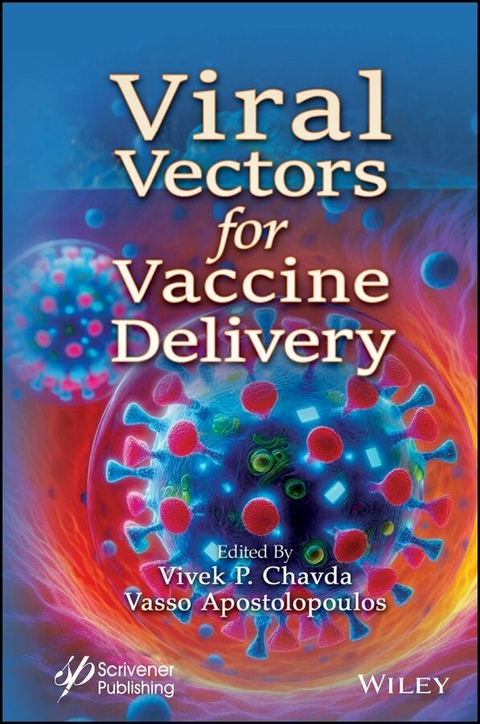
Viral Vectors for Vaccine Delivery (eBook)
387 Seiten
Wiley-Scrivener (Verlag)
978-1-394-27155-9 (ISBN)
The book is essential for anyone interested in vaccine development, as it highlights the unique advantages of viral vector vaccines in triggering robust, long-lasting immunity and provides an in-depth exploration of the technology and advancements shaping the future of healthcare.
Viral vector vaccines have several unique advantages when compared to other vaccine platforms. These powerful vaccines are capable of triggering long-lasting cellular responses, such as cytotoxic T-lymphocytes, that eradicate virus-infected cells. Viral vector-based vaccines use a harmless virus to smuggle the instructions for making antigens from the disease-causing virus into cells, triggering protective immunity against them. In contrast to conventional antigen-containing vaccines, these vaccines use the body's natural defense system to produce antigens by using a modified virus to deliver genetic code for an antigen. Viral Vectors for Vaccine Delivery provides a comprehensive overview of viral vectors and their applications in vaccine delivery. Its chapters explore various aspects of viral vector technology, from the basic principles of viral vector construction to the latest advancements in gene editing and manufacturing.
Readers will find that the book
- Offers a deep dive into the world of viral vectors, covering their principles, applications, and potential impact on healthcare;
- Explores how viral vectors are revolutionizing vaccine development, providing a more effective and targeted approach to disease prevention;
- Discusses the potential of viral vectors to address emerging health challenges and contribute to a healthier world.
Audience
Research scholars, pharma-process engineers, research scientists, pharmacy students and professionals from the pharmaceutical and biopharmaceutical industry interested in drug discovery, chemical biology, computational chemistry, medicinal chemistry, and bioinformatics
Vivek P. Chavda is an assistant professor in the Department of Pharmaceutics and Pharmaceutical Technology, L.M. College of Pharmacy, India with over eight years of experience in biologic research. He has over 250 peer-reviewed national and international publications, including 38 book chapters, seven edited books, ten book chapters, seven patents, and numerous newsletter articles to his credit. His research interests include the development of biologics processes and formulations, medical device development, nano-diagnostics, non-carrier formulations, long-acting parenteral formulations, and nano-vaccines.
Vasso Apostolopoulos, PhD, is the Vice-Chancellor's Distinguished Fellow and Director of the Immunology and Translational Research Group at Victoria University and the Immunology Program Director at the Australian Institute for Musculoskeletal Science. She has over 510 research publications and 22 patents to her credit and has received over 100 awards for her research work. Her research interests include vaccine and drug development for cancer, chronic, infectious, and autoimmune diseases.
The book is essential for anyone interested in vaccine development, as it highlights the unique advantages of viral vector vaccines in triggering robust, long-lasting immunity and provides an in-depth exploration of the technology and advancements shaping the future of healthcare. Viral vector vaccines have several unique advantages when compared to other vaccine platforms. These powerful vaccines are capable of triggering long-lasting cellular responses, such as cytotoxic T-lymphocytes, that eradicate virus-infected cells. Viral vector-based vaccines use a harmless virus to smuggle the instructions for making antigens from the disease-causing virus into cells, triggering protective immunity against them. In contrast to conventional antigen-containing vaccines, these vaccines use the body s natural defense system to produce antigens by using a modified virus to deliver genetic code for an antigen. Viral Vectors for Vaccine Delivery provides a comprehensive overview of viral vectors and their applications in vaccine delivery. Its chapters explore various aspects of viral vector technology, from the basic principles of viral vector construction to the latest advancements in gene editing and manufacturing. Readers will find that the book Offers a deep dive into the world of viral vectors, covering their principles, applications, and potential impact on healthcare; Explores how viral vectors are revolutionizing vaccine development, providing a more effective and targeted approach to disease prevention; Discusses the potential of viral vectors to address emerging health challenges and contribute to a healthier world. Audience Research scholars, pharma-process engineers, research scientists, pharmacy students and professionals from the pharmaceutical and biopharmaceutical industry interested in drug discovery, chemical biology, computational chemistry, medicinal chemistry, and bioinformatics
| Erscheint lt. Verlag | 22.5.2025 |
|---|---|
| Sprache | englisch |
| Themenwelt | Naturwissenschaften ► Chemie |
| Schlagworte | Biotechnology • future of medicine • gene therapy • Genetic Engineering • Healthcare • immunotherapy • Infectious Diseases • Innovation • Medicine • nanotechnology • Public Health • Research • Science • Vaccine development • Viral vectors |
| ISBN-10 | 1-394-27155-7 / 1394271557 |
| ISBN-13 | 978-1-394-27155-9 / 9781394271559 |
| Informationen gemäß Produktsicherheitsverordnung (GPSR) | |
| Haben Sie eine Frage zum Produkt? |
 PDF (Adobe DRM)
Kopierschutz: Adobe-DRM
Adobe-DRM ist ein Kopierschutz, der das eBook vor Mißbrauch schützen soll. Dabei wird das eBook bereits beim Download auf Ihre persönliche Adobe-ID autorisiert. Lesen können Sie das eBook dann nur auf den Geräten, welche ebenfalls auf Ihre Adobe-ID registriert sind.
Details zum Adobe-DRM
Dateiformat: PDF (Portable Document Format)
Mit einem festen Seitenlayout eignet sich die PDF besonders für Fachbücher mit Spalten, Tabellen und Abbildungen. Eine PDF kann auf fast allen Geräten angezeigt werden, ist aber für kleine Displays (Smartphone, eReader) nur eingeschränkt geeignet.
Systemvoraussetzungen:
PC/Mac: Mit einem PC oder Mac können Sie dieses eBook lesen. Sie benötigen eine
eReader: Dieses eBook kann mit (fast) allen eBook-Readern gelesen werden. Mit dem amazon-Kindle ist es aber nicht kompatibel.
Smartphone/Tablet: Egal ob Apple oder Android, dieses eBook können Sie lesen. Sie benötigen eine
Geräteliste und zusätzliche Hinweise
Buying eBooks from abroad
For tax law reasons we can sell eBooks just within Germany and Switzerland. Regrettably we cannot fulfill eBook-orders from other countries.
aus dem Bereich