Provides a timely overview of the use of CRISPR and non-coding RNA technologies to develop climate-resilient crops
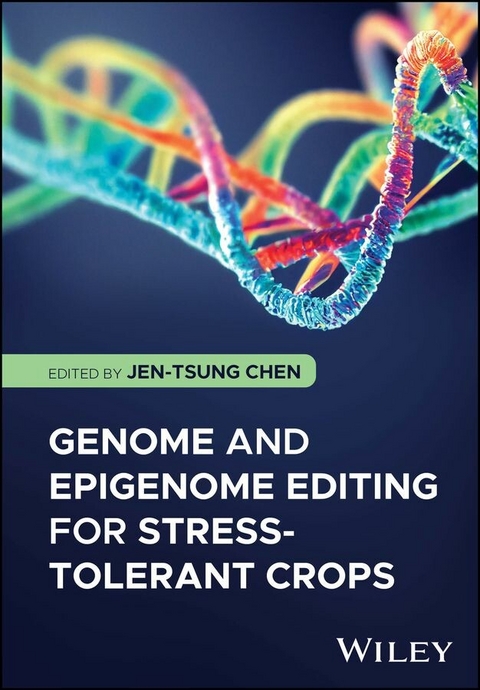
With mounting challenges from climate change, expanding populations, and resource limitations, the need for resilient and sustainable agricultural systems has never been greater. Genome and Epigenome Editing for Stress-Tolerant Crops summarizes advanced techniques for creating crops that can withstand both biotic and abiotic stressors. Edited by renowned biologist Jen-Tsung Chen, this authoritative volume discusses the coordination of CRISPR/Cas technology with ncRNA-based epigenetics to enhance stress tolerance and improve crop quality.
In addition to offering insights into genetic and molecular advances, contributions by experts in the field present key methodologies and applications that bridge multiple omics technologies with genome editing for impactful agricultural outcomes. Addressing emerging tools and strategies that could be instrumental in achieving the United Nations Sustainable Development Goals (SDGs) and advancing sustainable agriculture, Genome and Epigenome Editing for Stress-Tolerant Crops:
- Provides an in-depth overview of CRISPR/Cas and non-coding RNA strategies to develop stress-tolerant crops.
- Integrates multiple omics approaches, including genomics, transcriptomics, and metabolomics for comprehensive crop improvement.
- Discusses strategies for resilience against both abiotic and biotic stressors, such as drought, salinity, pests, and pathogens.
- Offers practical applications of CRISPR and RNA technologies for high-yield, high-quality crop development.
- Presents recent research advancements in epigenetic regulation to fine-tune plant stress responses.
- Discusses future directions in plant science to inspire new research and experimental designs.
Genome and Epigenome Editing for Stress-Tolerant Crops is essential reading for advanced undergraduate and graduate courses in plant biology, molecular genetics, and agricultural biotechnology. It is also a valuable reference for researchers, plant breeders, and scientists working on crop improvement and climate-resilient agriculture initiatives.
Jen-Tsung Chen is Professor of Cell Biology at the Department of Life Sciences, National University of Kaohsiung, Taiwan, where he teaches courses on cell biology, genomics, proteomics, plant physiology, and plant biotechnology. His research focuses on bioactive compounds, plant molecular biology, bioinformatics, and systems pharmacology. Dr. Chen is an editorial board member for several prestigious journals, including Plant Methods and GM Crops & Food. He has authored multiple books on drug discovery, nanotechnology, plant functional genomics, and CRISPR-based plant genome editing. Dr. Chen was included in the 'World's Top 2% Scientists' by Stanford University and Elsevier in 2023 and 2024.
Provides a timely overview of the use of CRISPR and non-coding RNA technologies to develop climate-resilient crops With mounting challenges from climate change, expanding populations, and resource limitations, the need for resilient and sustainable agricultural systems has never been greater. Genome and Epigenome Editing for Stress-Tolerant Crops summarizes advanced techniques for creating crops that can withstand both biotic and abiotic stressors. Edited by renowned biologist Jen-Tsung Chen, this authoritative volume discusses the coordination of CRISPR/Cas technology with ncRNA-based epigenetics to enhance stress tolerance and improve crop quality. In addition to offering insights into genetic and molecular advances, contributions by experts in the field present key methodologies and applications that bridge multiple omics technologies with genome editing for impactful agricultural outcomes. Addressing emerging tools and strategies that could be instrumental in achieving the United Nations Sustainable Development Goals (SDGs) and advancing sustainable agriculture, Genome and Epigenome Editing for Stress-Tolerant Crops: Provides an in-depth overview of CRISPR/Cas and non-coding RNA strategies to develop stress-tolerant crops.Integrates multiple omics approaches, including genomics, transcriptomics, and metabolomics for comprehensive crop improvement.Discusses strategies for resilience against both abiotic and biotic stressors, such as drought, salinity, pests, and pathogens.Offers practical applications of CRISPR and RNA technologies for high-yield, high-quality crop development.Presents recent research advancements in epigenetic regulation to fine-tune plant stress responses.Discusses future directions in plant science to inspire new research and experimental designs. Genome and Epigenome Editing for Stress-Tolerant Crops is essential reading for advanced undergraduate and graduate courses in plant biology, molecular genetics, and agricultural biotechnology. It is also a valuable reference for researchers, plant breeders, and scientists working on crop improvement and climate-resilient agriculture initiatives.
List of Contributors
Mariam Akhtar
Agricultural Biotechnology Division
National Institute for Biotechnology and
Genetic Engineering (NIBGE)
Constituent College of Pakistan Institute of
Engineering and Applied Sciences (PIEAS)
Faisalabad, Pakistan
Imran Amin
Agricultural Biotechnology Division
National Institute for Biotechnology and
Genetic Engineering (NIBGE)
Constitute College of Pakistan Institute of
Engineering and Applied Sciences (PIEAS)
Faisalabad, Pakistan
Afreen Anis
Faculty of Agriculture and Allied Sciences
C.V. Raman Global University
Bhubaneswar, India
Muhammad Jawad Akbar Awan
Agricultural Biotechnology Division
National Institute for Biotechnology and
Genetic Engineering (NIBGE)
Constituent College of Pakistan Institute of
Engineering and Applied Sciences (PIEAS)
Faisalabad, Pakistan
Asad Azeem
Department of Plant Breeding and Genetics
University of Layyah
Layyah, Pakistan
Sana Basharat
College of Tropical Agriculture and Forestry
Hainan University
Haikou, Hainan, China
Key Laboratory of Tropical Horticultural
Crop Quality Regulation
College of Horticulture
Hainan University
Haikou, Hainan, China
Hainan Yazhou Bay Seed Laboratory
Sanya Nanfan Research Institute of Hainan
University
Sanya, China
Fang Zhiyuan Academician Team Innovation
Center of Hainan Province
Sanya, China
Andriy Bilichak
Agriculture and Agri‐Food Canada
Morden Research and Development Centre
Morden, Manitoba, Canada
Muhammad Ismail Buzdar
Agricultural Biotechnology Division
National Institute for Biotechnology and
Genetic Engineering (NIBGE)
Constituent College of Pakistan Institute
of Engineering and Applied
Sciences (PIEAS)
Faisalabad, Pakistan
Himanshushekhar Chaurasia
Mechanical Processing Division
ICAR‐Central Institute for Research on Cotton
Technology
Mumbai, Maharashtra, India
Privilege Chikove
Faculty of Agriculture and Allied Sciences
C.V. Raman Global University
Bhubaneswar, India
Ananya Choudhury
Faculty of Agriculture and Allied Science
C. V. Raman Global University
Bhubaneswar, India
Parinita Das
Division of Agricultural Bioinformatics
ICAR‐Indian Agricultural Statistics Research
Institute
New Delhi, Delhi, India
Discipline of Bioinformatics
The Graduate School
ICAR‐Indian Agricultural Research Institute
New Delhi, Delhi, India
Soumyashree Dash
Faculty of Agriculture and Allied Sciences
C.V. Raman Global University
Bhubaneswar, India
Swatismita Deo
Faculty of Agriculture and Allied Science
C. V. Raman Global University
Bhubaneswar, India
Dhaarani V.
Faculty of Agriculture and Allied Science
C. V. Raman Global University
Bhubaneswar, India
Tushar K. Dutta
Division of Nematology
ICAR‐Indian Agricultural Research Institute
New Delhi, Delhi, India
Subham Ghosh
Division of Agricultural Bioinformatics
ICAR‐Indian Agricultural Statistics Research
Institute
New Delhi, Delhi, India
Discipline of Bioinformatics
The Graduate School
ICAR‐Indian Agricultural Research
Institute
New Delhi, Delhi, India
Ifrah Imran
Agricultural Biotechnology Division
National Institute for Biotechnology and
Genetic Engineering (NIBGE)
Constitute College of Pakistan Institute of
Engineering and Applied Sciences (PIEAS)
Faisalabad, Pakistan
Anam Ishtiaq
Agricultural Biotechnology Division
National Institute for Biotechnology and
Genetic Engineering (NIBGE)
Constitute College of Pakistan Institute of
Engineering and Applied Sciences (PIEAS)
Faisalabad, Pakistan
Abul Kalam Mohammad Aminul Islam
Department of Genetics and Plant Breeding
Faculty of Agriculture
Bangabandhu Sheikh Mujibur Rahman
Agricultural University
Gazipur, Bangladesh
Faiz Ahmad Joyia
Centre of Agricultural Biochemistry and
Biotechnology (CABB)
University of Agriculture
Faisalabad, Pakistan
Angeline Jurry
Faculty of Agriculture and Allied Sciences
C.V. Raman Global University
Bhubaneswar, India
Soumita Karmakar
Faculty of Agriculture and Allied Sciences
C.V. Raman Global University
Bhubaneswar, India
Emanpreet Kaur
Agriculture and Agri‐Food Canada
Morden Research and Development Centre
Morden, Manitoba, Canada
Kadiyala Kavya
Department of Genetics and Plant Breeding
College of Post Graduate Studies in
Agricultural Sciences
Central Agricultural University (Imphal)
Umiam, Meghalaya, India
Ajay Kumar Keot
Biological Sciences and Technology Division
CSIR‐North East Institute of Science and
Technology (NEIST)
Jorhat, Assam, India
Academy of Scientific and Innovative
Research (AcSIR)
Ghaziabad, India
Jahan Khan
Agricultural Biotechnology Division
National Institute for Biotechnology and
Genetic Engineering (NIBGE)
Constituent College of Pakistan Institute of
Engineering and Applied Sciences (PIEAS)
Faisalabad, Pakistan
Muhammad Sarwar Khan
Centre of Agricultural Biochemistry and
Biotechnology (CABB)
University of Agriculture
Faisalabad, Pakistan
Marium Khatun
Department of Genetics and Plant Breeding
Faculty of Agriculture
Bangabandhu Sheikh Mujibur Rahman
Agricultural University
Gazipur, Bangladesh
Abhishek Kumar
Faculty of Agriculture
Maharishi Markandeshwar University
Mullana, Ambala, Haryana, India
Niraj Kumar
Biological Sciences and Technology
Division, CSIR‐North East Institute of Science
and Technology (NEIST)
Jorhat, Assam, India
Academy of Scientific and Innovative
Research (AcSIR)
Ghaziabad, India
Sharia Yesmin Labonno
Department of Genetics and Plant Breeding
Faculty of Agriculture
Bangabandhu Sheikh Mujibur Rahman
Agricultural University
Gazipur, Bangladesh
Louie Cris Lopos
Agriculture and Agri‐Food Canada
Morden Research and Development Centre
Morden, Manitoba, Canada
Muhammad Arslan Mahmood
Agricultural Biotechnology Division
National Institute for Biotechnology and
Genetic Engineering (NIBGE)
Constitute College of Pakistan Institute of
Engineering and Applied Sciences (PIEAS)
Faisalabad, Pakistan
Alagu Manickavelu
Department of Genomic Science
Central University of Kerala
Kasaragod, Kerala, India
Riwandahun Marwein
Biological Sciences and Technology Division
CSIR‐North East Institute of Science and
Technology (NEIST)
Jorhat, Assam, India
Academy of Scientific and Innovative Research
(AcSIR)
Ghaziabad, India
Srutirekha Mishra
Faculty of Agriculture and Allied Science
C. V. Raman Global University
Bhubaneswar, India
Sneha Murmu
Division of Agricultural Bioinformatics
ICAR‐Indian Agricultural Statistics Research
Institute
New Delhi, Delhi, India
Ghulam Mustafa
Centre of Agricultural Biochemistry and
Biotechnology (CABB)
University of Agriculture
Faisalabad, Pakistan
Rubab Zahra Naqvi
Agricultural Biotechnology Division
National Institute for Biotechnology and
Genetic Engineering (NIBGE)
Constitute College of Pakistan Institute of
Engineering and Applied Sciences (PIEAS)
Faisalabad, Pakistan
Bhupati Nayak
Faculty of Agriculture and Allied Science
C. V. Raman Global University
Bhubaneswar, India
Fernanda Freitas de Oliveira
Genetics Department
Federal University of Parana
Curitiba‐PR, Brazil
Jardel de Oliveira
Department of Agronomy ‐ Postgraduate
Program in Agronomy ‐ Plant Production
São Paulo Western University
Presidente Prudente‐SP, Brazil
Pritilagna Panigrahi
Faculty of Agriculture and Allied Science
C. V. Raman Global University
Bhubaneswar, India
Aqsa Parvaiz
Department of Biochemistry and
Biotechnology
The Women University Multan
Multan, Pakistan
Laxmipriya Pati
Faculty of Agriculture and Allied Science
C. V. Raman Global University
Bhubaneswar, India
Liu Pingwu
College of Tropical Agriculture and Forestry
Hainan University
Haikou, Hainan, China
Key Laboratory of Tropical Horticultural Crop
Quality Regulation
College of Horticulture
Hainan University
Haikou, Hainan, China
Hainan Yazhou Bay Seed Laboratory
Sanya Nanfan Research Institute of Hainan
University
Sanya, China
Fang Zhiyuan Academician Team Innovation
Center of Hainan Province
Sanya, China
Pooja
Department of Plant Pathology
Chaudhary Charan...
| Erscheint lt. Verlag | 6.5.2025 |
|---|---|
| Sprache | englisch |
| Themenwelt | Naturwissenschaften ► Biologie ► Genetik / Molekularbiologie |
| Schlagworte | abiotic stress • biotic stress • Climate-resilient agriculture • CRISPR • Crop improvement • epigenetics • Genome editing • Non-coding RNA • omics technologies • Plant Biotechnology • Plant Breeding • plant genomics • Plant Molecular Biology • RNA technology • stress-tolerant crops • sustainable agriculture |
| ISBN-10 | 1-394-28002-5 / 1394280025 |
| ISBN-13 | 978-1-394-28002-5 / 9781394280025 |
| Informationen gemäß Produktsicherheitsverordnung (GPSR) | |
| Haben Sie eine Frage zum Produkt? |
 EPUB (Adobe DRM)
Kopierschutz: Adobe-DRM
Adobe-DRM ist ein Kopierschutz, der das eBook vor Mißbrauch schützen soll. Dabei wird das eBook bereits beim Download auf Ihre persönliche Adobe-ID autorisiert. Lesen können Sie das eBook dann nur auf den Geräten, welche ebenfalls auf Ihre Adobe-ID registriert sind.
Details zum Adobe-DRM
Dateiformat: EPUB (Electronic Publication)
EPUB ist ein offener Standard für eBooks und eignet sich besonders zur Darstellung von Belletristik und Sachbüchern. Der Fließtext wird dynamisch an die Display- und Schriftgröße angepasst. Auch für mobile Lesegeräte ist EPUB daher gut geeignet.
Systemvoraussetzungen:
PC/Mac: Mit einem PC oder Mac können Sie dieses eBook lesen. Sie benötigen eine
eReader: Dieses eBook kann mit (fast) allen eBook-Readern gelesen werden. Mit dem amazon-Kindle ist es aber nicht kompatibel.
Smartphone/Tablet: Egal ob Apple oder Android, dieses eBook können Sie lesen. Sie benötigen eine
Geräteliste und zusätzliche Hinweise
Buying eBooks from abroad
For tax law reasons we can sell eBooks just within Germany and Switzerland. Regrettably we cannot fulfill eBook-orders from other countries.
aus dem Bereich