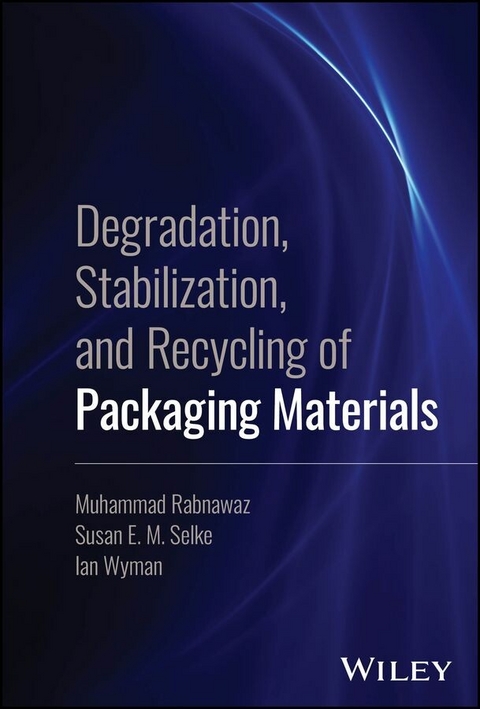
Degradation, Stabilization, and Recycling of Packaging Materials (eBook)
385 Seiten
Wiley (Verlag)
978-1-394-29428-2 (ISBN)
Practical guidance to sustainable packaging and its challenges with analysis of various packaging materials and their interactions with different environments
Degradation, Stabilization, and Recycling of Packaging Materials analyzes packaging materials and their interactions with different environments, discussing the degradation processes of different materials like plastics, wood, paper, glass, and metal, providing specific strategies to address these degradation processes, and exploring solid waste management, recent developments in recycling, and the principles of eco-friendly packaging design.
Organized into two parts, the first section of this book provides a comprehensive examination of how environmental factors such as heat, shear, light, air, packaged products, and stress affect packaging materials, focusing on the chemistry of their deterioration and stabilization methods. The second section explores solid waste management, recent developments in recycling, and key principles of eco-friendly packaging design, culminating in an extensive discussion of legal and regulatory aspects.
The book includes case studies and problem sets in each chapter, with solutions to the problems in an appendix in the back of the book.
Written by a team of highly qualified authors, Degradation, Stabilization, and Recycling of Packaging Materials includes discussion on:
- Structure of tinplate and tin-free steel, corrosion in lacquered cans, and effects of producing, processing, and storing metals
- Recyclable versus repulpable paper, uses of recycled papers, wet-strength papers, non-wood fibers as paper sources, and contamination issues with paper recycling
- Plastic recycling rates, plastic scrap exports in the US and abroad, chemical versus mechanical plastic recycling, hydrocracking of plastics, and PE and PET recycling
- Lightweight glass bottles, strategies to modify or strengthen glass, and the real recyclability of glass
Presenting advanced technical knowledge that demystifies the sustainable packaging landscape Degradation, Stabilization, and Recycling of Packaging Materials is a critical resource for researchers, students, and industry professionals in the field of materials science and packaging to evaluate challenges related to solid waste and devise effective disposal strategies.
Muhammad Rabnawaz, PhD is an Associate Professor for the Michigan State University (MSU) School of Packaging.
Susan E. M. Selke, PhD is Professor Emeritus in the Michigan State University (MSU) School of Packaging.
Ian Wyman, PhD is a Professional Aide in the Michigan State University (MSU) School of Packaging.
Practical guidance to sustainable packaging and its challenges with analysis of various packaging materials and their interactions with different environments Degradation, Stabilization, and Recycling of Packaging Materials analyzes packaging materials and their interactions with different environments, discussing the degradation processes of different materials like plastics, wood, paper, glass, and metal, providing specific strategies to address these degradation processes, and exploring solid waste management, recent developments in recycling, and the principles of eco-friendly packaging design. Organized into two parts, the first section of this book provides a comprehensive examination of how environmental factors such as heat, shear, light, air, packaged products, and stress affect packaging materials, focusing on the chemistry of their deterioration and stabilization methods. The second section explores solid waste management, recent developments in recycling, and key principles of eco-friendly packaging design, culminating in an extensive discussion of legal and regulatory aspects. The book includes case studies and problem sets in each chapter, with solutions to the problems in an appendix in the back of the book. Written by a team of highly qualified authors, Degradation, Stabilization, and Recycling of Packaging Materials includes discussion on: Structure of tinplate and tin-free steel, corrosion in lacquered cans, and effects of producing, processing, and storing metalsRecyclable versus repulpable paper, uses of recycled papers, wet-strength papers, non-wood fibers as paper sources, and contamination issues with paper recyclingPlastic recycling rates, plastic scrap exports in the US and abroad, chemical versus mechanical plastic recycling, hydrocracking of plastics, and PE and PET recyclingLightweight glass bottles, strategies to modify or strengthen glass, and the real recyclability of glass Presenting advanced technical knowledge that demystifies the sustainable packaging landscape Degradation, Stabilization, and Recycling of Packaging Materials is a critical resource for researchers, students, and industry professionals in the field of materials science and packaging to evaluate challenges related to solid waste and devise effective disposal strategies.
| Erscheint lt. Verlag | 21.3.2025 |
|---|---|
| Sprache | englisch |
| Themenwelt | Naturwissenschaften ► Chemie |
| Schlagworte | bottle recycling • green recycling • Metal recycling • packaging recycling • Paper recycling • pet recycling • Plastic recycling • recycling challenges • recycling regulations • waste management • Waste reduction • wood recycling |
| ISBN-10 | 1-394-29428-X / 139429428X |
| ISBN-13 | 978-1-394-29428-2 / 9781394294282 |
| Informationen gemäß Produktsicherheitsverordnung (GPSR) | |
| Haben Sie eine Frage zum Produkt? |
 PDF (Adobe DRM)
Kopierschutz: Adobe-DRM
Adobe-DRM ist ein Kopierschutz, der das eBook vor Mißbrauch schützen soll. Dabei wird das eBook bereits beim Download auf Ihre persönliche Adobe-ID autorisiert. Lesen können Sie das eBook dann nur auf den Geräten, welche ebenfalls auf Ihre Adobe-ID registriert sind.
Details zum Adobe-DRM
Dateiformat: PDF (Portable Document Format)
Mit einem festen Seitenlayout eignet sich die PDF besonders für Fachbücher mit Spalten, Tabellen und Abbildungen. Eine PDF kann auf fast allen Geräten angezeigt werden, ist aber für kleine Displays (Smartphone, eReader) nur eingeschränkt geeignet.
Systemvoraussetzungen:
PC/Mac: Mit einem PC oder Mac können Sie dieses eBook lesen. Sie benötigen eine
eReader: Dieses eBook kann mit (fast) allen eBook-Readern gelesen werden. Mit dem amazon-Kindle ist es aber nicht kompatibel.
Smartphone/Tablet: Egal ob Apple oder Android, dieses eBook können Sie lesen. Sie benötigen eine
Geräteliste und zusätzliche Hinweise
Buying eBooks from abroad
For tax law reasons we can sell eBooks just within Germany and Switzerland. Regrettably we cannot fulfill eBook-orders from other countries.
aus dem Bereich