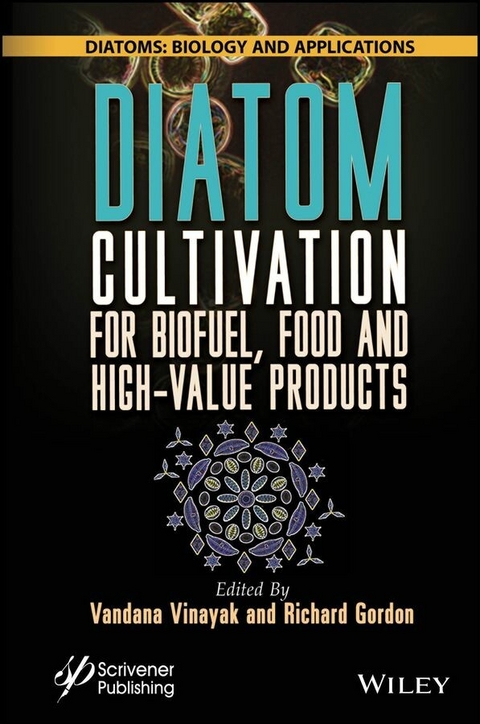
Diatom Cultivation for Biofuel, Food and High-Value Products (eBook)
651 Seiten
Wiley-Scrivener (Verlag)
9781394174966 (ISBN)
This unique book examines the techno-economic prospects of diatom cultivation, the design and implementation of algal reactors, and the potential of diatoms as a source of biofuel and other value-added products.
Diatom Cultivation for Biofuel, Food and High-Value Products covers the scientific, economic, and practical aspects of using diatoms for multiple purposes. It explores an integrated approach to diatom cultivation, including discussions on techniques, harvesting methods, and innovative technologies. The book discusses the potential of these techniques for improving the efficiency and yield of diatom-based biofuels, as well as the challenges and ethical considerations associated with genetic engineering.
Readers of the book will discover a wealth of information including:
- The adaptation of chitosan-based harvesting methods for microalgae flocculation; the trends, scope, and techno-economic prospects of diatom cultivation, including the design and implementation of algal reactors and the potential of diatoms as a source of biofuel and other value-added products.
- Advanced applications and innovative techniques in the field of diatoms and microalgae such as an in-depth analysis of the pigments and proteins found in Phaeodactylum tricornutum; the nature and applications of diatom cell walls, including their purification processes and industrial uses; the biochemical engineering of diatoms for health and biorefinery concepts, highlighting the potential of diatoms in producing biofuels and other high-value products; the metabolic and transcriptomic stress and engineering of diatoms to enhance lipid production, exploring the stress conditions that can increase oil yield; explores the genetic engineering techniques, such as CRISPRCas9 and RNA interference.
- The environmental and industrial applications of diatoms for low-value products, such as diatom as a prospective green anode material; diatom cell disruption and milking via a nano biorefinery for biofuel production, utilizing techniques like pulsed electric fields, high-pressure homogenization, ultrasonication, etc; genetic engineering and metabolic engineering in diatoms for oil production; the use of diatoms for heavy metal bioremediation, exploring the mechanisms of heavy metal uptake by diatoms, including biosorption and bioaccumulation; the transesterification of diatom oil and parameters for optimization; diatom harvesting for lipid production like bubble wrap (Bubble Farming).
Audience
The book serves as a guide for researchers and scientists in phycology, biology, ecology, environmental science, biofuels, bioengineering as well as nutritionists and dieticians who design functional foods and nutraceutical products.
Vandana Vinayak is an assistant professor in the School of Applied Sciences, Dr. Hari Singh Gour Vishwavidhyalaya University, Sagar, Madhya Pradesh, India. Her research focuses on diatom nanoengineering, sustainable algal technologies, and valorization. She has published more than 50 research articles, 20 review articles, 12 book chapters, and two published patents. Vinayak has won the Women Scientist Award and the Noel Gold Medal Award.
Richard Gordon involvement with diatoms goes back to 1970, when his capillarity model for their gliding motility was published in the Proceedings of the National Academy of Sciences of the United States of America. He later worked on a diffusion-limited aggregation model for diatom morphogenesis, which led to the first paper ever published on diatom nanotechnology in 1988. He organized the first workshop on diatom nanotech in 2003.
This unique book examines the techno-economic prospects of diatom cultivation, the design and implementation of algal reactors, and the potential of diatoms as a source of biofuel and other value-added products. Diatom Cultivation for Biofuel, Food and High-Value Products covers the scientific, economic, and practical aspects of using diatoms for multiple purposes. It explores an integrated approach to diatom cultivation, including discussions on techniques, harvesting methods, and innovative technologies. The book discusses the potential of these techniques for improving the efficiency and yield of diatom-based biofuels, as well as the challenges and ethical considerations associated with genetic engineering. Readers of the book will discover a wealth of information including: The adaptation of chitosan-based harvesting methods for microalgae flocculation; the trends, scope, and techno-economic prospects of diatom cultivation, including the design and implementation of algal reactors and the potential of diatoms as a source of biofuel and other value-added products. Advanced applications and innovative techniques in the field of diatoms and microalgae such as an in-depth analysis of the pigments and proteins found in Phaeodactylum tricornutum; the nature and applications of diatom cell walls, including their purification processes and industrial uses; the biochemical engineering of diatoms for health and biorefinery concepts, highlighting the potential of diatoms in producing biofuels and other high-value products; the metabolic and transcriptomic stress and engineering of diatoms to enhance lipid production, exploring the stress conditions that can increase oil yield; explores the genetic engineering techniques, such as CRISPRCas9 and RNA interference. The environmental and industrial applications of diatoms for low-value products, such as diatom as a prospective green anode material; diatom cell disruption and milking via a nano biorefinery for biofuel production, utilizing techniques like pulsed electric fields, high-pressure homogenization, ultrasonication, etc; genetic engineering and metabolic engineering in diatoms for oil production; the use of diatoms for heavy metal bioremediation, exploring the mechanisms of heavy metal uptake by diatoms, including biosorption and bioaccumulation; the transesterification of diatom oil and parameters for optimization; diatom harvesting for lipid production like bubble wrap (Bubble Farming). Audience The book serves as a guide for researchers and scientists in phycology, biology, ecology, environmental science, biofuels, bioengineering as well as nutritionists and dieticians who design functional foods and nutraceutical products.
Preface
Diatoms are emerging as pivotal players in addressing some of the most pressing environmental and energy challenges of our time. This book delves into the multifaceted world of diatoms, exploring their cultivation, harvesting, and diverse applications. By harnessing the potential of diatoms, we can develop sustainable solutions that benefit both industry and the environment, contributing to a healthier planet for future generations.
The cultivation and harvesting of diatoms present unique challenges and opportunities. This book provides a comprehensive overview of the technological limitations and needs in this field, highlighting innovative methods such as the use of chitosan as a natural flocculant. These advancements are crucial for optimizing the efficiency and effectiveness of microalgae harvesting processes, its advantages over synthetic flocculants, and its potential for large-scale applications.
Diatoms, with their intricate cell wall structures and biochemical compositions, offer immense potential for various applications, including bio-fuel production, bioremediation, and even space exploration. This book examines the technoeconomic prospects of diatom cultivation, the design and implementation of algal reactors, and the potential of diatoms as a source of biofuel and other value-added products. Diatoms are unique among microalgae due to their silica-based cell walls, known as frustules, which exhibit intricate nanostructures. These frustules not only provide mechanical protection but also have potential applications in nanotechnology and materials science.
One of the key features of diatoms is their ability to produce valuable biochemical compounds. This book provides an in-depth analysis of the pigments and proteins found in Phaeodactylum tricornutum, exploring their potential applications in various industries. Diatoms are known for their diverse and unique biochemical compositions, which include pigments such as chlorophylls, carotenoids, and fucoxanthin. These pigments have potential applications in the food, pharmaceutical, and cosmetic industries due to their antioxidant and anti-inflammatory properties.
Biofuel production from diatoms is a promising avenue for sustainable energy. This book explores the methods for lipid extraction from diatoms, the economic feasibility of biofuel production, and the industrial aspects of this process. Diatoms are considered one of the most promising sources of biofuels due to their high lipid content and rapid growth rates.
The potential of diatoms extends beyond Earth, with applications in long-term space missions and life support systems. This book discusses the testing of diatom growth under microgravity conditions and the potential use of diatoms in space applications. Diatoms have been proposed as a potential component of life support systems for long-term space missions due to their ability to produce oxygen and remove carbon dioxide.
Genetic engineering plays a crucial role in enhancing the lipid production of diatoms. This book delves into the genetic modifications and stress conditions that can increase oil production in diatoms, providing insights into the future prospects of this field. Genetic engineering techniques, such as CRISPR-Cas9 and RNA interference, have been used to modify the metabolic pathways of diatoms to enhance lipid production.
The book discusses the potential of these techniques for improving the efficiency and yield of diatom-based biofuels, as well as the challenges and ethical considerations associated with genetic engineering. Further, the work highlighted in this wide-ranging book is divided into three parts:
Part I: Culture Methods. This section introduces the foundational aspects of microalgae and diatom cultivation. Chapter 1 discusses the adaptation of chitosan-based harvesting methods for microalgae flocculation, addressing the challenges and technological limitations in microalgae cultivation and harvesting. The chapter delves into the various methods of microalgae harvesting, including centrifugation, filtration, and flocculation, with a particular focus on the use of chitosan as a natural flocculant. It explores the mechanisms of chitosan flocculation, its advantages over synthetic flocculants, and its potential for large-scale applications. Chapter 2 explores the trends, scope, and technoeconomic prospects of diatom cultivation, including the design and implementation of algal reactors and the potential of diatoms as a source of biofuel and other value-added products. The chapter discusses the cultivation of diatoms in photobioreactors and open ponds, highlighting the advantages and limitations of each system. It also examines the potential of diatoms in the biofuels industry, focusing on their high lipid content and rapid growth rates. The economic feasibility of diatom-based biofuel production is analysed, considering factors such as feedstock availability, production costs, and market demand. Chapter 3 provides an in-depth analysis of the pigments and proteins found in Phaeodactylum tricornutum, exploring their potential applications in various industries. It discusses the diverse and unique biochemical compositions of diatoms, including pigments such as chlorophylls, carotenoids, and fucoxanthin, and their potential applications in the food, pharmaceutical, and cosmetic industries. The chapter also examines the protein content of diatoms, including enzymes and bioactive peptides, and their potential uses in nutraceuticals and functional foods.
Part II: High-Value Products. This section covers advanced applications and innovative techniques in the field of diatoms and microalgae. Chapters 4 and 5 examine the nature and applications of diatom cell walls, including their purification processes and industrial uses. The chapters discuss the silica frustules of diatoms, which exhibit intricate nanostructures and have potential applications in nanotechnology and materials science. They explore the methods for extracting and purifying diatom frustules, as well as their potential for creating high-value products. Chapter 6 discusses the biochemical engineering of diatoms for health and biorefinery concepts, highlighting the potential of diatoms in producing biofuels and other high-value products. The chapter examines the genetic modifications and stress conditions that can enhance lipid production in diatoms, providing insights into the future prospects of this field. Chapter 7 focuses on the metabolic and transcriptomic stress and engineering of diatoms to enhance lipid production, exploring the stress conditions that can increase oil yield. The chapter delves into the genetic engineering techniques, such as CRISPRCas9 and RNA interference, that have been used to modify the metabolic pathways of diatoms to enhance lipid production. It discusses the potential of these techniques for improving the efficiency and yield of diatom-based biofuels, as well as the challenges and ethical considerations associated with genetic engineering. Chapter 8 examines the potential of diatoms in space applications, including long-term space missions and life support systems. The chapter discusses the challenges of cultivating diatoms in space, including the effects of microgravity on growth and metabolism, and explores the potential benefits of using diatoms for cultivation within bio-regenerative life support system (BLSS). Chapter 9 discusses diatom as prospective green anode material.
Part III: Low-Value Products. This section highlights the environmental and industrial applications of diatoms for low value products. Chapter 10 discusses diatom cell disruption and milking via a nanobiorefinery for bio-fuel production, utilizing techniques like pulsed electric fields, high pressure homogenisation, ultrasonication, etc. Chapter 11 discusses genetic engineering and metabolic engineering in diatoms for oil production. Chapter 12 explores the use of diatoms for heavy metal bioremediation, discussing the mechanisms and challenges involved. The chapter examines the high capacity of diatoms for accumulating heavy metals, making them suitable for bioremediation applications. It explores the mechanisms of heavy metal uptake by diatoms, including biosorption and bioaccumulation, and discusses the challenges and limitations of using diatoms for bioremediation. Chapter 13 discusses diatoms for biofuel in biofilm reactors, it discusses transesterification of diatom oil and parameters for optimisation and Chapter 14 discusses diatom harvesting for lipid production like bubble wrap (Bubble Farming), oozing, mechanical pressure, pulse electric field etc.
We are pleased to present this book, which documents the latest advancements in the cultivation, harvesting value added products from diatoms, and applications of microalgae and diatoms. By fostering an interdisciplinary exchange of ideas and actions, we hope to contribute to the innovative design of high-performing systems that provide practical solutions to global challenges. We trust that this book will be a valuable resource for researchers, industry professionals, and anyone interested in the potential of microalgae and diatoms.
There are four general methods for agricultural scale growth of diatoms and other microalgae: Runways; Photobioreactors; Bubble Farming; Biofilms. These vary widely in ease to contaminate; requirement for flat land; gas barrier; water retention; nutrients requirement; scalability; running energy, and cost.
The editors and Clifford Merz have been developing Bubble Farming at a laboratory scale. It needs outdoor, agricultural testing to...
| Erscheint lt. Verlag | 11.3.2025 |
|---|---|
| Reihe/Serie | Diatoms: Biology and Applications |
| Sprache | englisch |
| Themenwelt | Naturwissenschaften ► Biologie ► Botanik |
| Schlagworte | biofuel • Chloroplast • Diatomite • Diatoms • Freshwater • Genome • Lipid • Marine • microalgae • Nanoarchitecture • nanomaterials • Pigments • shear force • Silica • Transesterification |
| ISBN-13 | 9781394174966 / 9781394174966 |
| Informationen gemäß Produktsicherheitsverordnung (GPSR) | |
| Haben Sie eine Frage zum Produkt? |
 EPUB (Adobe DRM)
Kopierschutz: Adobe-DRM
Adobe-DRM ist ein Kopierschutz, der das eBook vor Mißbrauch schützen soll. Dabei wird das eBook bereits beim Download auf Ihre persönliche Adobe-ID autorisiert. Lesen können Sie das eBook dann nur auf den Geräten, welche ebenfalls auf Ihre Adobe-ID registriert sind.
Details zum Adobe-DRM
Dateiformat: EPUB (Electronic Publication)
EPUB ist ein offener Standard für eBooks und eignet sich besonders zur Darstellung von Belletristik und Sachbüchern. Der Fließtext wird dynamisch an die Display- und Schriftgröße angepasst. Auch für mobile Lesegeräte ist EPUB daher gut geeignet.
Systemvoraussetzungen:
PC/Mac: Mit einem PC oder Mac können Sie dieses eBook lesen. Sie benötigen eine
eReader: Dieses eBook kann mit (fast) allen eBook-Readern gelesen werden. Mit dem amazon-Kindle ist es aber nicht kompatibel.
Smartphone/Tablet: Egal ob Apple oder Android, dieses eBook können Sie lesen. Sie benötigen eine
Geräteliste und zusätzliche Hinweise
Buying eBooks from abroad
For tax law reasons we can sell eBooks just within Germany and Switzerland. Regrettably we cannot fulfill eBook-orders from other countries.
aus dem Bereich