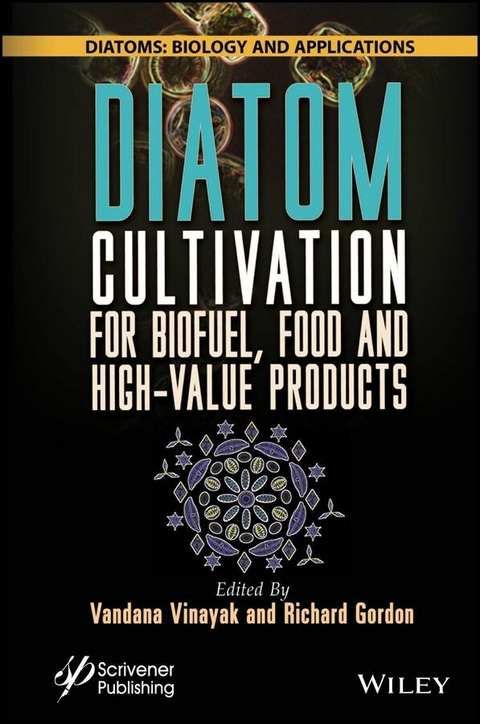
Diatom Cultivation for Biofuel, Food and High-Value Products (eBook)
441 Seiten
Wiley-Scrivener (Verlag)
978-1-394-17497-3 (ISBN)
This unique book examines the techno-economic prospects of diatom cultivation, the design and implementation of algal reactors, and the potential of diatoms as a source of biofuel and other value-added products.
Diatom Cultivation for Biofuel, Food and High-Value Products covers the scientific, economic, and practical aspects of using diatoms for multiple purposes. It explores an integrated approach to diatom cultivation, including discussions on techniques, harvesting methods, and innovative technologies. The book discusses the potential of these techniques for improving the efficiency and yield of diatom-based biofuels, as well as the challenges and ethical considerations associated with genetic engineering.
Readers of the book will discover a wealth of information including:
- The adaptation of chitosan-based harvesting methods for microalgae flocculation; the trends, scope, and techno-economic prospects of diatom cultivation, including the design and implementation of algal reactors and the potential of diatoms as a source of biofuel and other value-added products.
- Advanced applications and innovative techniques in the field of diatoms and microalgae such as an in-depth analysis of the pigments and proteins found in Phaeodactylum tricornutum; the nature and applications of diatom cell walls, including their purification processes and industrial uses; the biochemical engineering of diatoms for health and biorefinery concepts, highlighting the potential of diatoms in producing biofuels and other high-value products; the metabolic and transcriptomic stress and engineering of diatoms to enhance lipid production, exploring the stress conditions that can increase oil yield; explores the genetic engineering techniques, such as CRISPRCas9 and RNA interference.
- The environmental and industrial applications of diatoms for low-value products, such as diatom as a prospective green anode material; diatom cell disruption and milking via a nano biorefinery for biofuel production, utilizing techniques like pulsed electric fields, high-pressure homogenization, ultrasonication, etc; genetic engineering and metabolic engineering in diatoms for oil production; the use of diatoms for heavy metal bioremediation, exploring the mechanisms of heavy metal uptake by diatoms, including biosorption and bioaccumulation; the transesterification of diatom oil and parameters for optimization; diatom harvesting for lipid production like bubble wrap (Bubble Farming).
Audience
The book serves as a guide for researchers and scientists in phycology, biology, ecology, environmental science, biofuels, bioengineering as well as nutritionists and dieticians who design functional foods and nutraceutical products.
Vandana Vinayak is an assistant professor in the School of Applied Sciences, Dr. Hari Singh Gour Vishwavidhyalaya University, Sagar, Madhya Pradesh, India. Her research focuses on diatom nanoengineering, sustainable algal technologies, and valorization. She has published more than 50 research articles, 20 review articles, 12 book chapters, and two published patents. Vinayak has won the Women Scientist Award and the Noel Gold Medal Award.
Richard Gordon involvement with diatoms goes back to 1970, when his capillarity model for their gliding motility was published in the Proceedings of the National Academy of Sciences of the United States of America. He later worked on a diffusion-limited aggregation model for diatom morphogenesis, which led to the first paper ever published on diatom nanotechnology in 1988. He organized the first workshop on diatom nanotech in 2003.
This unique book examines the techno-economic prospects of diatom cultivation, the design and implementation of algal reactors, and the potential of diatoms as a source of biofuel and other value-added products. Diatom Cultivation for Biofuel, Food and High-Value Products covers the scientific, economic, and practical aspects of using diatoms for multiple purposes. It explores an integrated approach to diatom cultivation, including discussions on techniques, harvesting methods, and innovative technologies. The book discusses the potential of these techniques for improving the efficiency and yield of diatom-based biofuels, as well as the challenges and ethical considerations associated with genetic engineering. Readers of the book will discover a wealth of information including: The adaptation of chitosan-based harvesting methods for microalgae flocculation; the trends, scope, and techno-economic prospects of diatom cultivation, including the design and implementation of algal reactors and the potential of diatoms as a source of biofuel and other value-added products. Advanced applications and innovative techniques in the field of diatoms and microalgae such as an in-depth analysis of the pigments and proteins found in Phaeodactylum tricornutum; the nature and applications of diatom cell walls, including their purification processes and industrial uses; the biochemical engineering of diatoms for health and biorefinery concepts, highlighting the potential of diatoms in producing biofuels and other high-value products; the metabolic and transcriptomic stress and engineering of diatoms to enhance lipid production, exploring the stress conditions that can increase oil yield; explores the genetic engineering techniques, such as CRISPRCas9 and RNA interference. The environmental and industrial applications of diatoms for low-value products, such as diatom as a prospective green anode material; diatom cell disruption and milking via a nano biorefinery for biofuel production, utilizing techniques like pulsed electric fields, high-pressure homogenization, ultrasonication, etc; genetic engineering and metabolic engineering in diatoms for oil production; the use of diatoms for heavy metal bioremediation, exploring the mechanisms of heavy metal uptake by diatoms, including biosorption and bioaccumulation; the transesterification of diatom oil and parameters for optimization; diatom harvesting for lipid production like bubble wrap (Bubble Farming). Audience The book serves as a guide for researchers and scientists in phycology, biology, ecology, environmental science, biofuels, bioengineering as well as nutritionists and dieticians who design functional foods and nutraceutical products.
| Erscheint lt. Verlag | 27.2.2025 |
|---|---|
| Reihe/Serie | Diatoms: Biology and Applications |
| Sprache | englisch |
| Themenwelt | Naturwissenschaften ► Biologie ► Botanik |
| Schlagworte | biofuel • Chloroplast • Diatomite • Diatoms • Freshwater • Genome • Lipid • Marine • microalgae • Nanoarchitecture • nanomaterials • Pigments • shear force • Silica • Transesterification |
| ISBN-10 | 1-394-17497-7 / 1394174977 |
| ISBN-13 | 978-1-394-17497-3 / 9781394174973 |
| Informationen gemäß Produktsicherheitsverordnung (GPSR) | |
| Haben Sie eine Frage zum Produkt? |
 PDF (Adobe DRM)
Kopierschutz: Adobe-DRM
Adobe-DRM ist ein Kopierschutz, der das eBook vor Mißbrauch schützen soll. Dabei wird das eBook bereits beim Download auf Ihre persönliche Adobe-ID autorisiert. Lesen können Sie das eBook dann nur auf den Geräten, welche ebenfalls auf Ihre Adobe-ID registriert sind.
Details zum Adobe-DRM
Dateiformat: PDF (Portable Document Format)
Mit einem festen Seitenlayout eignet sich die PDF besonders für Fachbücher mit Spalten, Tabellen und Abbildungen. Eine PDF kann auf fast allen Geräten angezeigt werden, ist aber für kleine Displays (Smartphone, eReader) nur eingeschränkt geeignet.
Systemvoraussetzungen:
PC/Mac: Mit einem PC oder Mac können Sie dieses eBook lesen. Sie benötigen eine
eReader: Dieses eBook kann mit (fast) allen eBook-Readern gelesen werden. Mit dem amazon-Kindle ist es aber nicht kompatibel.
Smartphone/Tablet: Egal ob Apple oder Android, dieses eBook können Sie lesen. Sie benötigen eine
Geräteliste und zusätzliche Hinweise
Buying eBooks from abroad
For tax law reasons we can sell eBooks just within Germany and Switzerland. Regrettably we cannot fulfill eBook-orders from other countries.
aus dem Bereich