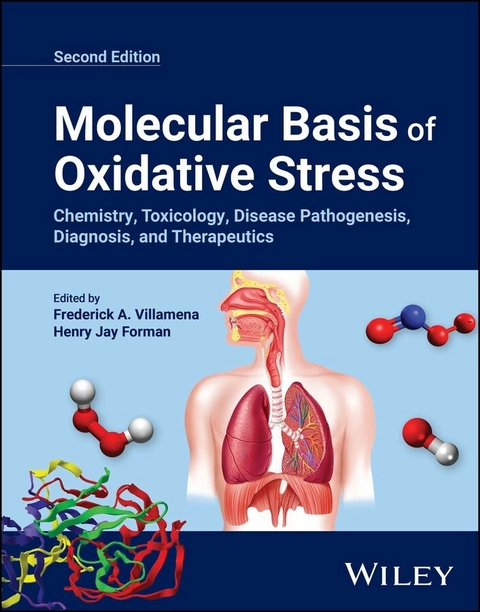
Molecular Basis of Oxidative Stress (eBook)
1734 Seiten
Wiley (Verlag)
978-1-119-79037-2 (ISBN)
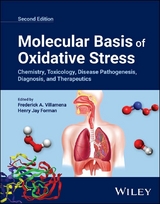
In-depth resource on mechanisms of oxidative stress and damage and the role of free radicals in disease, diagnosis, and therapeutics
Molecular Basis of Oxidative Stress is a comprehensive resource on the molecular and chemical bases of oxidative stress, providing insight on various diseases caused by oxidative stress (cancer, cardiovascular, neurodegenerative) and the role of reactive oxygen species (ROS) in disease pathogenesis along with in-depth knowledge about the mechanisms of oxidative stress and damage, free radical chemistry, and the role of free radicals in disease, diagnosis, and therapeutics.
Thoroughly updated and expanded to reflect advances in the years since its original publication, the Second Edition includes new chapters covering topics like oxidative stress mechanisms, biomarkers, and therapeutic strategies in the management and treatment of diseases. The disease section features 10 new emerging diseases, including kidney and eye diseases and COPD.
This Second Edition also covers developments in the field in the last several years, such as an increase in mortality rate from air pollution and obstructive pulmonary diseases in which exogenous oxidants are initiators.
Written by a team of highly qualified academics, Molecular Basis of Oxidative Stress discusses sample topics including:
- Classification, physico-chemical properties, sources, and detection of reactive species and etiology of COPD from cigarette smoke and pollution
- Oxidative, reductive and indirect non-redox modifications of key biomolecular systems such as lipids, proteins, and DNA by reactive species
- Gene expression of antioxidant defense enzymes, mitochondrial dysfunction and aberrant activation of NOX and cell signaling
- Biomarkers of oxidative stress in neurodegenerative diseases and emerging fields inbiomarker discovery such as cysteinylated albumin and nitroalkene fatty acids
Imparting strong foundational knowledge of redox chemistry, chemistry of oxidative damage and mechanisms of oxidative stress, and oxidative stress-mediated disease pathogenesis, Molecular Basis of Oxidative Stress is an essential reference for both novice and advanced toxicologists, biochemists, and pharmacologists, along with clinical and medical scientists in various fields such as oncology, cardiovascular, andneuroscience.
Frederick A. Villamena, PhD, is an Associate Professor of Biological Chemistry and Pharmacology at The Ohio State University, College of Medicine.
Henry Jay Forman, PhD, is both Distinguished Professor Emeritus of Biochemistry at the University of California, Merced and Research Professor Emeritus of Gerontology at the University of Southern California Leonard Davis School of Gerontology.
In-depth resource on mechanisms of oxidative stress and damage and the role of free radicals in disease, diagnosis, and therapeutics Molecular Basis of Oxidative Stress is a comprehensive resource on the molecular and chemical bases of oxidative stress, providing insight on various diseases caused by oxidative stress (cancer, cardiovascular, neurodegenerative) and the role of reactive oxygen species (ROS) in disease pathogenesis along with in-depth knowledge about the mechanisms of oxidative stress and damage, free radical chemistry, and the role of free radicals in disease, diagnosis, and therapeutics. Thoroughly updated and expanded to reflect advances in the years since its original publication, the Second Edition includes new chapters covering topics like oxidative stress mechanisms, biomarkers, and therapeutic strategies in the management and treatment of diseases. The disease section features 10 new emerging diseases, including kidney and eye diseases and COPD. This Second Edition also covers developments in the field in the last several years, such as an increase in mortality rate from air pollution and obstructive pulmonary diseases in which exogenous oxidants are initiators. Written by a team of highly qualified academics, Molecular Basis of Oxidative Stress discusses sample topics including: Classification, physico-chemical properties, sources, and detection of reactive species and etiology of COPD from cigarette smoke and pollution Oxidative, reductive and indirect non-redox modifications of key biomolecular systems such as lipids, proteins, and DNA by reactive species Gene expression of antioxidant defense enzymes, mitochondrial dysfunction and aberrant activation of NOX and cell signaling Biomarkers of oxidative stress in neurodegenerative diseases and emerging fields inbiomarker discovery such as cysteinylated albumin and nitroalkene fatty acids Imparting strong foundational knowledge of redox chemistry, chemistry of oxidative damage and mechanisms of oxidative stress, and oxidative stress-mediated disease pathogenesis, Molecular Basis of Oxidative Stress is an essential reference for both novice and advanced toxicologists, biochemists, and pharmacologists, along with clinical and medical scientists in various fields such as oncology, cardiovascular, andneuroscience.
LIST OF CONTRIBUTORS
Ara Aboolian is a PhD student at the German Diabetes Center, who has received his undergraduate and graduate degrees in biology and molecular biomedicine, respectively, at the Heinrich Heine University (Düsseldorf, Germany). His research focuses on oxidative stress in diabetic kidney disease (DKD). By utilizing cell and mouse models of diabetes, he investigates whether attenuating mitochondrial ROS production is sufficient to prevent or delay the progression of DKD.
Giancarlo Aldini is full professor at the University of Milan. He has held various roles within international organizations such as the European Society of Free Radical Research and the HNE international group. He has served as the director of the PhD school in pharmaceutical sciences at the University of Milan. His primary research interest lies in the development and application of high‐resolution mass spectrometric techniques in drug discovery and development, with a particular focus on oxidative stress as a drug target and molecular approaches for its prevention. He has authored more than 250 papers.
D. Allan Butterfield was born in Maine. He obtained his PhD in physical chemistry from Duke University, followed by a NIH postdoctoral fellowship in Neurosciences at the Duke University School of Medicine. He then joined the Department of Chemistry at the University of Kentucky in 1975, rising to full professor in eight years. He is now the UK Alumni Association endowed professor of Biological Chemistry, director of the Center of Membrane Sciences, director of the Free Radical Biology in Cancer Core of the UK Markey Cancer Center, and faculty of the Sanders‐Brown Center on Aging at the University of Kentucky. He has published more than 550 refereed papers on his principal NIH‐supported research areas of oxidative stress and redox proteomics in all phases of Alzheimer disease and in mechanisms of chemotherapy‐induced cognitive dysfunction (referred to by patients as “chemobrain”). His chapter contribution was co‐authored by Rukhsana Sultana and Giovanna Cenini. Dr. Rukhsana Sultana received her PhD in life sciences from the University of Hyderabad. After spending time as a postdoctoral scholar and research associate in the Butterfield laboratory, Dr. Sultana is now a research assistant professor of biological chemistry at the University of Kentucky. She has co‐authored more than 100 refereed scientific papers most on oxidative stress in Alzheimer disease. Dr. Giovanna Cenini received her PhD in pharmacology from the University of Brescia in Italy. After spending two years in the Butterfield laboratory as a predoctoral fellow and two years as a postdoctoral scholar, Dr. Cenini is now a postdoctoral scholar in biochemistry at the University of Bonn. She has published approximately 15 papers from her time in the Butterfield laboratory mostly on oxidative stress and p53 in Alzheimer disease and Down syndrome.
Megan M. Allyn, MS, is a PhD candidate in chemical and biomolecular engineering at The Ohio State University. They received dual BS in chemistry and chemical engineering from Kettering University in Flint, MI. Current research includes the development of polymeric drug delivery devices and their investigation for treatment of retinal diseases.
Alessandra Altomare received her PhD in pharmaceutical sciences from the University of Milan working in the field of mass spectrometry‐based proteomics, where she is currently an associate professor. She has authored 69 papers; her main research interest is devoted to the development and application of proteomics‐based analytical strategies (HR‐MS) for (1) identification of molecular targets; (2) structural characterization of oxidative stress biomarkers; (3) elucidation of the mechanism of action of small and large bioactive molecules of synthetic and natural origin.
Cristina Banfi is the coordinator of the Target Discovery area and group leader of the Proteomics, Metabolomics, and Network Analysis at Centro Cardiologico Monzino IRCCS in Milan. The research activity of Dr Banfi involves basic research with pharmacological, biochemical and molecular biology, as well as clinical research in patients at high risk for atherosclerosis and cardiovascular events. In recent years, Dr Banfi has developed proteomic strategies by means of “state‐of‐the art” techniques and instrumentations for the analysis of differentially expressed proteins in human specimens (tissue, body fluids, and circulating cells), in in vitro cultured cells (human vein and aortic endothelial cells, cardiomyocytes), and in animal models of heart ischemia and stroke. She has authored more than 150 papers.
Peter J. Barnes, FMedSci, FRS, is a professor of thoracic medicine at the National Heart and Lung Institute and was head of respiratory medicine at Imperial College London 1987–2017. He qualified at Cambridge and Oxford Universities and trained in London. He has published more than 1500 peer‐review papers on asthma, COPD (h‐index 230), and has written/edited more than 50 books. He has been the most highly cited respiratory researcher in the world over the last 20 years. He was president of the ERS in 2013/2014 and was knighted for services to respiratory science in 2023.
Ms. Chwen‐Lin Chen (BS) began her career as a research technician at the Davis Heart and Lung Research Institute of Ohio State University from 2002 to 2010. Since 2010, she has held the esteemed position of senior research technician at NEOMED. Her expertise and dedication to scientific research has led to the publication of 35 peer‐reviewed articles, showcasing her commitment to scientific excellence.
Dr. Yeong‐Renn Chen earned his PhD from Oklahoma State University in 1994. He served as an assistant and associate professor of internal medicine at Ohio State University from 2002 to 2010. Currently, Dr. Chen holds the position of full professor at Northeast Ohio Medical University (NEOMED). Dr. Chen’s research is centered around mitochondrial biology and ischemia and reperfusion injury. He has published more than 70 peer‐reviewed articles, and his research has been funded by NIH and AHA. Dr. Chen also contributes to medical education. He teaches renal physiology and bioenergetics in the MD Program at NEOMED, imparting critical knowledge to future physician.
Sean S. Davies was born in Honolulu, Hawaii. He obtained his PhD in experimental pathology from the University of Utah, followed by a postdoctoral fellowship in clinical pharmacology at Vanderbilt University, where he is now an associate professor of pharmacology. His research centers on the role of lipid mediators in chronic diseases including atherosclerosis and diabetes with an emphasis on mediators derived nonenzymatically by lipid peroxidation. His goal is to develop pharmacological strategies to modulate levels of these mediators and thereby treat disease. His chapter contribution was coauthored with Lilu Guo.
Brian J. Day was born in Montana. He obtained his PhD in Pharmacology and Toxicology from Purdue University, followed by a NIH Postdoctoral Fellowship in Pulmonary and Toxicology at Duke University. He then joined the Department of Medicine at National Jewish Health, Denver, Colorado, in 1997 and is currently a full professor and vice chair of research. He has published more than 120 refereed papers on his principal NIH‐supported research areas of oxidative stress and lung disease. He is also a founder of Aeolus Pharmaceuticals and inventor on its product pipeline. He currently serves as chief scientific officer for Aeolus Pharmaceuticals that is developing metalloporphyrins as therapeutic agents. His chapter contribution was co‐authored by Neal Gould. Dr. Gould received his PhD in Toxicology from the University of Colorado at Denver in 2011 and is currently a postdoctoral fellow at the University of Pennsylvania in Dr. Ischiropoulos’ research group. He has published 7 refereed papers in the area of oxidative stress and lung disease.
Grégory Durand was born in Avignon, France. He obtained his PhD in organic chemistry from the Université d’Avignon in 2002. In 2003, he was appointed “Maître de Conférences” at the Université d’Avignon where he obtained his Habilitation Thesis in 2009. In 2007 and 2009, he spent one semester at the Davis Heart & Lung Research Institute (The Ohio State University) as a visiting scholar. He is currently the director of the chemistry department of the Université d’Avignon. His research focuses on the synthesis of novel nitrone compounds as probes and therapeutics. He is also involved in the development of surfactant‐like molecules for handling membrane proteins.
Rodrigo Franco was born in Mexico City, Mexico, and received his BS in science and his PhD in biomedical sciences from the National Autonomous University of Mexico, Mexico City. His postdoctoral training was done at the National Institute of Environmental Health Sciences‐NIH in NC. Then, he joined the Redox Biology Center and the School of Veterinary and Biomedical Sciences at the University of Nebraska‐Lincoln, where he is currently an assistant full professor. His research is focused on the role of oxidative stress and thiol‐redox signaling in neuronal cell death.
Alexandros G. Georgakilas is an associate professor of biology at East Carolina University (ECU) in Greenville, NC, and recently elected assistant professor at the physics department, National Technical...
| Erscheint lt. Verlag | 12.2.2025 |
|---|---|
| Sprache | englisch |
| Themenwelt | Naturwissenschaften ► Chemie |
| Schlagworte | Antioxidants • Biomarker discovery • Disease pathogenesis • exogenous oxidants • Free Radical Chemistry • free radicals disease • Oxidative Damage • Oxidative stress • oxidative stress biomarkers • prooxidants • Pulmonary Disease • Reactive oxygen species • Redox biology • redox chemistry • Redox signaling • signal transduction • Toxicology |
| ISBN-10 | 1-119-79037-9 / 1119790379 |
| ISBN-13 | 978-1-119-79037-2 / 9781119790372 |
| Informationen gemäß Produktsicherheitsverordnung (GPSR) | |
| Haben Sie eine Frage zum Produkt? |
 EPUB (Adobe DRM)
Kopierschutz: Adobe-DRM
Adobe-DRM ist ein Kopierschutz, der das eBook vor Mißbrauch schützen soll. Dabei wird das eBook bereits beim Download auf Ihre persönliche Adobe-ID autorisiert. Lesen können Sie das eBook dann nur auf den Geräten, welche ebenfalls auf Ihre Adobe-ID registriert sind.
Details zum Adobe-DRM
Dateiformat: EPUB (Electronic Publication)
EPUB ist ein offener Standard für eBooks und eignet sich besonders zur Darstellung von Belletristik und Sachbüchern. Der Fließtext wird dynamisch an die Display- und Schriftgröße angepasst. Auch für mobile Lesegeräte ist EPUB daher gut geeignet.
Systemvoraussetzungen:
PC/Mac: Mit einem PC oder Mac können Sie dieses eBook lesen. Sie benötigen eine
eReader: Dieses eBook kann mit (fast) allen eBook-Readern gelesen werden. Mit dem amazon-Kindle ist es aber nicht kompatibel.
Smartphone/Tablet: Egal ob Apple oder Android, dieses eBook können Sie lesen. Sie benötigen eine
Geräteliste und zusätzliche Hinweise
Buying eBooks from abroad
For tax law reasons we can sell eBooks just within Germany and Switzerland. Regrettably we cannot fulfill eBook-orders from other countries.
aus dem Bereich