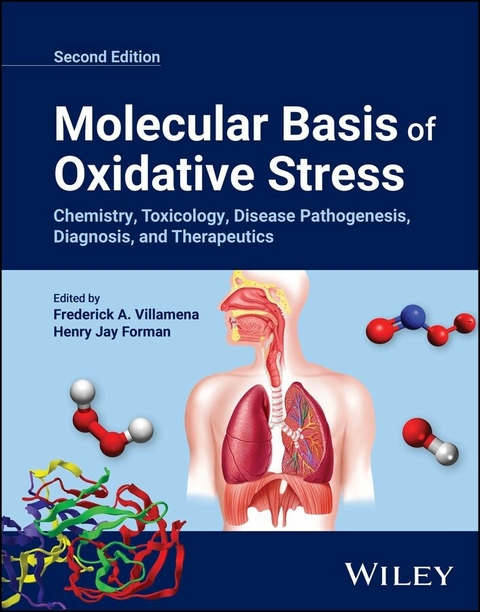
Molecular Basis of Oxidative Stress (eBook)
563 Seiten
Wiley (Verlag)
978-1-119-79027-3 (ISBN)
In-depth resource on mechanisms of oxidative stress and damage and the role of free radicals in disease, diagnosis, and therapeutics
Molecular Basis of Oxidative Stress is a comprehensive resource on the molecular and chemical bases of oxidative stress, providing insight on various diseases caused by oxidative stress (cancer, cardiovascular, neurodegenerative) and the role of reactive oxygen species (ROS) in disease pathogenesis along with in-depth knowledge about the mechanisms of oxidative stress and damage, free radical chemistry, and the role of free radicals in disease, diagnosis, and therapeutics.
Thoroughly updated and expanded to reflect advances in the years since its original publication, the Second Edition includes new chapters covering topics like oxidative stress mechanisms, biomarkers, and therapeutic strategies in the management and treatment of diseases. The disease section features 10 new emerging diseases, including kidney and eye diseases and COPD.
This Second Edition also covers developments in the field in the last several years, such as an increase in mortality rate from air pollution and obstructive pulmonary diseases in which exogenous oxidants are initiators.
Written by a team of highly qualified academics, Molecular Basis of Oxidative Stress discusses sample topics including:
- Classification, physico-chemical properties, sources, and detection of reactive species and etiology of COPD from cigarette smoke and pollution
- Oxidative, reductive and indirect non-redox modifications of key biomolecular systems such as lipids, proteins, and DNA by reactive species
- Gene expression of antioxidant defense enzymes, mitochondrial dysfunction and aberrant activation of NOX and cell signaling
- Biomarkers of oxidative stress in neurodegenerative diseases and emerging fields inbiomarker discovery such as cysteinylated albumin and nitroalkene fatty acids
Imparting strong foundational knowledge of redox chemistry, chemistry of oxidative damage and mechanisms of oxidative stress, and oxidative stress-mediated disease pathogenesis, Molecular Basis of Oxidative Stress is an essential reference for both novice and advanced toxicologists, biochemists, and pharmacologists, along with clinical and medical scientists in various fields such as oncology, cardiovascular, andneuroscience.
Frederick A. Villamena, PhD, is an Associate Professor of Biological Chemistry and Pharmacology at The Ohio State University, College of Medicine.
Henry Jay Forman, PhD, is both Distinguished Professor Emeritus of Biochemistry at the University of California, Merced and Research Professor Emeritus of Gerontology at the University of Southern California Leonard Davis School of Gerontology.
In-depth resource on mechanisms of oxidative stress and damage and the role of free radicals in disease, diagnosis, and therapeutics Molecular Basis of Oxidative Stress is a comprehensive resource on the molecular and chemical bases of oxidative stress, providing insight on various diseases caused by oxidative stress (cancer, cardiovascular, neurodegenerative) and the role of reactive oxygen species (ROS) in disease pathogenesis along with in-depth knowledge about the mechanisms of oxidative stress and damage, free radical chemistry, and the role of free radicals in disease, diagnosis, and therapeutics. Thoroughly updated and expanded to reflect advances in the years since its original publication, the Second Edition includes new chapters covering topics like oxidative stress mechanisms, biomarkers, and therapeutic strategies in the management and treatment of diseases. The disease section features 10 new emerging diseases, including kidney and eye diseases and COPD. This Second Edition also covers developments in the field in the last several years, such as an increase in mortality rate from air pollution and obstructive pulmonary diseases in which exogenous oxidants are initiators. Written by a team of highly qualified academics, Molecular Basis of Oxidative Stress discusses sample topics including: Classification, physico-chemical properties, sources, and detection of reactive species and etiology of COPD from cigarette smoke and pollution Oxidative, reductive and indirect non-redox modifications of key biomolecular systems such as lipids, proteins, and DNA by reactive species Gene expression of antioxidant defense enzymes, mitochondrial dysfunction and aberrant activation of NOX and cell signaling Biomarkers of oxidative stress in neurodegenerative diseases and emerging fields inbiomarker discovery such as cysteinylated albumin and nitroalkene fatty acids Imparting strong foundational knowledge of redox chemistry, chemistry of oxidative damage and mechanisms of oxidative stress, and oxidative stress-mediated disease pathogenesis, Molecular Basis of Oxidative Stress is an essential reference for both novice and advanced toxicologists, biochemists, and pharmacologists, along with clinical and medical scientists in various fields such as oncology, cardiovascular, andneuroscience.
| Erscheint lt. Verlag | 6.2.2025 |
|---|---|
| Sprache | englisch |
| Themenwelt | Naturwissenschaften ► Chemie |
| Schlagworte | Antioxidants • Biomarker discovery • Disease pathogenesis • exogenous oxidants • Free Radical Chemistry • free radicals disease • Oxidative Damage • Oxidative stress • oxidative stress biomarkers • prooxidants • Pulmonary Disease • Reactive oxygen species • Redox biology • redox chemistry • Redox signaling • signal transduction • Toxicology |
| ISBN-10 | 1-119-79027-1 / 1119790271 |
| ISBN-13 | 978-1-119-79027-3 / 9781119790273 |
| Informationen gemäß Produktsicherheitsverordnung (GPSR) | |
| Haben Sie eine Frage zum Produkt? |
 PDF (Adobe DRM)
Kopierschutz: Adobe-DRM
Adobe-DRM ist ein Kopierschutz, der das eBook vor Mißbrauch schützen soll. Dabei wird das eBook bereits beim Download auf Ihre persönliche Adobe-ID autorisiert. Lesen können Sie das eBook dann nur auf den Geräten, welche ebenfalls auf Ihre Adobe-ID registriert sind.
Details zum Adobe-DRM
Dateiformat: PDF (Portable Document Format)
Mit einem festen Seitenlayout eignet sich die PDF besonders für Fachbücher mit Spalten, Tabellen und Abbildungen. Eine PDF kann auf fast allen Geräten angezeigt werden, ist aber für kleine Displays (Smartphone, eReader) nur eingeschränkt geeignet.
Systemvoraussetzungen:
PC/Mac: Mit einem PC oder Mac können Sie dieses eBook lesen. Sie benötigen eine
eReader: Dieses eBook kann mit (fast) allen eBook-Readern gelesen werden. Mit dem amazon-Kindle ist es aber nicht kompatibel.
Smartphone/Tablet: Egal ob Apple oder Android, dieses eBook können Sie lesen. Sie benötigen eine
Geräteliste und zusätzliche Hinweise
Buying eBooks from abroad
For tax law reasons we can sell eBooks just within Germany and Switzerland. Regrettably we cannot fulfill eBook-orders from other countries.
aus dem Bereich