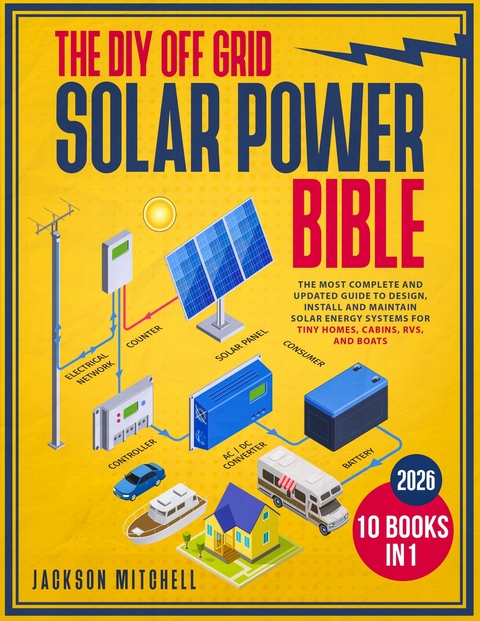
The DIY Off Grid Solar Power Bible (eBook)
198 Seiten
Jackson Mitchell (Verlag)
978-0-00-063826-7 (ISBN)
CHAPTER 1
UNDERSTANDING OFF-GRID
SOLAR POWER SYSTEMS
An off-grid solar system is a standalone PV system that operates independently from the main electrical grid. It is specifically designed to supply electricity to remote or rural areas where grid connectivity is unavailable or economically unfeasible. This system utilizes solar panels to convert sunlight into electrical power, which is then stored in batteries for use when needed, including periods of low sunlight or during nighttime.
Key components of off-grid solar systems include solar panels, an inverter, a battery bank, a charge controller, and optionally, a generator. Solar panels capture sunlight and transform it into electricity, which is then converted into AC power by the inverter for household use. Excess energy is stored in the battery bank for later use, with the charge controller regulating the energy flow to prevent battery damage. In some instances, a generator may be included to provide backup power during emergencies.
Grid-Tied vs. Off-Grid Solar Systems: Key Differences
The fundamental distinction between grid-tied and off-grid solar power systems lies in their interaction with the electricity grid. A grid-tied system is connected to the utility grid, allowing users to draw power from the grid when their solar panels do not produce enough energy and to feed excess energy back into the grid when their panels generate surplus power. This interaction enables users to balance their energy consumption and potentially receive credits for the excess energy they contribute.
On the other hand, off-grid solar power systems operate independently of the utility grid. These systems are designed to provide all the energy required for a household or establishment without relying on external sources. Off-grid setups consist of solar panels, energy storage systems (typically batteries), charge controllers, inverters, and backup generators. Solar panels capture sunlight and convert it into direct current (DC) electricity. Charge controllers regulate the flow of electricity to the batteries, preventing overcharging and prolonging their lifespan. Inverters convert DC electricity into alternating current (AC), which is used to power household appliances. Energy storage in batteries ensures a continuous power supply during cloudy days or nighttime.
Choosing a grid-tied or off-grid system depends on several factors, including geographical location, energy consumption, budget, and personal preferences. Grid-tied systems are simpler to install and often more cost-effective initially. They allow users to take advantage of net metering, reducing electricity bills by selling excess energy. However, these systems are vulnerable to grid failures, which means they won't provide power during blackouts or emergencies. In contrast, off-grid systems offer energy independence and resilience, ensuring a consistent power supply regardless of grid status. Yet, they require a larger upfront investment due to the need for energy storage solutions.
Pros and Cons of Off-Grid Living with Solar Power
Pros:
1. Energy Independence
Opting for off-grid solar grants you complete autonomy from utility companies, offering unparalleled control over your energy supply. This autonomy frees you from reliance on local utility providers and shields you from fluctuations in energy prices. Additionally, in regions prone to extreme weather events like hurricanes or tornadoes, off-grid solar ensures continued power availability.
2. Remote Power Generation
Off-grid solar systems enable the provision of electricity to remote areas where grid connectivity is unavailable or economically unfeasible. This capability facilitates self-sufficiency and allows for powering vacation homes or cabins situated in isolated locations far from urban centers.
3. Environmentally Conscious Solution
Selecting off-grid solar represents the most environmentally conscious approach to energy sourcing. By generating power locally, off-grid systems mitigate reliance on utility-scale infrastructure, thereby reducing environmental impact. Moreover, off-grid solar fosters heightened awareness of energy consumption, promoting energy efficiency due to the inherent limitation of available energy.
4. Enhanced Reliability
Maintaining uninterrupted power supply, even during local utility outages, instills a sense of security and peace of mind. Off-grid solar ensures continuous electricity provision, safeguarding against inconveniences caused by planned or unexpected blackouts. This reliability is particularly advantageous for individuals reliant on consistent electricity for medical devices or refrigeration needs.
Cons:
1. Higher Initial Costs: The upfront expenses of purchasing solar panels, batteries, inverters, and other components, along with installation and maintenance costs, can deter individuals from adopting off-grid systems, especially in comparison to grid-tied alternatives.
2. Complexity of Maintenance: Off-grid systems require regular monitoring and maintenance. Batteries need consistent attention to ensure optimal performance and longevity. In remote locations, accessing professional maintenance services can be challenging.
3. Limited Energy Storage: While advancements in battery technology have improved energy storage capabilities, off-grid systems still rely on the stored energy in batteries. Extended cloudy periods can potentially deplete stored energy, necessitating backup generators or reduced energy consumption.
4. Sizing Challenges: Properly sizing an off-grid system requires meticulous consideration of energy consumption patterns, weather conditions, and storage capacity. Undersized systems may lead to energy shortages, while oversized systems result in unnecessary expenses.
Real-Life Off-Grid Solar Power Success Stories
The transition to off-grid solar power systems has engendered remarkable success stories that exemplify the potential and benefits of this alternative energy solution. These anecdotes showcase how off-grid living with solar power can transform lives and communities:
Solar Power Empowers Himalayan Villages
https://miro.medium.com/v2/resize:fit:1400/1*z2-BhGyL31-UrTlDOnH5Dg.jpeg
In the remote Himalayan region of Ladakh, India, a network of villages was historically isolated due to challenging terrain and lack of access to modern amenities, including electricity. With the implementation of off-grid solar power systems, these villages now enjoy consistent and clean energy. Solar panels installed on rooftops harness the abundant sunlight, providing lighting, powering appliances, and even facilitating the establishment of small businesses. The project has improved the quality of life and opened avenues for economic growth.
Island Sustainability in American Samoa
On the island of Ta'u in American Samoa, Tesla implemented a groundbreaking off-grid solar and battery solution. Situated on seven acres on the island's northern coast, the system comprises 5,328 solar panels that produce 1.410 megawatts of electricity. Prior to this, the island heavily relied on diesel generators for electricity, which were both environmentally detrimental and expensive. Tesla's installation of solar panels and a battery storage system now fulfills nearly 100% of the island's energy needs. This transformation has significantly reduced the island's carbon emissions and demonstrated the feasibility of large-scale off-grid systems.
Educational Advancement in Rwanda
In Rwanda, the lack of reliable electricity hindered educational progress in rural areas. Off-grid solar power systems, equipped with battery storage, have enabled schools to establish computer labs, provide internet access, and facilitate distance learning. This shift has expanded educational opportunities, bridging the gap between urban and rural students and fostering a brighter future for the nation.
Off-Grid Resilience in Australia
Australia's vast and sparsely populated regions often face challenges in accessing electricity from centralized grids. In response, many Australians have embraced off-grid solar power systems. These systems have provided energy independence and played a crucial role in disaster resilience. During natural disasters that disrupt the main grid, off-grid systems continue to provide power, aiding in communication, medical assistance, and basic necessities.
Off-grid solar power systems represent a dynamic and transformative approach to energy consumption. The differences between grid-tied and off-grid systems underscore the importance of energy autonomy and resilience. While off-grid living with solar power presents both advantages and challenges, real-life success stories illuminate the positive impact this solution can have on individuals, communities, and the environment. As technology continues to advance and costs decrease, the...
| Erscheint lt. Verlag | 17.9.2024 |
|---|---|
| Sprache | englisch |
| Themenwelt | Naturwissenschaften ► Physik / Astronomie |
| ISBN-10 | 0-00-063826-9 / 0000638269 |
| ISBN-13 | 978-0-00-063826-7 / 9780000638267 |
| Informationen gemäß Produktsicherheitsverordnung (GPSR) | |
| Haben Sie eine Frage zum Produkt? |
 EPUB (Adobe DRM)
Größe: 11,1 MB
Kopierschutz: Adobe-DRM
Adobe-DRM ist ein Kopierschutz, der das eBook vor Mißbrauch schützen soll. Dabei wird das eBook bereits beim Download auf Ihre persönliche Adobe-ID autorisiert. Lesen können Sie das eBook dann nur auf den Geräten, welche ebenfalls auf Ihre Adobe-ID registriert sind.
Details zum Adobe-DRM
Dateiformat: EPUB (Electronic Publication)
EPUB ist ein offener Standard für eBooks und eignet sich besonders zur Darstellung von Belletristik und Sachbüchern. Der Fließtext wird dynamisch an die Display- und Schriftgröße angepasst. Auch für mobile Lesegeräte ist EPUB daher gut geeignet.
Systemvoraussetzungen:
PC/Mac: Mit einem PC oder Mac können Sie dieses eBook lesen. Sie benötigen eine
eReader: Dieses eBook kann mit (fast) allen eBook-Readern gelesen werden. Mit dem amazon-Kindle ist es aber nicht kompatibel.
Smartphone/Tablet: Egal ob Apple oder Android, dieses eBook können Sie lesen. Sie benötigen eine
Geräteliste und zusätzliche Hinweise
Buying eBooks from abroad
For tax law reasons we can sell eBooks just within Germany and Switzerland. Regrettably we cannot fulfill eBook-orders from other countries.
aus dem Bereich