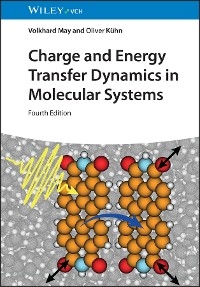
Charge and Energy Transfer Dynamics in Molecular Systems (eBook)
Wiley-VCH GmbH (Verlag)
978-3-527-69628-4 (ISBN)
Charge and Energy Transfer Dynamics in Molecular Systems
Comprehensive resource offering knowledge on charge and energy transfer dynamics in molecular systems and nanostructures
Charge and Energy Transfer Dynamics in Molecular Systems provides a unified description of different charge and energy transfer phenomena in molecular systems with emphasis on the theory, bridging the regimes of coherent and dissipative dynamics and thus presenting classic rate theories as well as modern treatments of ultrafast phenomena. Starting from microscopic models, the common features of the different transfer processes are highlighted, along with applications ranging from vibrational energy flow in large polyatomic molecules, the motion of protons in solution, up to the concerted dynamics of electronic and nuclear degrees of freedom in molecules and molecular aggregates.
The newly revised and updated Fourth Edition contains a more detailed coverage of recent developments in density matrix theory, mixed quantum-classical methods for dynamics simulations, and a substantially expanded treatment of time-resolved spectroscopy.
The book is written in an easy-to-follow style, including detailed mathematical derivations, thus making even complex concepts understandable and applicable.
Charge and Energy Transfer Dynamics in Molecular Systems includes information on:
- Electronic and vibrational molecular states, covering molecular Schrödinger equation, Born-Oppenheimer separation and approximation, Hartree-Fock equations and other electronic structure methods
- Dynamics of isolated and open quantum systems, covering multidimensional wave packet dynamics, and different variants of density operator equations
- Interaction of molecular systems with radiation fields, covering linear and nonlinear optical response using the correlation function approach
- Intramolecular electronic transitions, covering optical transition and internal conversion processes
- Transfer processes of electrons, protons, and electronic excitation energy
Providing in-depth coverage of the subject, Charge and Energy Transfer Dynamics in Molecular Systems is an essential resource for anyone working on timely problems of energy and charge transfer in physics, chemistry and biophysics as well as for all engaged in nanoscience and organic electronics.
Volkhard May studied physics at Humboldt University, Berlin, and received his Ph.D. in Theoretical Physics in 1981, and his Habilitation at the College of Education, Güstrow, in 1987. His research activities focused on the theory of transfer phenomena in molecular nanostructures. He is retired since 2019.
Oliver Kühn received his PhD from Humboldt University, Berlin. Since 2008 he is a Professor of Theoretical Physics at the University of Rostock. His current research focusses on dynamics of condensed phase systems such as molecular aggregates and novel materials.
Volkhard May studied physics at Humboldt University, Berlin, and received his Ph.D. in Theoretical Physics in 1981, and his Habilitation at the College of Education, Güstrow, in 1987. He worked in the Department of Biophysics at the Institute of Molecular Biology in Berlin from 1987 to 1991, and has been a senior researcher at the Instiute of Physics, Humboldt University, since 1992. His current research activities focus on the theory of transfer phenomena in molecular nanostructures. Oliver Kühn studied physics at Humboldt University, Berlin. After receiving his Ph.D. degree in Theoretical Physics in 1995, he worked as a postdoc first at the University of Rochester, USA, then at Lund University, Sweden. From 1997 to 2007, Prof. Kühn has been a senior researcher at the Institute of Chemistry, Free University Berlin, where he earned his habilitation in 2000. Since 2008 he is a Professor of Theoretical Physics at the University of Rostock. His current research interests lie in ultrafast spectroscopy and dynamics of condensed phase systems such as biomolecular hydrogen bonds and excitons in molecular aggregates.
I NTRODUCTION
ELECTRONIC AND VIBRATIONAL MOLECULAR STATES
Introduction
Molecular Schrödinger Equation
Born-Oppenheimer Separations
Electronic Structure Methods
Potential Energy Surfaces
Adiabatic versus Diabatic Representation of the Molecular Hamiltonian
Condensed Phase Approaches
Supplement
DYNAMICS OF ISOLATED AND OPEN QUANTUM SYSTEM
Introduction
Time-Dependent Schrödinger Equation
The Golden Rule of Quantum Mechanics
The Nonequilibrium Statistical Operator and the Density Matrix
The Reduced Density Operator and the Reduced Density Matrix
Quantum Mater Equation
The Reservoir Correlation Function
Reduced Density Matrix in Energy Representation
Coordinate and Wigner Representation of the Reduced Density Matrix
The Path Integral Representation of the Density Matrix
Hierarchy Equations of Motion Approach
Coherent to Dissipative Dynamics of a Two-Level System
Trajectory-Based Methods
Generalized Rate Equations: The Liouville Space Approach
Supplement
INTERACTION OF MOLECULAR SYSTEMS WITH RADIATION FIELDS
Introduction
Absorption of Light
Nonlinear Optical Response
Field Organization and Spontaneous Emission of Light
VIBRATIONAL DYNAMICS: ENERGY REDISTRIBUTION, RELAXATION, AND DEPHASING
Introduction
Intramolecular Vibrational Energy Redistribution
Intermolecular Vibrational Energy Relaxation
Polyatomic Molecules in Solution
Quantum-Classical Approaches to Relaxation and Dephasing
INTRAMOLECULAR ELECTRONIC TRANSITIONS
Introduction
The Optical Absorption Coefficient
Absorption Coefficient and Dipole-Dipole Correlation Function
The Emission Spectrum
Optical Preparation of an Excited Electronic State
Internal Conversion Dynamics
Supplement
ELECTRON TRANSFER
Classification of Electron Transfer Reactions
Theoretical Models for Electron Transfer Systems
Regimes of Electron Transfer
Nonadiabatic Electron Transfer in a Donor-Acceptor Complex
Bridge-Mediated Electron Transfer
Nonequilibrium Quantum Statistical Description of Electron Transfer
Heterogeneous Electron Transfer
Charge Transmission through Single Molecules
Photoinduced Ultrafast Electron Transfer
Supplement
PROTON TRANSFER
Introduction
Proton Transfer Hamiltonian
Adiabatic Proton Transfer
Nonadiabatic Proton Transfer
The Intermediate Regime: From Quantum to Quantum-Classical Hybrid Methods
Proton-Coupled Electron Transfer
EXCITATION ENERGY TRANSFER
Introduction
The Aggregate Hamiltonian
Exciton-Vibrational Interaction
Regimes of Excitation Energy Transfer
Transfer Dynamics in the Case of Weak Excitonic Coupling: Förster Theory
Transfer Dynamics in the Case of Strong Excitonic Coupling
Optical Properties of Aggregates
Excitation Energy Transfer Including Charge Transfer States
Exciton-Exciton Annihilation
Supplement
INDEX
1
Introduction
The understanding of transfer phenomena in molecular systems calls for a unified theoretical treatment that should have its foundation in a microscopic definition of the constituent parts and their interactions. There are three important questions that need to be answered in this regard. First, what is the appropriate theoretical description of the molecular system? Second, what is the form of the dynamical equations that describe the transfer process? And third, how can the computed results be related to experimental observations?
In what follows the term “molecular system” will cover single molecules and simple molecular aggregates as well as larger arrangements of molecules such as supramolecular complexes. In particular, molecules embedded in different types of environments will be of interest. Here, the scope ranges from molecules in solution to biological macromolecules such as membrane‐bound protein complexes. The common link between these molecular systems is that they show transfer processes. By “transfer process,” we understand the flow of vibrational energy and the dynamics of electrons, protons, and electronic excitation energy.
From a general point of view, quantum mechanics gives the framework for all phenomena occurring in molecular systems. Given the broad scope of transfer processes to be discussed, it is clear that an exact quantum mechanical treatment is impossible if we go beyond the level of simple model systems. Therefore, it is a particular challenge for theory to develop versatile models that provide answers to the initially raised three questions.
Chapter 2 addresses the first question discussing the steps that lead us from the formally exact to some approximate molecular Hamilton operator. Given a molecule in gas phase (vacuum) as shown in Figure 1.1a, the Born–Oppenheimer separation of nuclear and electronic motions can be performed. Here, the molecular wave function is split up into an electronic and a nuclear part, a procedure that is justified by the large mass difference between both types of particles. This results in a Schrödinger equation for the electronic wave function alone, for given fixed positions of the nuclei. Calculating the electronic energy spectrum for different positions of the nuclei, one obtains potential energy surfaces that govern the motion of the nuclei. These potential energy surfaces are at the heart of our understanding of stationary molecular spectra and molecular dynamics. If nuclear and electronic motion are adiabatically separable, that is if the coupling between different electronic states is negligible, one can carry out the Born–Oppenheimer approximation. Under certain conditions, however, the so‐called nonadiabatic transitions between different electronic states as a consequence of the nuclear motions take place.
Figure 1.1 The problem of the interaction between electrons and nuclei is transformed to some tractable level by employing the Born–Oppenheimer separation of their motions. (a) Three‐atomic molecule ( O) with the electron density shown for the equilibrium distance (left) as well as for a stretched bond (right). The electron density adjusts instantaneously to the configuration of the nuclei. As a result, a potential energy curve is formed determining the dynamics of the bond distance coordinate. (b) If the molecule is taken from the gas into the condensed phase, its stationary and dynamic properties have to take into account the interaction with the surrounding molecules. This may give rise, for instance, to a change in equilibrium geometry and electron density (figure courtesy of Ashour Ahmed).
If we move from the gas to the condensed phase as shown in Figure 1.1b, the effect of the molecule–environment interaction has to be taken into account. The simplest way to do this is to add an additional external potential to the molecular Hamiltonian. Often, the environment can be described as a macroscopic dielectric, and its influence can be judged from its dielectric properties.
Having discussed the stationary molecular properties, we turn in Chapter 3 to the second question related to molecular dynamics. Here, the reader will become familiar with the concepts ranging from incoherent to coherent transfer events. The connection between these limits is provided by the relevant time scales; of particular importance is the relation between intramolecular relaxation and intermolecular transfer times. In view of experimental advances in ultrafast spectroscopy, our treatment reflects the historical evolution of knowledge about molecular dynamics from simple transfer rates to quantum mechanical wave packet dynamics.
An important ingredient for the theoretical modeling is the concept of an open molecular system interacting with its environment (reservoir) by collision processes or via other means of energy exchange. A schematic illustration of this situation is given in Figure 1.2. The relevant system may represent any type of molecule, but it may also comprise selected so‐called active degrees of freedom of a particular molecule.
Figure 1.2 The total system consisting of a relevant system ( ) interacting with a reservoir ( ) is completely described by the quantum‐statistical operator . By means of a reduction procedure, one can focus on the relevant system using the reduced statistical operator . Effects of the – interaction are still accounted for. In addition, the system may be influenced by external fields (wiggly line).
The most general description of the total system, plus , is given by the quantum‐statistical operator , as indicated in the left‐hand part of Figure 1.2. This operator is based on the concept of a mixed quantum state formed by and its macroscopic environment. However, the operator contains much more information than will ever be needed, for instance, to simulate a particular experiment. Indeed, it is the relevant system whose properties we are interested in. Making use of a reduction procedure, we obtain a reduced statistical operator that contains the information on the dynamics of only but including the influence of the environment (right‐hand part of Figure 1.2). When deriving equations of motion for the reduced statistical operator, the so‐called quantum master equations, a number of approximations have to be invoked. Most fundamental in this respect will be the assumption of a weak interaction between the system and the reservoir , which in practice requires a proper separation into relevant and environmental coordinates for the molecular system at hand. Under certain conditions, however, a numerical exact description of the dynamics of the relevant system becomes possible. If there is no interaction at all, the quantum master equation is equivalent to the time‐dependent Schrödinger equation. This is the regime of coherent dynamics. If the interaction is not negligible, however, the system dynamics gradually changes with increasing coupling strength from a partially coherent one to an incoherent one. The incoherent motion of a quantum system is commonly described using ordinary rate equations that are based on the Golden Rule rate expression of quantum mechanics.
The concept of the statistical operator provides a quantum‐statistical description of and . However, in many situations it is sufficient to describe by means of classical mechanics. Then, can be characterized by a wave function , and the dynamics of the environmental degrees of freedom is governed by Newton's equations. Often, the dynamics is split up in such a way that the classical particles move in the mean field of the quantum particle. This situation is visualized in Figure 1.3.
The overwhelming amount of data on transfer processes in molecular systems is obtained by spectroscopic techniques working in the infrared, the visible to ultraviolet, and, more recently, also in the X‐ray region. We will discuss the third question related to experimental observation mostly in the context of spectroscopy, with focus on the infrared to ultraviolet domain. As a means of preparation, Chapter 4 gives a brief account on the general theoretical concepts of the interaction of molecular systems with the electromagnetic radiation field. Further, a formulation of linear and nonlinear spectroscopy in terms of correlation functions will be introduced.
Figure 1.3 Mixed quantum–classical description of condensed phase dynamics. The classical particles move in the mean field generated by the quantum particle described by the wave function .
The general concepts presented in Chapters 2–4 are then applied to describe different transfer phenomena. In principle, transfer processes can be classified according to the type of transferred particle. In addition, one can distinguish between intra‐ and intermolecular particle transfer. The common frame is provided by the molecular Schrödinger equation together with the Born–Oppenheimer separation of electronic and nuclear motions as mentioned above.
The coupled nuclear dynamics in polyatomic molecules that might be immersed in some condensed phase environment is treated in Chapter 5. We show how an initially prepared vibrational state decays while its excitation energy is distributed over all possible...
| Erscheint lt. Verlag | 6.6.2023 |
|---|---|
| Sprache | englisch |
| Themenwelt | Naturwissenschaften ► Physik / Astronomie ► Atom- / Kern- / Molekularphysik |
| Schlagworte | atomic and molecular physics • Atom- u. Molekülphysik • Born–Oppenheimer separation • Chemie • Chemistry • Electronic molecular state • electronic structure methods • Energietransfer (Mikrophysik) • energy transfer textbook • Hartree–Fock equations • interaction representation • Ladungstransfer • Materials Science • Materialwissenschaften • molecular Schrödinger equation • Molekülphysik • open wave packets • Organic electronics • Organische Elektronik • Physical Chemistry • Physics • Physik • Physikalische Chemie • vibrational molecular states |
| ISBN-10 | 3-527-69628-8 / 3527696288 |
| ISBN-13 | 978-3-527-69628-4 / 9783527696284 |
| Informationen gemäß Produktsicherheitsverordnung (GPSR) | |
| Haben Sie eine Frage zum Produkt? |
 EPUB (Adobe DRM)
Kopierschutz: Adobe-DRM
Adobe-DRM ist ein Kopierschutz, der das eBook vor Mißbrauch schützen soll. Dabei wird das eBook bereits beim Download auf Ihre persönliche Adobe-ID autorisiert. Lesen können Sie das eBook dann nur auf den Geräten, welche ebenfalls auf Ihre Adobe-ID registriert sind.
Details zum Adobe-DRM
Dateiformat: EPUB (Electronic Publication)
EPUB ist ein offener Standard für eBooks und eignet sich besonders zur Darstellung von Belletristik und Sachbüchern. Der Fließtext wird dynamisch an die Display- und Schriftgröße angepasst. Auch für mobile Lesegeräte ist EPUB daher gut geeignet.
Systemvoraussetzungen:
PC/Mac: Mit einem PC oder Mac können Sie dieses eBook lesen. Sie benötigen eine
eReader: Dieses eBook kann mit (fast) allen eBook-Readern gelesen werden. Mit dem amazon-Kindle ist es aber nicht kompatibel.
Smartphone/Tablet: Egal ob Apple oder Android, dieses eBook können Sie lesen. Sie benötigen eine
Geräteliste und zusätzliche Hinweise
Buying eBooks from abroad
For tax law reasons we can sell eBooks just within Germany and Switzerland. Regrettably we cannot fulfill eBook-orders from other countries.
aus dem Bereich