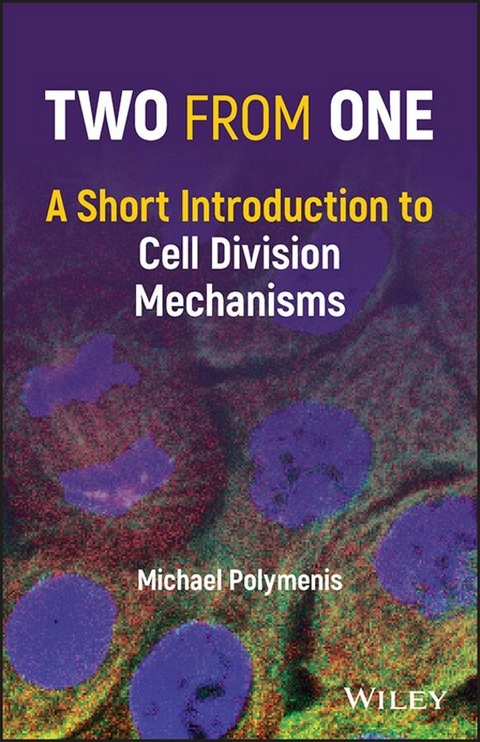
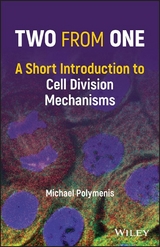
Condensed and easy step-in resource to the vast universe of cell cycle control and cell division
Two from One: A Short Introduction to Cell Division Mechanisms is an easy and solid step-in for students and all individuals starting to learn about cell and molecular biology, as well as professionals looking for an avenue into the subject, emphasizing general concepts and universal aspects of eukaryotic cell division without getting lost in the vast amount of detail across the overall field. The text enables readers to learn about general concepts and discoveries from various systems and approaches to elucidate the process of cell division, with descriptions of scientific processes included throughout in order to aid in reader comprehension.
The content and material have been taught, revised, and simplified based on student feedback, to be as accessible as possible to a broader audience. It can be read in a few hours by anyone with an interest in the topic and an undergraduate background.
In Two from One, readers can expect to find coverage on a myriad of essential topics, such as:
- Cell theory, mitosis, chromosome theory of heredity, DNA, and why/how cell cycles come in many flavors
- Cell growth and division, covering balanced growth and cell proliferation, measures of cell growth, and the relationship between cell growth and division
- Assaying cell cycle progression, covering measuring cell cycle phases, single-cell imaging, labeled mitoses, and frequency distributions
- Duplicating the genome, covering DNA replication, origin firing, chromatin, checkpoints, and the DNA damage checkpoint
Undergraduates, graduate students, and early career professionals in cell biology, biomedicine, and biology, along with post docs changing subject area or needing further information on cell division, will find Two from One to be an immensely useful, accessible, and reader-friendly resource in a traditionally highly complex field.
Michael Polymenis is a Professor of Biochemistry and Biophysics at Texas A&M University. His research focuses on the coordination of cell growth with cell division, with funding from the National Institutes of Health and the National Science Foundation. He has published numerous articles on the subject and regularly serves on various federal research proposal review panels. His editorial service includes ad hoc reviews of primary research articles on mechanisms of cell division.
Michael Polymenis is a Professor of Biochemistry and Biophysics at Texas A&M University. His research focuses on the coordination of cell growth with cell division, with funding from the National Institutes of Health and the National Science Foundation. He has published numerous articles on the subject and regularly serves on various federal research proposal review panels. His editorial service includes ad hoc reviews of primary research articles on mechanisms of cell division.
1
History and Context
1.1 From Cells to Their Nuclei
Until the last decades of the previous century, the history of the cell cycle is nearly the same as the history of the chromosome theory of heredity. And before chromosomes, we have to go back to when cells were first seen and then recognized as the unit of life. By the early seventeenth century, advances in lens grinding in the Netherlands allowed several individuals in Europe to experiment with and construct microscopes. Robert Hooke first used the word “cell” to describe what he saw when looking with his microscope at plant tissue. School children today have seen Hooke's famous drawings of cork sections. The drawings resemble a honeycomb, and they first appeared in Hooke's Micrographia in 1665. Hooke did not recognize that what he saw were the skeletal remains of all life's basic units. That realization did not happen until much later. In the decades after Hooke, numerous microscopists made a series of observations of cells. In 1719, looking at red cells from fish (which do not lose their nuclei as ours do), Antonie van Leeuwenhoek probably made the first drawings of the nucleus (1). The term “nucleus” was introduced in 1831 by Robert Brown (also of “Brownian” motion fame) when he used it to describe cells from orchids (1).
The discovery of the nucleus was highly significant. Not only because the nucleus contains the chromosomes (which had not been discovered at the time), but also because it is a visible cellular landmark. A marker that scientists can look for and monitor. Cellular landmarks, morphological or molecular, have driven and continue to drive cell cycle research. But just because a landmark is there does not necessarily mean that it may also make certain things happen. An example is the nucleolus and its role in the generation of new cells. Rudolf Wagner clearly described the nucleolus within the nucleus in 1835, which he assumed to be the “germinative spot” for cell formation. The nucleolus has important roles, but not in “seeding” new cells.
1.1.1 The Cell Theory
Theodor Schwann and Matthias Schleiden are usually credited with the formulation of key tenets of the cell theory. That the cell is the fundamental unit of life, and that all plants and animals are made of cells, each cell having a nucleus and a nucleolus (2). But it was not clear to them how new cells were made. They favored the idea that intracellular or extracellular matter crystallizes somehow into new cells (1, 2). Schleiden thought that new nuclei form without any relationship to preexisting ones. In essence, the views of Schwann and Schleiden on how new cells are made fell squarely into the realm of the spontaneous generation of life from nonliving matter, which was a popular theory at the time. Until Louis Pasteur put an end to spontaneous generation with his unambiguous col de cygnet (swan neck flask) experiment in 1859.
Explicit descriptions of cell division and the concept of new cells arising from preexisting ones came from Robert Remak (1, 2). Remak reached these conclusions from observations in multiple contexts, from red blood cells of chicken embryos to frog eggs immediately after fertilization (1). The splitting of eggs after fertilization had been observed by others before. But Remak's histological manipulations allowed him to visualize the membrane of the egg, and follow the origin of the embryonic cells from the fertilized egg. The continuity of all the cells in the embryo from one fertilized ancestor was now a settled issue. This placed cell division and the cell cycle as the basis of how multicellular organisms develop. Remak's data fit nicely with Pasteur's that there is no spontaneous generation of life. The notion that new cells arise only from cell division was opposed by many, including Rudolf Virchow. But Virchow changed his tune later. Virchow's famous aphorism omnis cellula e cellula (all cells arise only from preexisting cells) encapsulated succinctly and popularized a key part of the cell theory, a pillar of modern biology. Together with the other pillar of modern biology, Darwin's theory of evolution, we arrive at a stunning and profound conclusion: Starting with a single cell, all life that ever was, is, and will be on this planet results from cell division. Spend a moment to reflect on this. If you had any doubt that the topics we will discuss in this book are important, now is the time to put those doubts to rest.
1.1.2 Mitosis
By the mid‐nineteenth century, the cell theory was established, and microscopy was getting better. Several individuals (including Remak) had documented distinct stages of nuclear division, including nuclear elongation in some cases, and nuclear dissolution in others. Wilhelm Hofmeister noticed that the nuclei of plant cells dissolved, but some nuclear material remained, in what he thought were coagulates, which then segregated into the nuclei of daughter cells. Although Hofmeister could not realize the biological role of what he was seeing, his descriptions were remarkably close to the stages of mitosis we recognize today (1). Scientists kept looking and looking under the microscope. They also processed and stained the cells with various techniques and dyes ‐all searching for crisp landmarks. Walther Flemming experimented with basic dyes and fixatives. To this day, pathologists use similar methods to look at cells in tissues. Flemming found that a nuclear substance, which was presumably acidic and negatively charged, stained very strongly with basic, positively charged dyes. He used the term chromatin (from the Greek “colored”) to describe that substance. Flemming used salamander cells, because they were big and had big nuclei. As always, choosing the right experimental system for a research objective can reap enormous rewards.
Imagine you have a simple microscope, and you have figured out how to stain cells, with some nuclear substance being intensely stained. Assuming that it takes several hours to days for typical proliferating animal cells to divide, what would you expect to see? For the most part, not much. Each cell would be very similar to others and to itself, from its birth until it divides. Shortly before division, Flemming noticed that the colored nuclear substance was organized into threadlike structures (the Greek word for a thread is μίτος/mitos), which were then distributed into the daughter cells, in a process he called mitosis (Figure 1.1).
The nuclear threads/filaments were named chromosomes a few years later by Waldeyer. Unlike others that had also seen thread‐like structures forming and segregating, Flemming was the first to discover their splitting during mitosis lengthways (1). Flemming imaged and documented the complete series of events during mitosis, a fundamental cellular process, in all its glory: first, chromosomes appear, becoming denser and more compact over time, while at the same time the nuclear membrane disappears in most animal and plant cells (prophase); second, the compact chromosomes reach an equilibrium position at an “equator” position (metaphase); third, the chromosomes split lengthways and move toward the opposite poles of the cell (anaphase); fourth, the chromosomes arrive to the poles and the daughter nuclei appear, with reconstituted nuclear membrane around them (telophase).
Figure 1.1 Illustration of mitotic cells.
Source: (3) Walther Flemming (1882), F.C.W. Vogel.
Figure 1.2 The duration of the interphase is much longer than the mitotic stages in the cell cycle. In most cells, interphase is devoid of any morphological landmarks.
Now we can divide the cell cycle into two phases. The relatively short phase of mitosis (“M” phase) starts when threads appear in the nucleus and ends when two nuclei appear (Figure 1.2). Mitosis is typically followed very quickly with cytokinesis when the cell's cytoplasm segregates to two daughter cells, each with a nucleus. The rest of the cell cycle, which in most cells lasts a lot longer than the M phase, is called the interphase (Figure 1.2). During interphase nothing much appears to be happening. The dramatic visual landmarks of mitosis are hard to miss and continue to guide research about when and how the nucleus divides. But it would be many decades later, in the middle of the twentieth century, when interphase landmarks were discovered. Until then, scientists followed what they had, the mysterious chromosomes.
1.1.3 The Chromosome Theory of Heredity
When the chromosomes were first seen, their role was unknown. That the chromosomes carry the genetic information would not be clearly formulated until 1903 from Walter Sutton, and at about the same time from Theodor Boveri. The chromosome theory of heredity would be proven beyond doubt in the first decades of the twentieth century. Mendel's laws, which by 1900 were rediscovered, were abstract and could apply to any substance that carried the genetic information. As we will discuss later, the chromosomes do behave according to Mendel's laws. But what was the evidence that led to the idea that chromosomes carry the genetic information?
It was becoming more apparent that the nucleus, and not the cytoplasm, carried the genetic information. The unambiguous pieces of...
| Erscheint lt. Verlag | 7.12.2022 |
|---|---|
| Sprache | englisch |
| Themenwelt | Naturwissenschaften ► Biologie ► Mikrobiologie / Immunologie |
| Schlagworte | Biochemie • Biochemie u. Chemische Biologie • Biochemistry (Chemical Biology) • Biowissenschaften • cell cycle • Cell Cycle Control • cell division • cell growth • Chemie • Chemistry • chromosome • chromosome segregation • DNA • eukaryotic cell division • Life Sciences • master regulators of cell cycle • medical biochemistry • Medical Cell Biology • Medical Science • Medizin • Medizinische Biochemie • Medizinische Zellbiologie • mitosis • Textbook • Zellbiologie • Zellteilung |
| ISBN-13 | 9781119930167 / 9781119930167 |
| Informationen gemäß Produktsicherheitsverordnung (GPSR) | |
| Haben Sie eine Frage zum Produkt? |
 EPUB (Adobe DRM)
Kopierschutz: Adobe-DRM
Adobe-DRM ist ein Kopierschutz, der das eBook vor Mißbrauch schützen soll. Dabei wird das eBook bereits beim Download auf Ihre persönliche Adobe-ID autorisiert. Lesen können Sie das eBook dann nur auf den Geräten, welche ebenfalls auf Ihre Adobe-ID registriert sind.
Details zum Adobe-DRM
Dateiformat: EPUB (Electronic Publication)
EPUB ist ein offener Standard für eBooks und eignet sich besonders zur Darstellung von Belletristik und Sachbüchern. Der Fließtext wird dynamisch an die Display- und Schriftgröße angepasst. Auch für mobile Lesegeräte ist EPUB daher gut geeignet.
Systemvoraussetzungen:
PC/Mac: Mit einem PC oder Mac können Sie dieses eBook lesen. Sie benötigen eine
eReader: Dieses eBook kann mit (fast) allen eBook-Readern gelesen werden. Mit dem amazon-Kindle ist es aber nicht kompatibel.
Smartphone/Tablet: Egal ob Apple oder Android, dieses eBook können Sie lesen. Sie benötigen eine
Geräteliste und zusätzliche Hinweise
Buying eBooks from abroad
For tax law reasons we can sell eBooks just within Germany and Switzerland. Regrettably we cannot fulfill eBook-orders from other countries.
aus dem Bereich