Blood Science (eBook)
John Wiley & Sons (Verlag)
978-1-119-86419-6 (ISBN)
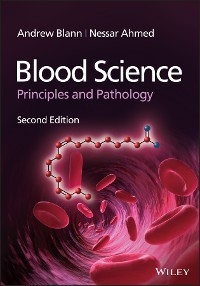
The second edition of the leading introduction to blood science, with updated new illustrations and case studies
Blood Science: Principles and Pathology integrates hematology and blood transfusion, clinical biochemistry, and immunology to provide a thorough introduction to this rapidly expanding discipline. Reflecting recent changes in education and training for healthcare scientists, this comprehensive textbook covers the analytical techniques used in blood science, the diagnosis and management of various blood disorders, and more.
Fully revised, the second edition presents new case studies and high-quality images throughout, illustrating the practical skills and knowledge required by today's undergraduate students and practitioners. Detailed yet accessible chapters contain learning objectives and summaries, links to further readings and resources, and real-world case studies with easy-to-follow interpretations. Throughout the text, the authors highlight how laboratory data and clinical details are used to investigate patients with actual or suspected diseases in real-world scenarios:
- Multi-disciplinary view merging biochemical, hematological, immunological, and genetical knowledge into a single discipline: Blood science
- Discusses advances in molecular genetics identifying mutations resulting in the occurrence of certain pathological conditions such as leukaemia
- Presents an expanded concluding chapter with detailed case reports that integrate biochemistry, immunology, and haematology, which all contribute to the investigation of respective conditions
- Explains the potentials for developing tests such as non-coding RNAs
- Offers further reading suggestions to dive even deeper into discussed subjects and concepts
Designed to meet the needs of undergraduate students taking blood science modules in biomedical, biological, and healthcare science programs, Blood Science: Principles and Pathology, Second Edition is also an invaluable guide for new graduates entering the field, as well as those training for professional qualifications or working with blood samples in laboratory-based environments.
Dr Andrew Blann, Consultant Clinical Scientist, The Institute of Biomedical Science, London, UK.
Dr Nessar Ahmed, Reader in Clinical Biochemistry, Department of Life Sciences, Manchester Metropolitan University, UK.
Dr Andrew Blann, Consultant Clinical Scientist, The Institute of Biomedical Science, -London, UK. Dr Nessar Ahmed, Reader in Clinical Biochemistry, Department of Life Sciences, -Manchester Metropolitan University, UK.
Preface
Acknowledgements
List of Abbreviations
About the Companion Website
1. Introduction to Blood Science
2. Analytical Techniques in Blood Science
3. The Physiology of the Red Blood Cell
4. The Pathology of the Red Blood Cell
5. White Blood Cells in Health and Disease
6. White Blood Cell Malignancy
7. The Physiology and Pathology of Haemostasis
8. The Diagnosis and Management of Disorders of Haemostasis
9. Immunopathology
10. Immunogenetics and Histocompatibility
11. Blood Transfusion
12. Waste products, electrolytes, and renal disease
13. Hydrogen ions, pH, and acid-base disorders
14. Glucose, lipids, and atherosclerosis
15. Calcium, phosphate, magnesium, and bone disease
16. Nutrients and Gastrointestinal Disorders
17. Liver function tests and plasma proteins
18. Endocrinology
19. Cancer and tumour markers
20. Inherited Metabolic Disorders
21. Drugs and Poisons
22. Case Reports in Blood Science
Further Reading
Appendix 1: Reference Ranges
Glossary
Index
CHAPTER 1
Introduction to Blood Science
LEARNING OBJECTIVES
After studying this chapter, you should be able to:
- Explain key aspects of blood science.
- Understand the role of blood science in modern pathology.
- Describe the role of blood science in the wider provision of healthcare.
- Outline the overlap between different areas of blood science.
In this chapter, we will introduce you to blood science – not only the study of blood but also how the subject relates with other disciplines in pathology. You will also get a feel for blood science in the wider aspect of healthcare.
1.1 What is Blood Science?
Put simply – the study of blood. However, as with many questions, a short answer is often inadequate, and this is no exception. Blood itself is a dynamic and crucial fluid providing transport and many regulatory functions and that interfaces with all organs and tissues. As such it has a very important role in ensuring adequate whole‐body physiology and homeostasis. It follows that adverse changes to the blood will have numerous consequences, many of which are serious and life‐threatening.
Blood itself is water that carries certain cells, and in which are dissolved many ions and molecules. These cells are required for the transport of oxygen, in defence against microbial attack, and in regulating the balance between clotting (thrombosis) and bleeding (haemorrhage). The blood is also an important distributor of body heat. The blood also carries nutrients from the intestines to the cells and tissues of the body. Once these nutrients (and oxygen) have been consumed, the blood transports the waste products of metabolism to those organs where they are removed (that is, are excreted: the lungs and the kidneys). In some particular diseases and conditions (such as diabetes, myeloma, and renal disease), the investigation of urine can be valuable. Although clearly not blood, blood scientists will perform and comment on the analysis of this fluid. Nevertheless, if you define an organ as a collection of diverse tissues with a common overall function, the blood is indeed an organ.
1.1.1 An Historical Perspective
From the early nineteenth century, little was known about the make‐up of blood, and blood cells in particular, until a way could be found of stopping it clotting once outside the body. Thus, the development of anticoagulants was an important breakthrough. Once this was achieved, it became possible to separate intact blood cells from plasma. This led to the discovery of the differences between serum and plasma, the former obtained from clotted blood.
As the Victorian age progressed, chemists were refining old tests and discovering new ones, and so initiated the development of modern biochemistry. However, the most well‐developed disciplines were (what we now call) microbiology and histology. The former was built on study of diseases, such as cholera and tuberculosis, and the germ and antiseptic theories of Koch, Lister, and others. Histology was benefiting from the development of dyes, enabling the identification of different substances within tissues of the body.
The first organisation dedicated to non‐medical laboratory workers, the Pathological and Bacteriological Laboratory Assistants Association, the forerunner of today’s Institute of Biomedical Science (IBMS), was founded in 1912. Members of this group include Biomedical and Clinical Scientists. Other professional bodies for laboratory workers include the Association for Clinical Biochemistry and Laboratory Medicine (ACB), founded in 1953.
Further developments in biomedical science during the remainder of the last century saw the emergence of four disciplines within pathology: clinical biochemistry (also known as clinical chemistry), haematology, histology, and microbiology (the latter having evolved from bacteriology in recognition of the role of viruses in human disease). Immunology appeared as a discipline in its own right in the 1970s, followed in the last decades by genetics (possibly also known as molecular biology, or more correctly, molecular genetics).
Therefore, biomedical science has been evolving over the last 200 years, driven by advances in science and technology. This evolution has seen the merging of several of these disciplines (bacteriology and virology into microbiology) and the development of new ones. This principle has also been rolled out for other scientists, such as cardiac physiologists, audiologists, and medical physicists. Biomedical sciences (which may also be known as the life sciences), encompassing all those working in modern pathology laboratories, may be classified into three groups: infection sciences, cellular sciences, and blood science (Table 1.1).
Therefore, blood science (in common with infection science and cellular science) is simply another step in the development of a particular part of pathology. However, blood science is not simply a group of disciplines thrown together. Haematology and blood transfusion are sisters, and have historically grown up together over the decades. Being based on the functions of certain cells in the blood (leukocytes), immunology is effectively a ‘daughter’ subdivision of haematology.
The merger of clinical biochemistry with haematology, blood transfusion, and immunology at first seems strange. However, all take as their source material blood in special blood tubes called vacutainers, some of which have anticoagulants to stop the blood from clotting. Furthermore, to some extent, many tests in each of the four disciplines are amendable to measurement in batches by autoanalysers. As we shall see, many diseases call on both haematology and biochemistry and often immunology. The serious consequences of many diseases may call for the transfusion of red blood cells or proteins to help the blood to clot. The inclusion of genetics in blood sciences comes from the fact that many diseases have a genetic component, such as the bleeding condition haemophilia and the cancers leukaemia and lymphoma.
TABLE 1.1 The biomedical or life sciences
| Infection sciences Bacteriology, epidemiology and public health, molecular pathology, virology Cellular sciences Cytopathology, genetics, histopathology, reproductive sciences Blood science Biochemistry, haematology, blood transfusion, immunology, molecular genetics |
1.1.2 The Reference Range
The function of the laboratory is to provide the practitioner investigating or treating the patient with useful information. This information is almost always numerical, and if so the particular number needs to be compared with a range of other numbers to provide the practitioner with an idea of the extent to which a particular result is of concern. This is the set of numbers that we refer to, and hence the term ‘reference range’. We prefer this name to alternatives such as ‘normal range’ or ‘target range’.
The expression ‘normal range’ is inadequate simply because a result that is normal (that is, is present in a lot of individuals) in a population does not necessarily mean it is desirable. A good example of this is low haemoglobin that may be endemic in some parts of the world, possibly because of malnutrition, genetics, and parasites – none of which we would consider healthy. In addition, merely because someone appears healthy (that is, are asymptomatic), it does not automatically follow that their blood result is satisfactory, and vice versa. Similarly, ‘target range’ is not fully appropriate as it implies a level of a result that we are trying to achieve – this may never be possible in some individuals, resulting in disappointment and a sense of failure. However, there are cases where a target is a useful objective.
It is also worthwhile discussing where ‘normal values’ come from. Who is normal? Many people have unsuspected asymptomatic disease that may well impact on blood science. In the past, results from blood donors were considered to be representative of being ‘normal’, but we now recognise the shortcoming in this definition as blood donors are in fact highly motivated and healthy individuals who are therefore, on the whole, ‘healthier’ than the general population.
Individuals who are free from disease are often described as being ‘normal’. In a medical setting, someone who is not complaining about any particular condition (such as chest pain) is said to be asymptomatic. This is not to say that person is free of disease, simply that it is not so bad that it impacts on their lifestyle. It is important to recognise that normality does not always indicate health, but is merely an indication of the frequency of a given condition in a defined population. Some diseases occur with such frequency in the population that they might be considered to be ‘normal’, such as dental caries. In addition, merely because a particular factor has a high prevalence, and so may be normal, does not mean to say that it is either desirable or healthy. A good example of this is serum cholesterol, which is asymptomatic, but high concentrations of which predict, and are a contributor to, cardiovascular disease.
The Normal Distribution
If we examine the distribution of an indicator of health, for example the level of serum cholesterol...
| Erscheint lt. Verlag | 20.10.2022 |
|---|---|
| Sprache | englisch |
| Themenwelt | Naturwissenschaften ► Biologie ► Mikrobiologie / Immunologie |
| Schlagworte | analytical techniques • biochemistry, red blood cells • Biowissenschaften • blood science • blood science case reports • blood transfusion, immunology • Blut • Cell & Molecular Biology • haemostasis • Hämatologisches Labor • Hematology • immunopathology • laboratory hematology • Life Sciences • Medical Science • Medizin • metabolic markers • molecular genetics • Molecular Techniques • Molekulare Methoden • Pathology • Physiology • Platelets • Textbook • undergraduate blood science • White Blood Cells • Zell- u. Molekularbiologie |
| ISBN-10 | 1-119-86419-4 / 1119864194 |
| ISBN-13 | 978-1-119-86419-6 / 9781119864196 |
| Informationen gemäß Produktsicherheitsverordnung (GPSR) | |
| Haben Sie eine Frage zum Produkt? |
 EPUB (Adobe DRM)
Kopierschutz: Adobe-DRM
Adobe-DRM ist ein Kopierschutz, der das eBook vor Mißbrauch schützen soll. Dabei wird das eBook bereits beim Download auf Ihre persönliche Adobe-ID autorisiert. Lesen können Sie das eBook dann nur auf den Geräten, welche ebenfalls auf Ihre Adobe-ID registriert sind.
Details zum Adobe-DRM
Dateiformat: EPUB (Electronic Publication)
EPUB ist ein offener Standard für eBooks und eignet sich besonders zur Darstellung von Belletristik und Sachbüchern. Der Fließtext wird dynamisch an die Display- und Schriftgröße angepasst. Auch für mobile Lesegeräte ist EPUB daher gut geeignet.
Systemvoraussetzungen:
PC/Mac: Mit einem PC oder Mac können Sie dieses eBook lesen. Sie benötigen eine
eReader: Dieses eBook kann mit (fast) allen eBook-Readern gelesen werden. Mit dem amazon-Kindle ist es aber nicht kompatibel.
Smartphone/Tablet: Egal ob Apple oder Android, dieses eBook können Sie lesen. Sie benötigen eine
Geräteliste und zusätzliche Hinweise
Buying eBooks from abroad
For tax law reasons we can sell eBooks just within Germany and Switzerland. Regrettably we cannot fulfill eBook-orders from other countries.
aus dem Bereich