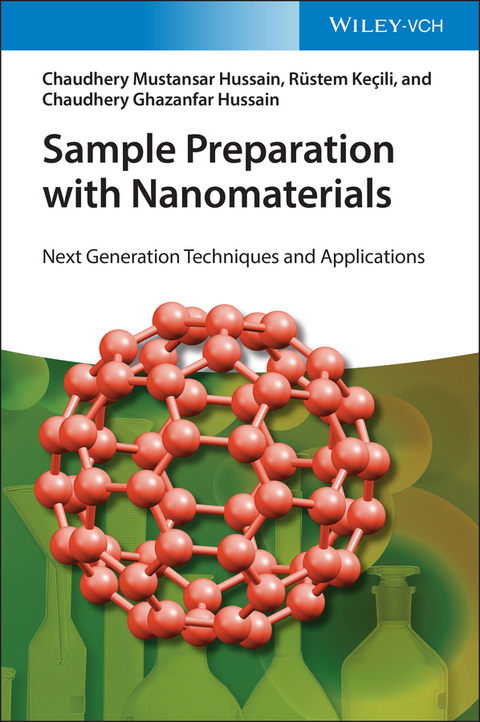
Sample Preparation with Nanomaterials (eBook)
Discover this timely, comprehensive, and up-to-date exploration of crucial aspects of the use of nanomaterials in analytical chemistry
Sample Preparation with Nanomaterials: Next Generation Techniques for Sample Preparation delivers insightful and complete overview of recent progress in the use of nanomaterials in sample preparation. The book begins with an overview of special features of nanomaterials and their applications in analytical sciences. Important types of nanomaterials, like carbon nanotubes and magnetic particles, are reviewed and biological sample preparation and lab-on-a-chip systems are presented.
The distinguished author places special emphasis on approaches that tend to green and reduce the cost of sample treatment processes. He also discusses the legal, economical, and toxicity aspects of nanomaterial samples. This book includes extensive reference material, like a complete list of manufacturers, that makes it invaluable for professionals in analytical chemistry.
Sample Preparation with Nanomaterials offers considerations of the economic aspects of nanomaterials, as well as the assessment of their toxicity and risk. Readers will also benefit from the inclusion of:
- A thorough introduction to nanomaterials in the analytical sciences and special properties of nanomaterials for sample preparation
- An exploration of the mechanism of adsorption and desorption on nanomaterials, including carbon nanomaterials used as adsorbents
- Discussions of membrane applications of nanomaterials, surface enhanced raman spectroscopy, and the use of nanomaterials for biological sample preparation
- A treatment of magnetic nanomaterials, lab-on-a-chip nanomaterials, and toxicity and risk assessment of nanomaterials
Perfect for analytical chemists, materials scientists, and process engineers, Sample Preparation with Nanomaterials: Next Generation Techniques for Sample Preparation will also earn a place in the libraries of analytical laboratories, universities, and companies who conduct research into nanomaterials and seek a one-stop resource for sample preparation.
Chaudhery Mustansar Hussain, PhD, is an Adjunct Professor and Director of Labs in the Department of Chemistry & Environmental Sciences at the New Jersey Institute of Technology (NJIT), Newark, New Jersey, USA. His research is focused on nanotechnology, analytical chemistry, advanced technologies & materials, environmental management, and various industries. Dr. Hussain is the author of numerous papers in peer-reviewed journals as well as prolific author and editor of several (around 50 books) scientific monographs and handbooks in his research areas.
Rüstem Keçili is currently an Associate Professor at the Yunus Emre Vocational School of Health Services, Anadolu University, Turkey. He worked as a researcher at MIP Technologies AB, Sweden, and was a visiting researcher at the University of Manchester, UK. His professional background covers nanomaterials, molecularly imprinted polymers and chromatography.
Chaudhery Ghazanfar Hussain is a Research Scholar in Computer Science and Technology at the Department of Education, Punjab, Pakistan. His key areas of research are Data Science, Computer Networks, Environmental Modeling, nanomaterials and Industrial development. He is author of monographs on software technology. He is a true IT professional and affiliated with several companies.
Chaudhery Mustansar Hussain, PhD is an Adjunct Professor and Director of Labs in the Department of Chemistry & Environmental Sciences at the New Jersey Institute of Technology (NJIT), Newark, New Jersey, USA. His research is focused on nanotechnology, analytical chemistry, advanced technologies & materials, environmental management, and various industries. Dr. Hussain is the author of numerous papers in peer-reviewed journals as well as prolific author and editor of several (around 50 books) scientific monographs and handbooks in his research areas.
1 Nanomaterials (NMs) in Analytical Sciences
1.1 Introduction
1.2 Types of NMs
1.3 Applications of NMs
1.4 Conclusions
References
2 Special Properties of Nanomaterials (NMs) for SamplePreparation
2.1 Introduction
2.2 Mechanical Properties of NMs
2.3 Thermal Properties of NMs
2.4 Electrical Properties of NMs
2.5 Optical Properties of NMs
2.6 Magnetic Properties of NMs
2.7 Adsorption Properties of NMs
2.8 Conclusions
References
3 Adsorption Mechanism on Nanomaterials (NMs)
3. 1Introduction
3.2 Adsorption Process
3.3 Conclusions and Future Perspective
References
4 Carbon Nanomaterials (CNMs) as Adsorbents for SamplePreparation
4.1 Introduction
4.2 Carbon Nanomaterials (CNMs)
4.3 Adsorption on CNMs
4.4 Applications of CNMs
4.5 Conclusions
References
5 Membrane Applications of Nanomaterials (NMs)
5.1 Introduction935.2Traditional Membranes
5.2 Traditional Membranes
5.3 Carbon Nanomaterial-based Membranes
5.4 Nanoparticle-based Membranes
5.5 Molecularly Imprinted Polymer (MIP)-based Membranes
5.6 Conclusions
References
6 Surface-Enhanced Raman Spectroscopy (SERS) withNanomaterials (NMs)
6.1 Introduction
6.2 Theory of SERS
6.3 SERS Mechanisms
6.4 Determination of SERS Enhancement Factor
6.5 Selection Rules
6.6 Fabrications of SERS Substrates
6.7 Applications of SERS
6.8 Conclusions
References
7 Nanomaterials (NMs) for Biological Sample Preparations
7.1 Introduction
7.2 The Use of NMs in Diagnostic Platforms
7.3 NMs-based Lab-on-a-chip (LOC) Platforms
7.4 Biomedical Applications of NMs
7.5 Sensor Applications of NMs
7.6 Conclusions
8 Magnetic Nanomaterials for Sample Preparation
8.1 Introduction
8.2 Synthesis of Magnetic Nanoparticles
8.3 Solid-Phase Extraction (SPE)
8.4 Magnetic Solid-Phase Extraction (MSPE)
8.5 Conclusions and Future Trends
References
9 Lab on Chip with Nanomaterials (NMs)
9.1 Introduction
9.2 Lab-on-a-Chip (LOC) Concept
9.3 NM-Based LOC Platforms
9.4 Conclusions and Future Perspectives
References
10 Toxicity and Risk Assessment of Nanomaterials
10.1 Introduction
10.2 Hazard Assessment of Nanomaterials
10.3 Toxicity Mechanism of Nanomaterials
10.4 The Traditional Risk Assessment Paradigm
10.5 Strategies for Improving Specific Risk Assessment
10.6 Conclusions
References
11 Economic Aspects of Nanomaterials (NMs) for SamplePreparation
11.1 Introduction
11.2 Toxicity Concerns of NMs
11.3 Global Market for NM-Based Products
11.4 Conclusions
References
12 Legal Aspects of Nanomaterials (NMs) for SamplePreparation
12.1 Introduction
12.2 Safety Issues of NMs
12.3 Regulatory Aspects of NMs
12.4 Conclusions
References
13 Monitoring of Nanomaterials (NMs) in the Environment
13.1 Introduction
13.2 Toxicity and Safety Concerns of NMs
13.3 Main Sources and Transport Routes of Nanopollutants
13.4 Requirements of Analytical Approaches
13.5 Sampling of NMs in Environmental Samples
13.6 Separation of NMs in Environmental Samples
13.7 Detection Techniques for the Characterization of NMs
13.8 Conclusions
References
14 Future Prospect of Sampling
14.1 Introduction
14.2 Sampling
14.3 Sample Preparation
14.4 Green Chemistry
14.5 Miniaturization of Analytical Systems
14.6 Conclusions
References
x
| Erscheint lt. Verlag | 6.4.2021 |
|---|---|
| Sprache | englisch |
| Themenwelt | Naturwissenschaften ► Chemie |
| Schlagworte | Carbon Nanomaterials • Chemical Analysis / Sample Preparation • Chemie • Chemische Analyse / Probenvorbereitung • Chemistry • <p>Nanomaterial properties • magnetic nanomaterials </p> • Nanomaterial • nanomaterial adsorbents • Nanomaterialien • nanomaterials • nanomaterials membranes • nanomaterials sample preparation • nanomaterials sample preparation textbook • nanomaterials samples • Nanostrukturiertes Material • Nanotechnologie • nanotechnology • Physical Chemistry • Physikalische Chemie |
| ISBN-10 | 3-527-68560-X / 352768560X |
| ISBN-13 | 978-3-527-68560-8 / 9783527685608 |
| Informationen gemäß Produktsicherheitsverordnung (GPSR) | |
| Haben Sie eine Frage zum Produkt? |
 PDF (Adobe DRM)
Kopierschutz: Adobe-DRM
Adobe-DRM ist ein Kopierschutz, der das eBook vor Mißbrauch schützen soll. Dabei wird das eBook bereits beim Download auf Ihre persönliche Adobe-ID autorisiert. Lesen können Sie das eBook dann nur auf den Geräten, welche ebenfalls auf Ihre Adobe-ID registriert sind.
Details zum Adobe-DRM
Dateiformat: PDF (Portable Document Format)
Mit einem festen Seitenlayout eignet sich die PDF besonders für Fachbücher mit Spalten, Tabellen und Abbildungen. Eine PDF kann auf fast allen Geräten angezeigt werden, ist aber für kleine Displays (Smartphone, eReader) nur eingeschränkt geeignet.
Systemvoraussetzungen:
PC/Mac: Mit einem PC oder Mac können Sie dieses eBook lesen. Sie benötigen eine
eReader: Dieses eBook kann mit (fast) allen eBook-Readern gelesen werden. Mit dem amazon-Kindle ist es aber nicht kompatibel.
Smartphone/Tablet: Egal ob Apple oder Android, dieses eBook können Sie lesen. Sie benötigen eine
Geräteliste und zusätzliche Hinweise
Buying eBooks from abroad
For tax law reasons we can sell eBooks just within Germany and Switzerland. Regrettably we cannot fulfill eBook-orders from other countries.
aus dem Bereich