Principles of Virology, Volume 2 (eBook)
John Wiley & Sons (Verlag)
978-1-68367-359-0 (ISBN)
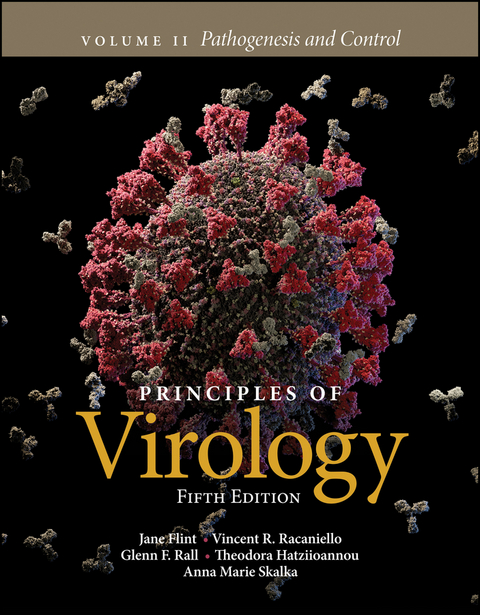
Principles of Virology, the leading virology textbook in use, is an extremely valuable and highly informative presentation of virology at the interface of modern cell biology and immunology. This text utilizes a uniquely rational approach by highlighting common principles and processes across all viruses. Using a set of representative viruses to illustrate the breadth of viral complexity, students are able to under-stand viral reproduction and pathogenesis and are equipped with the necessary tools for future encounters with new or understudied viruses.
This fifth edition was updated to keep pace with the ever-changing field of virology. In addition to the beloved full-color illustrations, video interviews with leading scientists, movies, and links to exciting blogposts on relevant topics, this edition includes study questions and active learning puzzles in each chapter, as well as short descriptions regarding the key messages of references of special interest.
Volume I: Molecular Biology focuses on the molecular processes of viral reproduction, from entry through release. Volume II: Pathogenesis and Control addresses the interplay between viruses and their host organisms, on both the micro- and macroscale, including chapters on public health, the immune response, vaccines and other antiviral strategies, viral evolution, and a brand new chapter on the therapeutic uses of viruses. These two volumes can be used for separate courses or together in a single course. Each includes a unique appendix, glossary, and links to internet resources.
Principles of Virology, Fifth Edition, is ideal for teaching the strategies by which all viruses reproduce, spread within a host, and are maintained within populations. This edition carefully reflects the results of extensive vetting and feedback received from course instructors and students, making this renowned textbook even more appropriate for undergraduate and graduate courses in virology, microbiology, and infectious diseases.
Jane Flint is Professor Emerita of Molecular Biology at Princeton University. Dr. Flint's research focused on investigation of the mechanisms by which viral gene products modulate host pathways and antiviral defenses to allow efficient reproduction in normal human cells of adenoviruses, viruses that are used in such therapeutic applications as gene transfer and cancer treatment.
Vincent R. Racaniello is Higgins Professor of Microbiology & Immunology at Columbia University Vagelos College of Physicians & Surgeons. Dr. Racaniello has been studying viruses for over 40 years, including polio- virus, rhinovirus, enteroviruses, hepatitis C virus, and Zika virus. He blogs about virus-es at virology.ws and is host of This Week in Virology.
Glenn F. Rall is a Professor and the Chief Academic Officer at the Fox Chase Cancer Center, and is an Adjunct Professor in the Microbiology and Immunology departments at the University of Pennsylvania, as well as Thomas Jefferson, Drexel, and Temple Universities. Dr. Rall studies viral infections of the brain and the immune responses to those infections, with the goal of defining how viruses contribute to disease.
Theodora Hatziioannou is a Research Associate Professor at Rockefeller University and is actively involved in teaching programs at Albert Einstein College of Medicine. Dr. Hatziioannou has worked on multiple viruses with a focus on retroviruses and the molecular mechanisms that govern virus tropism and on the improvement of animal models for human disease.
Anna Marie Skalka is a Professor Emerita and former Senior Vice President for Basic Research at the Fox Chase Cancer Center. Dr. Skalka is internationally recognized for her contributions to the understanding of the biochemical mechanisms by which retroviruses replicate and insert their genetic material into the host genome, as well as her research into other molecular aspects of retrovirus biology.
Principles of Virology, the leading virology textbook in use, is an extremely valuable and highly informative presentation of virology at the interface of modern cell biology and immunology. This text utilizes a uniquely rational approach by highlighting common principles and processes across all viruses. Using a set of representative viruses to illustrate the breadth of viral complexity, students are able to under-stand viral reproduction and pathogenesis and are equipped with the necessary tools for future encounters with new or understudied viruses. This fifth edition was updated to keep pace with the ever-changing field of virology. In addition to the beloved full-color illustrations, video interviews with leading scientists, movies, and links to exciting blogposts on relevant topics, this edition includes study questions and active learning puzzles in each chapter, as well as short descriptions regarding the key messages of references of special interest. Volume I: Molecular Biology focuses on the molecular processes of viral reproduction, from entry through release. Volume II: Pathogenesis and Control addresses the interplay between viruses and their host organisms, on both the micro- and macroscale, including chapters on public health, the immune response, vaccines and other antiviral strategies, viral evolution, and a brand new chapter on the therapeutic uses of viruses. These two volumes can be used for separate courses or together in a single course. Each includes a unique appendix, glossary, and links to internet resources. Principles of Virology, Fifth Edition, is ideal for teaching the strategies by which all viruses reproduce, spread within a host, and are maintained within populations. This edition carefully reflects the results of extensive vetting and feedback received from course instructors and students, making this renowned textbook even more appropriate for undergraduate and graduate courses in virology, microbiology, and infectious diseases.
Jane Flint is Professor Emerita of Molecular Biology at Princeton University. Dr. Flint's research focused on investigation of the mechanisms by which viral gene products modulate host pathways and antiviral defenses to allow efficient reproduction in normal human cells of adenoviruses, viruses that are used in such therapeutic applications as gene transfer and cancer treatment. Vincent R. Racaniello is Higgins Professor of Microbiology & Immunology at Columbia University Vagelos College of Physicians & Surgeons. Dr. Racaniello has been studying viruses for over 40 years, including polio- virus, rhinovirus, enteroviruses, hepatitis C virus, and Zika virus. He blogs about virus-es at virology.ws and is host of This Week in Virology. Glenn F. Rall is a Professor and the Chief Academic Officer at the Fox Chase Cancer Center, and is an Adjunct Professor in the Microbiology and Immunology departments at the University of Pennsylvania, as well as Thomas Jefferson, Drexel, and Temple Universities. Dr. Rall studies viral infections of the brain and the immune responses to those infections, with the goal of defining how viruses contribute to disease. Theodora Hatziioannou is a Research Associate Professor at Rockefeller University and is actively involved in teaching programs at Albert Einstein College of Medicine. Dr. Hatziioannou has worked on multiple viruses with a focus on retroviruses and the molecular mechanisms that govern virus tropism and on the improvement of animal models for human disease. Anna Marie Skalka is a Professor Emerita and former Senior Vice President for Basic Research at the Fox Chase Cancer Center. Dr. Skalka is internationally recognized for her contributions to the understanding of the biochemical mechanisms by which retroviruses replicate and insert their genetic material into the host genome, as well as her research into other molecular aspects of retrovirus biology.
Preface
The enduring goal of scientific endeavor, as of all human enterprise, I imagine, is to achieve an intelligible view of the universe. One of the great discoveries of modern science is that its goal cannot be achieved piecemeal, certainly not by the accumulation of facts. To understand a phenomenon is to understand a category of phenomena or it is nothing. Understanding is reached through creative acts.
A. D. HERSHEY
Carnegie Institution Yearbook 65
All five editions of this textbook have been written according to the authors’ philosophy that the best approach to teaching introductory virology is by emphasizing shared principles. Studying the common steps of the viral reproductive cycle, illustrated with a set of representative viruses, and considering mechanisms by which these viruses can cause disease provides an integrated overview of the biology of these infectious agents. Such knowledge cannot be acquired by learning a collection of facts about individual viruses. Consequently, the major goal of this book is to define and illustrate the basic principles of virus biology.
In this information-rich age, the quantity of data describing any given virus can be overwhelming, if not indigestible, for student and expert alike. The urge to write more and more about less and less is the curse of reductionist science and the bane of those who write textbooks meant to be used by students. In the fifth edition, we continue to distill information with the intent of extracting essential principles, while providing descriptions of how the information was acquired and tools to encourage our readers’ exploration of the primary literature. Boxes are used to emphasize major principles and to provide supplementary material of relevance, from explanations of terminology to descriptions of trailblazing experiments. Our goal is to illuminate process and strategy as opposed to listing facts and figures. In an effort to make the book readable, we have been selective in our choice of viruses that are used as examples. The encyclopedic Fields’ Virology [Knipe DM, Howley PM (ed). 2020. Fields Virology, 7th ed. Lippincott Williams & Wilkins, Philadelphia, PA] is recommended as a resource for detailed reviews of specific virus families.
What’s New
This edition is marked by a welcome addition to the author team. Our new member, Theodora Hatziioannou, brings expertise in retrovirology, entry, and intrinsic immunity, as well as authority regarding ancient Greek mythology and philosophy that the attentive reader will see is generously sprinkled throughout the text.
We have added an important new chapter in Volume II, “Therapeutic Viruses.” While the majority of the chapters define how viruses reproduce and cause mayhem to both cell and host, this new chapter turns the tables to discuss how viruses can be beneficial to eliminate tumor cells, deliver therapeutic genes to specific cells, and expand our arsenal of vaccines for prevention of virus-mediated diseases.
The authors continually strive to make this text accessible and relevant to our readers, many of whom are undergraduates, graduate students, and postdoctoral fellows. Consequently, for this edition, we enlisted the aid of more than twenty of these trainees to provide guidance and commentary on our chapters and ensure that concepts are clearly explained and that the text is compelling to read. This unique group of editors has been invaluable in the design of all of our fully reworked and up-to-date chapters and appendices, and we extend a particular thank-you to them for sharing their perspectives.
A new feature is the inclusion of a set of study questions and/or, in some cases, puzzles, as aids to ensure that the key principles are evident within each chapter. This section complements the Principles that begin each chapter, focusing on unifying core concepts.
Finally, although the SARS-CoV-2 pandemic began as we were preparing to go to press, we have included additions to relevant chapters on the epidemiology, emergence, and replication of this global scourge, as well as some hopeful information concerning vaccine development. What is apparent is that, now more than ever, an appreciation of how viruses impact their hosts is not just an academic pursuit, but rather literally a matter of life and death. We extend our gratitude to all those who serve in patient care settings.
Principles Taught in Two Distinct, but Integrated Volumes
Volume I covers the molecular biology of viral reproduction, and Volume II focuses on viral pathogenesis, control of virus infections, and virus evolution. The organization into two volumes follows a natural break in pedagogy and provides considerable flexibility and utility for students and teachers alike. The two volumes differ in content but are integrated in style and presentation. In addition to updating the chapters and appendices for both volumes, we have organized the material more efficiently, and as noted above, added a new chapter that we believe reflects an exciting direction for the field. Links to Internet resources such as websites, podcasts, blog posts, and movies are provided within each chapter; the digital edition provides one-click access to these materials.
As in our previous editions, we have tested ideas for inclusion in the text in our own classes. We have also received constructive comments and suggestions from other virology instructors and their students. Feedback from our readers was particularly useful in finding typographical errors, clarifying confusing or complicated illustrations, and pointing out inconsistencies in content.
For purposes of readability, references are not included within the text; each chapter ends with an updated list of relevant books, review articles, and selected research papers for readers who wish to pursue specific topics. New to this edition are short descriptions of the key messages from each of the cited papers of special interest. Finally, each volume has a general glossary of essential terms.
These two volumes outline and illustrate the strategies by which all viruses reproduce, how infections spread within a host, and how they are maintained in populations. We have focused primarily on animal viruses, but have drawn insights from studies of viruses that reproduce in plants, bacteria, and archaea.
Volume I: The Science of Virology and the Molecular Biology of Viruses
This volume examines the molecular processes that take place in an infected host cell. Chapter 1 provides a general introduction and historical perspective, and includes descriptions of the unique properties of viruses. The unifying principles that are the foundations of virology, including the concept of a common strategy for viral propagation, are then described. The principles of the infectious cycle, descriptions of the basic techniques for cultivating and assaying viruses, and the concept of the single-step growth cycle are presented in Chapter 2.
The fundamentals of viral genomes and genetics, and an overview of the surprisingly limited repertoire of viral strategies for genome replication and mRNA synthesis, are topics of Chapter 3. The architecture of extracellular virus particles in the context of providing both protection and delivery of the viral genome in a single vehicle is considered in Chapter 4. Chapters 5 to 13 address the broad spectrum of molecular processes that characterize the common steps of the reproductive cycle of viruses in a single cell, from decoding genetic information to genome replication and production of progeny virions. We describe how these common steps are accomplished in cells infected by diverse but representative viruses, while emphasizing common principles. Volume I concludes with a chapter that presents an integrated description of cellular responses to illustrate the marked, and generally irreversible, impact of virus infection on the host cell.
The appendix in Volume I provides concise illustrations of viral reproductive cycles for members of the main virus families discussed in the text. It is intended to be a reference resource when reading individual chapters and a convenient visual means by which specific topics may be related to the overall infectious cycles of the selected viruses.
Volume II: Pathogenesis, Control, and Evolution
This volume addresses the interplay between viruses and their host organisms. In Chapter 1, we introduce the discipline of epidemiology, and consider basic aspects that govern how the susceptibility of a population is controlled and measured. Physiological barriers to virus infections, and how viruses spread in a host, and to other hosts, are the topics of Chapter 2. The early host response to infection, comprising cell-autonomous (intrinsic) and innate immune responses, are the topics of Chapter 3, while the next chapter considers adaptive immune defenses, which are tailored to the pathogen, and immune memory. Chapter 5 focuses on the classical patterns of virus infection within cells and hosts, and the myriad ways that viruses cause illness. In Chapter 6, we discuss virus infections that transform cells in culture and promote oncogenesis (the formation of tumors) in animals. Next, we consider the principles underlying treatment and control of infection. Chapter 7 focuses on vaccines, and Chapter 8 discusses the approaches and challenges of antiviral drug discovery. In Chapter 9, the new chapter in this edition, we describe the rapidly expanding applications of viruses as...
| Erscheint lt. Verlag | 2.9.2020 |
|---|---|
| Reihe/Serie | ASM |
| ASM | |
| ASM Books | The Teacher's Toolbox Series |
| Sprache | englisch |
| Themenwelt | Naturwissenschaften ► Biologie ► Mikrobiologie / Immunologie |
| Schlagworte | adenosine residues splicing • antigenicity adjuvants stimulate • Biowissenschaften • cellular gene expression • Infection • Life Sciences • Microbiology & Virology • Mikrobiologie • Mikrobiologie u. Virologie • Pathogenese • viral genomes • viral mrnas export • viral mrna synthesis • viral pre-mrna editing • Viral proteins • viral replication machines • Virologie • Virology • Viruses |
| ISBN-10 | 1-68367-359-X / 168367359X |
| ISBN-13 | 978-1-68367-359-0 / 9781683673590 |
| Informationen gemäß Produktsicherheitsverordnung (GPSR) | |
| Haben Sie eine Frage zum Produkt? |
 EPUB (Adobe DRM)
Kopierschutz: Adobe-DRM
Adobe-DRM ist ein Kopierschutz, der das eBook vor Mißbrauch schützen soll. Dabei wird das eBook bereits beim Download auf Ihre persönliche Adobe-ID autorisiert. Lesen können Sie das eBook dann nur auf den Geräten, welche ebenfalls auf Ihre Adobe-ID registriert sind.
Details zum Adobe-DRM
Dateiformat: EPUB (Electronic Publication)
EPUB ist ein offener Standard für eBooks und eignet sich besonders zur Darstellung von Belletristik und Sachbüchern. Der Fließtext wird dynamisch an die Display- und Schriftgröße angepasst. Auch für mobile Lesegeräte ist EPUB daher gut geeignet.
Systemvoraussetzungen:
PC/Mac: Mit einem PC oder Mac können Sie dieses eBook lesen. Sie benötigen eine
eReader: Dieses eBook kann mit (fast) allen eBook-Readern gelesen werden. Mit dem amazon-Kindle ist es aber nicht kompatibel.
Smartphone/Tablet: Egal ob Apple oder Android, dieses eBook können Sie lesen. Sie benötigen eine
Geräteliste und zusätzliche Hinweise
Buying eBooks from abroad
For tax law reasons we can sell eBooks just within Germany and Switzerland. Regrettably we cannot fulfill eBook-orders from other countries.
aus dem Bereich