Seascape Ecology (eBook)
John Wiley & Sons (Verlag)
978-1-119-08444-0 (ISBN)
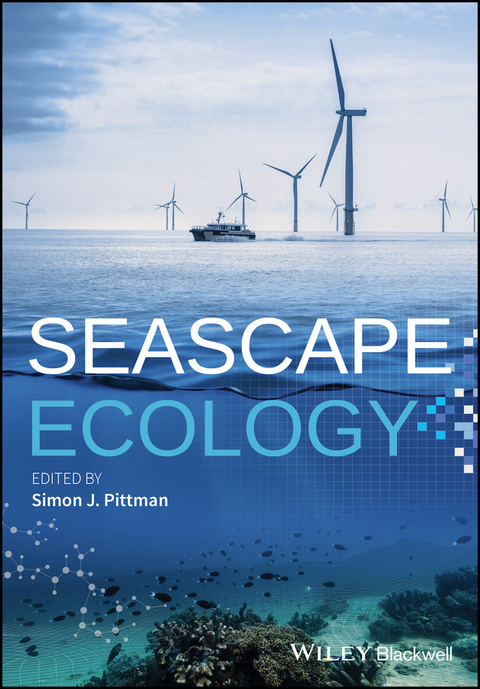
Seascape Ecology provides a comprehensive look at the state-of-the-science in the application of landscape ecology to the seas and provides guidance for future research priorities. The first book devoted exclusively to this rapidly emerging and increasingly important discipline, it is comprised of contributions from researchers at the forefront of seascape ecology working around the world. It presents the principles, concepts, methodology, and techniques informing seascape ecology and reports on the latest developments in the application of the approach to marine ecology and management.
A growing number of marine scientists, geographers, and marine managers are asking questions about the marine environment that are best addressed with a landscape ecology perspective. Seascape Ecology represents the first serious effort to fill the gap in the literature on the subject. Key topics and features of interest include:
- The origins and history of seascape ecology and various approaches to spatial patterning in the sea
- The links between seascape patterns and ecological processes, with special attention paid to the roles played by seagrasses and salt marshes and animal movements through seascapes
- Human influences on seascape ecology-includes models for assessing human-seascape interactions
- A special epilogue in which three eminent scientists who have been instrumental in shaping the course of landscape ecology offer their insights and perspectives
Seascape Ecology is a must-read for researchers and professionals in an array of disciplines, including marine biology, environmental science, geosciences, marine and coastal management, and environmental protection. It is also an excellent supplementary text for university courses in those fields.
Simon J. Pittman is a marine ecologist with a Ph.D. in Geographical Sciences from the University of Queensland, Australia. As a scientist with one foot in academia and the other in government, he has taught and mentored graduate students, managed research projects informing management, as well as writing for marine science journals, academic books, and scientific reports. He is Director of Seascape Analytics Ltd., working as a senior scientist for the Biogeography Branch of the U.S. National Oceanic and Atmospheric Administration. Dr. Pittman is an Associate Researcher at Plymouth University's Marine Institute, and Affiliate Faculty of Oregon State University and the University of the Virgin Islands.
Simon J. Pittman is a marine ecologist with a Ph.D. in Geographical Sciences from the University of Queensland, Australia. As a scientist with one foot in academia and the other in government, he has taught and mentored graduate students, managed research projects informing management, as well as writing for marine science journals, academic books, and scientific reports. He is Director of Seascape Analytics Ltd., working as a senior scientist for the Biogeography Branch of the U.S. National Oceanic and Atmospheric Administration. Dr. Pittman is an Associate Researcher at Plymouth University's Marine Institute, and Affiliate Faculty of Oregon State University and the University of the Virgin Islands.
Chapter 1
Introducing Seascape Ecology
Simon J. Pittman
Here, on the edge of what we know, in contact with the ocean of the unknown, shines the mystery and beauty of the world. And it's breathtaking.Carlo Rovelli, Sette brevi lezioni di fisica (2014)
1.1 Introduction
A conceptual shift is under way in the way we perceive, understand and interact with the marine environment. The once widespread view of the sea as a vast featureless expanse of water providing unlimited resources is now giving way to a deeper more ecologically meaningful perspective. In recent years we have started to recognise and study the sea as a highly interconnected system exhibiting complex spatiotemporal patterning and previously unanticipated vulnerability to human activities. A primary catalyst for this change in worldview has been the technological advancement and proliferation of space-, air- and water-based ocean-sensing systems, together with increased sophistication in geospatial tools and mathematical simulation models. These technologies have allowed us to collect, integrate, analyse and visualise vast quantities of marine data that have revealed unimaginable structural complexity and interconnectedness across the seafloor, sea surface and throughout the water column. Whilst these patterns are visually captivating, it is their ecological implications that are scientifically intriguing and most relevant to society. However, significant knowledge gaps still exist in our understanding of how structural patterning in the sea, across multiple spatial and temporal scales, influences marine species distributions, biodiversity patterns, ecosystem services and human wellbeing. The breadth and depth of our existing knowledge has been constrained not only by technological limitations and data availability but also by the dominant philosophical and methodological scientific frameworks in marine science that have resulted in a preponderance of nonspatial, single scale and reductionist approaches in marine ecology. This has limited the ability of marine science to support holistic management strategies such as ecosystem-based management, where the human dimensions are integral to understanding the functioning of the system. In a rapidly changing world, where environmental patterns are being modified by human activity and the ocean economy is expanding and diversifying, society urgently requires a deeper and more holistic understanding of the linkages between seascape patterns and ecological processes to inform effective marine stewardship.
The scientific discipline of landscape ecology offers an appropriately holistic and interdisciplinary spatially explicit framework to address complex ecological questions. Although landscape ecology was once considered esoteric in science, its conceptual and analytical frameworks now permeate many areas of ecological research offering important new ecological insights (Turner 2005). In contrast, spatially explicit studies of seascape patterning are still relatively rare and although seascape ecology, the marine equivalent of landscape ecology, is on the verge of entering mainstream marine ecology, the level of familiarity among marine scientists is still comparable to that reported by terrestrial landscape ecologists in the 1980s, whereby ‘ideas were new and were received with a mixture of scepticism and excitement’ (Turner 2005).
Regardless, this new direction of scientific enquiry, with a focus on interpretation of spatial patterning, is not isolated to ecology but is part of a broader technological shift often referred to as the geospatial revolution. Our global society is undergoing a spatial information revolution fuelled by rapid innovations emerging from spatial computing, such as online maps, geoportals, location-based public services and a proliferation of augmented reality applications for all ages (Downs 2014; Shekhar et al. 2015). The geospatial revolution is also influencing the curriculum in schools and universities (Coulter 2014). This new wave of technological innovation and open access to geospatial data, which allows us to construct detailed and dynamic multidimensional digital representations of the global system, is the inspiration for the vision of Digital Earth as highlighted by Al Gore (Gore 1998) and others (Craglia et al. 2012). Consequently, a transformative shift is also underway in marine ecology. A new generation of marine ecologists, known as seascape ecologists, are bringing enhanced spatial awareness to ecological thinking, together with the tools to work with ‘big data’, a holistic perspective and a desire to ask new types of applied research questions. Yet, despite our best efforts to acquire and make accessible vast datasets that capture in detail the multidimensional patterning of the oceans, we still know surprisingly little about the ecological consequences of spatial patterning, including the implications for people and society.
In this introduction to the first book on seascape ecology, I introduce this emerging discipline and its relationship to landscape ecology and then touch on several key topics central to the conceptual and operational framework of seascape ecology.
1.2 Landscape Ecology and the Emergence of Seascape Ecology
Seascape ecology, the application of landscape ecology concepts to the marine environment, has been slowly emerging since the 1970s (Box 1.1) (Sousa 1979; Paine & Levin 1981; Walsh 1985; Steele 1989; Jones & Andrew 1992), yielding new ecological insights and showing growing potential to support the development of ecologically meaningful science-based management practices (Boström et al. 2011; Pittman et al. 2011). Seascape ecology, which draws heavily from conceptual and analytical frameworks developed in landscape ecology, focuses on understanding the causes and ecological consequences of the complex and dynamic spatial patterning that exists in marine environments (Robbins & Bell 1994; Pittman et al. 2011; see also Chapter 16 in this book). Landscape ecology shares some common ground with the broader subject of spatial ecology, which is also interested in spatial heterogeneity, but landscape ecology is defined by a set of concepts and techniques that are widely recognised as a specialisation in ecology (see foundation papers in Wiens et al. 1987) warranting an identity as a distinct discipline within ecology.
Influenced by a fusion of geography and ecology, the European roots of landscape ecology can be traced back to the early twentieth century and perhaps even to the Prussian geographer and explorer Alexander von Humboldt (1769–1859) through his contributions in Essai sur la géographie des plantes (von Humboldt & Bonpland 1807) and his holistic perspective of the universe outlined in Kosmos (published between 1845 and 1862). In 1939, Carl Troll, a German biogeographer, first introduced the term ‘landschaftsökologie’ (landscape ecology) to describe the study of landscape patterns mapped from aerial photography and then in 1971 defined it as ‘the study of the main complex causal relationships between the life communities and their environment’ that ‘are expressed regionally in a definite distribution pattern’ (Troll 1971). Troll's focus was primarily terrestrial but his studies of landscape formations also included detailed mapping of the spatial patterning and hydrological characteristics of mangrove vegetation, Gezeitenwälder, in southeast Asia (Troll 1939).
Modern landscape ecology, whose practitioners are primarily interested in the geometry of patterns across the landscape and revealing the empirical relationships between pattern, ecological processes and environmental change, has developed a unique set of concepts and analytical tools, which combined with a holistic and interdisciplinary perspective have made valuable contributions to the way we understand and manage terrestrial environments (Forman 1995; Gutzwiller 2002; Bissonette & Storch 2002; Turner 2005; see also Chapter 12 in this book). Key focal research themes in landscape ecology include: linkages between spatial pattern and ecological process; importance of spatial and temporal scales; spatial heterogeneity effects on fluxes and disturbance; changing spatial patterns; and the development of a framework for natural resource management (Risser et al. 1984; Wiens & Moss 2005). A central tenet in landscape ecology is that patch context matters, where local conditions are influenced by attributes of the surroundings (for definitions of a patch see Chapter 6 in this book). For instance, the physical arrangement of objects in space and their location relative to other things influence how they function (Bell et al. 1991). With this perspective, landscape ecologists will typically ask different questions focused at different scales than other scientists, such as: ‘How do landscape patterns influence the way that animals find food, evade predators and interact with competitors? What are the ecological consequences of patches with different sizes, quality, spatial arrangement and diversity across the landscape? At what scale(s) is structure most influential? How does human activity alter the structure and function of landscapes?’
Although the majority of focus in landscape ecology has been in terrestrial systems, some crossover into aquatic systems has occurred. For freshwater systems, for example, landscape ecology, in the form of landscape limnology, has now influenced the way we study rivers and lakes (Schlosser 1991; Poff 1997; Wiens 2002). For...
| Erscheint lt. Verlag | 30.10.2017 |
|---|---|
| Sprache | englisch |
| Themenwelt | Naturwissenschaften ► Biologie ► Limnologie / Meeresbiologie |
| Naturwissenschaften ► Biologie ► Ökologie / Naturschutz | |
| Naturwissenschaften ► Geowissenschaften ► Hydrologie / Ozeanografie | |
| Schlagworte | advances in seascape ecology • Ãkologie / Salzwasser • aquatic eco-spatial relationships • biological oceanography • Biologische Ozeanographie • Biowissenschaften • chemical seascapes • coral reef connectivity and management • coral reef mosaics • coral reefs • Dean L. Urban • earth sciences • ecology and spatial patterns in the sea • Geographie • Geography • Geowissenschaften • Jianguo Wu • John A. Wiens • Life Sciences • <p>marine ecology • mapping marine ecosystem process • mapping marine habitats</p> • marine biogeography • Marine Ecology • Marine environment • Ökologie / Salzwasser • physical geography • Physiogeographie • seascape chemical landscapes • seascape configurations • seascape diversity • seascape ecology • seascape ecology-derived metrics • seascape ecology examples • seascape ecology in marine biology • seascape ecology metrics • seascape ecology tools • seascape fractal dimensions • seascape patch types • spatial distributions of mangroves • spatial distributions of salt marshes • spatial distributions of sea grasses • spatial patterns of marine habitats • what is seascape ecology |
| ISBN-10 | 1-119-08444-X / 111908444X |
| ISBN-13 | 978-1-119-08444-0 / 9781119084440 |
| Informationen gemäß Produktsicherheitsverordnung (GPSR) | |
| Haben Sie eine Frage zum Produkt? |
 EPUB (Adobe DRM)
Kopierschutz: Adobe-DRM
Adobe-DRM ist ein Kopierschutz, der das eBook vor Mißbrauch schützen soll. Dabei wird das eBook bereits beim Download auf Ihre persönliche Adobe-ID autorisiert. Lesen können Sie das eBook dann nur auf den Geräten, welche ebenfalls auf Ihre Adobe-ID registriert sind.
Details zum Adobe-DRM
Dateiformat: EPUB (Electronic Publication)
EPUB ist ein offener Standard für eBooks und eignet sich besonders zur Darstellung von Belletristik und Sachbüchern. Der Fließtext wird dynamisch an die Display- und Schriftgröße angepasst. Auch für mobile Lesegeräte ist EPUB daher gut geeignet.
Systemvoraussetzungen:
PC/Mac: Mit einem PC oder Mac können Sie dieses eBook lesen. Sie benötigen eine
eReader: Dieses eBook kann mit (fast) allen eBook-Readern gelesen werden. Mit dem amazon-Kindle ist es aber nicht kompatibel.
Smartphone/Tablet: Egal ob Apple oder Android, dieses eBook können Sie lesen. Sie benötigen eine
Geräteliste und zusätzliche Hinweise
Buying eBooks from abroad
For tax law reasons we can sell eBooks just within Germany and Switzerland. Regrettably we cannot fulfill eBook-orders from other countries.
aus dem Bereich