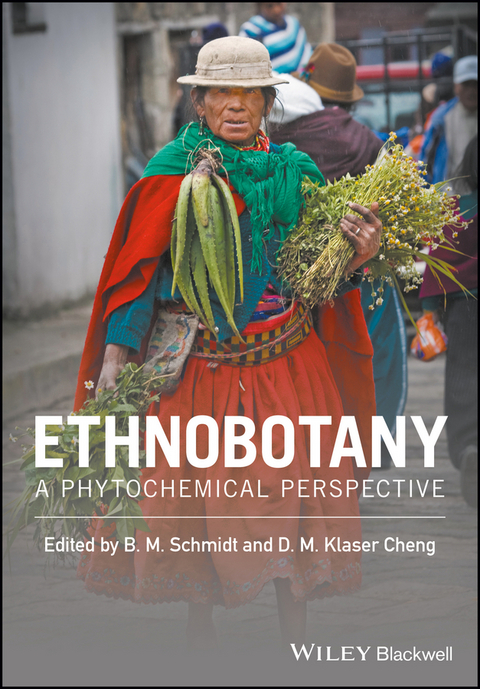
Ethnobotany (eBook)
John Wiley & Sons (Verlag)
978-1-118-96191-9 (ISBN)
Ethnobotany: A Phytochemical Perspective explores the chemistry behind hundreds of plant medicines, dyes, fibers, flavors, poisons, insect repellants, and many other uses of botanicals. Bridging the gap between ethnobotany and chemistry, this book presents an introduction to botany, ethnobotany, and phytochemistry to clearly join these fields of study and highlight their importance in the discovery of botanical uses in modern industry and research.
Part I. Ethnobotany, explores the history of plant exploration, current issues such as conservation and intellectual property rights, and a review of plant anatomy. An extensive section on plant taxonomy highlights particularly influential and economically important plants from across the plant kingdom. Part II. Phytochemistry, provides fundamentals of secondary metabolism, includes line drawings of biosynthetic pathways and chemical structures, and describes traditional and modern methods of plant extraction and analysis. The last section is devoted to the history of native plants and people and case studies on plants that changed the course of human history from five geographical regions: Africa, the Americas, Asia, Europe, and Ocean. Throughout the entire book, vivid color photographs bring science to life, capturing the essence of human botanical knowledge and the beauty of the plant kingdom.
B. M. SCHMIDT, Global Leader of Plant Biology, L'Oreal USA
D. M. KLASER CHENG, Senior Scientist, Nutrasorb, LLC and Visiting Scientist, Rutgers University
Ethnobotany: A Phytochemical Perspective explores the chemistry behind hundreds of plant medicines, dyes, fibers, flavors, poisons, insect repellants, and many other uses of botanicals. Bridging the gap between ethnobotany and chemistry, this book presents an introduction to botany, ethnobotany, and phytochemistry to clearly join these fields of study and highlight their importance in the discovery of botanical uses in modern industry and research. Part I. Ethnobotany, explores the history of plant exploration, current issues such as conservation and intellectual property rights, and a review of plant anatomy. An extensive section on plant taxonomy highlights particularly influential and economically important plants from across the plant kingdom. Part II. Phytochemistry, provides fundamentals of secondary metabolism, includes line drawings of biosynthetic pathways and chemical structures, and describes traditional and modern methods of plant extraction and analysis. The last section is devoted to the history of native plants and people and case studies on plants that changed the course of human history from five geographical regions: Africa, the Americas, Asia, Europe, and Ocean. Throughout the entire book, vivid color photographs bring science to life, capturing the essence of human botanical knowledge and the beauty of the plant kingdom.
B. M. SCHMIDT, Global Leader of Plant Biology, L'Oreal USA D. M. KLASER CHENG, Senior Scientist, Nutrasorb, LLC and Visiting Scientist, Rutgers University
Title Page 5
Copyright Page 6
Contents 7
List of Contributors 11
Foreword 13
Preface 15
Acknowledgments 19
Part I Introduction to Ethnobotany and Phytochemistry 21
Chapter 1 Ethnobotany 23
Key Terms and Concepts 23
Ethnobotany throughout History 24
References and Additional Reading 38
Current Topics in Ethnobotany 38
References 42
Taxonomy: Plant Families 43
References and Additional Reading 110
Plant Anatomy and Architecture: The Highlights 113
References and Additional Reading 125
Keys for Plant Identification 126
Herbaria, Plant Collection, and Voucher Specimens 127
References and Additional Reading 129
Chapter 2 Phytochemistry 131
Primary and Secondary Metabolites 131
Databases 146
References and Additional Reading 147
Extraction and Chromatographic Techniques 147
References 153
Evaluation of Biological Activities 154
References 159
Part II Case Studies 161
Chapter 3 Introduction 163
Chapter 4 Africa 165
Introduction 165
Northern Africa 169
Southern Africa 171
The African Diaspora 176
References and Additional Reading 179
Achillea millefolium: Re-Exploring Herbal Remedies for Combating Malaria 180
References 184
Vanilla: Madagascar’s Orchid Economy 186
References 190
Traditional Treatments for HIV in South Africa 191
References 196
Duckweed as a More Sustainable First-Generation Bioethanol Feedstock 198
References 201
Chapter 5 The Americas 203
Introduction 204
North America 205
Central America and the Caribbean 209
South America 214
References and Additional Reading 218
Phlorotannins in Seaweed 219
References 222
Agave: More Than Just Tequila 223
References 228
Quinoa: A Source of Human Sustenance and Endurance in the High Andes 229
References 233
Maqui (Aristotelia chilensis): An Ancient Mapuche Medicine with Antidiabetic Potential 235
References 240
Betalains from Chenopodium quinoa: Andean Natural Dyes with Industrial Uses beyond Food and Medicine 242
References 246
Chapter 6 Asia 247
Introduction 248
Central Asia 249
Western Asia 251
South Asia 253
Southeast Asia 257
East Asia 260
References and Additional Reading 263
Ethnobotany of Dai People’s Festival Cake in Southwest China 264
References 267
The Ethnobotany of Teeth Blackening in Southeast Asia 267
References 271
Artemisia Species and Human Health 272
References 277
Traditional Treatment of Jaundice in Manipur, Northeast India 278
References 285
Ethnobotany and Phytochemistry of Sacred Plant Species Betula utilis (bhojpatra) and Quercus oblongata (banj) from Uttarakhand Himalaya, India 287
References 290
Neem-Based Insecticides 292
References 295
Chapter 7 Europe 297
Introduction 298
References and Additional Reading 305
Differential Use of Lavandula stoechas L. among Anatolian People against Metabolic Disorders 305
References 309
Mad Honey 311
References 314
Indigo: The Devil’s Dye and the American Revolution 315
References 322
Insecticides Based on Plant Essential Oils 323
References 326
Chapter 8 Oceania 329
Introduction 330
References and Additional Reading 337
Banana (Musa spp.) as a Traditional Treatment for Diarrhea 337
References 342
Pharmacological Effects of Kavalactones from Kava (Piper methysticum) Root 343
References 348
Botanical Index 349
Subject Index 359
EULA 378
| Erscheint lt. Verlag | 25.7.2017 |
|---|---|
| Sprache | englisch |
| Themenwelt | Naturwissenschaften ► Biologie ► Botanik |
| Schlagworte | an introduction to botany, ethnobotany, and phytochemistry • biosynthetic pathways • Biowissenschaften • Botanik • case studies on plants that changed the course of human history • Chemie • Chemistry • conservation and intellectual property rights • dyes chemistry • ethnobotany • fiber chemistry • flavors chemistry • fundamentals of secondary metabolism • history of native plants • insect repellant chemistry • Life Sciences • Medical Science • Medizin • Pharmaceutical & Medicinal Chemistry • Pharmacology & Pharmaceutical Medicine • Pharmakologie u. Pharmazeutische Medizin • Pharmazeutische u. Medizinische Chemie • plant anatomy review • plant exploration history • plant medicine chemistry • plant science • traditional and modern methods of plant extraction and analysis |
| ISBN-10 | 1-118-96191-9 / 1118961919 |
| ISBN-13 | 978-1-118-96191-9 / 9781118961919 |
| Informationen gemäß Produktsicherheitsverordnung (GPSR) | |
| Haben Sie eine Frage zum Produkt? |
 PDF (Adobe DRM)
Kopierschutz: Adobe-DRM
Adobe-DRM ist ein Kopierschutz, der das eBook vor Mißbrauch schützen soll. Dabei wird das eBook bereits beim Download auf Ihre persönliche Adobe-ID autorisiert. Lesen können Sie das eBook dann nur auf den Geräten, welche ebenfalls auf Ihre Adobe-ID registriert sind.
Details zum Adobe-DRM
Dateiformat: PDF (Portable Document Format)
Mit einem festen Seitenlayout eignet sich die PDF besonders für Fachbücher mit Spalten, Tabellen und Abbildungen. Eine PDF kann auf fast allen Geräten angezeigt werden, ist aber für kleine Displays (Smartphone, eReader) nur eingeschränkt geeignet.
Systemvoraussetzungen:
PC/Mac: Mit einem PC oder Mac können Sie dieses eBook lesen. Sie benötigen eine
eReader: Dieses eBook kann mit (fast) allen eBook-Readern gelesen werden. Mit dem amazon-Kindle ist es aber nicht kompatibel.
Smartphone/Tablet: Egal ob Apple oder Android, dieses eBook können Sie lesen. Sie benötigen eine
Geräteliste und zusätzliche Hinweise
Buying eBooks from abroad
For tax law reasons we can sell eBooks just within Germany and Switzerland. Regrettably we cannot fulfill eBook-orders from other countries.
aus dem Bereich