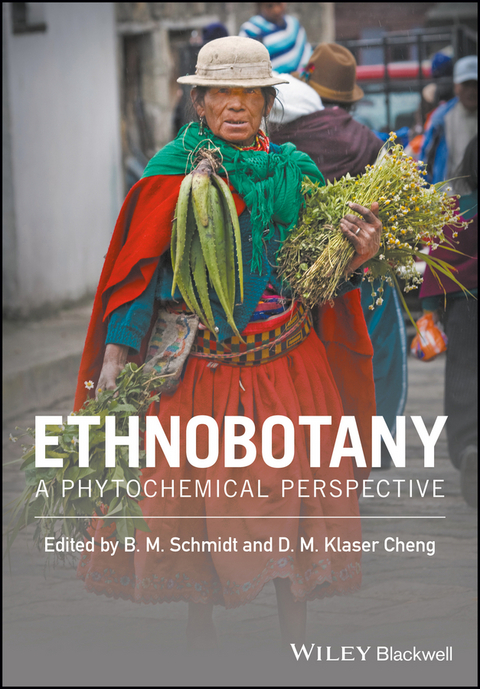
Ethnobotany (eBook)
John Wiley & Sons (Verlag)
978-1-118-96192-6 (ISBN)
|
B. M. SCHMIDT, Global Leader of Plant Biology, L'Oreal USA
D. M. KLASER CHENG, Senior Scientist, Nutrasorb, LLC and Visiting Scientist, Rutgers University
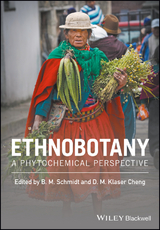
Ethnobotany: A Phytochemical Perspective explores the chemistry behind hundreds of plant medicines, dyes, fibers, flavors, poisons, insect repellants, and many other uses of botanicals. Bridging the gap between ethnobotany and chemistry, this book presents an introduction to botany, ethnobotany, and phytochemistry to clearly join these fields of study and highlight their importance in the discovery of botanical uses in modern industry and research. Part I. Ethnobotany, explores the history of plant exploration, current issues such as conservation and intellectual property rights, and a review of plant anatomy. An extensive section on plant taxonomy highlights particularly influential and economically important plants from across the plant kingdom. Part II. Phytochemistry, provides fundamentals of secondary metabolism, includes line drawings of biosynthetic pathways and chemical structures, and describes traditional and modern methods of plant extraction and analysis. The last section is devoted to the history of native plants and people and case studies on plants that changed the course of human history from five geographical regions: Africa, the Americas, Asia, Europe, and Ocean. Throughout the entire book, vivid color photographs bring science to life, capturing the essence of human botanical knowledge and the beauty of the plant kingdom.
B. M. SCHMIDT, Global Leader of Plant Biology, L'Oreal USA D. M. KLASER CHENG, Senior Scientist, Nutrasorb, LLC and Visiting Scientist, Rutgers University
1
Ethnobotany
B. M. Schmidt
Key Terms and Concepts
Ethnobotany is the scientific study of the relationship between plants and people. It includes traditional and modern knowledge of plants used for medicine, food, fibers, building materials, art, cosmetics, dyes, agrochemicals, fuel, religion, rituals, and magic. A broader definition also includes how people classify, identify, and relate to plants along with reciprocal interactions of plants and people. In many ways, ethnobotany is a product of European curiosity with the New World and other native peoples encountered during their exploration voyages starting in the fifteenth century. Before the American botanist John Harshberger coined the term “ethnobotany” in 1896, “aboriginal botany” was used to describe European interest in the way aboriginal people used plants for medicine, food, textiles, and so on. Many European exploration missions were undertaken with the sole purpose of exploring natural and cultural wonders (see Captain Cook’s breadfruit voyages, Chapter 1, the section titled “Moraceae: Mulberry Family”), often followed by colonial or imperialist expeditions. Early explorers, missionaries, clergy, physicians, traditional healers, historians, botanists, anthropologists, and phytochemists have all contributed to the field of ethnobotany. Botany is the study of plants (Kingdom Plantae) including physiology, morphology, genetics, ecology, distribution, taxonomy, and economic importance. Sometimes fungi (Kingdom Fungi) are included in botany, but for the purposes of this book, they will not be covered.
Ethnobiology is a multidisciplinary field that studies the relationships of people and their environment, which includes plants and animals. Ethnobotany could be considered a specialized branch of ethnobiology. There are several specialized branches of ethnobotany that focus on one particular aspect of the field. Ethnomedicine focuses on traditional medicine including diagnostic and healing practices along with herbal medicines. Ethnopharmacology is the study of the uses, modes of action, and biological effects of plant‐based medicines, stimulants, or psychoactive herbs. Economic botany is closely related to ethnobotany. The main distinction is that economic botany focuses on applied economic, agricultural, or commercial aspects of human uses of plants, but does not deeply explore traditional cultures, the “ethno” side of ethnobotany. Economic botany studies often have the goal of developing new plant‐derived products, which may or may nor be based on traditional uses, while ethnobotany studies may simply document facts about plant use when there is no prospect of commercial gain.
Ethnobotanists use a variety of tools for their scientific investigations including historical texts, surveys, interviews, and field observations of human–plant interaction. They typically collaborate with indigenous people or local scientists to make an inventory of local natural resources, identifying which plants are useful and in what way. Biocultural diversity is the total variety exhibited by the world’s natural and cultural systems. It includes both the biodiversity index (the diversity of plants, animals, habitats, and ecosystems), and the cultural diversity index (diversity of human cultures and languages). Biodiversity is measured by dividing the number of distinct species in an area by the total number of individuals in the area. Cultural diversity can be calculated by dividing the number of distinct languages, religions, and ethnic groups in an area by the number of total individuals in the area. Hot spots of biocultural diversity include Central Africa, Malesia, and the Amazon Basin.
Phytochemistry is the study of plant natural products. Natural products include both primary metabolites (e.g., amino acids, carbohydrates, and fats) and secondary metabolites (e.g., alkaloids, carotenoids, and polyphenols). Phytochemistry also encompasses plant biosynthetic pathways and metabolism, plant genetics, plant physiology, chemical ecology, and plant ecology. It can be considered either a branch of chemistry or botany, depending on whether the scientist and/or research program focuses more on the plant or the chemicals.
Historically, there has been a significant gap between the fields of ethnobotany and phytochemistry. Ethnobotanists are often great anthropologists, with rich knowledge of traditional cultures, texts, and historical context. They provide valuable plant inventories in vulnerable areas and are particularly interested in the cultural role of plants. But when it comes to phytochemistry, the fundamental nature of how a plant works as a biologic (drug, stimulant, etc.), what properties make it a good building material or fiber, or why one natural dye requires a mordant and another does not, they frequently provide superficial answers. Therefore, their publications or presentations will often stop short of describing the chemistry behind the traditional use. Phytochemists, on the other hand, have a thorough grasp of the chemical nature of plants, from the biosynthetic pathways to the effects of the environment on the production of secondary metabolites, to the metabolism of phytochemicals in the human body. Often, they have a background in botany, with a picture of how plants are related and function on the basis of their common chemistries. But they lack training in anthropology or linguistics, with limited awareness of the historical and cultural context of plants. Collaboration between these two groups of scientists is essential to present the whole story of how valuable plants are to our society. More and more, university programs are preparing ethnobotanists and phytochemists with tools from both disciplines. Together, with the common goal of preserving biocultural diversity and promoting social well‐being, we can make the best use of our natural resources.
Ethnobotany throughout History
Humans have been using plants since before recorded history. Our earliest relatives gathered plants to use as food, medicine, fibers, and building materials, passing on their knowledge through oral traditions. Agriculture, the practice of producing crops and raising livestock, came about independently in different regions of the world 10,000–15,000 years ago. Botanical knowledge was a great advantage in ancient civilizations, as it conferred a greater chance of survival. Many ancient scholars took a keen interest in botany, publishing herbals that contained botanical information, as well as plants’ usefulness. With this information, a person could identify a plant in the wild or in a garden and also know how to use it.
Ethnobotany as a science did not come about until more modern times. While people historically had a close connection to plants and many scholars studied botany, few studied the botanical knowledge of a social group until the twentieth century. The following are a few of the influential botanical scholars and texts that helped disperse ethnobotanical knowledge throughout the ages.
Early Botanical Figures and Texts (Antiquity–500 CE)
Egypt, Greece, and Rome
The mortuary temple of Queen Hatshepsut of Egypt (c. 1508–1458 BCE) at Deir el‐Bahri depicts a trade expedition to the region of Punt. This is one of the earliest documentations of botanical trade. Her ships returned with myrrh trees, among other treasures. Scholars believe she died of bone cancer, which may have been caused by inadvertently using a carcinogenic skin salve composed of palm oil, nutmeg apple oil, and creosote. Creosote contains benzo(a)pyrene, which is highly carcinogenic. Her story provides a glimpse into the extent of botanical knowledge over 3500 years ago.
Around the same time (c. 1500 BCE), the Egyptian Papyrus Ebers (Figure 1.1) was written. It is considered the oldest book of botanical knowledge, a collection of old folk medicine that was likely copied from books that were hundreds of years older. The papyrus was found in a tomb along with another medical text, the Edwin Smith Papyrus. Numerous herbal remedies are listed, such as Acanthus, aloe, balsam, barley, beans, caraway, cedar, castor oil, coriander, dates, figs, garlic, grapes, indigo, juniper, linseed, myrrh, onions, palm, pomegranate, poppy, saffron, turpentine, watermelon, wheat, willow, and zizyphus lotus.
Figure 1.1 Papyrus Ebers, column 38.
© 2009, Einsamer Schütze.
Hippocrates (c. 460–350 BCE) was a Greek physician, often called the Father of Western Medicine. The Hippocratic Collection, a compilation of treatises containing medical remedies and most notably the Hippocratic Oath, was attributed to Hippocrates in ancient times. However, scholars now believe the Hippocratic Collection was actually written by several authors, perhaps medical scholars from different schools.
Theophrastus (c. 372–287 BCE) was the student of Aristotle and is known as the Father of Botany. After Aristotle’s death, he inherited Aristotle’s library and garden. Two of his most notable works are Peri phytôn historia also known by the Latin title, De historia plantarum, “Inquiry into Plants” (ten books) and Peri phytôn aitiôn, “The Causes of Plants” (eight books). Theophrastus described roughly 500 plant...
| Erscheint lt. Verlag | 25.7.2017 |
|---|---|
| Sprache | englisch |
| Themenwelt | Naturwissenschaften ► Biologie ► Botanik |
| Schlagworte | an introduction to botany, ethnobotany, and phytochemistry • biosynthetic pathways • Biowissenschaften • Botanik • case studies on plants that changed the course of human history • Chemie • Chemistry • conservation and intellectual property rights • dyes chemistry • ethnobotany • fiber chemistry • flavors chemistry • fundamentals of secondary metabolism • history of native plants • insect repellant chemistry • Life Sciences • Medical Science • Medizin • Pharmaceutical & Medicinal Chemistry • Pharmacology & Pharmaceutical Medicine • Pharmakologie u. Pharmazeutische Medizin • Pharmazeutische u. Medizinische Chemie • plant anatomy review • plant exploration history • plant medicine chemistry • plant science • traditional and modern methods of plant extraction and analysis |
| ISBN-10 | 1-118-96192-7 / 1118961927 |
| ISBN-13 | 978-1-118-96192-6 / 9781118961926 |
| Informationen gemäß Produktsicherheitsverordnung (GPSR) | |
| Haben Sie eine Frage zum Produkt? |
 EPUB (Adobe DRM)
Kopierschutz: Adobe-DRM
Adobe-DRM ist ein Kopierschutz, der das eBook vor Mißbrauch schützen soll. Dabei wird das eBook bereits beim Download auf Ihre persönliche Adobe-ID autorisiert. Lesen können Sie das eBook dann nur auf den Geräten, welche ebenfalls auf Ihre Adobe-ID registriert sind.
Details zum Adobe-DRM
Dateiformat: EPUB (Electronic Publication)
EPUB ist ein offener Standard für eBooks und eignet sich besonders zur Darstellung von Belletristik und Sachbüchern. Der Fließtext wird dynamisch an die Display- und Schriftgröße angepasst. Auch für mobile Lesegeräte ist EPUB daher gut geeignet.
Systemvoraussetzungen:
PC/Mac: Mit einem PC oder Mac können Sie dieses eBook lesen. Sie benötigen eine
eReader: Dieses eBook kann mit (fast) allen eBook-Readern gelesen werden. Mit dem amazon-Kindle ist es aber nicht kompatibel.
Smartphone/Tablet: Egal ob Apple oder Android, dieses eBook können Sie lesen. Sie benötigen eine
Geräteliste und zusätzliche Hinweise
Buying eBooks from abroad
For tax law reasons we can sell eBooks just within Germany and Switzerland. Regrettably we cannot fulfill eBook-orders from other countries.
aus dem Bereich