


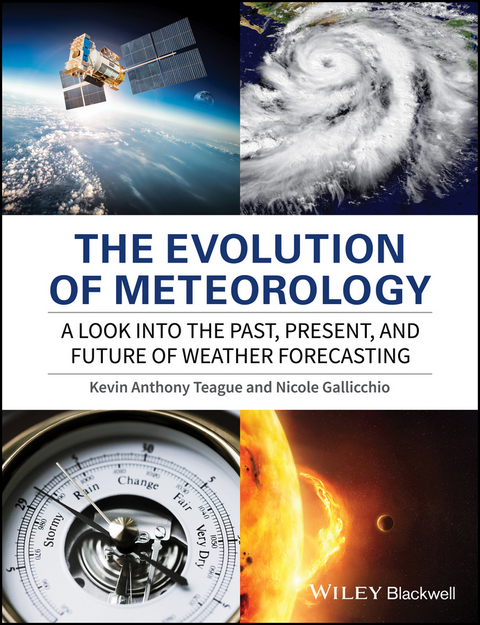
The Evolution of Meteorology (eBook)
John Wiley & Sons (Verlag)
978-1-119-13615-6 (ISBN)
The essential guide to the history, current trends, and the future of meteorology
This comprehensive review explores the evolution of the field of meteorology, from its infancy in 3000 bc, through the birth of fresh ideas and the naming of the field as a science, to the technology boom, to today. The Evolution of Meteorology reveals the full story of where meteorology was then to where it is now, where the field is heading, and what needs to be done to get the field to levels never before imagined. Authored by experts of the topic, this book includes information on forecasting technologies, organizations, governmental agencies, and world cooperative projects.
The authors explore the ancient history of the first attempts to understand and predict weather and examine the influence of the very early birth of television, computers, and technologies that are useful to meteorology. This modern-day examination of meteorology is filled with compelling research, statistics, future paths, ideas, and suggestions. This vital resource:
- Examines current information on climate change and recent extreme weather events
- Starts with the Ancient Babylonians and ends with the largest global agreement of any kind with the Paris Agreement
- Includes current information on the most authoritative research in the field of meteorology
- Contains data on climate change theories and understanding, as well as extreme weather statistics and histories
This enlightening text explores in full the history of the study of meteorology in order to bring awareness to the overall path and future prospects of meteorology.
Kevin A. Teague and Nicole Gallicchio are the cofounders of Forecasting Consultants LLC, a private weather forecasting and forensic company geared towards a multitude of industries and users. Their business has allowed the authors to grow and expand their knowledge base in all aspects of atmospheric science.
The essential guide to the history, current trends, and the future of meteorology This comprehensive review explores the evolution of the field of meteorology, from its infancy in 3000 bc, through the birth of fresh ideas and the naming of the field as a science, to the technology boom, to today. The Evolution of Meteorology reveals the full story of where meteorology was then to where it is now, where the field is heading, and what needs to be done to get the field to levels never before imagined. Authored by experts of the topic, this book includes information on forecasting technologies, organizations, governmental agencies, and world cooperative projects. The authors explore the ancient history of the first attempts to understand and predict weather and examine the influence of the very early birth of television, computers, and technologies that are useful to meteorology. This modern-day examination of meteorology is filled with compelling research, statistics, future paths, ideas, and suggestions. This vital resource: Examines current information on climate change and recent extreme weather events Starts with the Ancient Babylonians and ends with the largest global agreement of any kind with the Paris Agreement Includes current information on the most authoritative research in the field of meteorology Contains data on climate change theories and understanding, as well as extreme weather statistics and histories This enlightening text explores in full the history of the study of meteorology in order to bring awareness to the overall path and future prospects of meteorology.
Kevin A. Teague and Nicole Gallicchio are the cofounders of Forecasting Consultants LLC, a private weather forecasting and forensic company geared towards a multitude of industries and users. Their business has allowed the authors to grow and expand their knowledge base in all aspects of atmospheric science.
Title Page 5
Copyright Page 6
Contents 7
About the Authors 15
Preface 17
Acknowledgments 19
Section I Building Blocks of Meteorology (3000 bc–ad 1950) 21
Chapter 1 Ancient Civilizations, Philosophical Theories, and Folklore (3000 bc–ad 1400) 23
1.1 Ancient Babylonians 23
1.2 Ancient Chinese 24
1.3 Aristotle and Meteorologica 24
1.4 Theophrastus and the Book of Signs 25
1.5 Ibn Wahshiyya and Nabataean Agriculture 26
1.6 William of Ockham and Nominalism 26
1.7 Religion, Folklore, and Animals 27
Chapter Summary 28
References 28
Book References 28
Website References 29
Chapter 2 Inventions of Weather Instruments (1400–1800) 31
2.1 Rain Gauge 31
2.2 Hygrometer 32
2.3 Thermometer 33
2.3.1 Psychrometer 34
2.4 Barometer 35
2.5 Anemometer 36
Chapter Summary 36
References 37
Book References 37
Journal/Report References 37
Website References 37
Chapter 3 The Birth of Modern Meteorology (1800–1950) 39
3.1 Telegraph 39
3.2 Fitzroy 40
3.3 Hugo Hildebrand Hildebrandsson 40
3.4 Weather Balloons/Radiosondes 40
3.4.1 Barothermograph/Barothermohygrograph 42
3.5 Birth of Governmental Weather Departments 42
3.6 Numerical Weather Prediction 45
3.7 Weather Broadcasting 46
3.8 Forecasting for WWII 46
3.9 Extreme Weather Forecasting: ‘Nowcasting’ 47
Section Summary 48
References 48
Book References 48
Journal/Report References 48
Website References 48
Figure References – In Order of Appearance 49
Section II The Early Television, Computer, Satellite, and Radar Era (1950–1980) 51
Chapter 4 Television and the First Computerized Advancements 53
4.1 Television in the Household 53
4.2 Television Weather Forecasting of the 1950s 53
4.3 Television Weather Forecasting of the 1960s and 1970s 54
4.4 The Beginning of Computers and Numerical Weather Prediction (NWP) 55
4.5 Computers and NWP in the Met Office 57
4.6 Computers and NWP Worldwide 57
4.7 The 1970s and Its Lasting Influences on Forecasting 59
Chapter Summary 60
References 60
Book References 60
Journal/Report References 60
Website References 60
Figure References – In Order of Appearance 61
Chapter 5 Radar and Satellite History 63
5.1 Invention of the Radar 63
5.2 Development of Weather Radar 64
5.2.1 Doppler Radar 65
5.3 Invention of the Satellite 66
5.4 Remote Sensing 66
5.5 Development of Weather Satellites 67
Section Summary 68
References 68
Book References 68
Journal/Report References 69
Website References 69
Figure References – In Order of Appearance 69
Section III Modern-Day Technologies, Advancements, and Social Media Impacts (1980–2013) 71
Chapter 6 Personal Technology Boom 73
6.1 Television Networks 73
6.1.1 The Weather Channel 73
6.1.2 The BBC 74
6.1.3 World Networks 74
6.2 Personal Computers 75
6.3 The Internet and Meteorology 76
6.4 Cellphones and Social Media 76
6.5 Movies 78
Chapter Summary 79
References 79
Book References 79
Journal/Report References 79
Website References 79
Chapter 7 Covering Major Storms 81
7.1 The Great Storm of 1987 81
7.2 Hurricanes and Tropical Cyclones 83
7.2.1 Hurricane Andrew 83
7.2.2 Hurricanes Katrina and Sandy 84
7.2.3 The Great Bhola Cyclone of 1970 86
7.3 Tornadoes 86
7.3.1 Tornadic Outbreaks 87
7.3.2 Advanced Warnings for Tornado Activity 87
7.4 Floods, Droughts, and Wildfires 88
7.5 Storm Chasing 90
7.6 Media Coverage 90
Chapter Summary 91
References 91
Book References 91
Journal/Report References 92
Website References 92
Figure References – In Order of Appearance 93
Chapter 8 The Rise of Modern Computer Models 95
8.1 European Center for Medium-Range Weather Forecasting (ECMWF) 95
8.1.1 General Circulation Model 96
8.1.2 Ocean Wave Model 97
8.1.3 Data Assimilation System 97
8.1.4 Ensemble Prediction System (EPS) 97
8.1.5 Monthly and Seasonal Forecasting System 97
8.2 Main US Models 98
8.2.1 Global Forecasting System (GFS) 98
8.2.2 Global Ensemble Forecast System (GEFS) 98
8.2.3 North American Model (NAM) 99
8.3 Specific Use Forecasting Models 99
8.4 Weather Research and Forecasting Model (WRF) 99
8.5 Global Data-Processing and Forecasting System (GDPFS) 100
8.6 Main Model Biases and Various Characteristics 100
8.6.1 UKMET Characteristics 100
8.6.2 ECMWF Characteristics 102
8.6.3 NAM Characteristics 102
8.6.4 GFS Characteristics 103
8.6.5 Ensemble Characteristics 103
Chapter Summary 104
References 104
Book References 104
Journal/Report References 104
Website References 104
Figure References – In Order of Appearance 105
Chapter 9 Advancements within the Nationalized Governmental Weather Departments 107
9.1 The National Weather Service 107
9.1.1 Automated Surface Observing System 108
9.1.2 Next Generation Weather Radar 108
9.1.3 Satellites 108
9.1.4 Advanced Computer Systems 108
9.1.5 Advanced Weather Interactive Processing System 109
9.1.6 Further Advancements 111
9.2 The Met Office 111
9.2.1 The Met Office around the World 112
9.2.2 Public Weather Service 112
9.2.3 The Met College 113
9.3 Advancements across the World 113
9.3.1 Korea Meteorological Administration 114
9.3.2 Japan Meteorological Agency 115
9.3.3 South African Weather Service 115
9.3.4 Australian Government’s Bureau of Meteorology 115
9.3.5 China Meteorological Administration 115
9.3.6 Hydrometeorological Centre of Russia 116
9.3.7 Mexico National Weather Service 116
9.4 Radar Development 116
9.4.1 Radar in Europe 116
9.4.2 Radar in the United States 118
9.4.3 Radar in Asia and Australia 118
9.5 New Satellite Developments 120
9.5.1 United States’ GOES and TIROS Satellites 120
9.5.2 Europe’s METEOSAT 121
9.5.3 Russia’s METEOR 121
9.5.4 United States’ LANDSAT 122
9.5.5 Canada’s RADARSAT 122
9.5.6 Japan’s GMS and MTSAT 122
Chapter Summary 122
References 124
Book References 124
Journal/Report References 124
Website References 124
Figure References – In Order of Appearance 126
Chapter 10 Meteorological Agencies at the Global and Private Level 127
10.1 World Government Agencies 127
10.2 Operations of World Organizations 130
10.3 Global Discussions 130
10.4 What a Private-Sector Weather Business Entails 131
10.5 Government vs. Private Sector 132
10.5.1 The United States 133
10.5.2 Australia 134
10.5.3 Canada 134
10.5.4 Europe/United Kingdom 134
10.5.5 Japan/East Asia 135
10.6 The Lesser-Known Services of the Private Sector 135
10.6.1 Extreme Weather 135
10.6.2 Weather Technology 136
Section Summary 138
References 138
Book References 138
Journal/Report References 139
Website References 139
Figure References – In Order of Appearance 140
Section IV Current and Future Ideologies of Climate Change and Meteorological Processes 141
Chapter 11 Climate Change 143
11.1 Climate Discussions 143
11.2 Earth’s Lifetime Fluctuations 145
11.3 Past Climate Data 147
11.3.1 Coring 148
11.3.2 Varve 148
11.3.3 Loess 148
11.3.4 Glacial Deposits 148
11.3.5 Dendrochronology 149
11.3.6 Boreholes 149
11.3.7 Climate Data Limitations 149
11.4 Permafrost and Climate Change 150
11.5 Greenhouse Gases 152
11.6 The Intergovernmental Panel on Climate Change 153
11.6.1 The Copenhagen Diagnosis 154
11.6.2 The Fifth Assessment Report (AR5) Overview 155
Chapter Summary 157
References 158
Book References 158
Journal/Report References 158
Website References 158
Figure References – In Order of Appearance 159
Chapter 12 Extreme Weather 161
12.1 Current Climate and Weather Trends 161
12.1.1 Global Temperature Anomalies 163
12.2 Classifying Extreme Weather 164
12.2.1 Thresholds 164
12.2.2 Temporal Duration 165
12.2.3 Climate Extremes Index 165
12.2.4 Using the Past for Today 166
12.3 Extreme Weather Influences 167
12.3.1 Temperature 167
12.3.2 Convection 167
12.3.3 The Hydrologic Cycle 168
12.3.4 Ocean and Tidal Cycles 169
12.3.5 Ocean Current Change 169
12.4 Is Extreme Weather on the Rise? 170
12.4.1 Is Climate Change Influencing Extreme Weather? 172
12.5 Weather Pattern Predictions 173
12.5.1 Possible Future Weather Patterns for a Warming Climate 174
12.5.2 Possible Future Weather Patterns for a Cooling Climate 175
12.5.3 The Next Ice Age 176
12.5.4 Jet Stream Positioning 177
12.5.5 El Niño and La Niña 178
12.5.6 Extreme Tropical Cyclones 180
12.5.7 Droughts 183
12.5.8 Extreme and Unlikely Snowfalls 184
Chapter Summary 185
References 186
Book References 186
Journal/Report References 186
Website References 186
Figure References – In Order of Appearance 188
Chapter 13 Additional Meteorological Impacts 189
13.1 Space Weather 189
13.1.1 Space Weather and Technology 189
13.1.2 Solar Flares and Wind 190
13.2 Earthquakes and the Effect on Climate Change 191
13.3 Weather and the Effects on the Human Body 192
Section Summary 194
References 195
Journal/Report References 195
Website References 195
Figure References – In Order of Appearance 195
Section V The Future Direction of Meteorology 197
Chapter 14 Weather Technology 199
14.1 Tropical Cyclone Technology 199
14.1.1 Tropical Cyclone Hunter Technology 199
14.1.2 Sea Foam Detection 200
14.1.3 Drones 202
14.1.4 Sea Gliders 203
14.1.5 Data Initialization 203
14.1.6 Tropical Cyclone Modeling 205
14.2 Coastal Flooding 206
14.2.1 Coastal Flood Risk 206
14.2.2 Coastal Flooding Technology and Preparedness 207
14.3 Extreme Weather 210
14.3.1 Forecasting and Nowcasting 210
14.3.2 Nowcasting Precipitation 212
14.3.3 Nowcasting Tornadoes 213
14.3.4 Warning Systems 214
14.3.5 High-Resolution Models 216
14.4 Enhancements to Radar, Satellite, and Model Output of Supercomputers 218
14.4.1 Radar Enhancements 218
14.4.2 Satellite Enhancements 219
14.4.3 Improving Model Output Data 222
14.5 Long-Range Forecasting 223
14.6 Various Planned Advancements 223
14.6.1 Lidar 223
14.6.2 Smartphone Measurements 223
14.6.3 Cloud Overlap 224
14.6.4 Weather Modification 224
Chapter Summary 226
References 226
Book References 226
Journal/Report References 226
Website References 227
Figure References – In Order of Appearance 230
Chapter 15 Global Cooperation 231
15.1 Overall Global Forecasting 231
15.2 Global Networking in Meteorology 233
15.3 Disaster Management 235
15.3.1 Global Disaster Management Technology 238
15.3.2 Weather-Related Insurance 239
15.4 Global Radar and Satellite Cooperation 240
15.4.1 Global Radar Effort 240
15.4.2 Global Satellite Effort 241
15.5 Global Data-Processing and Forecasting Systems 241
15.5.1 Global NWP Growth 242
15.5.2 Global Supercomputers 243
15.6 Global Response to Climate Change 243
Section Summary 245
References 246
Book References 246
Journal/Report References 246
Website References 247
Figure References – In Order of Appearance 248
Book Summary 248
Appendix Figures A–H 251
ChapterEight 252
FigureReference 257
ChapterNine 257
FigureReference 260
ChapterTwelve 260
FigureReference 260
ChapterFifteen 264
Index 265
Supplemental Images 269
EULA 277
| Erscheint lt. Verlag | 12.5.2017 |
|---|---|
| Sprache | englisch |
| Themenwelt | Naturwissenschaften ► Geowissenschaften ► Meteorologie / Klimatologie |
| Technik | |
| Schlagworte | advanced warnings for tornado activity • advancements in weather forecasting • and wildfires • Climatology & Palaeoclimatology • covering major storms • current weather technologies • Cyclones • data assimilation system and weather forecasting • development of weather radar • Droughts • earth sciences • ensemble prediction system and weather forecasting • floods • Geowissenschaften • global forecasting weather forecasting system • Guide to basics of meteorology • Hurricane Andrew • hurricane Katrina and Sandy • Inventions of Weather Instruments • Kevin A. Teague • Klimatologie • Klimatologie u. Paläoklimatologie • Meteorologie • meteorology • meteorology and computers • meteorology and early television forecasting • meteorology and radar • meteorology and satellites • Modern Meteorology • monthly and seasonal weather forecasting system • Nicole Gallicchio • ocean wave model • Present and Future of Weather Forecasting • social media and weather forecasting • Storm Chasing • The Evolution of Meteorology: A Look into the Past • Tornadoes • weather forecasting and computer models • Wettervorhersage |
| ISBN-10 | 1-119-13615-6 / 1119136156 |
| ISBN-13 | 978-1-119-13615-6 / 9781119136156 |
| Informationen gemäß Produktsicherheitsverordnung (GPSR) | |
| Haben Sie eine Frage zum Produkt? |
 PDF (Adobe DRM)
Kopierschutz: Adobe-DRM
Adobe-DRM ist ein Kopierschutz, der das eBook vor Mißbrauch schützen soll. Dabei wird das eBook bereits beim Download auf Ihre persönliche Adobe-ID autorisiert. Lesen können Sie das eBook dann nur auf den Geräten, welche ebenfalls auf Ihre Adobe-ID registriert sind.
Details zum Adobe-DRM
Dateiformat: PDF (Portable Document Format)
Mit einem festen Seitenlayout eignet sich die PDF besonders für Fachbücher mit Spalten, Tabellen und Abbildungen. Eine PDF kann auf fast allen Geräten angezeigt werden, ist aber für kleine Displays (Smartphone, eReader) nur eingeschränkt geeignet.
Systemvoraussetzungen:
PC/Mac: Mit einem PC oder Mac können Sie dieses eBook lesen. Sie benötigen eine
eReader: Dieses eBook kann mit (fast) allen eBook-Readern gelesen werden. Mit dem amazon-Kindle ist es aber nicht kompatibel.
Smartphone/Tablet: Egal ob Apple oder Android, dieses eBook können Sie lesen. Sie benötigen eine
Geräteliste und zusätzliche Hinweise
Buying eBooks from abroad
For tax law reasons we can sell eBooks just within Germany and Switzerland. Regrettably we cannot fulfill eBook-orders from other countries.
aus dem Bereich


