Submerged Landscapes of the European Continental Shelf (eBook)
John Wiley & Sons (Verlag)
978-1-118-92750-2 (ISBN)
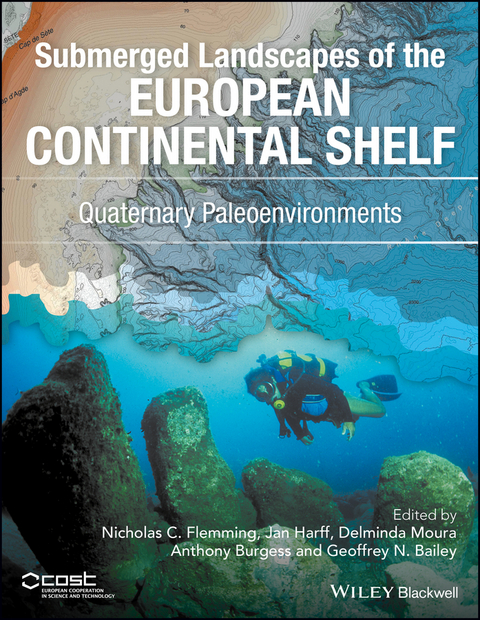
Quaternary Paleoenvironments examines the drowned landscapes exposed as extensive and attractive territory for prehistoric human settlement during the Ice Ages of the Pleistocene, when sea levels dropped to 120m-135m below their current levels. This volume provides an overview of the geological, geomorphological, climatic and sea-level history of the European continental shelf as a whole, as well as a series of detailed regional reviews for each of the major sea basins. The nature and variable attractions of the landscapes and resources available for human exploitation are examined, as are the conditions under which archaeological sites and landscape features are likely to have been preserved, destroyed or buried by sediment during sea-level rise. The authors also discuss the extent to which we can predict where to look for drowned landscapes with the greatest chance of success, with frequent reference to examples of preserved prehistoric sites in different submerged environments.
Quaternary Paleoenvironments will be of interest to archaeologists, geologists, marine scientists, palaeoanthropologists, cultural heritage managers, geographers, and all those with an interest in the drowned landscapes of the continental shelf.Nicholas C. Flemming has studied submerged terrestrial archaeological sites and changes of sea level for more than 50 years, and is the author of several books and papers on the subject. He is a Visiting Research Fellow at the National Oceanography Centre, Southampton, a Fellow of the Society of Antiquaries of London, a Fellow of the Society for Underwater Technology, and a Vice-President of the Nautical Archaeology Society.
Jan Harff is Professor of Geosciences and Seafloor Geology at the University of Szczecin, Poland. He collaborates with marine research institutes in the Baltic area and Scandinavia, Russia, the United States and China. He coordinated (together with Friedrich Lüth) the research project SINCOS (Sinking Coasts - Geosphere, Ecosphere and Anthroposphere of the Holocene Southern Baltic Sea), and chaired Working Group 2 ('Environmental Data and Reconstruction') of the COST Action TD0902: SPLASHCOS.
Delminda Moura is a geologist at the Universidade do Algarve- Centre for Marine and Environmental Research (CIMA), Portugal, conducting research on landscape evolution during the Quaternary, as forced by climatic and sea-level changes. She devotes particular attention to the use of morphological, sedimentological and biological proxies to reconstruct past sea levels.
Anthony Burgess graduated in 1996 from the University of Wales (Swansea), and then joined the Home Office, working as a crime analyst until 2008. After leaving the Home Office and enjoying an extended period of travel, he completed his masters in maritime archaeology at the University of Southampton, and is currently a PhD candidate in Archaeology at the University of Malta.
Geoffrey N. Bailey is Anniversary Professor of Archaeology in the University of York, and Chairman of the EU-funded SPLASHCOS programme. His research interests are in coastal prehistory, submerged landscapes and Quaternary-scale environmental change, and he has engaged in major projects on these themes in Australia, Africa, Greece, Saudi Arabia and the UK, most recently as Principal Investigator of the European Research Council DISPERSE Project, concerned with the role of geologically unstable landscapes and coastal environments in patterns of early human dispersal in Africa, the Red Sea and the Arabian Peninsula. He is a Fellow of the Society of Antiquaries of London, a member of Academia Europaea, and President of the UISPP Commission on Coastal Prehistory and Submerged Landscapes.
Quaternary Paleoenvironments examines the drowned landscapes exposed as extensive and attractive territory for prehistoric human settlement during the Ice Ages of the Pleistocene, when sea levels dropped to 120m-135m below their current levels. This volume provides an overview of the geological, geomorphological, climatic and sea-level history of the European continental shelf as a whole, as well as a series of detailed regional reviews for each of the major sea basins. The nature and variable attractions of the landscapes and resources available for human exploitation are examined, as are the conditions under which archaeological sites and landscape features are likely to have been preserved, destroyed or buried by sediment during sea-level rise. The authors also discuss the extent to which we can predict where to look for drowned landscapes with the greatest chance of success, with frequent reference to examples of preserved prehistoric sites in different submerged environments. Quaternary Paleoenvironments will be of interest to archaeologists, geologists, marine scientists, palaeoanthropologists, cultural heritage managers, geographers, and all those with an interest in the drowned landscapes of the continental shelf.
Nicholas C. Flemming has studied submerged terrestrial archaeological sites and changes of sea level for more than 50 years, and is the author of several books and papers on the subject. He is a Visiting Research Fellow at the National Oceanography Centre, Southampton, a Fellow of the Society of Antiquaries of London, a Fellow of the Society for Underwater Technology, and a Vice-President of the Nautical Archaeology Society. Jan Harff is Professor of Geosciences and Seafloor Geology at the University of Szczecin, Poland. He collaborates with marine research institutes in the Baltic area and Scandinavia, Russia, the United States and China. He coordinated (together with Friedrich Lüth) the research project SINCOS (Sinking Coasts - Geosphere, Ecosphere and Anthroposphere of the Holocene Southern Baltic Sea), and chaired Working Group 2 ("Environmental Data and Reconstruction") of the COST Action TD0902: SPLASHCOS. Delminda Moura is a geologist at the Universidade do Algarve- Centre for Marine and Environmental Research (CIMA), Portugal, conducting research on landscape evolution during the Quaternary, as forced by climatic and sea-level changes. She devotes particular attention to the use of morphological, sedimentological and biological proxies to reconstruct past sea levels. Anthony Burgess graduated in 1996 from the University of Wales (Swansea), and then joined the Home Office, working as a crime analyst until 2008. After leaving the Home Office and enjoying an extended period of travel, he completed his masters in maritime archaeology at the University of Southampton, and is currently a PhD candidate in Archaeology at the University of Malta. Geoffrey N. Bailey is Anniversary Professor of Archaeology in the University of York, and Chairman of the EU-funded SPLASHCOS programme. His research interests are in coastal prehistory, submerged landscapes and Quaternary-scale environmental change, and he has engaged in major projects on these themes in Australia, Africa, Greece, Saudi Arabia and the UK, most recently as Principal Investigator of the European Research Council DISPERSE Project, concerned with the role of geologically unstable landscapes and coastal environments in patterns of early human dispersal in Africa, the Red Sea and the Arabian Peninsula. He is a Fellow of the Society of Antiquaries of London, a member of Academia Europaea, and President of the UISPP Commission on Coastal Prehistory and Submerged Landscapes.
Submerged Landscapes of the European Continental Shelf 3
Contents 7
Contributors 9
Foreword 13
Preface 17
Reference 18
Acknowledgement 19
1 Introduction: Prehistoric Remains on the Continental Shelf — Why do Sites and Landscapes Survive Inundation? 21
The Big Question 21
General Issues 22
Recent History of Collaboration 24
Outline of this Book 24
Conventions and Standards 26
Conclusion 28
References 29
2 Sea Level and Climate 31
Introduction 31
Tectonic and Geological Setting of Europe with Special Reference to the Shelf and Marginal Seas 33
Proto-Europe 33
Paleo-Europe 34
Meso-Europe 35
Neo-Europe 36
Quaternary Climate and Sea-level Change 36
The Quaternary and European Sedimentary Environments 40
Glacio-isostatic Adjustment and Relative Sea-level Modeling 40
The Baltic Glacio-isostatic Adjustments 44
North Sea and Atlantic Shelf from the Last Glacial Maximum to the Atlantic Period 44
Tectonic Controls: The Mediterranean Sea 50
A Hydrologic System: The Black Sea since MIS 2 53
Holocene Climate and Coastal Morphodynamics 54
Climate 54
Coastal morphodynamics 59
Conclusion 61
References 62
3 Non-Cultural Processes of Site Formation, Preservation and Destruction 71
Introduction 71
The Continental Shelf Profile, Landscape, and Factors Determining Site Survival on Different Timescales 75
Effect of sea-level variation on the shelf profile 77
Assessments of How and Why Sites Survive or are Destroyed in the Long, Intermediate, or Short Term 80
Effects of coastal and shallow water processes on the timescale of 100 years to 20,000 years 81
Processes in the short term: weeks to 100–1000 years 82
Site Formation and Coastal Landscapes and Processes 87
High latitude (> 50°N) rock weathering
Glacial erosion and transport 88
Eolian erosion and transport 89
Mid latitude (50°N–30°N) rock weathering 89
Fluvial erosion, transport and coastline evolution 89
Early diagenesis 90
Substrate and coastal physiography 91
Selected Case Examples 92
Golfe du Morbihan, Brittany, France, 5000 BP to 4500 BP 92
Pavlopetri, southern Greece, 5000 BP 92
Southwest Baltic, Danish and German coasts 92
Western UK and Severn Estuary, 8000 BP to 6000 BP 92
Atlit-Yam, Israel, Pre-Pottery Neolithic, 8000 BP 93
Bouldnor Cliff, Isle of Wight, UK, 8000 BP 93
Rotterdam Port, the Netherlands, North Sea, 30,000 BP to 10,000 BP 93
Cap Lévi, Anse de La Mondrée, France, 100 ka 93
A240 concession, East Anglia, UK, North Sea, 300 ka to 250 ka 93
Value of Understanding the Submerged Landscape: Sites in Context 94
Environmental and Industrial Threats to Known Sites and Preserved Submerged Landscapes 94
Conclusion 94
References 95
4 Standard Core Variables for Continental Shelf Prehistoric Research and Their Availability 103
Introduction: The Concept of Core Variables 103
Suggested Core Variables for All European Sea Areas 104
Characteristics and Sources for Core Variables 105
Bathymetry 105
Relevance of electronic charts: ECDIS 109
Available multibeam surveys, areas covered 110
Coastlines and coastal processes 110
Coastal processes: coastal behavior and erosion 111
Solid substrate geology and Quaternary geology 112
Sediments 113
European-scale data on Quaternary marine and coastal features 114
Sub-bottom acoustic data 115
Seabed core data 115
Examples of Seabed Features Relating to Terrestrial Landscapes 117
Automatic Feature Recognition 119
Recommendations 120
References 121
5 The Baltic Sea Basin 123
Introduction 123
General description 124
Coastlines 124
Bathymetry 126
Data sources 127
Earth Sciences 127
Pre-Quaternary geology 127
Pleistocene and Holocene sediment thickness 129
Data sources 130
Climate and ice-sheet history 130
Data sources 135
Development of the Baltic Sea: alternating lake and marine stages 135
Postglacial rebound, relative shore-level changes and evolution of coastlines 138
Paleogeographic reconstructions 138
Evidence for Submerged Terrestrial Landforms 141
Potential for Prehistoric Archaeological Site Survival 143
Conclusion and Recommendations 147
Acknowledgments 148
References 148
6 The Northwest Shelf 155
Introduction 155
Taphonomic Processes 155
Paleoenvironmental Change 158
Evidence Base 160
Conclusion 161
Data Sources 161
Bathymetry 161
Substrate/geology/geomorphology 162
Oceanographic processes 162
Quaternary paleoenvironments 162
Acknowledgments 163
References 163
7 The North Sea 167
Introduction 167
Physical Geography and Modern Environment 170
Quaternary Background and Paleogeographic Framework 173
Early Pleistocene 173
Middle Pleistocene 175
Late Pleistocene up to the Last Glacial Maximum 179
Late Glacial and Holocene 181
Outlook on data, mapping and reconstruction quality 184
Evidence of Submerged Landscapes on the Shelf 186
Taphonomy 190
Taphonomic variables 190
Mapping archaeological potential 193
Conclusion 195
Data sources/Useful links 196
Belgium 196
Denmark 196
Germany 196
Norway 196
The Netherlands 196
UK 197
General 197
Acknowledgments 197
References 197
8 Northern North Sea and Atlantic Northwest Approaches 207
Introduction 207
Earth Sciences and Sources of Data 208
Geomorphological background 208
Data sources: BGS seabed sediments and Quaternary sheets 1:250,000 209
Background Bedrock and Quaternary Geology 209
Bedrock geology 209
Quaternary geology 210
Bathymetry 211
Post-Last Glacial Maximum Climate, Sea Level and Paleoshorelines 213
Late Glacial shoreline isobase map 215
Holocene Relative Sea-Level Changes 217
Models of Postglacial Isostatic Adjustment 220
Relative Sea-Level Changes 220
Rockall 220
St. Kilda 220
Outer Hebrides 220
Northwest Scotland mainland 221
Northeast Scotland and the Northern Isles 221
Taphonomy and Potential for Archaeological Site Survival 221
Potential Example Areas for Future Work 223
Known Submerged Finds 224
Areas of high potential 225
Conclusion and Outlook 225
References 226
9 Paleolandscapes of the Celtic Sea and the Channel/La Manche 231
Introduction 231
Earth Sciences and Sources of Data 231
Modern coastline, best sources of high-resolution data 231
Data sources 232
Wetlands, deltas, marshes, lagoons, coastal lakes 234
Coastal geomorpho-dynamics, erosion, accumulation 236
Solid geology 237
Bathymetry 238
Vertical earth movements 240
Pleistocene and Holocene sediment thickness on the continental shelf 240
Post-LGM Climate, Sea Level, and Paleoshorelines 242
General climatic conditions and changes after the LGM 242
Evolution of sea level and coastline since the LGM 244
Climate conditions on the shelf 244
Evidence for Submerged Terrestrial Landforms and Ecology 246
Submerged river valleys 246
Descriptions or maps of known seabed-submerged terrestrial features 247
Paleoclimate and faunal indicators 247
Taphonomy and Potential for Archaeological Site Survival 248
Oceanographic conditions, wind, waves, and currents 248
Areas with the potential for discovery of archaeological material 249
Zone A: Celtic Sea, shelf margin, and Western Approaches up to the Start–Cotentin Ridge 249
Zone B: The Bristol Channel and Severn Estuary 251
Zone C: The central English Channel from the Start–Cotentin Ridge to Beachy Head 251
Zone D: The eastern Channel 252
General conclusions about possibility of site preservation 253
Potential Example Areas for Future Work 254
References 254
10 Irish Sea and Atlantic Margin 261
Introduction 261
Earth Sciences 261
Modern coastline and physical processes 261
Solid geology 264
Bathymetry, sources of bathymetric data and digital archives 265
Pleistocene and Holocene sediment thickness on the continental shelf 267
Data sources 270
Post-LGM Climate and Sea-Level Change 271
Climate change and ice-sheet evolution 271
Sea-level and paleogeographic change 274
Shelf climate 278
Shelf paleoenvironments (floral evidence) 279
Shelf paleoenvironments (faunal evidence) 280
Submerged Landscape Evidence 281
Paleochannels 281
Glacial features 283
Paleoshoreline features 283
Former terrestrial environments 286
Taphonomy and Potential for Archaeological Site Survival 288
Potential Areas for Future Work 290
Regions with least and highest chance of site survival 290
Prioritization of potential sites 291
Conclusion and Outlook 291
References 292
11 The Iberian Atlantic Margin 301
Introduction 301
Geomorphological Framework of the Iberian Atlantic Margin 302
Northern margin 302
Northwestern margin: northern Nazaré canyon 304
Western margin: southern Nazaré canyon to Cape Sines 305
Western margin between Cape Sines and Cape St. Vicente 307
Southern margin between Cape St. Vicente and Cape Santa Maria 308
Gulf of Cádiz 309
Marine Climate 310
Northwestern coast 310
Western coast 310
Southern coast between Cape St. Vicente and Cape Santa Maria 311
Quaternary Evolution 311
Past Landscapes and Their Preservation 313
Data Sources 315
Acknowledgements 315
References 315
12 The Western Mediterranean Sea 321
Introduction 321
Earth Sciences and Sources of Data 322
Modern coastline: best sources of high-resolution data 322
Solid geology 323
Bathymetry 324
Vertical earth movements 327
Pleistocene and Holocene sediment thickness on the continental shelf 332
Post-LGM Climate, Sea Level and Paleoshorelines 332
General climatic conditions 332
Evolution of sea level and coastline since the LGM 333
Broad classification of the climate conditions on the shelf 333
Submerged Terrestrial Landforms and Ecology 334
Submerged river valleys 334
Seabed submerged terrestrial features 335
Regional paleoclimate and vegetation indicators, peat, pollen, organics 336
Climate variability and marine productivity 337
Taphonomy and Potential for Archaeological Site Survival 337
Sources of oceanographic data 337
Areas of rapid erosion, and rapid accumulation of sediments since the LGM 340
Areas of maximum protection from wave and current damage 341
Coastal and wetland or lagoonal areas of prehistoric potential 342
General conclusions about site preservation 342
Potential Areas for Future Work 343
Regions with least and highest chance of site survival 343
List of the institutions and names and contacts of scientists having special research-expertise in the example areas: 346
Major industrial activities in the area which tend to disturb seabed prehistoric sites 346
Recommendation 346
References 347
12 Western Mediterranean: Annex 353
Introduction 353
The Karst of Southeast France 353
The Calanques of Marseille 354
Ancient landscape 354
The last rise of sea level 355
Submerged Caves and Chambers 355
The approaches 355
The Calanques of Marseille (Bouches-du-Rhône) 356
The massif of La Couronne 358
Departement of Var 359
Alpes Maritimes 359
Conclusion 359
References 360
13 The Central Mediterranean 361
Introduction 361
Earth Sciences 362
Geodynamic setting of the central Mediterranean shelves 362
Modern coastline 365
Wetlands, deltas, marshes, lagoons, coastal lakes 365
Coastal geomorpho-dynamics, erosion, accumulation 365
Bathymetry 367
Vertical land movements 367
Volcanoes 372
Pleistocene and Holocene Sediment Thickness on the Continental Shelf 373
Post-LGM Climate, Sea Level, and Paleoshorelines 376
General climatic conditions and change since LGM. Mediterranean Sea Surface Temperature (SST) patterns 376
Evolution of sea level and coastline since the LGM 377
Central Mediterranean wave climate 378
Submerged Terrestrial Landforms and Ecology 382
Submerged river valleys 382
Submerged marine caves 383
Regional paleoclimate and vegetation indicators 383
Areas of rapid erosion, and rapid accumulation of sediments since the LGM 387
Conclusion 387
References 388
14 Physical Characteristics of the Continental Shelves of the East Mediterranean Basin, Submerged Settlements and Landscapes — Actual Finds and Potential Discoveries 397
Introduction and Background 397
The archaeological background 397
The geological/geomorphological background 398
Formation possesses of continental shelves during low sea stands 399
Physical conditions 401
Climate 401
Waves 402
Currents 402
Description of the Regions in the Study Area 403
Libyan–Egyptian Mediterranean coast and shelf, and the Nile Delta 403
Nile sediment supply to the south Levant coast 404
Eastern Mediterranean (Levant coast) — Alexandria to Anatolia 404
The Northern multi-littoral cells — Akko to Alexandretta 412
Cyprus coast (the continental shelf down to 100 m water depth) 413
Discussion, Conclusions and Recommendations 414
The survival of submerged settlements off the Carmel coast 414
The Potential for Finding Paleolandscapes and Submerged Settlements — General Outlines 415
The Levant coast: survival of sites, promising areas for discovering submerged settlements and potential for future work 417
Levantine known submerged terrestrial features 418
Recommendation for a Mediterranean–European Collaboration 419
Oceanographic and Archaeological Data Sources 419
Author contributions 419
Acknowledgments 419
References 420
15 Late Pleistocene Environmental Factors of the Aegean Region (Aegean Sea Including the Hellenic Arc) and the Identification of Potential Areas for Seabed Prehistoric Sites and Landscapes 425
Introduction 425
Geodynamic Outline and Morpho-tectonics 426
Geomorphology 429
Geological and Tectonic Background 430
Late Pleistocene Morphological Configuration 432
LGM and Post-LGM Climate 432
Overview of the Present Wind and Wave Climate 435
Preliminary Analysis of Submerged Landscapes and Survey Potential 437
North Aegean shelf 437
North Aegean Island Bridge 438
East Aegean islands 438
Central Greece 439
Central Aegean Island Bridge 439
Ionian Margin 440
West Cretan Strait 441
Crete 442
East Cretan Strait 442
Potential Areas for Future Work 443
References 445
16 Geological and Geomorphological Factors and Marine Conditions of the Azov-Black Sea Basin and Coastal Characteristics as They Determine Prospecting for Seabed Prehistoric Sites on the Continental Shelf 451
Introduction 452
Earth Sciences Data 453
Main sources of data 453
Geodynamic settings of the Black Sea 456
Vertical earth movements and rates of vertical coastal displacement 457
Solid geology of the Black Sea 458
Bathymetry of the Black Sea 461
Modern coastline 462
Coastal geomorpho-dynamics, erosion, accumulation 468
Landscape regions of the northwestern Black Sea shelf 469
Pleistocene and Holocene stratigraphy, sediment thickness on the continental shelf, modern sedimentation rates, data sources 469
Post-LGM Climate, Sea Level, and Paleoshorelines 476
Evidence for Submerged Terrestrial Landforms and Ecology 480
Potential for Archaeological Site Survival 483
Potential Areas for Future Work 484
Conclusion 484
Acknowledgments 485
References 485
17 Late Pleistocene Environmental Factors defining the Black Sea, and Submerged Landscapes on the Western Continental Shelf 499
Introduction 499
Regional Geology of the Black Sea Basin 500
Bathymetry and High Resolution Data 502
Marine Sedimentology Research 502
Post-LGM Climate, Sea Level, and Paleoshorelines 504
Water-level fluctuation scenario 504
Discussion of sea-level curve and its archaeological implications 505
Modern Coastline and Coastal Processes: the Danube Delta 507
Coastal and Shelf Geomorpho-Dynamics, Erosion, and Accumulation 508
Conclusion 509
References 510
18 Submerged Prehistoric Heritage Potential of the Romanian Black Sea Shelf 517
Introduction 517
Romanian Black Sea Coast 518
Hydro-meteorological regime 518
Geomorphological data 520
Coastal zone geology 523
Romanian Black Sea Shelf 525
Shelf geomorphology 525
Inner shelf 525
Outer shelf 526
Relict geomorphologic structures 527
Late Quaternary Shelf Evolution 529
A special note concerning the Danube Delta 531
Dynamics of Neo-Eneolithic Settlements in the Western Part of the Black Sea Region 531
Conclusion 535
References 535
Glossary of Acronyms 539
Index 543
EULA 554
"[The book's] importance transcends academic boundaries. It would be at home on the shelves of the marine geologist, as it would be in the library of the underwater archaeologist." Underwater Technology
"This is a well-written, well-organized volume that provides the reader with an unparalleled collection of data sources and references used in the study of submerged landscapes." International Journal of Nautical Archaeology
"An impressive volume, offering a useful reference to all those working or interested in the European continental shelves." Geoscientist
| Erscheint lt. Verlag | 26.4.2017 |
|---|---|
| Sprache | englisch |
| Themenwelt | Naturwissenschaften ► Geowissenschaften ► Geologie |
| Naturwissenschaften ► Geowissenschaften ► Hydrologie / Ozeanografie | |
| Naturwissenschaften ► Geowissenschaften ► Mineralogie / Paläontologie | |
| Technik | |
| Schlagworte | archaeological sites preserved or destroyed by sea-level rise • archaeology • Archäologie • Archäologie Europas • coastal prehistory • drowned landscape discovery • drowned landscapes of the continental shelf • earth sciences • Europa /Geologie • European Archaeology • European continental shelf climatic and sea-level history • European continental shelf geological overview • European continental shelf geomorphological overview • European continental shelf major sea basins reviews • examples of preserved prehistoric sites in submerged environments • Geowissenschaften • human settlement during the Ice Ages of the Pleistocene • Ice Ages of the Pleistocene landscapes • landscape evolution research • landscape features preserved by sea-level rise • landscapes destroyed or buried during sea-level rise • Plattentektonik • Quartärforschung • Quartärforschung, Glaziologie • quaternary paleoenvironments • quaternary-scale environmental change • Quaternary Science & Glaciology • sea level change impacts on environment • Sea level changes • Sedimentologie u. Stratigraphie • Sedimentology & Stratigraphy • submerged landscapes • submerged terrestrial archaeological sites |
| ISBN-10 | 1-118-92750-8 / 1118927508 |
| ISBN-13 | 978-1-118-92750-2 / 9781118927502 |
| Informationen gemäß Produktsicherheitsverordnung (GPSR) | |
| Haben Sie eine Frage zum Produkt? |
 PDF (Adobe DRM)
Kopierschutz: Adobe-DRM
Adobe-DRM ist ein Kopierschutz, der das eBook vor Mißbrauch schützen soll. Dabei wird das eBook bereits beim Download auf Ihre persönliche Adobe-ID autorisiert. Lesen können Sie das eBook dann nur auf den Geräten, welche ebenfalls auf Ihre Adobe-ID registriert sind.
Details zum Adobe-DRM
Dateiformat: PDF (Portable Document Format)
Mit einem festen Seitenlayout eignet sich die PDF besonders für Fachbücher mit Spalten, Tabellen und Abbildungen. Eine PDF kann auf fast allen Geräten angezeigt werden, ist aber für kleine Displays (Smartphone, eReader) nur eingeschränkt geeignet.
Systemvoraussetzungen:
PC/Mac: Mit einem PC oder Mac können Sie dieses eBook lesen. Sie benötigen eine
eReader: Dieses eBook kann mit (fast) allen eBook-Readern gelesen werden. Mit dem amazon-Kindle ist es aber nicht kompatibel.
Smartphone/Tablet: Egal ob Apple oder Android, dieses eBook können Sie lesen. Sie benötigen eine
Geräteliste und zusätzliche Hinweise
Buying eBooks from abroad
For tax law reasons we can sell eBooks just within Germany and Switzerland. Regrettably we cannot fulfill eBook-orders from other countries.
aus dem Bereich