Earth Observation for Land and Emergency Monitoring (eBook)
John Wiley & Sons (Verlag)
978-1-118-79374-9 (ISBN)
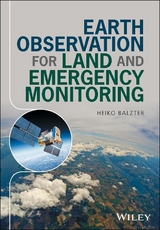
Earth Observation Science (EOS) is the study of the global Earth land-ocean-atmosphere system through observations. The principal tools for such studies are measurements from space since these provide the coverage of the planet that is necessary to capture the behaviour of the entire coupled system. In addition, surface observations, and measurements from aircraft, balloons and sounding rockets provide valuable contributors to what are now termed 'integrated, global observing systems.' Coupled with models, the EOS measurement suites provide powerful tools for research into the factors controlling and changing the Earth system in which we live.
The objectives of this book are to describe new methods and applications of satellite technology in the fields of land and emergency monitoring. It draws on new research outcomes from the European FP7 project GIONET (European Centre of Excellence in Earth Observation Research Training). GIONET combines industrial partners with universities and research institutes, and this book provides a perspective on Earth Observation applications that is motivated by the cross-fertilisation of both sectors. Hence, this book will find readers in both industry and academia.
This book highlights a broad range of innovative uses of Earth Observation technology to support environmental management, decision making, crisis management and climate policies. It uses advanced concepts of multi-sensor image integration, multi-temporal analysis and synergies between data and models. This is a truly interdisciplinary subject that encompasses a range of applications in various fields which are discussed in detail throughout the text. If you are interested in remote sensing applications and looking for inspiration, this is the book for you.
About the editor
Heiko Balzter is Professor of Physical Geography and Director of the Centre for Landscape and Climate Research at the University of Leicester, UK.
Earth Observation Science (EOS) is the study of the global Earth land-ocean-atmosphere system through observations. The principal tools for such studies are measurements from space since these provide the coverage of the planet that is necessary to capture the behaviour of the entire coupled system. In addition, surface observations, and measurements from aircraft, balloons and sounding rockets provide valuable contributors to what are now termed "e;integrated, global observing systems. Coupled with models, the EOS measurement suites provide powerful tools for research into the factors controlling and changing the Earth system in which we live. The objectives of this book are to describe new methods and applications of satellite technology in the fields of land and emergency monitoring. It draws on new research outcomes from the European FP7 project GIONET (European Centre of Excellence in Earth Observation Research Training). GIONET combines industrial partners with universities and research institutes, and this book provides a perspective on Earth Observation applications that is motivated by the cross-fertilisation of both sectors. Hence, this book will find readers in both industry and academia. This book highlights a broad range of innovative uses of Earth Observation technology to support environmental management, decision making, crisis management and climate policies. It uses advanced concepts of multi-sensor image integration, multi-temporal analysis and synergies between data and models. This is a truly interdisciplinary subject that encompasses a range of applications in various fields which are discussed in detail throughout the text. If you are interested in remote sensing applications and looking for inspiration, this is the book for you.
About the editor Heiko Balzter is Professor of Physical Geography and Director of the Centre for Landscape and Climate Research at the University of Leicester, UK.
Title Page 5
Copyright Page 6
Contents 7
List of Contributors 9
Preface 13
Chapter 1 Earth Observation for Land and Emergency Monitoring Core Services 15
Part I Forest Monitoring 19
Chapter 2 Methodology for Regional to Global Mapping of Aboveground Forest Biomass: Integrating Forest Allometry, Ground Plots, and Satellite Observations 21
2.1 Forests and Carbon 21
2.2 Using Earth Observation Imagery to Measure Aboveground Biomass 22
2.3 Global Forest Monitoring 26
2.4 Remote Sensing and Biomass Allometry 30
2.5 Synergistic Use of Regional Allometry, in situ Measurements, and Spaceborne Profiling LiDAR, with Optical and SAR Imagery for Biomass Mapping 33
2.6 Conclusions 39
References 40
Chapter 3 Remote Sensing for Aboveground Biomass Estimation in Boreal Forests 47
3.1 Introduction 47
3.2 The Boreal Forest Ecosystem 48
3.3 Remote Sensing for Biomass Estimation 49
3.4 Radar Remote Sensing for Biomass Estimation in Boreal Forests 51
3.5 Summary 58
Acknowledgments 61
References 61
Chapter 4 Forest Mapping of the Congo Basin using Synthetic Aperture Radar (SAR) 71
4.1 Introduction 71
4.2 Remote Sensing of Central African Forests 72
4.3 Case Study 75
4.4 Discussion 83
4.5 Conclusion 83
References 85
Part II Land Cover and Land Cover Change Monitoring 89
Chapter 5 Multi-Frequency SAR Applications for Land Cover Classification Within Copernicus Downstream Services 91
5.1 Background 91
5.2 Examples of Multi-Frequency SAR 94
5.3 Methods and Data 95
5.4 Results 104
5.5 Discussion 106
5.6 Conclusions 109
References 110
Chapter 6 Unsupervised Land Use/Land Cover Change Detection with Integrated Pixel and Object Based Approaches for High Resolution Remote Sensing Imagery 115
6.1 Introduction 115
6.2 Datasets 116
6.3 Methods 117
6.4 Results and Discussion 122
6.5 Conclusion 127
References 128
Chapter 7 Earth Observation Land Data Assimilation System (EO-LDAS) Regularization Constraints over Barrax Site 131
7.1 Background 131
7.2 Methods and Data 134
7.3 Results 137
7.4 Conclusions 151
Acknowledgements 151
References 151
Part III Coastal Zone and Freshwater Monitoring 155
Chapter 8 SAR-Based EO of Salt Marsh Habitats in Support of Integrated Coastal Zone Management 157
8.1 Introduction 157
8.2 Case Study: Llanrhidian Marsh 160
8.3 Discussion and Conclusions 167
References 168
Chapter 9 A Framework for Lakeshore Vegetation Assessment Using Field Spectroscopy and Airborne Hyperspectral Imagery 173
9.1 Background 173
9.2 Methods and Data 175
9.3 Results 179
9.4 Discussion and Conclusions 184
References 185
Chapter 10 Copernicus Framework for Monitoring Lake Balaton Phytoplankton 187
10.1 Introduction 187
10.2 Remote Sensing of Phytoplankton 188
10.3 Medium Resolution Imaging Spectrometer (MERIS) 191
10.4 Lake Balaton 193
10.5 MERIS Phytoplankton Mapping of Lake Balaton 194
10.6 Future Outlook 198
10.7 Conclusions 201
Acknowledgements 201
References 201
Part IV Land Deformation Mapping and Humanitarian Crisis Response 207
Chapter 11 InSAR Techniques for Land Deformation Monitoring 209
11.1 Introduction 209
11.2 Background 210
11.3 Methods and Data 217
11.4 Results and Discussions 218
11.5 Conclusions 219
Acknowledgments 219
References 219
Chapter 12 Mapping Land Surface Displacements in the Swiss Alps with Radar Interferometry 223
12.1 Introduction 223
12.2 Background 223
12.3 Study Area 226
12.4 Case Studies 227
12.5 Conclusions 232
Acknowledgements 233
References 233
Chapter 13 Sample Supervised Search-Centric Approaches in Geographic Object?Based Image Analysis: Concepts, State of the Art and a Future Outlook 237
13.1 Search-Centric Sample Supervised Image Analysis 237
13.2 Approaches in Geographic Object-Based Image Analysis 242
13.3 Search-Centric Sample Supervision within GEOBIA 243
13.4 Limitations of Search-centric Sample Supervised Segment Generation Approaches in GEOBIA 248
13.5 An Outlook on Search-Centric Sample Supervision in GEOBIA Approaches – Epistatic Links and Search Granularity 250
13.6 Conclusion 251
References 252
Part V Earth Observation for Climate Adaptation 259
Chapter 14 Remote Sensing of Wetland Dynamics as Indicators of Water Availability in Semi-Arid Africa 261
14.1 Wetland Monitoring in West Africa Using Remote Sensing 261
14.2 Remote Sensing of Wetlands 264
14.3 Remote Sensing Principles for Wetland Monitoring 266
14.4 The Case Study of Lac Bam: A Natural Ramsar Wetland Site in Burkina Faso 274
14.5 Perspectives on Wetland Remote Sensing for Water Availability 280
Acknowledgements 287
References 287
Chapter 15 Satellite Derived Information for Drought Detection and Estimation of Water Balance 299
15.1 Introduction 299
15.2 Literature Review 300
15.3 Data 303
15.4 Methodology 303
15.5 Results 307
15.6 Discussion 308
15.7 Conclusion 309
References 310
Chapter 16 Conclusions 315
References 318
Index 319
Supplemental Images 335
EULA 343
| Erscheint lt. Verlag | 14.3.2017 |
|---|---|
| Sprache | englisch |
| Themenwelt | Naturwissenschaften ► Biologie ► Ökologie / Naturschutz |
| Naturwissenschaften ► Geowissenschaften ► Geografie / Kartografie | |
| Naturwissenschaften ► Geowissenschaften ► Geologie | |
| Technik | |
| Schlagworte | Climate Policies • Earth measurements from aircraft • Earth measurements from balloons • Earth measurements from sounding rockets • Earth Observation Applications • Earth Observation for Land and Emergency Monitoring • Earth Observation Science • Earth Observation technology • earth sciences • Earth surface observations • earth system • environmental crisis management • Environmental Decision Making • Environmental Management • Environmental Science • Environmental Studies • EOS • EOS measurement suites • European Centre of Excellence in Earth Observation Research Training • European FP7 project GIONET • Fernerkundung • Geowissenschaften • GIONET • GIS & Remote Sensing • GIS u. Fernerkundung • global observing systems • Integrated • land and emergency monitoring • multi-sensor image integration • multi-temporal analysis • Remote Sensing Applications • Satellite Technology • Umweltforschung • Umweltwissenschaften |
| ISBN-10 | 1-118-79374-9 / 1118793749 |
| ISBN-13 | 978-1-118-79374-9 / 9781118793749 |
| Informationen gemäß Produktsicherheitsverordnung (GPSR) | |
| Haben Sie eine Frage zum Produkt? |
 PDF (Adobe DRM)
Kopierschutz: Adobe-DRM
Adobe-DRM ist ein Kopierschutz, der das eBook vor Mißbrauch schützen soll. Dabei wird das eBook bereits beim Download auf Ihre persönliche Adobe-ID autorisiert. Lesen können Sie das eBook dann nur auf den Geräten, welche ebenfalls auf Ihre Adobe-ID registriert sind.
Details zum Adobe-DRM
Dateiformat: PDF (Portable Document Format)
Mit einem festen Seitenlayout eignet sich die PDF besonders für Fachbücher mit Spalten, Tabellen und Abbildungen. Eine PDF kann auf fast allen Geräten angezeigt werden, ist aber für kleine Displays (Smartphone, eReader) nur eingeschränkt geeignet.
Systemvoraussetzungen:
PC/Mac: Mit einem PC oder Mac können Sie dieses eBook lesen. Sie benötigen eine
eReader: Dieses eBook kann mit (fast) allen eBook-Readern gelesen werden. Mit dem amazon-Kindle ist es aber nicht kompatibel.
Smartphone/Tablet: Egal ob Apple oder Android, dieses eBook können Sie lesen. Sie benötigen eine
Geräteliste und zusätzliche Hinweise
Buying eBooks from abroad
For tax law reasons we can sell eBooks just within Germany and Switzerland. Regrettably we cannot fulfill eBook-orders from other countries.
aus dem Bereich