Topics covered include:
- Stabilization, dimerization and decomposition of NHCs
- Stereoelectronic properties of NHCs and their evaluation
- Diversity of NHCs
- Isomers of NHC complexes and their identification
- NMR spectroscopic signatures of NHC complexes
- normal, abnormal and mesoionic NHCs
The Organometallic Chemistry of N-heterocyclic Carbenes is an essential resource for all students and researchers interested in this increasingly important and popular field of research.
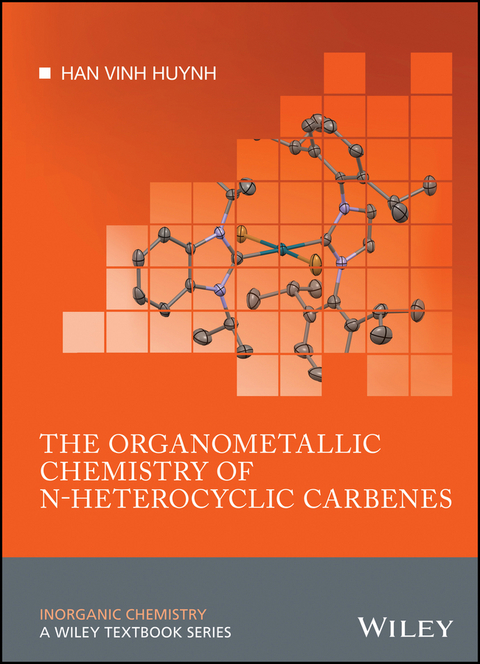
The Organometallic Chemistry of N-heterocyclic Carbenes describes various aspects of N-heterocyclic Carbenes (NHCs) and their transition metal complexes at an entry level suitable for advanced undergraduate students and above. The book starts with a historical overview on the quest for carbenes and their complexes. Subsequently, unique properties, reactivities and nomenclature of the four classical NHCs derived from imidazoline, imidazole, benzimidazole and 1,2,4-triazole are elaborated. General and historically relevant synthetic aspects for NHCs, their precursors and complexes are then explained. The book continues with coverage on the preparation and characteristics of selected NHC complexes containing the most common metals in this area, i.e. Ni, Pd, Pt, Ag, Cu, Au, Ru, Rh and Ir. The book concludes with an overview and outlook on the development of various non-classical NHCs beyond the four classical types. Topics covered include: Stabilization, dimerization and decomposition of NHCs Stereoelectronic properties of NHCs and their evaluation Diversity of NHCs Isomers of NHC complexes and their identification NMR spectroscopic signatures of NHC complexes normal, abnormal and mesoionic NHCs The Organometallic Chemistry of N-heterocyclic Carbenes is an essential resource for all students and researchers interested in this increasingly important and popular field of research.
HAN VINH HUYNH Department of Chemistry, National University of Singapore, Republic of Singapore
List of Abbreviations and Definitions
| Abbreviation/term | Definition |
| %VBur | Percentage of buried volume |
| γ | Gyromagnetic ratio |
| +I effect | Positive inductive effect |
| –I effect | Negative inductive effect |
| +M effect | Positive mesomeric effect |
| –M effect | Negative mesomeric effect |
| °C | Degree Celsius |
| 5‐NHC | Five‐membered N‐heterocyclic carbene |
| 6‐DAC | Six‐membered diamidocarbene |
| 6‐NHC | Six‐membered N‐heterocyclic carbene |
| 7‐DAC | Seven‐membered diamidocarbene |
| 7‐NHC | Seven‐membered N‐heterocyclic carbene |
| 8‐NHC | Eight‐membered N‐heterocyclic carbene |
| Å | Ångström |
| Ad | Adamantyl |
| aka | Also known as |
| All2‐bimy | 1,3‐diallylbenzimidazolin‐2‐ylidene |
| Ar | Aryl |
| BDE | Bond dissociation energy |
| Bh2‐bimy | 1,3‐dibenzhydrylbenzimidazolin‐2‐ylidene |
| bimy | Benzimidazolin‐2‐ylidene |
| BINAP | 2,2′‐bis(diphenylphosphino)‐1,1′‐binaphthyl |
| BMIM | 1‐butyl,3‐methylimidazolin‐2‐ylidene |
| Bn2‐bimy | 1,3‐dibenzylbenzimidazolin‐2‐ylidene |
| Bn2‐tazy | 1,4‐dibenzyl‐1,2,4‐triazolin‐5‐ylidene |
| Bn‐btzy | 3‐benzylbenzothiazolin‐2‐ylidene |
| BQ | p‐benzoquinone |
| bzoxNHC | Benzoxazole‐functionalized NHC |
| CAAC | Cyclic alkyl amino carbene |
| COD | 1,5‐cyclooctadiene |
| Cp | Cyclopentadienyl anion |
| Cp* | Pentamethylcyclopentadienyl anion |
| CuAAC | Copper‐catalyzed azide‐alkyne cycloaddition |
| Cy | Cyclohexyl |
| DAC | Diamidocarbene |
| DAE | Diallylether |
| dba | Dibenzylideneacetone |
| de | Diastereomeric excess |
| Dipp | 2,6‐diisopropylphenyl |
| ditz | 1,2,4‐triazolidine‐3,5‐diylidene |
| DMFU | Dimethylfumarate |
| DMSO | Dimethyl sulfoxide |
| dppd | 1,3‐diphenyl‐1,3‐propanedionate |
| DVDS | 1,1,3,3‐tetramethyl‐1,3‐divinyldisiloxane |
| EMIM | 1‐ethyl,3‐methylimidazolin‐2‐ylidene |
| equiv | Equivalent(s) |
| ESI | Electrospray ionization |
| Et | Ethyl |
| eV | Electron volt |
| FPyr | 1,2,3,4,6,7,8,9‐octahydropridazino[1,2‐a]‐indazolin‐11‐ylidene |
| h | Hour |
| HB | Conjugate acid of general Brønsted base |
| HMBC | Heteronuclear multiple‐bond correlation |
| HX | General Brønsted acid |
| Hz | Hertz |
| IAd | 1,3‐diadamantylimidazolin‐2‐ylidene |
| IBh | 1,3‐dibenzhydrylimidazolin‐2‐ylidene |
| iBu2‐bimy | 1,3‐diisobutylbenzimidazolin‐2‐ylidene |
| ICy | 1,3‐dicyclohexylimidazolin‐2‐ylidene |
| IFc | 1,3‐diferrocenylimidazolin‐2‐ylidene |
| IiPrMe2 | 1,3‐diisopropyl‐4,5‐dimethylimidazolin‐2‐ylidene |
| IMe | 1,3‐dimethylimidazolin‐2‐ylidene |
| IMeMe2 | 1,3,4,5‐tetramethylimidazolin‐2‐ylidene |
| IMes | 1,3‐dimesitylimidazolin‐2‐ylidene |
| imy | Imidazolin‐2‐ylidene |
| in situ | “In the reaction mixture”, without isolation |
| INap | 1,3‐di(1‐naphtyl)imidazolin‐2‐ylidene |
| Ind | Indenyl anion |
| Indy | Indazolin‐3‐ylidene |
| IPh | 1,3‐diphenylimidazolin‐2‐ylidene |
| IPr | 1,3‐(2,6‐diisopropylphenyl)imidazolin‐2‐ylidene |
| iPr | Isopropyl |
| iPr,Bn‐bimy | 1‐isopropyl,3‐benzylbenzimidazolin‐2‐ylidene |
| iPr2‐bimy | 1,3‐diisopropylbenzimidazolin‐2‐ylidene |
| IPy | 1,3‐di(2‐pyridyl)imidazolin‐2‐ylidene |
| IR | Infrared |
| ItBu | 1,3‐di(tert‐butyl)imidazolin‐2‐ylidene |
| IUPAC | International Union of Pure and Applied Chemistry |
| kJ | Kilojoule |
| M | Molar |
| MAH | Maleic anhydride |
| Me | Methyl |
| Me2‐bimy | 1,3‐dimethylbenzimidazolin‐2‐ylidene |
| Mes | Mesityl |
| MHMDS | metal hexamethyldisilazide |
| MS | Molecular sieves |
| MVS | Metal vapor synthesis |
| NCA | Weakly or non‐coordinating anion |
| NHC | N‐heterocyclic carbene |
| NMR | Nuclear Magnetic Resonance |
| NOHC | N,O‐heterocyclic carbene |
| Np | Neopentyl |
| Np2‐bimy | 1,3‐(2,2‐dimethylpropyl)benzimidazolin‐2‐ylidene |
| NQ | 1,4‐naphthoquinone |
| NSHC | N,S‐heterocyclic carbene |
| NuH | General nucleophile |
| p‐cymene | 1‐Methyl‐4‐(1‐methylethyl)benzene |
| PEPPSI | Pyridine‐enhanced precatalyst preparation stabilization and initiation |
| Ph | Phenyl |
| Ph3tria | 1,3,4‐triphenyl‐1,2,4‐triazolin‐5‐ylidene |
| ppm | Parts per million |
| Pr2‐bimy | 1,3‐di(n‐propyl)benzimidazolin‐2‐ylidene |
| pta | 1,3,5‐triaza‐7‐phosphaadamantane |
| Pyry | Pyrazolin‐3‐ylidene |
| R | Usually alkyl group |
| RCM | Ring‐closing metathesis |
| Ref | Reference |
| ROMP | Ring‐opening metathesis polymerization |
| RT | Room... |
| Erscheint lt. Verlag | 3.2.2017 |
|---|---|
| Reihe/Serie | Inorganic Chemistry: A Textbook Series |
| Inorganic Chemistry: A Textbook Series | Inorganic Chemistry: A Textbook Series |
| Sprache | englisch |
| Themenwelt | Naturwissenschaften ► Chemie ► Anorganische Chemie |
| Naturwissenschaften ► Chemie ► Organische Chemie | |
| Technik | |
| Schlagworte | Abnormal carbene • Carbene Complex • Carbene ligand • catalysis • Chemie • Chemistry • Coordination Chemistry • Donor strength • imidazolium • Katalyse • Koordinationschemie • Mesoionic • NHC • NHC catalyst • N-heterocyclic carbenes • Organometallchemie • Organometallic Chemistry |
| ISBN-13 | 9781118698792 / 9781118698792 |
| Informationen gemäß Produktsicherheitsverordnung (GPSR) | |
| Haben Sie eine Frage zum Produkt? |
 EPUB (Adobe DRM)
Kopierschutz: Adobe-DRM
Adobe-DRM ist ein Kopierschutz, der das eBook vor Mißbrauch schützen soll. Dabei wird das eBook bereits beim Download auf Ihre persönliche Adobe-ID autorisiert. Lesen können Sie das eBook dann nur auf den Geräten, welche ebenfalls auf Ihre Adobe-ID registriert sind.
Details zum Adobe-DRM
Dateiformat: EPUB (Electronic Publication)
EPUB ist ein offener Standard für eBooks und eignet sich besonders zur Darstellung von Belletristik und Sachbüchern. Der Fließtext wird dynamisch an die Display- und Schriftgröße angepasst. Auch für mobile Lesegeräte ist EPUB daher gut geeignet.
Systemvoraussetzungen:
PC/Mac: Mit einem PC oder Mac können Sie dieses eBook lesen. Sie benötigen eine
eReader: Dieses eBook kann mit (fast) allen eBook-Readern gelesen werden. Mit dem amazon-Kindle ist es aber nicht kompatibel.
Smartphone/Tablet: Egal ob Apple oder Android, dieses eBook können Sie lesen. Sie benötigen eine
Geräteliste und zusätzliche Hinweise
Buying eBooks from abroad
For tax law reasons we can sell eBooks just within Germany and Switzerland. Regrettably we cannot fulfill eBook-orders from other countries.
aus dem Bereich