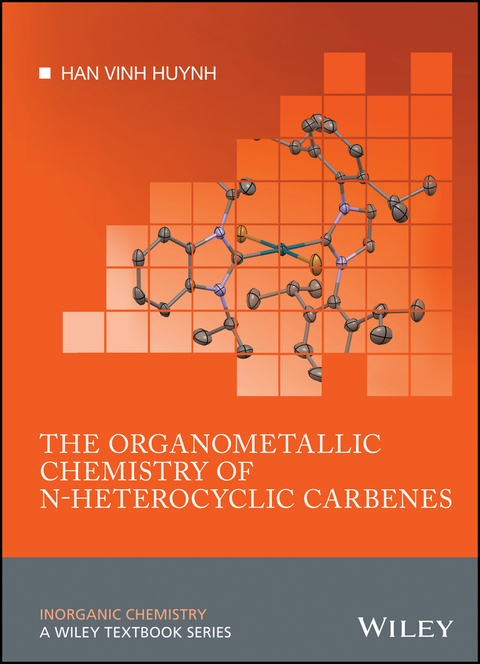
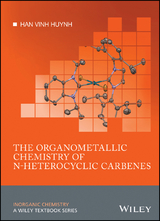
The Organometallic Chemistry of N-heterocyclic Carbenes describes various aspects of N-heterocyclic Carbenes (NHCs) and their transition metal complexes at an entry level suitable for advanced undergraduate students and above.
The book starts with a historical overview on the quest for carbenes and their complexes. Subsequently, unique properties, reactivities and nomenclature of the four classical NHCs derived from imidazoline, imidazole, benzimidazole and 1,2,4-triazole are elaborated. General and historically relevant synthetic aspects for NHCs, their precursors and complexes are then explained. The book continues with coverage on the preparation and characteristics of selected NHC complexes containing the most common metals in this area, i.e. Ni, Pd, Pt, Ag, Cu, Au, Ru, Rh and Ir. The book concludes with an overview and outlook on the development of various non-classical NHCs beyond the four classical types.
Topics covered include:
- Stabilization, dimerization and decomposition of NHCs
- Stereoelectronic properties of NHCs and their evaluation
- Diversity of NHCs
- Isomers of NHC complexes and their identification
- NMR spectroscopic signatures of NHC complexes
- normal, abnormal and mesoionic NHCs
The Organometallic Chemistry of N-heterocyclic Carbenes is an essential resource for all students and researchers interested in this increasingly important and popular field of research.
HAN VINH HUYNH Department of Chemistry, National University of Singapore, Republic of Singapore
The Organometallic Chemistry of N-heterocyclic Carbenes describes various aspects of N-heterocyclic Carbenes (NHCs) and their transition metal complexes at an entry level suitable for advanced undergraduate students and above. The book starts with a historical overview on the quest for carbenes and their complexes. Subsequently, unique properties, reactivities and nomenclature of the four classical NHCs derived from imidazoline, imidazole, benzimidazole and 1,2,4-triazole are elaborated. General and historically relevant synthetic aspects for NHCs, their precursors and complexes are then explained. The book continues with coverage on the preparation and characteristics of selected NHC complexes containing the most common metals in this area, i.e. Ni, Pd, Pt, Ag, Cu, Au, Ru, Rh and Ir. The book concludes with an overview and outlook on the development of various non-classical NHCs beyond the four classical types. Topics covered include: Stabilization, dimerization and decomposition of NHCs Stereoelectronic properties of NHCs and their evaluation Diversity of NHCs Isomers of NHC complexes and their identification NMR spectroscopic signatures of NHC complexes normal, abnormal and mesoionic NHCs The Organometallic Chemistry of N-heterocyclic Carbenes is an essential resource for all students and researchers interested in this increasingly important and popular field of research.
HAN VINH HUYNH Department of Chemistry, National University of Singapore, Republic of Singapore
Title Page 5
Copyright Page 6
Contents 7
Foreword 11
Preface 12
List of Abbreviations and Definitions 14
Chapter 1 General Introduction 17
1.1 Definition of Carbenes 17
1.2 Historical Overview of Carbenes, N-Heterocyclic Carbenes, and Their Complexes 19
1.2.1 The Quest for Free Stable Carbenes 19
1.2.2 The Quest for Carbene Complexes 27
References 31
Chapter 2 General Properties of Classical NHCs and Their Complexes 33
2.1 Stabilization in NHCs (Push-Pull Effect) 35
2.2 Backbone Differences and Their Implications 36
2.3 Dimerization of Carbenes 38
2.4 Nomenclature of N-Heterocyclic Carbenes 41
2.5 Electronic Properties of NHCs and Different Electronic Parameters 45
2.5.1 Tolman’s Electronic Parameter (TEP) and Related Carbonyl Based Systems 45
2.5.2 Lever’s Electronic Parameter (LEP) 52
2.5.3 Huynh’s Electronic Parameter (HEP) 54
2.6 Steric Properties of NHCs 58
2.7 Structural Diversity of NHC Ligands and Their Complexes 61
2.7.1 Donor-Functionalized NHCs 61
2.7.2 Multidentate NHCs 62
2.7.3 Pincer-Type NHC Ligands 63
2.7.4 Tripodal and Macrocyclic Ligands 64
References 65
Chapter 3 Synthetic Aspects 68
3.1 General Routes to Azolium Salts as NHC Precursors 68
3.1.1 N-Alkylation of Neutral Azoles 68
3.1.2 Multicomponent Condensation Reactions 71
3.1.3 Cyclization of Diamines 74
3.1.4 Cyclization of Formamidines 80
3.2 General Routes to Free NHCs 82
3.2.1 NHCs via Deprotonation of Azolium Salts 84
3.2.2 NHCs via Reduction of Thiones 87
3.2.3 NHCs via ?-Elimination of Small Molecules 89
3.3 General Synthetic Routes to NHC Complexes 90
3.3.1 Coordination of Free NHCs 92
3.3.2 Cleavage of Electron-Rich Entetramines by Transition Metals 94
3.3.3 In Situ Deprotonation of Azolium Salts in the Presence of Transition Metals 94
3.3.4 Carbene Transfer Routes 97
3.3.5 Oxidative Addition of an Azolium Salt to a Low-Valent Metal Complex 99
3.3.6 Metal-Template Synthesis Using Isocyanide Complexes as Precursors 101
3.3.7 NHC Complexes by Small Molecule Elimination 105
3.3.8 NHC Complexes by Protonation/Alkylation of Azolyl Complexes 109
References 111
Chapter 4 Group 10 Metal(0)-NHC Complexes 115
4.1 Nickel(0)-NHC Complexes 115
4.1.1 Reactions of Enetetramines and Free NHCs 115
4.1.2 Reduction of Nickel(II)-NHC Complexes 122
4.2 Palladium(0)-NHC Complexes 123
4.2.1 Reactions of Free NHCs 123
4.2.2 Reduction of Palladium(II)-NHC Complexes 128
4.3 Platinum(0)-NHC Complexes 131
4.3.1 Homoleptic Complexes 131
4.3.2 Heteroleptic Complexes 133
References 136
Chapter 5 Group 10 Metal(II)-NHC Complexes 138
5.1 Nickel(II)-NHC Complexes 138
5.1.1 Cleavage of Enetetramines and the Free Carbene Route 138
5.1.2 In Situ Deprotonation of Azolium Salts with Basic Metal Salts 140
5.1.3 The Silver-Carbene Transfer Route 143
5.2 Palladium(II)-NHC Complexes 145
5.2.1 Cleavage of Entetramines and the Free Carbene Route 146
5.2.2 In Situ Deprotonation of Azolium Salts with External Base 149
5.2.3 The “Palladium Acetate” Route 151
5.2.4 The Silver-Carbene Transfer Route 155
5.2.5 Isomers of Bis(NHC) Palladium(II) Complexes 159
5.3 Platinum(II)-NHC Complexes 166
5.3.1 Cleavage of Entetramines 167
5.3.2 Cyclization of Isocyanide Complexes 168
5.3.3 The Oxidative Addition Route 169
5.3.4 The Free Carbene Route 173
5.3.5 In Situ Deprotonation of Azolium Salts with External Base 175
5.3.6 In Situ Deprotonation with Basic Platinum Precursors 178
5.3.7 Carbene Transfer Reactions 180
References 184
Chapter 6 Group 11 Metal-NHC Complexes 187
6.1 Copper(I)-NHC Complexes 187
6.1.1 The Free Carbene Route 187
6.1.2 Alkylation of Copper-Azolate Complexes 188
6.1.3 In Situ Deprotonation with External Base 189
6.1.4 In Situ Deprotonation with Basic Copper Precursors 193
6.1.5 The Silver Carbene Transfer Route 196
6.1.6 The Copper Powder Route 198
6.2 Silver(I)-NHC Complexes 199
6.2.1 The Free Carbene Route 199
6.2.2 In Situ Deprotonation with Basic Silver Precursors 202
6.2.3 Silver-Carbene Transfer Reactions 208
6.3 Gold(I)-NHC Complexes 210
6.3.1 Cleavage of Enetetramines 210
6.3.2 Protonation/Alkylation of Azolato Complexes 210
6.3.3 The Free Carbene Route 212
6.3.4 The Silver-Carbene Transfer Route 216
6.3.5 Ligand Redistribution and Autoionization of Gold(I) NHC Complexes 226
6.4 Gold(III)-NHC Complexes 228
References 234
Chapter 7 Ruthenium, Rhodium, and Iridium Metal-NHC Complexes 236
7.1 Ruthenium(II)-NHC Complexes 236
7.1.1 Cleavage of Enetetramines and the Free Carbene Route 236
7.1.2 In Situ ?-Elimination 243
7.1.3 In Situ Deprotonation of Azolium Salts 244
7.1.4 The Silver-Carbene Transfer Route 246
7.2 Rhodium(I)- and Rhodium(III)-NHC Complexes 248
7.2.1 Cleavage of Enetetramines and the Free Carbene Route 248
7.2.2 In Situ Deprotonation of Azolium Salts 254
7.2.3 The Silver-Carbene Transfer Route 259
7.3 Iridium(I)- and Iridium(III) NHC Complexes 261
7.3.1 Cleavage of Enetetramines and the Free Carbene Route 261
7.3.2 In Situ ?-Elimination 266
7.3.3 In Situ Deprotonation of Azolium Salts 267
7.3.4 The Silver-Carbene Transfer Route 272
References 277
Chapter 8 Beyond Classical N-heterocyclic Carbenes I 279
8.1 N,S-Heterocyclic Carbenes (NSHCs) 279
8.2 N,O-Heterocyclic Carbenes (NOHCs) 286
8.3 Expanded Six-Membered NHCs 293
8.4 Expanded Seven- and Eight-Membered NHCs 298
8.5 Expanded Diamidocarbenes (DAC) 303
References 307
Chapter 9 Beyond Classical N-heterocyclic Carbenes II 309
9.1 Abnormal Imidazolin-4/5-ylidenes (aNHC) 310
9.2 Mesoionic 1,2,3-Triazolin-5-ylidenes (MIC) 319
9.3 Pyrazolin-3/5-ylidenes (Pyry) and Indazolin-3-ylidenes (Indy) 326
9.3.1 Pyrazolin-3/5-ylidenes 326
9.3.2 Indazolin-3-ylidenes 333
9.4 Cyclic (Alkyl)(Amino)Carbenes (CAACs) Or Pyrrolidin-2-ylidenes 336
9.5 Remote N-Heterocyclic Carbenes (rNHC) 340
9.5.1 Pyridin-3/4-ylidenes 340
9.5.2 Pyrazolin-4-ylidenes 342
References 344
Index 346
EULA 351
| Erscheint lt. Verlag | 23.1.2017 |
|---|---|
| Reihe/Serie | Inorganic Chemistry: A Textbook Series | Inorganic Chemistry: A Textbook Series |
| Sprache | englisch |
| Themenwelt | Naturwissenschaften ► Chemie ► Anorganische Chemie |
| Naturwissenschaften ► Chemie ► Organische Chemie | |
| Technik | |
| Schlagworte | Abnormal carbene • Carbene Complex • Carbene ligand • catalysis • Chemie • Chemistry • Coordination Chemistry • Donor strength • imidazolium • Katalyse • Koordinationschemie • Mesoionic • NHC • NHC catalyst • N-heterocyclic carbenes • Organometallchemie • Organometallic Chemistry |
| ISBN-13 | 9781118698808 / 9781118698808 |
| Informationen gemäß Produktsicherheitsverordnung (GPSR) | |
| Haben Sie eine Frage zum Produkt? |
 PDF (Adobe DRM)
Kopierschutz: Adobe-DRM
Adobe-DRM ist ein Kopierschutz, der das eBook vor Mißbrauch schützen soll. Dabei wird das eBook bereits beim Download auf Ihre persönliche Adobe-ID autorisiert. Lesen können Sie das eBook dann nur auf den Geräten, welche ebenfalls auf Ihre Adobe-ID registriert sind.
Details zum Adobe-DRM
Dateiformat: PDF (Portable Document Format)
Mit einem festen Seitenlayout eignet sich die PDF besonders für Fachbücher mit Spalten, Tabellen und Abbildungen. Eine PDF kann auf fast allen Geräten angezeigt werden, ist aber für kleine Displays (Smartphone, eReader) nur eingeschränkt geeignet.
Systemvoraussetzungen:
PC/Mac: Mit einem PC oder Mac können Sie dieses eBook lesen. Sie benötigen eine
eReader: Dieses eBook kann mit (fast) allen eBook-Readern gelesen werden. Mit dem amazon-Kindle ist es aber nicht kompatibel.
Smartphone/Tablet: Egal ob Apple oder Android, dieses eBook können Sie lesen. Sie benötigen eine
Geräteliste und zusätzliche Hinweise
Buying eBooks from abroad
For tax law reasons we can sell eBooks just within Germany and Switzerland. Regrettably we cannot fulfill eBook-orders from other countries.
aus dem Bereich