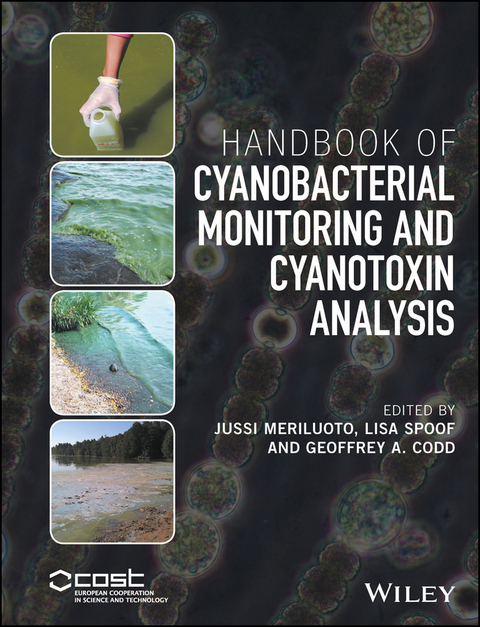
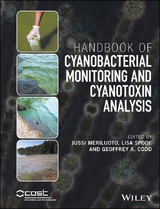
A valuable handbook containing reviews, practical methods and standard operating procedures.
- A valuable and practical working handbook containing introductory and specialist content that tackles a major and growing field of environmental, microbiological and ecotoxicological monitoring and analysis
- Includes introductory reviews, practical analytical chapters and a comprehensive listing of almost thirty Standard Operating Procedures (SOPs)
- For use in the laboratory, in academic and government institutions and industrial settings
Dr Jussi Meriluoto, Department of Biosciences / Biochemistry, Åbo Akademi University, Turku, Finland
Jussi Meriluoto, PhD, MTheol, is a biochemist of Finnish origin. He has been working in the field of toxic cyanobacteria since the 1980s. The main line of his research deals with instrumental analyses of cyanotoxins and biomarkers in various matrices. He has applied this expertise in the context of environmental and bioaccumulation studies, ecotoxicology, toxinology, drinking water treatment and toxin degradation. He also has an interest in terrestrial cyanobacteria and probiotic bacteria. He is leading Working Group 1 Occurrence of cyanobacteria and cyanotoxins in CYANOCOST, the COST Action responsible for the development of the Handbook. An important incentive in his work is the principle of inclusiveness and the desire to exchange technical and managemental know-how with new actors entering the cyanotoxin field.
Dr Lisa Spoof, Department of Biosciences / Biochemistry, Åbo Akademi University, Turku, Finland
Lisa Spoof, PhD, is a Finnish biochemist. She is a specialist on chromatographic and mass spectrometric analyses of cyanotoxins. She has carried out research on analysis, isolation and characterization of bioactive peptides (microcystins, nodularins, anabaenopeptins) in freshwater and brackish-water cyanobacteria since the 1990s. Her personal experience in laboratory work also includes research on cylindrospermopsin and cyanobacterial neurotoxins, and this strong hands-on experience has been useful for the editorial work concerning the practical chapters in this Handbook.
Professor Geoffrey A. Codd, School of Biological and Environmental Sciences, University of Stirling, UK, and, School of Life Sciences, University of Dundee, UK
Geoffrey Codd, PhD, FRSE, is a microbiologist and has carried out research on the biochemistry and ecotoxicology of cyanobacteria and cyanotoxins. His research has included the molecular and organismal modes of action of microcystins, development of physico-chemical and antibody-based methods for cyanotoxin analysis and the investigation of waterborne, cyanotoxin-associated human and animal health incidents. Professor Codd is a past President of the British Phycological Society and the Federation of European Phycological Societies and has served on working parties and committees for the assessment and risk management of cyanobacteria and cyanotoxins at national (UK, Australia, USA) and international level (EU, WHO, UNESCO).
A valuable handbook containing reviews, practical methods and standard operating procedures. A valuable and practical working handbook containing introductory and specialist content that tackles a major and growing field of environmental, microbiological and ecotoxicological monitoring and analysis Includes introductory reviews, practical analytical chapters and a comprehensive listing of almost thirty Standard Operating Procedures (SOPs) For use in the laboratory, in academic and government institutions and industrial settings Those readers will appreciate the research that validates and updates cyanotoxin monitoring and analysis plus adding to approaches for setting standard methods that can be applied worldwide. Wayne Carmichael, Analytical and Bioanalytical Chemistry (2018).
Dr Jussi Meriluoto, Department of Biosciences / Biochemistry, Åbo Akademi University, Turku, Finland Jussi Meriluoto, PhD, MTheol, is a biochemist of Finnish origin. He has been working in the field of toxic cyanobacteria since the 1980s. The main line of his research deals with instrumental analyses of cyanotoxins and biomarkers in various matrices. He has applied this expertise in the context of environmental and bioaccumulation studies, ecotoxicology, toxinology, drinking water treatment and toxin degradation. He also has an interest in terrestrial cyanobacteria and probiotic bacteria. He is leading Working Group 1 Occurrence of cyanobacteria and cyanotoxins in CYANOCOST, the COST Action responsible for the development of the Handbook. An important incentive in his work is the principle of inclusiveness and the desire to exchange technical and managemental know-how with new actors entering the cyanotoxin field. Dr Lisa Spoof, Department of Biosciences / Biochemistry, Åbo Akademi University, Turku, Finland Lisa Spoof, PhD, is a Finnish biochemist. She is a specialist on chromatographic and mass spectrometric analyses of cyanotoxins. She has carried out research on analysis, isolation and characterization of bioactive peptides (microcystins, nodularins, anabaenopeptins) in freshwater and brackish-water cyanobacteria since the 1990s. Her personal experience in laboratory work also includes research on cylindrospermopsin and cyanobacterial neurotoxins, and this strong hands-on experience has been useful for the editorial work concerning the practical chapters in this Handbook. Professor Geoffrey A. Codd, School of Biological and Environmental Sciences, University of Stirling, UK, and, School of Life Sciences, University of Dundee, UK Geoffrey Codd, PhD, FRSE, is a microbiologist and has carried out research on the biochemistry and ecotoxicology of cyanobacteria and cyanotoxins. His research has included the molecular and organismal modes of action of microcystins, development of physico-chemical and antibody-based methods for cyanotoxin analysis and the investigation of waterborne, cyanotoxin-associated human and animal health incidents. Professor Codd is a past President of the British Phycological Society and the Federation of European Phycological Societies and has served on working parties and committees for the assessment and risk management of cyanobacteria and cyanotoxins at national (UK, Australia, USA) and international level (EU, WHO, UNESCO).
Title Page 5
Copyright Page 6
Contents 7
List of Contributors 19
Preface 28
Acknowledgements 30
Section I Introduction 31
Chapter 1 Introduction: Cyanobacteria, Cyanotoxins, Their Human Impact, and Risk Management 33
1.1 Introduction 33
1.2 Cyanotoxins 34
1.3 Exposure Routes, Exposure Media, and At-isk Human Activities 36
1.4 Cyanobacterial Blooms and Cyanotoxins in Relation to Human Pressures on Water Resources and Climate Change 37
1.5 Aims of the Handbook 37
References 38
Section II Cyanobacteria 39
Chapter 2 Ecology of Cyanobacteria 41
2.1 Introduction 41
2.2 Environmental Conditions Leading to Cyanobacterial Blooms 42
2.2.1 What Species for Which Types of Environments? 43
2.3 Population Dynamics of Cyanobacteria 43
2.3.1 How Is a Bloom Defined? 43
2.3.2 Seasonality in the Dynamics of Cyanobacterial Populations 43
2.4 Spatial Distribution of Cyanobacteria in Freshwater Ecosystems 45
2.5 Ecology of the Production of Toxins by Cyanobacteria 46
2.6 General Conclusions 47
References 47
Chapter 3 Picocyanobacteria: The Smallest Cell-Size Cyanobacteria 49
3.1 Introduction 49
3.1.1 General Characteristics of Picocyanobacteria 49
3.1.2 Detection and Identification 50
3.1.3 Phylogenetic Position 50
3.1.4 Occurrence in Freshwater and Marine Environments 51
3.1.5 Ecological Role of Picocyanobacteria 51
3.2 Records of Toxic Picocyanobacteria 51
3.2.1 Occurrence of Microcystins in Picocyanobacteria 52
3.2.2 Other Bioactive Compounds in Picocyanobacteria 53
3.3 Summary 55
References 56
Chapter 4 Expansion of Alien and Invasive Cyanobacteria 58
4.1 Introduction 58
4.2 Definition of Invasive/Alien Species: Nomenclature Problems 59
4.2.1 Invasive Species Concept in Cyanobacteria 59
4.3 Occurrence of Invasive and Alien Cyanobacteria 61
4.3.1 Examples of the Expansion of Invasive and Alien Cyanobacteria 61
4.4 Factors Enhancing the Expansion of Alien Cyanobacteria 63
4.4.1 Physiological Factors 63
4.4.2 Environmental Factors 63
4.5 Impact of Cyanobacterial Invasion on Ecosystem 64
References 66
Section III Sampling, Monitoring and Risk Management 71
Chapter 5 Health and Safety During Sampling and in the Laboratory 73
5.1 Introduction 73
5.2 Sampling Safety 73
5.3 Laboratory Safety 74
5.4 Cyanotoxin Production and Application 75
5.5 Contamination due to Equipment, Glassware, and Accidents 75
References 75
Chapter 6 Basic Guide to Detection and Monitoring of Potentially Toxic Cyanobacteria 76
6.1 Introduction 77
6.2 Monitoring of Cyanobacteria: Sampling Strategies* 78
6.2.1 Selection of Variables 78
6.2.2 Choice of Sampling Locations in Relation to the Typology of Waterbodies and to Bloom-Forming Cyanobacteria 80
6.2.3 Monitoring Frequency 82
6.2.4 Equipment 83
6.2.5 Storage and Transport 84
6.3 Cyanobacterial Identification and Quantification* 85
6.3.1 Taxonomic Classification 85
6.3.2 Identification 87
6.3.3 Population Density Estimation 90
6.3.4 Cyanobacterial Biomass Estimation 92
Appendix 6.1 Testing Phytoplankton Distributions: ?2 Test (Pearson Goodness-of-Fit Test) 93
References 96
Chapter 7 Case Studies of Environmental Sampling, Detection, and Monitoring of Potentially Toxic Cyanobacteria 100
7.1 Introduction 101
7.2 Shallow Lakes 101
7.2.1 Variability in Microcystin Concentrations along the River Havel, Germany 101
7.2.2 Cylindrospermopsin in Shallow Lakes in Poland 102
7.2.3 Microcystis aeruginosa and Microcystins in Lake Taskisi, Turkey 103
7.2.4 Natural Swimming Pools – Lakes and Dams in Slovakia 103
7.3 Deep Lakes 104
7.4 Reservoirs 105
7.4.1 The Eutrophic, Microcystis-Dominated Sulejow Reservoir, Poland 106
7.4.2 Species, Morphospecies, and Toxin Variability in Santillana Reservoir, Spain 106
7.5 Rivers 107
7.6 The Baltic Sea 108
7.7 Waterbodies Used for Drinking Water Production 109
7.7.1 The Vertically Stratified Lake Sapanca, Turkey 110
7.7.2 Wind-Sheltered and Sensitive Lake Borgsjön, Finland 110
7.7.3 Management of Drinking Water in Sulejow, Zegrzynski, and Dobromierz Reservoirs and Pilica River, Poland 111
References 111
Chapter 8 New Tools for the Monitoring of Cyanobacteria in Freshwater Ecosystems 114
8.1 Introduction 114
8.2 Use of Photosynthetic Pigments for the In Situ Quantification of Cyanobacteria and Other Phytoplankton in Water 115
8.3 Integration of Physicochemical and Fluorescence Sensors in Buoys 116
8.4 New Methods for Automatic Cell Counting in Water Samples 116
References 117
Chapter 9 Remote Sensing of Cyanobacterial Blooms in Inland, Coastal, and Ocean Waters 119
9.1 Introduction 119
9.2 Bio-optical Properties of Marine and Inland Waters 120
9.3 Platforms and Sensors 121
9.4 Overview of Approaches 122
9.5 Case Study Examples 125
9.5.1 Mapping Cyanobacteria Blooms Using Airborne Remote Sensing 125
9.5.2 Mapping Cyanobacterial Blooms Using Satellite Remote Sensing 125
9.6 Future Prospects 126
References 128
Chapter 10 The Italian System for Cyanobacterial Risk Management in Drinking Water Chains 130
10.1 Introduction 130
10.2 Risk Assessment of Toxic Cyanobacterial Outbreaks in Water for Human Consumption in Italy 131
10.2.1 Toxic Species and Associated Toxins 131
10.2.2 Water Supply System Vulnerability 131
10.3 Framework of Risk Management of Toxic Cyanobacterial Outbreaks in Water for Human Consumption 132
10.3.1 Risk Management Framework 132
10.3.2 Emergency Response Plans 136
10.4 Risk Information and Communication 136
References 136
Section IV Toxins and Bioactive/Noxious Compounds from Cyanobacteria 137
Chapter 11 Microcystins and Nodularins 139
11.1 Chemical Characteristics and Diversity of Microcystins and Nodularins 139
11.2 Biosynthesis and Genetics of MC and NOD Production 140
11.3 Occurrence of MCs and NODs 142
11.4 Toxicological Effects and Associated Health Risk 143
11.4.1 Mechanisms of toxicity 143
11.4.2 Exposure Routes 145
11.4.3 Tolerable Daily Intake Guidelines 145
11.4.4 Impacts on Aquatic Ecosystems 146
11.5 Available Methods for the Analysis of MCs and NODs 147
References 148
Chapter 12 Cylindrospermopsin and Congeners 157
12.1 Chemical Characteristics of Cylindrospermopsin and Congeners 157
12.2 Genes Involved in CYN Biosynthesis 158
12.3 CYN Producers and Distribution 158
12.4 Toxicity of CYN 159
12.4.1 Mechanism of Toxicity 159
12.4.2 Human Intoxication 160
12.4.3 Effects on Animals and Ecosystems 160
12.5 The Biological Role of CYN 162
12.6 Degradation of CYN 162
12.7 Available Methods for Determining CYN in Waters 162
References 163
Chapter 13 Anatoxin-a, Homoanatoxin-a, and Natural Analogues 168
13.1 Introduction 168
13.2 Chemical Structure, Synthesis, and Reactivity 168
13.3 Biosynthesis of ANTX, HANTX, and dihydroANTX 170
13.4 Occurrence and Producing Strains 170
13.5 Toxicity and Pharmacology 171
13.5.1 Mechanism of Toxicity 171
13.5.2 Animal Poisonings 171
13.6 Analytical Methodologies 172
13.6.1 Available Methods for Determination and Quantification 172
13.6.2 Methods for the Detection and Quantitation of AN 172
References 174
Chapter 14 Saxitoxin and Analogues 178
14.1 Introduction 178
14.2 Toxicity of STXs 179
14.3 Occurrence 179
14.4 Genetics and Biosynthesis 180
14.5 Detection Methods 181
14.6 Guidance Values or National Regulations or Recommendations for Managing STXs 182
References 182
Chapter 15 Anatoxin-a(S) 185
15.1 Chemical Structure of Anatoxin-a(S) 185
15.2 Biosynthesis 185
15.3 Occurrence and Producing Strains 186
15.4 Toxicology and Pharmacology 186
15.4.1 Mechanism of Toxicity 186
15.4.2 Animal Poisonings 187
15.5 Analytical Methods for Determination and Quantification 187
References 188
Chapter 16 ?-N-Methylamino-l-Alanine and (S)-2,4-Diaminobutyric Acid 190
16.1 Historical Overview 190
16.2 Structure, Synthesis, and Molecular Properties 191
16.3 Neurotoxicity 191
16.4 Methods for Identification and Quantification 192
16.5 Occurrence in Cyanobacteria, Plants, and Animals 192
References 193
Chapter 17 Lipopolysaccharide Endotoxins 195
17.1 Lipopolysaccharide Endotoxins: Structure 195
17.2 Occurrence of LPS Endotoxins 197
17.3 Toxic Effects of LPS Endotoxins 198
17.4 Methods for Determination of LPS Endotoxins 199
References 200
Chapter 18 Cyanobacterial Retinoids 203
18.1 Introduction 203
18.2 Detection of Retinoids Produced by Cyanobacteria 204
18.3 Chemistry and Analysis of Retinoids 205
18.4 Malformations by Cyanobacterial Retinoids 206
18.5 Concluding Remarks 206
References 206
Chapter 19 Other Cyanobacterial Bioactive Substances 209
19.1 Introduction 209
19.2 Aeruginosins and Spumigins 212
19.3 Anabaenopeptins 214
19.4 Biogenic amines 215
19.5 Depsipeptides 216
19.6 Endocrine Disruptors and Novel Tumour Promoters 217
19.7 Lyngbyatoxins and Other Toxins Produced by Lyngbya majuscula 218
19.8 Microginins 219
19.9 Microviridins 219
References 220
Chapter 20 Taste and Odour Compounds Produced by Cyanobacteria 226
20.1 Cyanobacterial Taste and Odour Compounds in Water Resources 226
20.2 Analytical Methods for Taste and Odour Compounds 227
References 229
Section V Screening and Trace Analysis of Cyanotoxins 233
Chapter 21 Determination of Cyanotoxins by High-Performance Liquid Chromatography with Photodiode Array 235
21.1 Introduction: Application of High-Performance Liquid Chromatography for Different Classes of Cyanotoxins 235
21.2 HPLC of Microcystins and Nodularins 236
21.3 HPLC of Anatoxins 238
21.4 HPLC of Cylindrospermopsin 238
21.5 Advantages and Disadvantages of HPLC-PDA 238
References 239
Chapter 22 Determination of Cyanotoxins by High-Performance Liquid Chromatography with Fluorescence Derivatization 242
22.1 Principle of the Technique and Why It Is Used for Cyanotoxins 242
22.2 Types of Reactions for Analysing Paralytic Shellfish Toxins Using High-Performance Liquid Chromatography with Fluorescence Derivatization 243
22.3 Types of Reactions for Analysing ?-N-Methylamino-l-Alanine and Isomers by HPLC-FLD 246
22.4 Need for Confirmatory Techniques with HPLC-FLD 246
References 246
Chapter 23 Liquid Chromatography–Mass Spectrometry 248
23.1 Introduction 248
23.2 Ion Sources 250
23.2.1 Electron Ionisation (EI) 251
23.2.2 Chemical Ionisation (CI) 251
23.2.3 Fast Atom Bombardment (FAB) 252
23.2.4 Matrix-Assisted Laser Desorption/Ionisation (MALDI) 252
23.2.5 Atmospheric Pressure Ionisation (API) 252
23.2.6 Atmospheric Pressure Chemical Ionisation (APCI) 253
23.2.7 Electrospray Ionisation (ESI) 253
23.3 Types of Mass Analysers 255
23.3.1 Quadrupole Ion Trap (QIT) Mass Spectrometer 255
23.3.2 Quadrupole and Triple Quadrupole Mass Spectrometry 256
23.3.3 Time-of-Flight (TOF) Mass Spectrometry 259
23.3.4 The Orbitrap Mass Spectrometer 261
23.3.5 The Hybrid Linear Ion Trap–Fourier Transform Ion Cyclotron Resonance Mass Spectrometer 262
23.4 Application of LC?MS in Cyanotoxin Analyses 263
23.5 Overview of Quantitation: Cyanobacterial Toxins 265
23.5.1 Preparing of Standards for LC-MS Applications 266
23.5.2 An Approach to the Tuning of Target Analytes (0.1–1 µg mL?1) 266
23.6 Ion Suppression/Enhancement Considerations 267
23.6.1 Matrix Effects 267
23.6.2 Detecting and Evaluating of Ion Suppression 268
23.7 High-Resolution Mass Spectrometry (HRMS) 269
23.8 MS Experiments for the Detection of Unknown Cyanotoxins 272
23.8.1 Interpretation of Mass Spectra: Based on Examples of Different Cyanotoxins and Diagnostic Ions 274
23.8.2 Microcystins 276
23.8.3 Anatoxin-a 278
23.8.4 Cylindrospermopsin 278
23.8.5 BMAA 278
23.9 Performance Criteria of LC-MS Methods for Identification and Quantification of Cyanotoxins 279
References 281
Chapter 24 Capillary Electrophoresis of Cyanobacterial Toxins 288
24.1 Basic Theory and Introduction of Capillary Electrophoresis 288
24.2 Selection of Separation Methods 289
24.3 Detection Methods 289
24.4 CE Methods of Cyanobacterial Toxins 290
24.4.1 PSP Toxins 290
24.4.2 Microcystins 290
24.4.3 Anatoxin?a 290
24.4.4 Cylindrospermopsin (CYN) 291
24.5 Future Perspectives 292
References 292
Chapter 25 Immunoassays and Other Antibody Applications 293
25.1 Introduction 293
25.2 Production of Antibodies versus Cyanotoxins 294
25.3 Applications of Cyanotoxin Antibodies 294
25.4 Cyanotoxin Localisation and Quantification Using Antibodies 295
25.5 Other Cyanotoxin Antibody-Related Technologies 295
References 296
Chapter 26 Protein Phosphatase Inhibition Assays 297
26.1 Background and Molecular Mechanism of Protein Phosphatase Inhibition 297
26.2 Classes of Compounds that Inhibit Protein Phosphatases 298
26.3 Effects of Microcystins on Cyanobacterial Protein Phosphatases 298
26.4 The Basis of the PPIA Assay for Microcystins and Its Evolution 298
26.5 Comparison of PPIA with Other Analytical Methods for Microcystins 298
26.6 Commercially Available Kits for Microcystins 299
26.7 Improvements to the PPIA Assay to Make It More Specific to Microcystins 299
26.8 Conclusions about the Effectiveness of the PPIA Assay for Microcystins and Nodularins in Different Matrices 299
References 300
Chapter 27 Bioassay Use in the Field of Toxic Cyanobacteria 302
27.1 Introduction 302
27.2 Drivers and Objectives for Bioassay Use 303
27.3 Classification and Terminology 304
27.4 Bioassays for the Effect Evaluation 305
27.5 Bioassays for Monitoring 306
27.6 Conclusions and Future Perspectives 308
References 308
Chapter 28 Molecular Tools for the Detection of Toxigenic Cyanobacteria in Natural Ecosystems 310
28.1 Introduction 310
28.2 Molecular Methods for the Monitoring of Potentially Toxic Cyanobacteria 311
28.3 Strengths and Limitation of These Molecular Approaches 312
28.4 Conclusions 312
References 313
Section VI Methodological Considerations 315
Chapter 29 Method Validation Guidelines for the Analysis of Cyanotoxins 317
29.1 Introduction: Method Validation as a Requirement for Laboratory Accreditation 317
29.2 Performance Criteria and Validation Protocols for the Analysis of Cyanotoxins in Environmental Studies 318
29.3 Validation Issues Concerning the Analysis of Cyanotoxins 320
References 321
Chapter 30 Interpretation, Significance, and Reporting of Results 322
30.1 Introduction 322
30.2 Interpretation and Significance of Results 323
30.3 Reporting of Results and Maximization of Benefits 324
30.4 Examples, Debriefing 324
30.4.1 Problems with Drinking Water Production 325
30.4.2 Animal Deaths and Multiple Toxic Species/Multiple Toxins 325
30.4.3 Irrigation and Water Quality Problems 326
References 326
Chapter 31 Lessons from the Užice Case: How to Complement Analytical Data 328
31.1 Introduction 329
31.2 Vrutci Reservoir and the Cyanobacterial Bloom Detected in December 2013 329
31.3 Analytical Work: Toxin Analyses of Water, Cyanobacterial Biomass, and Fish from Reservoir Vrutci 331
31.4 Complementary Data on Toxicity and Observed Health Problems 332
31.4.1 Bioassays 332
31.4.2 Questionnaire 332
31.4.3 Epidemiological Survey 332
31.5 Analytical and Supplementary Results Combined: A Plausible Reconstruction of Events in Vrutci Reservoir and the City of Užice 336
31.6 Conclusions from the Užice Case 336
References 337
Chapter 32 Selection of Analytical Methodology for Cyanotoxin Analysis 339
32.1 Introduction 339
32.2 General Comparison of Physicochemical Analyses, Biochemical Methods, and Bioassays 339
32.3 Guidance for Selecting and Using Standard Operating Procedures Found in this Handbook 340
32.4 Methodology versus Required Response Time 341
32.5 Influence of Waterbody History on the Choice of Methods 342
32.6 Integration of the Results Obtained: Making Sense 342
Section VII Standard Operating Procedures (SOPs) 343
SOP 1 Cyanobacterial Samples: Preservation, Enumeration, and Biovolume Measurements 345
SOP 1.1 Introduction 345
SOP 1.2 Sample Preservation 345
SOP 1.2.1 Introduction 345
SOP 1.2.2 Preservation in acid Lugol’s Iodine Solution 346
SOP 1.2.3 Preservation in Buffered formaldehyde 348
SOP 1.2.4 Preservation in glutaraldehyde 348
SOP 1.3 Methods for Cyanobacterial Enumeration 349
SOP 1.3.1 Introduction 349
SOP 1.3.2 Utermöhl-based method 349
SOP 1.3.3 Abundance estimation using counting chambers 352
SOP 1.3.4 Epifluorescence microscopy analysis 353
SOP 1.3.5 Flow cytometry 354
SOP 1.4 Methods for Biovolume Measurement 356
SOP 1.4.1 Introduction 356
SOP 1.4.2 Stereometrical formulae 356
SOP 1.4.3 Semiautomated image analysis 356
References 359
SOP 2 Chlorophyll a Extraction and Determination 361
SOP 2.1 Introduction 361
SOP 2.2 Experimental 361
SOP 2.2.1 Materials 361
SOP 2.2.2 Spectrophotometer Calibration 362
SOP 2.2.3 Sample Preparation 362
SOP 2.2.4 Spectrophotometric Readings and Calculation 362
SOP 2.2.5 Equations 363
SOP 2.2.6 Performance indicators 363
References 364
SOP 3 Phycocyanin Extraction and Determination 365
SOP 3.1 Introduction 365
SOP 3.2 Experimental 365
SOP 3.2.1 Materials 365
SOP 3.2.2 Saline Buffer Preparation 366
SOP 3.2.3 Sample Preparation 366
SOP 3.2.4 Spectrophotometric Readings 366
SOP 3.3 Calculation 367
SOP 3.4 Performance Indicators 367
References 368
SOP 4 Analysis of Picocyanobacteria Abundance in Epifluorescence Microscopy 369
SOP 4.1 Introduction 369
SOP 4.2 Experimental 370
SOP 4.2.1 Materials 370
SOP 4.2.2 Equipment 370
SOP 4.2.3 Procedure 371
SOP 4.2.4 Further Notes and Biomass Calculation 371
References 372
SOP 5 Estimation of Cyanobacteria Biomass by Marker Pigment Analysis 373
SOP 5.1 Introduction 373
SOP 5.2 Experimental 374
SOP 5.2.1 Sample Processing and Pigment Extraction 374
SOP 5.2.2 Materials 374
SOP 5.2.3 Special Equipment 374
SOP 5.2.4 HPLC Mobile Phase [7] 375
SOP 5.2.5 Chromatography 375
References 379
SOP 6 Extraction of Cyanotoxins from Cyanobacterial Biomass 380
SOP 6.1 Introduction 380
SOP 6.2 Experimental 381
SOP 6.2.1 Materials 381
SOP 6.2.2 Solvents 381
SOP 6.2.3 General Procedure 381
SOP 6.3 Quality Control 381
SOP 6.4 Validation Data 383
SOP 6.5 Special Issues 383
References 383
SOP 7 Solid-Phase Extraction of Microcystins and Nodularin from Drinking Water 384
SOP 7.1 Introduction 384
SOP 7.2 Experimental 385
SOP 7.2.1 Materials 385
SOP 7.2.2 Special Equipment 385
SOP 7.2.3 Solutions 386
SOP 7.2.4 General Procedure 386
SOP 7.3 Quality Control 387
SOP 7.4 Validation Data 387
References 387
SOP 8 Extraction of Microcystins from Animal Tissues 388
SOP 8.1 Introduction 388
SOP 8.2 Experimental 388
SOP 8.2.1 Materials 388
SOP 8.2.2 Special Equipment 389
SOP 8.2.3 General Procedure 389
SOP 8.3 Validation 390
SOP 8.4 Special Issues 391
References 391
SOP 9 Analysis of Microcystins by Online Solid Phase Extraction–Liquid Chromatography Tandem Mass Spectrometry 392
SOP 9.1 Introduction 392
SOP 9.2 Experimental 393
SOP 9.2.1 Materials 393
SOP 9.2.2 Special Equipment 393
SOP 9.2.3 HPLC Mobile Phase 393
SOP 9.2.4 Online SPE HPLC-ESI-MS/MS Analysis 394
SOP 9.2.5 Online SPE HPLC-ESI-MS/MS Chromatograms of Microcystins on Isocratic Mode: Suitable for Samples of Medium Complexity 396
SOP 9.2.6 Online SPE HPLC-ESI-MS/MS Chromatograms of Microcystins on Elution Gradient: Suitable for Complex Samples 396
SOP 9.3 Validation 397
References 401
SOP 10 Determination of Microcystins and Nodularin in Filtered and Drinking Water by LC-MS/MS 402
SOP 10.1 Introduction 402
SOP 10.2 Experimental 402
SOP 10.2.1 Materials 402
SOP 10.2.2 Special Equipment 403
SOP 10.2.3 Solutions 403
SOP 10.2.4 Calibration Standards and Quality Control Standard 403
SOP 10.2.5 General Procedure 404
SOP 10.3 Calibration 405
SOP 10.4 Sample Analysis – Calculations 405
SOP 10.5 Quality Control 405
SOP 10.6 Expression of Results 407
SOP 10.7 Validation Data 407
References 408
SOP 11 Analysis of Microcystins and Nodularin by Ultra High-Performance Liquid Chromatography Tandem Mass Spectrometry 409
SOP 11.1 Introduction 409
SOP 11.2 Experimental 409
SOP 11.2.1 Materials 409
SOP 11.2.2 Special Equipment 410
SOP 11.2.3 Solutions 410
SOP 11.2.4 Calibration Standards 410
SOP 11.2.5 HPLC Mobile Phases 410
SOP 11.2.6 UHPLC-MS/MS 410
SOP 11.3 Identification of Analytes 411
SOP 11.4 Quantification of Analytes 411
SOP 11.5 Validation 413
References 414
SOP 12 Analysis of Microcystins in Animal Tissues Using LC-MS/MS 415
SOP 12.1 Introduction 415
SOP 12.2 Experimental 416
SOP 12.2.1 Materials 416
SOP 12.2.2 Special Equipment 416
SOP 12.2.3 HPLC Mobile Phase 416
SOP 12.2.4 HPLC-MS/MS 416
SOP 12.3 Calibration and Method Validation 417
References 418
SOP 13 Quantitative Screening of Microcystins and Nodularin in Water Samples with Commercially Available ELISA Kits 420
SOP 13.1 Introduction 420
SOP 13.2 Experimental 421
SOP 13.2.1 Materials 421
SOP 13.2.2 Special Equipment 421
SOP 13.2.3 Standard Solutions 421
SOP 13.2.4 General Procedure 421
SOP 13.3 Quality Control 421
SOP 13.4 Validation 422
Reference 422
SOP 14 Quantitative Screening of Microcystins and Nodularin in Water Samples with Commercially Available PPIA Kits 423
SOP 14.1 Introduction 423
SOP 14.2 Experimental 424
SOP 14.2.1 Materials 424
SOP 14.2.2 Special Equipment 424
SOP 14.2.3 Standard Solutions 424
SOP 14.2.4 General Procedure 424
SOP 14.3 Quality Control 425
SOP 14.4 Validation 425
References 425
SOP 15 Solid-Phase Extraction of Cylindrospermopsin from Filtered and Drinking Water 426
SOP 15.1 Introduction 426
SOP 15.2 Experimental 427
SOP 15.2.1 Materials 427
SOP 15.2.2 Special Equipment 427
SOP 15.2.3 Solutions 427
SOP 15.2.4 General Procedure 427
SOP 15.3 Quality Data 428
SOP 15.4 Validation 428
References 428
SOP 16 Determination of Cylindrospermopsin in Filtered and Drinking Water by LC-MS/MS 429
SOP 16.1 Introduction 429
SOP 16.2 Experimental 429
SOP 16.2.1 Materials 429
SOP 16.2.2 Special Equipment 430
SOP 16.2.3 Calibration Standards and Quality Control Standard 430
SOP 16.2.4 General Procedure 431
SOP 16.3 Calibration 431
SOP 16.3.1 Multiple-Point Calibration 432
SOP 16.4 Sample Analysis: Calculations 432
SOP 16.5 Quality Control 433
SOP 16.6 Expression of Results 433
SOP 16.7 Validation Data 433
References 434
SOP 17 Solid-Phase Extraction of Anatoxin-a from Filtered and Drinking Water 435
SOP 17.1 Introduction 435
SOP 17.2 Experimental 435
SOP 17.2.1 Materials 435
SOP 17.2.2 Special Equipment 436
SOP 17.2.3 Solutions 436
SOP 17.2.4 Standard Anatoxin-a Solution 436
SOP 17.2.5 General Procedure 437
SOP 17.3 Quality Control 437
SOP 17.4 Validation 437
Reference 437
SOP 18 Determination of Anatoxin?a in Filtered and Drinking Water by LC-MS/MS 438
SOP 18.1 Introduction 438
SOP 18.2 Experimental 438
SOP 18.2.1 Materials 438
SOP 18.2.2 Special Equipment 439
SOP 18.2.3 LC Solutions 439
SOP 18.2.4 Calibration Standards and Quality Control Standard 439
SOP 18.3 Calibration 440
SOP 18.4 Sample Analysis—Calculations 441
SOP 18.5 Quality Control 442
SOP 18.6 Expression of Results 442
SOP 18.7 Validation 442
Reference 442
SOP 19 Analysis of Anatoxin-a and Cylindrospermopsin by Ultra High-Performance Liquid Chromatography Tandem Mass Spectrometry 443
SOP 19.1 Introduction 443
SOP 19.2 Experimental 443
SOP 19.2.1 Materials 443
SOP 19.2.2 Special Equipment 444
SOP 19.2.3 Calibration Standards 444
SOP 19.2.4 HPLC Mobile Phases 444
SOP 19.2.5 UHPLC-MS/MS 444
SOP 19.3 Identification of Analytes 446
SOP 19.4 Quantification of Analytes 446
SOP 19.5 Validation 447
References 447
SOP 20 Extraction and Chemical Analysis of Saxitoxin and Analogues in Water 448
SOP 20.1 Preparation of Aqueous Standard Solutions and Calibration Conditions for Dissolved and Cell-Bound Saxitoxins 448
SOP 20.1.l Introduction 448
SOP 20.1.2 Experimental 449
SOP 20.2 Online Solid-Phase Extraction of Dissolved Saxitoxins 452
SOP 20.2.1 Introduction 452
SOP 20.2.2 Experimental 452
SOP 20.3 Extraction of Cell-Bound Saxitoxins From Biomass Filtered on Glass-Fibre Filters 455
SOP 20.3.1 Introduction 455
SOP 20.3.2 Experimental 455
SOP 20.4 Analysis of Saxitoxins by High-Performance Liquid Chromatography Coupled to Mass Spectrometry 456
SOP 20.4.1 Introduction 456
SOP 20.4.2 Experimental 456
SOP 20.4.3 Quantification for Standards and Real Samples 461
References 461
SOP 21 Extraction of BMAA from Cyanobacteria 462
SOP 21.1 Introduction 462
SOP 21.2 Experimental 462
SOP 21.2.1 Materials 462
SOP 21.2.2 Special Equipment 463
SOP 21.2.3 Solutions 463
SOP 21.2.4 General Procedure 463
SOP 21.3 Validation 463
SOP 21.4 Special Issues 464
References 464
SOP 22 Analysis of ?-N-Methylamino-l-Alanine by UHPLC-MS/MS 465
SOP 22.1 Introduction 465
SOP 22.2 Experimental 465
SOP 22.2.1 Materials 465
SOP 22.2.2 Special Equipment 466
SOP 22.2.3 Solutions 466
SOP 22.2.4 General Procedure 466
SOP 22.3 Validation 467
SOP 22.4 Special Issues 467
References 468
SOP 23 Extraction and LC-MS/MS Analysis of Underivatised BMAA 469
SOP 23.1 Introduction 469
SOP 23.2 Experimental 470
SOP 23.2.1 Materials 470
SOP 23.2.2 Special Equipment 470
SOP 23.2.3 Solutions 470
SOP 23.2.4 LC Mobile Phase 470
SOP 23.2.5 General Procedure 470
SOP 23.2.6 Chromatography 473
SOP 23.2.7 Detection by MS/MS 473
SOP 23.3 Quantification 475
References 476
SOP 24 Extraction, Purification, and Testing of LPS from Cyanobacterial Samples 477
SOP 24.1 Introduction 477
SOP 24.2 Experimental 478
SOP 24.2.1 Materials 478
SOP 24.2.2 Special Equipment 478
SOP 24.2.3 Solutions 478
SOP 24.2.4 Extraction, Purification, and Determination of LPS 478
SOP 24.3 Validation 480
References 481
SOP 25 Extraction and Chemical Analysis of Planktopeptin and Anabaenopeptins 482
SOP 25.1 Solid-Phase Extraction of Anabaenopeptins and Planktopeptin 482
SOP 25.1.1 Introduction 482
SOP 25.1.2 Experimental 482
SOP 25.1.3 Validation 484
SOP 25.1.4 Special Issues 484
SOP 25.2 Analysis of Anabaenopeptins and Planktopeptin by HPLC with PDA Detector 485
SOP 25.2.1 Introduction 485
SOP 25.2.2 Experimental 485
SOP 25.2.3 Validation 487
SOP 25.2.4 Special Issues 487
SOP 25.3 Analysis of Anabaenopeptins and Planktopeptin by LC-MC/MC Using Information?Dependent Acquisition (IDA) Mode 488
SOP 25.3.1 Introduction 488
SOP 25.3.2 Experimental 488
SOP 25.3.3 Special Issues 489
References 491
SOP 26 Thamnocephalus Test 492
SOP 26.1 Introduction 492
SOP 26.2 Test Material 493
SOP 26.3 Validity of the Test 493
SOP 26.4 Description of Method [5] 493
SOP 26.5 Procedure 494
SOP 26.5.1 Concentrations of Test Substances 494
SOP 26.5.2 Replicates and Controls 494
SOP 26.5.3 Transfer of the Larvae 494
SOP 26.5.4 Incubation Conditions 494
SOP 26.6 Scoring of Results 494
SOP 26.7 Evaluation of Results [2] 495
References 495
Annex 1: Interlaboratory Trial [2] 496
Annex 2: Decision Tree 498
SOP 27 Determination of Geosmin and 2-Methylisoborneol in Water by HS-SPME-GC/MS 499
SOP 27.1 Introduction 499
SOP 27.2 Experimental 500
SOP 27.2.1 Materials 500
SOP 27.2.2 Special Equipment 500
SOP 27.2.3 General Procedure 500
SOP 27.3 Calibration 502
SOP 27.4 Sample Analysis – Calculations 503
SOP 27.5 Quality Control 503
SOP 27.6 Expression of Results 504
SOP 27.7 Validation 504
References 504
SOP 28 Rapid Analysis of Geosmin and 2-Methylisoborneol from Aqueous Samples Using Solid-Phase Extraction and GC-MS 505
SOP 28.1 Introduction 505
SOP 28.2 Experimental 506
SOP 28.2.1 Materials 506
SOP 28.2.2 Special Equipment 506
SOP 28.2.3 General Procedure 506
SOP 28.3 Internal and External Standard Calibration 508
SOP 28.4 Calculating the Concentration of MIB and GSM in the Water Sample 508
SOP 28.5 Quality Assurance Requirements 508
SOP 28.6 Storage and Shipping 509
SOP 28.7 Special Issues 509
References 510
SOP 29 Basic Validation Protocol for the Analysis of Cyanotoxins in Environmental Samples 511
SOP 29.1 Scope 511
SOP 29.2 Principle 512
SOP 29.3 General Considerations 512
SOP 29.4 Performance Parameters and Validation Criteria 512
SOP 29.5 Validation Experiments 512
SOP 29.6 Assessment of Method Performance Parameters 514
References 515
Section VIII Appendices 517
Appendix 1 Cyanobacterial Species and Recent Synonyms 519
References 529
Appendix 2 Cyanobacteria Associated With the Production of Cyanotoxins 531
References 545
Appendix 3 Tables of Microcystins and Nodularins 556
References 563
Index 568
EULA 579
| Erscheint lt. Verlag | 18.11.2016 |
|---|---|
| Sprache | englisch |
| Themenwelt | Naturwissenschaften ► Biologie ► Mikrobiologie / Immunologie |
| Naturwissenschaften ► Chemie ► Analytische Chemie | |
| Technik | |
| Schlagworte | Analytical Chemistry • Analytische Chemie • Anatoxin • Blooms • Blue-Green Algae • Chemie • Chemistry • cyanobacteria • Cyanobakterien • cylindrospermopsin • Environmental Analysis • Environmental Microbiology • Environmental Studies • eutrophication • Microcystin • saxitoxin • toxins • Umweltanalytik • Umweltforschung • Umwelt-Mikrobiologie • water quality |
| ISBN-13 | 9781119068723 / 9781119068723 |
| Informationen gemäß Produktsicherheitsverordnung (GPSR) | |
| Haben Sie eine Frage zum Produkt? |
 PDF (Adobe DRM)
Kopierschutz: Adobe-DRM
Adobe-DRM ist ein Kopierschutz, der das eBook vor Mißbrauch schützen soll. Dabei wird das eBook bereits beim Download auf Ihre persönliche Adobe-ID autorisiert. Lesen können Sie das eBook dann nur auf den Geräten, welche ebenfalls auf Ihre Adobe-ID registriert sind.
Details zum Adobe-DRM
Dateiformat: PDF (Portable Document Format)
Mit einem festen Seitenlayout eignet sich die PDF besonders für Fachbücher mit Spalten, Tabellen und Abbildungen. Eine PDF kann auf fast allen Geräten angezeigt werden, ist aber für kleine Displays (Smartphone, eReader) nur eingeschränkt geeignet.
Systemvoraussetzungen:
PC/Mac: Mit einem PC oder Mac können Sie dieses eBook lesen. Sie benötigen eine
eReader: Dieses eBook kann mit (fast) allen eBook-Readern gelesen werden. Mit dem amazon-Kindle ist es aber nicht kompatibel.
Smartphone/Tablet: Egal ob Apple oder Android, dieses eBook können Sie lesen. Sie benötigen eine
Geräteliste und zusätzliche Hinweise
Buying eBooks from abroad
For tax law reasons we can sell eBooks just within Germany and Switzerland. Regrettably we cannot fulfill eBook-orders from other countries.
aus dem Bereich