Computational Pharmaceutics (eBook)
John Wiley & Sons (Verlag)
978-1-118-57397-6 (ISBN)
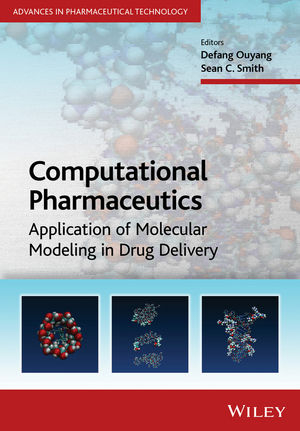
Molecular modeling techniques have been widely used in drug discovery fields for rational drug design and compound screening. Now these techniques are used to model or mimic the behavior of molecules, and help us study formulation at the molecular level. Computational pharmaceutics enables us to understand the mechanism of drug delivery, and to develop new drug delivery systems. The book discusses the modeling of different drug delivery systems, including cyclodextrins, solid dispersions, polymorphism prediction, dendrimer-based delivery systems, surfactant-based micelle, polymeric drug delivery systems, liposome, protein/peptide formulations, non-viral gene delivery systems, drug-protein binding, silica nanoparticles, carbon nanotube-based drug delivery systems, diamond nanoparticles and layered double hydroxides (LDHs) drug delivery systems. Although there are a number of existing books about rational drug design with molecular modeling techniques, these techniques still look mysterious and daunting for pharmaceutical scientists. This book fills the gap between pharmaceutics and molecular modeling, and presents a systematic and overall introduction to computational pharmaceutics. It covers all introductory, advanced and specialist levels. It provides a totally different perspective to pharmaceutical scientists, and will greatly facilitate the development of pharmaceutics. It also helps computational chemists to look for the important questions in the drug delivery field. This book is included in the Advances in Pharmaceutical Technology book series.
Dr Defang Ouyang is at the Institute of Medical Sciences, University of Macau in China as well as Aston University, UK. He has a multi-disciplinary and unique background and expertise in both drug delivery and molecular modeling. He completed his PhD at The University of Queensland, Australia in 2010. Since joining Aston, he has pioneered the application of molecular modeling techniques in the field of drug delivery - "computational pharmaceutics", including cyclodextrin-drug complexes, solid dispersions, non-viral gene delivery systems and liposome formulations. So far, he has authored over 20 refereed publications, consisting of an invited book, a book chapter, invited reviews, journal articles, conference papers and patents. Professor Sean C. Smith is at the School of Chemical Engineering, University of New South Wales, Australia. He was previously Director of the Center for Nanophase Materials Sciences at Oak Ridge National Laboratory, USA. He is firmly established internationally as a significant figure in the field of theoretical and computational chemistry. His contributions include theoretical studies of chemical reactions, material sciences, nano science and biological sciences. His publications include one book, three invited chapters, three invited reviews, and 203 refereed journal articles.
Chapter 1. Introduction of computational pharmaceutics
Defang Ouyang
Chapter 2. Crystal energy landscapes for aiding crystal form selection
Sarah Price
Chapter 3. Solubilization of poor-soluble drugs in cyclodextron formulation
Defang Ouyang
Chapter 4. Molecular Modeling for Polymeric and Micellar Drug Delivery
Sharon M. Loverde
Chapter 5. Solid dispersion - a pragmatic method to improve the bioavailability of poorly soluble drugs
Defang Ouyang
Chapter 6. Computer simulations of lipid membranes and liposomes for drug delivery
Becky Notman
Chapter 7. Molecular modeling for protein aggregation and formulation
Jim Warwicker
Chapter 8. Computational simulation of drug delivery by nano-materials at molecular level
Youyong Li
Chapter 9. Molecular and analytical modeling of nanodiamond for drug delivery applications
Amanda Barnard
Chapter 10. Molecular modeling of LDH drug delivery systems
Vinuthaa Murthy
Chapter 11. Molecular dynamics simulation as a tool to study the efficacy of PEGylation
Alex Bunker
Chapter 12. Synchrotron Radiation Micro Computed Tomography: a new approach for quantitative 3D structural architecture of drug delivery systems
Jiwen Zhang
Chapter 13. Pharmacokinetic modelling and simulation in drug delivery
Raj
Index
1
Introduction to Computational Pharmaceutics
Defang Ouyang1 and Sean C. Smith2
1Institute of Chinese Medical Sciences, University of Macau, Macau
2School of Chemical Engineering, University of New South Wales, Australia
1.1 What Is Computational Pharmaceutics?
It is a given that active pharmaceutical ingredients (APIs) should be made into safe and effective dosage forms or formulations before administration to patients. Pharmaceutics is the discipline to make an API into the proper dosage form or medicine, which may then be safely and effectively used by patients [1]. Pharmaceutics also relates to the absorption, distribution, metabolism, and excretion of medicines in the body. Branches of pharmaceutics include formulation development, pharmaceutical manufacture and associated technologies, dispersing pharmacy, physical pharmacy, pharmacokinetics, and biopharmaceutics [1–4]. Today there are various dosage forms, such as tablets, capsules, solutions, suspensions, creams, inhalations, patches, and recently nanomedicines (e.g., liposomes, nanoparticles, nanopatches). Although numerous new techniques have been developed for the form of dosage, current development of drug formulations still strongly relies on personal experience of pharmaceutical scientists by trial and error in the laboratory [1]. The process of formulation development is laborious, time-consuming, and costly. Therefore, the simplification of formulation development becomes more and more important in pharmaceutical research. Computational pharmaceutics involves the application of computational modeling to drug delivery and pharmaceutical nanotechnology. In combination with existing branches of pharmaceutics, it offers rapidly growing potential for developing rational, deductive and knowledge-based strategies in pharmaceutics.
With stunningly rapid advances in hardware, theory and software algorithms, computer simulation is now able to model complex systems, which may be difficult, costly, or even impractical to measure or monitor directly by experiment [5, 6]. The first example of computer modeling was the simulation of the nuclear bomb process in the Manhattan Project, World War II. With the development of high performance computing, multiscale modeling techniques have been widely pursued, from quantum mechanics (QM) and molecular dynamics (MDs) to stochastic Monte Carlo methods, coarse grained dynamics, discrete element methods (DEMs), finite element methods as well as advanced analytical modeling. In principle, all properties of all systems are able to be described by QM. However, first principle calculations are limited to small systems, <1000 atoms, which is impractical for solving applications of large molecules or systems [5, 6]. MD simulations mimic the physical motion of atoms and molecules under Newton’s laws of physics, which is applicable to larger systems containing millions of atoms [5, 6]. MD simulation is based on molecular mechanics, which models the interactions between atoms with force fields. Monte Carlo (MC) simulation uses the same empirical force field as MD simulation. However, MC simulation features playing and recording the results in casino-like conditions by repeated random sampling [5, 6]. Thus, unlike MD simulation, MC simulation cannot offer dynamical information with time evolution of the system in a form suitable for viewing. MC methods are especially useful for modeling systems with significant uncertainty and high degrees of freedom, such as polymer chains and protein membranes. For much larger systems, coarse-grain models do further classical approximations by treating functional groups as rigid bodies of constrained particles [5, 6]. The DEM is one of the numerical methods for computing the motion and effect of a large number of small particles, which is widely used in the pharmaceutical process and manufacturing [5, 6].
In the past three decades, the application of computational modeling approaches in the field of drug design (e.g., QSAR, ligand docking) has been intensively developed to the point of being a mature field [7]. Pharmaceutical research is, however, a far broader field than drug design alone. Proceeding beyond drug design, the application of computational modeling to drug delivery and pharmaceutical nanotechnology, computational pharmaceutics, is a very new field with great potential for growth [8]. As shown in Figure 1.1, computational pharmaceutics has the ability to provide multiscale lenses to pharmaceutical scientists, revealing mechanistic details ranging across the chemical reactions of small drug molecules, proteins, nucleic acids, nanoparticles, and powders with the human body. The aim of this book is to provide a contemporary overview of the application of computational modeling techniques to problems relating to pharmaceutics (drug delivery and formulation development) that will be of great relevance for pharmaceutical scientists and computational chemists in both industry and academia. Contributions from leading researchers cover both computational modeling methodologies and various examples where these methods have been applied successfully in this field.
Figure 1.1 Application of computational pharmaceutics.
1.2 Application of Computational Pharmaceutics
Polymorphism of small drug molecules (e.g., crystal, hydrate, solvate, salt, cocrystal) plays a very important role in pharmaceutical research because it greatly influences the dissolution behavior and the bioavailability of pharmaceutical products. Thus, crystal structure prediction (CSP) methods have gained wide attention from pharmaceutical scientists. Chapter 2 discusses the general principles of CSP and recent progress in solid form screening by the crystal energy landscape method.
Cyclodextrins are a family of cyclic oligosaccharides, which are widely used in drug delivery and formulations for the solubilization of poorly soluble drugs. In Chapter 3, the physicochemical principles of cyclodextrin/drug complexation, experimental characterization and recent theoretical progress of drug/cyclodextrin modeling are discussed.
Polymeric-based micellar vehicles have been widely used in pharmaceutics for the delivery of both hydrophilic and lipophilic drugs. Multiscale modeling for polymeric-based vehicles for drug delivery is discussed in Chapter 4, including different computational approaches, micellar self-assembly and stability, the interaction of Taxol with model cellular membranes, and Taxol–tubulin association.
Solid dispersion refers to the dispersion of drug molecules in carriers in a solid state, prepared by the hot melting method. Poor physical stability has strongly hindered the commercialization of this technique. Chapter 5 discusses the possible molecular structure of amorphous solid dispersions and the mechanism of physical stability of this technology.
Biological lipid membranes are the key to drug absorption and bioavailability. Liposomes, artificially prepared vesicles with a phospholipid bilayer, are widely employed in drug delivery for cancer and other diseases. Chapter 6 reviews the theoretical progress of lipid membrane models, small-molecular uptake and permeation across lipid membranes, nanoparticle–membrane interaction, and the mechanism of chemical penetration enhancers.
Protein/peptide drugs are becoming increasingly important in the pharmaceutical market. However, the development of stable and effective formulations for biopharmaceuticals is still quite challenging for pharmaceutical scientists. Chapter 7 summarizes the diverse modeling results on the solution behavior of protein formulation, including protein aggregation pathways in liquid formulations, protein-cosolvent interactions, and protein–protein interactions.
Inorganic nanoparticles had been increasingly utilized for drug/gene delivery in recent decades. One of the main advantages of nanoparticle drug delivery systems is the targeting effect to specific organs and tissues. Chapter 8 discusses recent progress in computational modeling of inorganic nanoparticle drug delivery systems: carbon nanotubes, graphene/graphene oxide, silica, and gold nanoparticles.
Although the concept of nanodiamonds (diamond nanoparticles) for drug delivery is still in its infancy, recently nanodiamonds have been widely studied for bio-imaging and drug targeting for improved chemotherapeutic effect. Chapter 9 reviews the structure of the individual nanodiamond, its surface chemistry and interactions, and nanodiamond drug delivery systems.
Layered double hydroxides (LDHs) are composed of nanoscale cationic brucite-like layers and exchangeable interlayer anions. LDH nanoparticles are an efficient drug delivery system for anionic chemicals, such as small drug molecules (e.g., methotrexate, heparin) and nucleic acids (RNA and DNA). In Chapter 10, different computational approaches are discussed to investigate the properties and interactions of LDH/anion systems.
The structure of particles or powders plays an important role in many dosage forms, such as tablets, granules, and capsules. However, the microstructure of these dosage forms is less well investigated. Chapter 11 reviews the principles of synchrotron radiation-based microtomography (SR-μCT) and its application to determine the particulate architecture of granules, osmotic pump tablets. and HPMC matrix tablets.
Physiology-based pharmacokinetics plays an important...
| Erscheint lt. Verlag | 19.5.2015 |
|---|---|
| Reihe/Serie | Advances in Pharmaceutical Technology |
| Advances in Pharmaceutical Technology | Advances in Pharmaceutical Technology |
| Mitarbeit |
Herausgeber (Serie): Dennis Douroumis, Alfred Fahr, Juergen Siepmann, Martin J. Snowden, Vladimir P. Torchilin |
| Sprache | englisch |
| Themenwelt | Naturwissenschaften ► Chemie ► Technische Chemie |
| Technik | |
| Schlagworte | Chemie • Chemistry • Computational Chemistry • Computational Chemistry & Molecular Modeling • Computational Chemistry u. Molecular Modeling • computational pharmaceutics • Computer Modelling • Drug Delivery • Drug Formulation & Delivery • Formulation • molecular dynamics • Molecular Modelling • nanomedicine • Nanomedizin • Nanotechnologie • nanotechnology • Pharmaceutics • Pharmacokinetic Modelling • Pharmazie • Wirkstoffformulierung, Wirkstofftransport |
| ISBN-10 | 1-118-57397-8 / 1118573978 |
| ISBN-13 | 978-1-118-57397-6 / 9781118573976 |
| Informationen gemäß Produktsicherheitsverordnung (GPSR) | |
| Haben Sie eine Frage zum Produkt? |
 EPUB (Adobe DRM)
Kopierschutz: Adobe-DRM
Adobe-DRM ist ein Kopierschutz, der das eBook vor Mißbrauch schützen soll. Dabei wird das eBook bereits beim Download auf Ihre persönliche Adobe-ID autorisiert. Lesen können Sie das eBook dann nur auf den Geräten, welche ebenfalls auf Ihre Adobe-ID registriert sind.
Details zum Adobe-DRM
Dateiformat: EPUB (Electronic Publication)
EPUB ist ein offener Standard für eBooks und eignet sich besonders zur Darstellung von Belletristik und Sachbüchern. Der Fließtext wird dynamisch an die Display- und Schriftgröße angepasst. Auch für mobile Lesegeräte ist EPUB daher gut geeignet.
Systemvoraussetzungen:
PC/Mac: Mit einem PC oder Mac können Sie dieses eBook lesen. Sie benötigen eine
eReader: Dieses eBook kann mit (fast) allen eBook-Readern gelesen werden. Mit dem amazon-Kindle ist es aber nicht kompatibel.
Smartphone/Tablet: Egal ob Apple oder Android, dieses eBook können Sie lesen. Sie benötigen eine
Geräteliste und zusätzliche Hinweise
Buying eBooks from abroad
For tax law reasons we can sell eBooks just within Germany and Switzerland. Regrettably we cannot fulfill eBook-orders from other countries.
aus dem Bereich