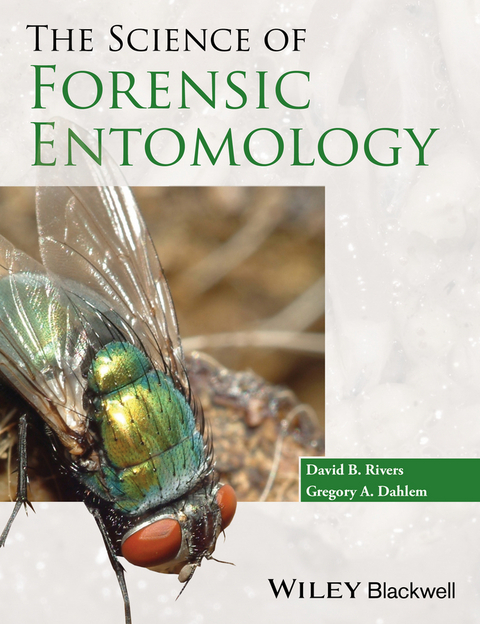
The Science of Forensic Entomology (eBook)
John Wiley & Sons (Verlag)
978-1-118-40304-4 (ISBN)
The Science of Forensic Entomology builds a foundation of biological and entomological knowledge that equips the student to be able to understand and resolve questions concerning the presence of specific insects at a crime scene, in which the answers require deductive reasoning, seasoned observation, reconstruction and experimentation-features required of all disciplines that have hypothesis testing at its core. Each chapter addresses topics that delve into the underlying biological principles and concepts relevant to the insect biology that forms the bases for using insects in matters of legal importance.
The book is more than an introduction to forensic entomology as it offers in depth coverage of non-traditional topics, including the biology of maggot masses, temperature tolerances of necrophagous insects; chemical attraction and communication; reproductive strategies of necrophagous flies; archaeoentomology, and use of insects in modern warfare (terrorism). As such it will enable advanced undergraduate and postgraduate students the opportunity to gain a sound knowledge of the principles, concepts and methodologies necessary to use insects and other arthropods in a wide range of legal matters.
David B Rivers
Loyola University Maryland, Maryland, USA
Gregory Dahlem
Northern Kentucky University, Kentucky, USA
The Science of Forensic Entomology builds a foundation of biological and entomological knowledge that equips the student to be able to understand and resolve questions concerning the presence of specific insects at a crime scene, in which the answers require deductive reasoning, seasoned observation, reconstruction and experimentation features required of all disciplines that have hypothesis testing at its core. Each chapter addresses topics that delve into the underlying biological principles and concepts relevant to the insect biology that forms the bases for using insects in matters of legal importance. The book is more than an introduction to forensic entomology as it offers in depth coverage of non-traditional topics, including the biology of maggot masses, temperature tolerances of necrophagous insects; chemical attraction and communication; reproductive strategies of necrophagous flies; archaeoentomology, and use of insects in modern warfare (terrorism). As such it will enable advanced undergraduate and postgraduate students the opportunity to gain a sound knowledge of the principles, concepts and methodologies necessary to use insects and other arthropods in a wide range of legal matters.
David B Rivers Loyola University Maryland, Maryland, USA Gregory Dahlem Northern Kentucky University, Kentucky, USA
The Science of Forensic Entomology 5
Copyright 6
Contents 7
About the companion website 14
Preface 15
Chapter 1 Role of forensic science in criminal investigations 21
Overview 21
The big picture 21
1.1 What is forensic science? 21
1.2 Application of science to criminal investigations 23
1.2.1 Physical evidence 23
1.2.2 Collection of evidence 24
1.2.3 The scientific method is the key to forensic analyses 24
1.2.4 Analysis of physical evidence 27
1.3 Recognized specialty disciplines in forensic science 29
1.3.1 Forensic pathology 29
1.3.2 Forensic anthropology 29
1.3.3 Forensic dentistry (odontology) 29
1.3.4 Forensic psychology and psychiatry 30
1.3.5 Forensic toxicology 30
1.3.6 Computer forensic science/computer forensics 30
1.3.7 Forensic botany 30
Chapter review 30
What is forensic science? 30
Application of science to criminal investigations 30
Recognized specialty disciplines in forensic science 31
Test your understanding 31
Notes 32
References cited 32
Supplemental reading 32
Additional resources 32
Chapter 2 History of forensic entomology 33
Overview 33
The big picture 33
2.1 Historical records of early human civilizations suggest understanding of insect biology and ecology 33
2.2 Early influences leading to forensic entomology 36
2.2.1 Thirteenth-century China 36
2.2.2 Seventeenth-century Europe 37
2.2.3 Eighteenth-century Europe 38
2.3 Foundation for discipline is laid through casework, research, war, and public policy 38
2.3.1 Casework in Europe 38
2.3.2 Influences from the United States 39
2.4 Turn of the twentieth century brings advances in understanding of necrophagous insects 41
2.5 Forensic entomology during the “great” wars 42
2.6 Growth of the discipline due to the pioneering efforts of modern forensic entomologists leads to acceptance by judicial systems and public 43
Chapter review 44
Historical records of early human civilizations suggest understanding of insect biology and ecology 44
Early influences leading to forensic entomology 44
Foundation for discipline is laid through casework, research, war, and public policy 44
Turn of the twentieth century brings advances in understanding of necrophagous insects 45
Forensic entomology during the “great” wars 45
Growth of the discipline due to the pioneering efforts of modern forensic entomologists leads to acceptance by judicial systems and public 45
Test your understanding 46
Level 1: knowledge/comprehension 46
Level 2: application/analysis 46
Notes 46
References cited 46
Supplemental reading 47
Additional resources 47
Chapter 3 Role of insects and other arthropods in urban and stored product entomology 49
Overview 49
The big picture 49
3.1 Insects and other arthropods are used in civil, criminal, and administrative matters pertinent to the judicial system 49
3.2 Civil cases involve disputes over private issues 51
3.3 Criminal law involves more serious matters involving safety and welfare of people 51
3.4 Administrative law is concerned with rulemaking, adjudication, or enforcement of specific regulatory agendas 52
3.5 Stored product entomology addresses issues of both a civil and criminal nature 53
3.5.1 Pest status 53
3.5.2 Beyond pest status 54
3.5.3 Forensic entomology considerations 54
3.5.4 Stored product insects 56
3.6 Urban entomology is focused on more than just “urban” issues 58
3.6.1 Urban insects 60
Chapter review 62
Insects and other arthropods are used in civil, criminal, and administrative matters pertinent to the judicial systems 62
Civil cases involve disputes over private issues 63
Criminal law involves more serious matters involving safety and welfare of people 63
Administrative law is concerned with rulemaking, adjudication, or enforcement of specific regulatory agendas 63
Stored product entomology addresses issues of both a civil and criminal nature 63
Urban entomology is focused on more than just “urban” issues 64
Test your understanding 64
Notes 65
References cited 65
Supplemental reading 66
Additional resources 66
Chapter 4 Introduction to entomology 67
Overview 67
The big picture 67
4.1 Insecta is the biggest class of the biggest phylum of living organisms, the Arthropoda 67
4.2 The typical adult insect has three body parts, six legs, two antennae, compound eyes, external mouthparts, and wings 70
4.3 Tagmosis has produced the three functional body segments of insects: the head, thorax, and abdomen 71
4.3.1 Head 72
4.3.2 Thorax 73
4.3.3 Abdomen 74
4.4 Sensory organs and their modifications allow insects to perceive and react to their environments 75
4.5 The structure and function of an insect’s digestive system is intimately tied to the food that it prefers to eat 77
4.6 A tubular tracheal system transports oxygen to the body ’ s cells while blood moves through the body without the aid of a vascular system 78
4.7 The nervous system of insects integrates sensory input and drives many aspects of behavior 80
4.8 In order to grow, insects need to shed their “skin” 81
4.9 Many insects look and behave entirely differently as a larva than as an adult – the magic of metamorphosis 81
4.10 The desire to reproduce is a driving force for unique reproductive behaviors and copulatory structures in insects 82
Chapter review 84
Distinguishing features of arthropods and insects 84
External morphology 84
Sensory structures 84
Internal morphology 85
Insect development and life cycles 85
Test your understanding 85
Level 2: application/analysis 86
References cited 86
Supplemental reading 87
Additional resources 87
Chapter 5 Biology, taxonomy, and natural history of forensically important insects 89
Overview 89
The big picture 89
5.1 A variety of different insects and terrestrial arthropods are attracted to a dead body 89
5.2 The fauna of insects feeding on a body is determined by location, time, and associated organisms 91
5.3 Necrophagous insects include the taxa feeding on the corpse itself 92
5.3.1 Insects that feed on but do not breed in carrion 92
5.3.2 Insects that breed in carrion 93
5.4 Parasitoids and predators are the second most significant group of carrion-frequenting taxa 105
5.4.1 The rove beetles (Coleoptera: Staphylinidae) 105
5.4.2 The parasitoid wasps (Hymenoptera: Braconidae and Pteromalidae) 106
5.4.3 Other parasitoids and predators 107
5.5 Omnivorous species include taxa which feed on both the corpse and associated arthropods 107
5.5.1 The carrion beetles (Coleoptera: Silphidae) 108
5.5.2 The ants (Hymenoptera: Formicidae) 108
5.5.3 The yellowjackets (Hymenoptera: Vespidae) 109
5.5.4 Other omnivorous species 109
5.6 Adventitious species include taxa that use the corpse as an extension of their own natural habitat 109
Chapter review 110
A variety of different insects and terrestrial arthropods are attracted to a dead body 110
The fauna of insects feeding on a body is determined by location, time, and associated organisms 110
Necrophagous insects include the taxa feeding on the corpse itself 110
Parasitoids and predators are the second most significant group of carrion-frequenting taxa 111
Omnivorous species include taxa which feed on both the corpse and associated arthropods 111
Adventitious species include taxa that use the corpse as an extension of their own natural habitat 111
Test your understanding 112
References cited 112
Supplemental reading 114
Additional resources 114
Chapter 6 Reproductive strategies of necrophagous flies 115
Overview 115
The big picture 115
6.1 The need to feed: anautogeny and income breeders are common among necrophagous Diptera 115
6.2 Size matters in egg production 118
6.3 Progeny deposition is a matter of competition 120
6.3.1 Ovipary or oviparity 120
6.3.2 Vivipary 121
6.3.3 Mixed strategies 122
6.3.4 Mating and oviposition 122
6.4 Larvae are adapted for feeding and competing on carrion 122
6.5 Feeding aggregations maximize utilization of food source 123
6.6 Mother versus offspring: fitness conflicts 124
6.7 Resource partitioning is the path to reproductive success 125
Chapter review 126
The need to feed: anautogeny and income breeders are common among necrophagous Diptera 126
Size matters in egg production 126
Progeny deposition is a matter of competition 127
Larvae are adapted for feeding and competing on carrion 127
Feeding aggregations maximize utilization of food source 127
Mother versus offspring: fitness conflicts 128
Resource partitioning is path to reproductive success 128
Test your understanding 128
Notes 129
References cited 129
Supplemental reading 131
Additional resources 132
Chapter 7 Chemical attraction and communication 133
Overview 133
The big picture 133
7.1 Insects rely on chemicals in intraspecific and interspecific communication 133
7.2 Chemical communication requires efficient chemoreception 134
7.3 Semiochemicals modify the behavior of the receiver 135
7.4 Pheromones are used to communicate with members of the same species 136
7.4.1 Basic characteristics of pheromones 136
7.4.2 Types of pheromones 136
7.4.3 Mode of action 137
7.5 Allelochemicals promote communication across taxa 138
7.5.1 Basic characteristics of allelochemicals 138
7.5.2 Types of allelochemicals 138
7.5.3 Mode of action 139
7.6 Chemical attraction to carrion 140
7.6.1 Initial colonizers of carrion 140
7.6.2 Apneumones “signal” the way to carrion 141
7.7 Chemical attraction to carrion by subsequent fauna 142
Chapter review 144
Insects rely on chemicals in intraspecific and interspecific communication 144
Chemical communication requires efficient chemoreception 144
Semiochemicals modify the behavior of the receiver 144
Pheromones are used to communicate with members of the same species 145
Allelochemicals promote communication across taxa 145
Chemical attraction to carrion by initial colonizers 146
Chemical attraction to carrion by subsequent fauna 146
Test your understanding 147
Notes 147
References cited 147
Supplemental reading 149
Additional resources 150
Chapter 8 Biology of the maggot mass 151
Overview 151
The big picture 151
8.1 Carrion communities are composed largely of fly larvae living in aggregations 151
8.2 Formation of maggot masses involves clustering during oviposition or larviposition 152
8.2.1 Clustered oviposition and larviposition 153
8.2.2 Random formation 153
8.2.3 Foraging by larvae 154
8.3 Larval feeding aggregations provide adaptive benefits to individuals 154
8.3.1 Group feeding 155
8.3.2 Heterothermy 157
8.3.3 Predatory/parasite avoidance strategies 160
8.4 Developing in maggot masses is not always beneficial to conspecifics or allospecifics 160
8.4.1 Attraction of predators and parasitoids 161
8.4.2 Proteotaxic stress 162
8.4.3 Overcrowding 163
Chapter review 163
Carrion communities are composed largely of fly larvae living in aggregations 163
Formation of maggot masses involves clustering during oviposition or larviposition 164
Larval feeding aggregations provide adaptive benefits to individuals 164
Developing in maggot masses is not always beneficial to conspecifics or allospecifics 165
Test your understanding 165
Level 2: application/analysis 166
Level 3: synthesis/evaluation 166
References cited 166
Supplemental reading 169
Additional resources 169
Chapter 9 Temperature tolerances of necrophagous flies 171
Overview 171
The big picture 171
9.1 Necrophagous insects face seasonal, aseasonal, and self-induced (heterothermy) temperature extremes 172
9.2 Temperature challenges do not equal death: necrophagous insects are equipped with adaptations to survive a changing environment 173
9.3 Life-history features that promote survival during proteotaxic stress 174
9.3.1 Heat-shock response 174
9.3.2 Acquisition of thermal tolerance 176
9.3.3 Behavioral mechanisms 176
9.3.4 Evidence for thermoreceptors in flies 177
9.3.5 Evaporative cooling, conductance, and convection 177
9.4 Deleterious effects of high temperatures on necrophagous flies 178
9.4.1 Lethal effects 179
9.4.2 Sublethal effects 180
9.5 Life-history strategies and adaptations that promote survival at low temperatures 180
9.5.1 Strategies for seasonal low temperatures 181
9.5.2 Hibernation or diapause 183
9.5.3 Aseasonal low-temperature adaptations 184
9.6 Deleterious effects of low-temperature exposure 186
9.6.1 Chilling injury 186
9.6.2 Freezing injury 186
Chapter review 187
Necrophagous insects face seasonal, aseasonal, and self-induced (heterothermy) temperature extremes 187
Temperature challenges do not mean death: necrophagous insects are equipped with adaptations to survive a changing environment 187
Life-history features that promote survival during proteotaxic stress 188
Deleterious effects of high temperatures on necrophagous flies 188
Life-history strategies and adaptations that promote survival at low temperatures 189
Deleterious effects of low-temperature exposure 190
Test your understanding 190
Notes 191
Referenced cited 191
Supplemental reading 194
Additional resources 194
Chapter 10 Postmortem decomposition of human remains and vertebrate carrion 195
Overview 195
The big picture 195
10.1 Decomposition of human and other vertebrate remains is a complex process 195
10.2 Numerous factors affect the rate of body decomposition 197
10.2.1 Abiotic factors 197
10.2.2 Biotic factors 198
10.3 When the heart stops: changes occur almost immediately but are not outwardly detectable 199
10.3.1 Livor mortis 199
10.3.2 Rigor mortis 200
10.3.3 Algor mortis 200
10.3.4 Macromolecule decomposition 200
10.4 Body decomposition is characterized by stages of physical decay 204
10.4.1 Fresh stage 204
10.4.2 Bloated stage 205
10.4.3 Decay stage 206
10.4.4 Postdecay stage 206
10.4.5 Skeletal or remains stage 207
Chapter review 207
Decomposition of human and other vertebrate remains is a complex process 207
Numerous factors affect the rate of body decomposition 208
When the heart stops: changes occur almost immediately but are not outwardly detectable 208
Body decomposition is characterized by stages of physical decay 209
Test your understanding 210
Level 2: application/analysis 210
Level 3: synthesis/evaluation 210
Notes 210
References cited 210
Supplemental reading 212
Additional resources 212
Chapter 11 Insect succession on carrion under natural and artificial conditions 213
Overview 213
The big picture 213
11.1 What’s normal about terrestrial decomposition? Typical patterns of insect succession on bodies above ground 214
11.2 Succession patterns under forensic conditions are not typical 216
11.3 Several factors serve as barriers to oviposition by necrophagous insects 218
11.3.1 Physical barriers to activation/searching 218
11.3.2 Physical deterrents to oviposition/larviposition 219
11.3.3 Enhancement of detection/oviposition 220
11.4 The physical conditions of carrion decay can function as a hurdle to insect development 220
11.4.1 Developmental accelerants 221
11.4.2 Developmental depressants 222
11.4.3 Developmental extremes 223
11.5 Insect faunal colonization of animal remains is influenced by conditions of physical decomposition 224
11.5.1 Biogeographical location 224
11.5.2 Habitat type 226
11.5.3 Seasonality 227
11.5.4 Artificial conditions 228
Chapter review 228
What’s normal about terrestrial decomposition? Typical patterns of insect succession on bodies above ground 228
Succession patterns under forensic conditions are not typical 229
Several factors serve as barriers to oviposition by necrophagous insects 229
The physical conditions of carrion decay can function as a hurdle to insect development 230
Insect faunal colonization of animal remains is influenced by conditions of physical decomposition 230
Test your understanding 228
Notes 231
References cited 232
Supplemental reading 234
Additional resources 234
Chapter 12 Postmortem interval 235
Overview 235
The big picture 235
12.1 The time since death is referred to as the postmortem interval 235
12.1.1 What is the PMI? 235
12.1.2 Why is the PMI important? 236
12.1.3 The PMI versus PMI min 237
12.2 The role of insects in estimating the PMI 237
12.2.1 Assumptions for using insects in calculating the PMI 238
12.2.2 Insect development is linked to ambient temperatures 238
12.3 Modeling growth–temperature relationships 240
12.3.1 Physiological energy budgets 241
12.4 Calculating the PMI requires experimental data on insect development and information from the crime scene 242
12.4.1 What is needed to calculate the PMI? 242
12.4.2 Base temperature 242
12.4.3 Accumulated degree days for insect development 243
12.4.4 Accumulated degree days for the crime scene 244
12.4.5 Putting it all together 247
12.5 The evolving PMI : changing approaches and sources of error 247
12.5.1 Estimation of larval age 247
12.5.2 The true ambient temperatures shaping larval development 248
12.5.3 Photoperiod influences on larval development 249
12.5.4 Larval nutrition 249
Chapter review 250
The time since death is referred to as the postmortem interval 250
The role of insects in estimating the PMI 250
Modeling growth–temperature relationships 250
Calculating the PMI requires experimental data on insect development and information from the crime scene 251
The evolving PMI: changing approaches and sources of error 251
Test your understanding 252
Notes 253
References cited 253
Supplemental reading 255
Additional resources 255
Chapter 13 Insect alterations of bloodstain evidence 257
Overview 257
The big picture 257
13.1 Bloodstains are not always what they appear to be at the crime scene 257
13.2 Science is the cornerstone of bloodstain pattern analyses 258
13.2.1 Biochemistry of blood 259
13.2.2 Laws of physics apply to blood droplets 259
13.3 Crash course in bloodstain analyses 260
13.3.1 Direction of travel 261
13.3.2 Shape and size of bloodstains 261
13.3.3 Angle of impact 261
13.3.4 Origin of impact 262
13.4 Insect activity can alter blood evidence 263
13.5 Insect feeding activity on bloodstains or fresh blood can yield regurgitate spots or transference 263
13.6 Digested blood is eliminated from insects as liquid feces or frass 265
13.7 Parasitic insects can confound blood evidence by leaving spot artifacts 266
Chapter review 266
Bloodstains are not always what they appear to be at the crime scene 266
Science is the cornerstone of bloodstain pattern analyses 266
Crash course in bloodstain analyses 267
Insect activity can alter blood evidence 267
Insect feeding activity on bloodstains or fresh blood can yield regurgitate spots or transference 267
Digested blood is eliminated from insects as liquid feces or frass 268
Parasitic insects can confound blood evidence by leaving spot artifacts 268
Test your understanding 268
Notes 268
References cited 269
Supplemental reading 269
Additional resources 270
Chapter 14 Necrophagous and parasitic flies as indicators of neglect and abuse 271
Overview 271
The big picture 271
14.1 Parasitic and necrophagous flies can infest humans, pets, and livestock 272
14.2 Not all forensically important insects wait until death to feed 273
14.3 Chemoattraction of flies to the living does not necessarily differ from the odors of death 275
14.3.1 Chemoattraction to body fluids 277
14.4 Necrophagous and parasitic flies display oviposition and development preferences on their vertebrate “hosts” 277
14.5 Larval myiasis can be fatal 278
14.5.1 Pathogenicity of myiasis 278
14.5.2 Host responses to myiasis 279
14.5.3 Larval defenses to host attack 280
Chapter review 281
Parasitic and necrophagous flies can infest humans, pets, and livestock 281
Not all forensically important insects wait until death to feed 281
Chemoattraction of flies to the living does not necessarily differ from the odors of death 282
Necrophagous and parasitic flies display oviposition and development preferences on their vertebrate “hosts” 282
Larval myiasis can be fatal 282
Test your understanding 283
Notes 283
References cited 284
Supplemental reading 285
Additional resources 286
Chapter 15 Application of molecular methods to forensic entomology
287
Overview 287
The big picture 287
15.1 Molecular methods: living things can be defined by their DNA 287
15.2 Evidence collection: preserve DNA integrity 290
15.3 Molecular methods of species identification 290
15.4 DNA barcoding protocol 295
15.4.1 Specimen collection 295
15.4.2 Searching databases for sequence data 295
15.4.3 DNA extraction 296
15.4.4 DNA amplification 296
15.4.5 Visualizing DNA product and concentration in gel 296
15.4.6 DNA sequencing 297
15.4.7 DNA editing and alignment 297
15.4.8 Data management 299
15.4.9 Selecting partitioning scheme and models of DNA evolution 299
15.4.10 Phylogenetic programs: inferring phylogenetic relationships 299
15.4.11 Species assignment and identification 299
15.5 Problems encountered in barcoding projects 299
15.6 Gut content: victim and suspect identifications 300
15.7 Molecular methods and population genetics 301
15.8 Molecular methods: non- DNA based 302
15.9 Validating molecular methods for use as evidence 304
15.10 Future directions 304
Chapter review 305
When you hear someone refer to molecular methods used in forensic entomology, they are usually referring to the utilization of DNA 305
Preserving DNA 305
Insects can be identified by their DNA 306
The steps behind DNA barcode-based identifications 306
Common problems in molecular identifications 306
Associating insects and victims 307
Population genetics can provide information about movement of bodies and differential development times 307
Molecules other than DNA can have forensic uses 307
Using molecular-based information in the courtroom 307
New molecular methods are being developed 307
Test your understanding 307
References cited 308
Supplemental reading 311
Additional resources 312
Chapter 16 Archaeoentomology: insects and archaeology
313
Overview 313
The big picture 313
16.1 Archaeoentomology is a new “old” discipline 313
16.2 Concepts and techniques from forensic entomology can be applied to archaeology 315
16.3 Ancient insects and food: connection to stored product entomology 316
16.4 Ancient insects as pests: beginnings of synanthropy and urban entomology 318
16.5 Ancient insects and mummies: revelations about past lives and civilizations 321
16.6 Forensic archaeoentomology: entomological investigations into extremely “cold” cases 324
Chapter review 324
Archaeoentomology is a new “old” discipline 324
Concepts and techniques from forensic entomology can be applied to archaeology 324
Ancient insects and food: connection to stored product entomology 325
Ancient insects as pests: beginnings of synanthropy and urban entomology 325
Ancient insects and mummies: revelations about past lives and civilizations 326
Forensic archaeoentomology: entomological investigations into extremely “cold” cases 326
Test your understanding 326
Notes 327
References cited 327
Supplemental reading 329
Additional resources 329
Chapter 17 Insects as weapons of war and threats to national security 331
Overview 331
The big picture 331
17.1 Terrorism and biological threats to national security are part of today ’ s world 332
17.2 Entomological weapons are not new ideas 334
17.3 Direct entomological threats to human populations are not all historical 336
17.4 Impending entomological threats to agriculture and food safety 338
17.5 Insect-borne diseases as new or renewed threats to human health 339
17.6 Insects can be used as tools for national security 341
17.6.1 Surveillance 341
17.6.2 Biosensors and chemical detection 342
17.6.3 Toxicological applications 344
Chapter review 344
Terrorism and biological threats to national security are part of today’s world 344
Entomological weapons are not new ideas 345
Direct entomological threats to human populations are not all historical 345
Impending entomological threats to agriculture and food safety 346
Insect-borne diseases as new or renewed threats to human health 346
Insects can be used as tools for national security 346
Test your understanding 347
Notes 348
References cited 348
Supplemental reading 349
Additional resources 349
Chapter 18 Deadly insects 351
Overview 351
The big picture 351
18.1 Insects that bite, sting or secrete cause fear, loathing, and death 352
18.2 Insects that cause death 353
18.2.1 Deadly Coleoptera 354
18.2.2 Deadly Hemiptera 356
18.2.3 Deadly Hymenoptera 356
18.2.4 Deadly Lepidoptera 357
18.3 Human envenomation and intoxication by insect-derived toxins 358
18.4 Insects that injure humans rely on chemically diverse venoms and toxins 358
18.4.1 Ant venoms 359
18.4.2 Wasp venoms 360
18.4.3 Salivary venoms 361
18.4.4 Secretory toxins 361
18.4.5 Stinging toxins (non-Hymenoptera) 361
18.5 Non-insect arthropods that should scare you! 362
18.5.1 Scorpions 362
18.5.2 Spiders 363
18.5.3 Centipedes 364
18.6 Implications of deadly insects for forensic entomology 365
Chapter review 366
Insects that bite, sting or secrete cause fear, loathing and death 366
Insects that cause death 366
Human envenomation and intoxication by insect-derived toxins 367
Insects that injure humans rely on chemically diverse venoms and toxins 367
Non-insect arthropods that should scare you! 368
Implications of deadly insects for forensic entomology 369
Test your understanding 369
Notes 369
References cited 370
Supplemental reading 371
Additional resources 371
Appendix I Collection and preservation of calyptrate Diptera 373
Collecting adult flies 373
Collecting fly larvae 375
Mounting and preserving specimens (adult flies) 375
References cited 377
Resources and links 377
Appendix II Getting specimens identified 379
Morphological identification of specimens on your own 379
Identification of specimens (by systematic expert) 380
References cited 381
Resources and links 381
Appendix III Necrophagous fly life table references 383
Glossary 387
Index
397
"Overall, I believe that this book has achieved its goal of presenting a thorough introduction to forensic entomology (as well as a number of related topics) to undergraduate and graduate students. The core chapters in particular are informative and include useful lists of references and notes." (Bulletin of the Entomological Society of Canada 2015)
| Erscheint lt. Verlag | 21.11.2013 |
|---|---|
| Sprache | englisch |
| Themenwelt | Studium ► 2. Studienabschnitt (Klinik) ► Rechtsmedizin |
| Naturwissenschaften ► Biologie ► Zoologie | |
| Naturwissenschaften ► Chemie | |
| Recht / Steuern ► Strafrecht ► Kriminologie | |
| Sozialwissenschaften | |
| Schlagworte | Analytische Chemie / Forensik • Biowissenschaften • Chemie • Chemistry • Core • Corpses • Countries • Coverage • Deals • disciplinesfly • Entomologie • Entomology • entomologyurban • every • feed • Forensic • Forensics • Forensic Science • Forensik • international • Judicial • Life Sciences • maggots • newest • recognized • subdisciplines • subfields • Systems • text provides • Three • unpleasant evidence |
| ISBN-10 | 1-118-40304-5 / 1118403045 |
| ISBN-13 | 978-1-118-40304-4 / 9781118403044 |
| Informationen gemäß Produktsicherheitsverordnung (GPSR) | |
| Haben Sie eine Frage zum Produkt? |
 PDF (Adobe DRM)
Kopierschutz: Adobe-DRM
Adobe-DRM ist ein Kopierschutz, der das eBook vor Mißbrauch schützen soll. Dabei wird das eBook bereits beim Download auf Ihre persönliche Adobe-ID autorisiert. Lesen können Sie das eBook dann nur auf den Geräten, welche ebenfalls auf Ihre Adobe-ID registriert sind.
Details zum Adobe-DRM
Dateiformat: PDF (Portable Document Format)
Mit einem festen Seitenlayout eignet sich die PDF besonders für Fachbücher mit Spalten, Tabellen und Abbildungen. Eine PDF kann auf fast allen Geräten angezeigt werden, ist aber für kleine Displays (Smartphone, eReader) nur eingeschränkt geeignet.
Systemvoraussetzungen:
PC/Mac: Mit einem PC oder Mac können Sie dieses eBook lesen. Sie benötigen eine
eReader: Dieses eBook kann mit (fast) allen eBook-Readern gelesen werden. Mit dem amazon-Kindle ist es aber nicht kompatibel.
Smartphone/Tablet: Egal ob Apple oder Android, dieses eBook können Sie lesen. Sie benötigen eine
Geräteliste und zusätzliche Hinweise
Buying eBooks from abroad
For tax law reasons we can sell eBooks just within Germany and Switzerland. Regrettably we cannot fulfill eBook-orders from other countries.
aus dem Bereich