Enzyme biocatalysis is a fast-growing area in process biotechnology that has expanded from the traditional fields of foods, detergents, and leather applications to more sophisticated uses in the pharmaceutical and fine-chemicals sectors and environmental management. Conventional applications of industrial enzymes are expected to grow, with major opportunities in the detergent and animal feed sectors, and new uses in biofuel production and human and animal therapy.
In order to design more efficient enzyme reactors and evaluate performance properly, sound mathematical expressions must be developed which consider enzyme kinetics, material balances, and eventual mass transfer limitations. With a focus on problem solving, each chapter provides abridged coverage of the subject, followed by a number of solved problems illustrating resolution procedures and the main concepts underlying them, plus supplementary questions and answers.
Based on more than 50 years of teaching experience, Problem Solving in Enzyme Biocatalysis is a unique reference for students of chemical and biochemical engineering, as well as biochemists and chemists dealing with bioprocesses.
Contains
- Enzyme properties and applications; enzyme kinetics; enzyme reactor design and operation 146 worked problems and solutions in enzyme biocatalysis
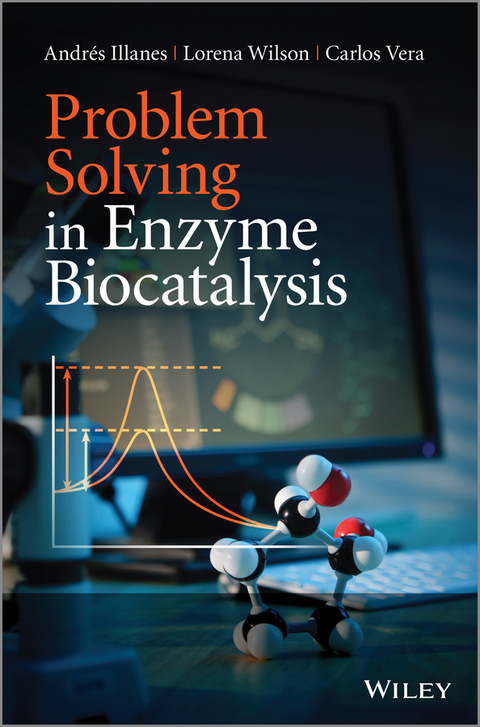
Enzyme biocatalysis is a fast-growing area in process biotechnology that has expanded from the traditional fields of foods, detergents, and leather applications to more sophisticated uses in the pharmaceutical and fine-chemicals sectors and environmental management. Conventional applications of industrial enzymes are expected to grow, with major opportunities in the detergent and animal feed sectors, and new uses in biofuel production and human and animal therapy. In order to design more efficient enzyme reactors and evaluate performance properly, sound mathematical expressions must be developed which consider enzyme kinetics, material balances, and eventual mass transfer limitations. With a focus on problem solving, each chapter provides abridged coverage of the subject, followed by a number of solved problems illustrating resolution procedures and the main concepts underlying them, plus supplementary questions and answers. Based on more than 50 years of teaching experience, Problem Solving in Enzyme Biocatalysis is a unique reference for students of chemical and biochemical engineering, as well as biochemists and chemists dealing with bioprocesses. Contains: Enzyme properties and applications; enzyme kinetics; enzyme reactor design and operation 146 worked problems and solutions in enzyme biocatalysis.
Andrés Illanes is Professor in the School of Biochemical Engineering at Pontificia Universidad Católica de Valparaíso, Chile. He has been researching enzyme biocatalysis since the 1970s, having done research in the main topics related to enzyme technology, and taught many courses at the undergraduate, M.Sc and Ph.D level in the subject both in Chile and abroad. He has authored over 80 ISI journal publications, several book chapters and three books on this topic, the latest with Springer 2008 Enzyme Biocatalysis: Principles and Applications. Lorena Wilson is Associate Professor at the School of Biochemical Engineering, Pontificia Universidad Católica de Valparaíso. She has worked on enzyme biocatalysis since her time as an undergraduate and done research in aspects related mostly to biocatalyst engineering and enzyme reactor performance. She has more than ten years teaching experience focused mostly on the subject of enzyme biocatalysis. She is a Biochemical Engineer with a PhD from the Universidad Autónoma de Madrid, Spain. Dr Wilson is also author of more than 40 ISI publications in high ranked journals and several book chapters. Carlos Vera works in the School of Biochemical Engineering at Pontificia Universidad Católica de Valparaíso, Chile.
Preface ix
Nomenclature xi
Epsilon Software Information xxi
1 Facts and Figures in Enzyme Biocatalysis 1
1.1 Introduction 1
1.2 Enzymes as Process Catalysts 3
1.3 Evolution of Enzyme Biocatalysis: From Hydrolysis to
Synthesis 5
1.4 The Enzyme Market: Figures and Outlook 6
References 7
2 Enzyme Kinetics in a Homogeneous System 11
2.1 Introduction 11
2.2 Theory of Enzyme Kinetics 14
2.3 Single-Substrate Reactions 17
2.4 Multiple-Substrate Reactions 19
2.5 Multiple-Enzyme Reactions 21
2.6 Determination of Kinetic Parameters 22
2.7 Effects of Operational Variables on Enzyme Kinetics 24
Solved Problems 29
Supplementary Problems 72
References 84
3 Enzyme Kinetics in a Heterogeneous System 87
3.1 Introduction 87
3.2 Immobilization of Enzymes 87
3.3 Mass-Transfer Limitations in Enzyme Catalysis 92
3.4 Determination of Intrinsic Kinetic and Mass-Transfer
Parameters 102
Solved Problems 105
Supplementary Problems 127
References 138
4 Enzyme Reactor Design and Operation under Ideal Conditions
141
4.1 Modes of Operation and Reactor Configurations 141
4.2 Definition of Ideal Conditions 142
4.3 Strategy for Reactor Design and Performance Evaluation
143
4.4 Mathematical Models for Enzyme Kinetics, Modes of Operation,
and Reactor Configurations under Ideal Conditions 143
Solved Problems 157
Supplementary Problems 174
References 179
5 Enzyme Reactor Design and Operation under Mass-Transfer
Limitations 181
5.1 Sequential Batch and Continuously Operated Reactors with
Immobilized Enzymes 182
5.2 Mathematical Models for Enzyme Kinetics, Modes of Operation,
and Reactor Configurations under Mass-Transfer Limitations 183
Solved Problems 185
Supplementary Problems 198
6 Enzyme Reactor Design and Operation under Biocatalyst
Inactivation 203
6.1 Mechanistically Based Mathematical Models of Enzyme
Inactivation 203
6.2 Effect of Catalytic Modulators on Enzyme Inactivation
205
6.3 Mathematical Models for Different Enzyme Kinetics, Modes of
Operation, and Reactor Configurations under Biocatalyst
Inactivation 206
6.4 Mathematical Models for Enzyme Kinetics, Modes of Operation,
and Reactor Configurations under Simultaneous Mass-Transfer
Limitations and Enzyme Inactivation 212
6.5 Strategies for Reactor Operation under Biocatalyst
Inactivation 213
Solved Problems 215
Supplementary Problems 233
References 240
7 Optimization of Enzyme Reactor Operation 243
7.1 Strategy for the Optimization of Enzyme Reactor Performance
244
7.2 Mathematical Programming for Static Optimization 247
7.3 Dynamic Programming 248
7.4 Statistical Optimization by Surface Response Methodology
249
Solved Problems 254
Supplementary Problems 272
References 275
Appendix A Mathematical Methods 277
A.1. Newton's Method 277
A.2. Curve Fitting by Least Squares 280
A.3. Solving Ordinary Differential Equations 296
A.4. Numerical Methods for Solving Differential Equations
302
References 310
Index 311
1
Facts and Figures in Enzyme Biocatalysis
1.1 Introduction
1.1.1 Enzyme Properties
Enzymes are the catalysts of life. Each of the chemical reactions that make up the complex metabolic networks found in all forms of life is catalyzed by an enzyme, which is the phenotypic expression of a specific gene. Thus the chemical potential of an organism is dictated by its genomic patrimony and enzymes are the biological entities that convert information into action. They are tightly regulated both by controls at the genomic level and by environmental signals that condition their mode of action once synthesized.
Enzymes are highly evolved complex molecular structures tailored to perform a specific task with efficiency and precision. They can be conjugated with other molecules or not, but their catalytic condition resides in their protein structure. The active site—the molecular niche in which catalysis takes place—represents a very small portion of the enzyme structure (only a few amino acid residues), while the remainder of the molecule acts as a scaffold and provides necessary structural stability. Many enzymes are conjugated proteins associated with other molecules that may or may not play a role in the catalytic process. Those that do are quite important as they will determine to a great extent an enzyme's technological potential.
“Enzyme biocatalysis” refers to the use of enzymes as biological catalysts dissociated from the cell from which they derive; the major challenge in this process is building up robust enzyme catalysts capable of performing under usually very nonphysiological conditions. The goal is to preserve the outstanding properties of enzymes as catalysts (specificity, reactivity under mild conditions) while overcoming their constraints (mostly their poor configurational stability). The pros and cons of enzymes as catalysts are thus the consequence of their complex molecular structure. Enzymes are labile catalysts, with enzyme stabilization being a major issue in biocatalysis and a prerequisite for most of their applications. Several enzyme stabilization strategies have been proposed, including: searching for new enzymes in the biota and metagenomic pools [1], improving natural enzymes via site-directed mutagenesis [2] and directed evolution [3], catalyst engineering (chemical modification [4], immobilization to solid matrices [5], and auto-aggregation [6]), medium engineering (use of nonconventional reaction media) [7], and, most recently, reactivating enzymes following activity exhaustion [8]. Enzyme immobilization has been a major breakthrough in biocatalysis and has widened its field of application considerably [9].
1.1.2 Enzyme Applications
Enzymes have found a wide spectrum of applications, from a very large number of enzyme-catalyzed industrial processes to use within the toolbox of molecular biology. Besides their use as process catalysts in industrial processes, which will be analyzed in Section 1.2, enzymes have found important applications in:
- Chemical and clinical analysis, due to their high specificity and sensibility, which allow the quantification of various analytes with high precision. Worth mentioning are their uses in flow injection analysis [10], robust electrodes for process control [11], and nanosensors [12]. Enzymes are also widely used in various diagnostic kits and as detectors in immunoassays [13].
- Therapy, due to their high specificity and activity, which allow the precise and efficient removal of unwanted metabolites. Many therapeutic applications have been envisaged, including for such enzymes as asparaginase, billirubin oxidase, carboxypeptidase, α-glucosidase, α-galactosidase, phenylalanine ammonia lyase, streptokinase, urease, uricase, and urokinase. The US Food and Drug Administration (FDA) has already approved applications in cardiovascular disorders, pancreatic insufficiency, several types of cancer, the replacement therapy for genetic deficiencies, the debridement of wounds, and the removal of various toxic metabolites from the bloodstream [14].
- Environmental management (waste treatment and bioremediation). Enzyme specificity allows the removal of particularly recalcitrant pollutants from hard industrial wastes and highly diluted effluents. Enzymes are also used in the final polishing of municipal and industrial effluents following conventional treatment and as enhancers of the hydrolytic potential of the microbial consortia in the first step of anaerobic digestion [15]. In addition, they are increasingly being used in bioremediation of polluted soils and waters with recalcitrant compounds [16], although the high cost of the enzymes is still prohibitive in most such cases [17].
- Biotechnological research and development. Enzymes are fundamental components of the toolbox for biotechnology research, especially in the areas of molecular biology and genetic engineering. Thermostable DNA polymerases are the basis of the polymerase chain reaction (PCR) [18], which is fundamental to gene amplification, while restriction endonucleases and ligases are fundamental tools in recombinant DNA technology [19].
Highly purified enzymes are required for most of these applications, which are sold at very high unitary prices. Therefore, despite their low volume of production, the market size is significant.
1.2 Enzymes as Process Catalysts
Enzymes used as catalysts for industrial processes are generally rather impure preparations sold as commodities at low unitary prices, although this tendency is changing to some extent, with increasing usage in an immobilized form and in organic synthesis. It can be estimated that industrial applications make up roughly 70% of the enzyme market size.
Enzyme transformations can be used in industrial applications to create the desired product (e.g. high-fructose syrup is produced from starch by the sequential operations of liquefaction, saccharification, and isomerization, catalyzed by α-amylase, amyloglucosidase, and glucose (xylose) isomerase, respectively). Enzymes can also be used as additives, in order to confer certain functional properties on the product, as illustrated by many applications in the food sector (amylases and proteases in bread making, phytases and β-glucosidases in animal feed upgrading, pectinases in fruit juice and wine making, β-galactosidases in low-lactose milk and dairy products, and so on).
Enzymes have been used systematically in industry since the beginning of the 20th century. Originally they were mostly crude preparations extracted from plant and animal tissues and fluids, but with the development of fermentation technology and industrial microbiology in the middle of that century, microbial enzymes began to take over. These had the advantages of intensive and reliable production and a wide spectrum of activities. In recent decades, advances in recombinant DNA technology have allowed genes of any origin to be expressed into a suitable microbial host [20], as well as in protein engineering techniques that allow enzyme properties to be improved through progressively rational approaches [21]. While plant and animal enzymes still have some application niches, most of the enzymes used industrially today are produced by microbial strains.
Until recently, most of the enzymes used as industrial catalysts were hydrolases, which are particularly robust and are frequently extracellular proteins that do not require coenzymes, making them well suited to use under harsh process conditions. Most industrial enzymatic processes are catalyzed by carbohydrases, proteases, and lipases, which are mostly used in their hydrolytic capacity to degrade substrates (frequently polymers) into products of lower molecular complexity. Some traditional industrial applications are listed in Table 1.1.
Table 1.1 Enzymes traditionally used as industrial catalysts.
| Enzyme | Source | Application |
| Carbohydrases |
| α-amylase | mold | bakery, confectionery, brewery, bioethanol |
| α-amylase | bacterium | starch liquefaction, detergent, textile desizing, bioethanol |
| glucoamylase | mold | glucose syrup |
| β-amylase | plant, bacterium | glucose syrup, brewery |
| pectinase | mold | juice and wine manufacture |
| cellulase | mold | juice extraction and clarification, detergent, denim, digestive-aids, bioethanol |
| xylanase | mold, bacterium | wood pulp bleaching, bioethanol |
| β-galactosidase | yeast, mold | low-lactose milk and dairies, whey upgrading |
| invertase | yeast, mold | confectionery |
| phytase | bacterium | animal feed |
| β-glucanase | mold | animal feed, brewery |
| naringinase | mold | juice debittering |
| Proteases |
| papain | papaya latex | yeast and meat extracts, brewery, protein hydrolysates, meat tenderizer, tanning, animal feed, digestive aids, anti-inflammatory and skin wound-healing preparations |
| bromelain | pineapple stem | anti-inflammatory and burn-healing... |
| Erscheint lt. Verlag | 2.10.2013 |
|---|---|
| Sprache | englisch |
| Themenwelt | Naturwissenschaften ► Biologie ► Biochemie |
| Naturwissenschaften ► Chemie ► Technische Chemie | |
| Technik ► Umwelttechnik / Biotechnologie | |
| Schlagworte | Andres Illanes • biochemical engineering • Bioprocesses • Biotechnologie i. d. Biowissenschaften • Biotechnologie i. d. Chemie • Biotechnology • Biowissenschaften • Carlos Vera • chemical engineering • Chemie • Chemische Verfahrenstechnik • Chemistry • conventional industrial enzymes applications • Enzyme Biocatalysis • Enzyme Biocatalysis Problem Solving • Enzyme kinetics • enzyme reactor design • enzyme reactor efficiency • enzyme reactor operation • enzyme reactor performance • enzymes in biofuel production • industrial enzymes applications • Life Sciences • Lorena Wilson • Problem Solving in Enzyme Biocatalysis • process biotechnology |
| ISBN-13 | 9781118341773 / 9781118341773 |
| Informationen gemäß Produktsicherheitsverordnung (GPSR) | |
| Haben Sie eine Frage zum Produkt? |
 EPUB (Adobe DRM)
Kopierschutz: Adobe-DRM
Adobe-DRM ist ein Kopierschutz, der das eBook vor Mißbrauch schützen soll. Dabei wird das eBook bereits beim Download auf Ihre persönliche Adobe-ID autorisiert. Lesen können Sie das eBook dann nur auf den Geräten, welche ebenfalls auf Ihre Adobe-ID registriert sind.
Details zum Adobe-DRM
Dateiformat: EPUB (Electronic Publication)
EPUB ist ein offener Standard für eBooks und eignet sich besonders zur Darstellung von Belletristik und Sachbüchern. Der Fließtext wird dynamisch an die Display- und Schriftgröße angepasst. Auch für mobile Lesegeräte ist EPUB daher gut geeignet.
Systemvoraussetzungen:
PC/Mac: Mit einem PC oder Mac können Sie dieses eBook lesen. Sie benötigen eine
eReader: Dieses eBook kann mit (fast) allen eBook-Readern gelesen werden. Mit dem amazon-Kindle ist es aber nicht kompatibel.
Smartphone/Tablet: Egal ob Apple oder Android, dieses eBook können Sie lesen. Sie benötigen eine
Geräteliste und zusätzliche Hinweise
Buying eBooks from abroad
For tax law reasons we can sell eBooks just within Germany and Switzerland. Regrettably we cannot fulfill eBook-orders from other countries.
aus dem Bereich