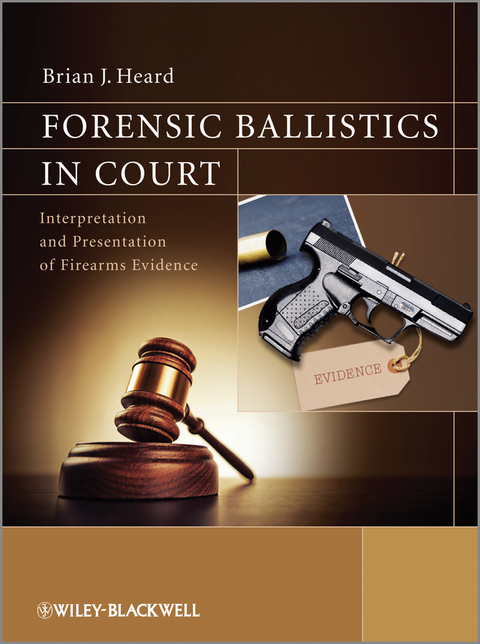
Forensic Ballistics in Court (eBook)
Forensic Ballistics in Court: Interpretation and Presentation of Firearms Evidence is an accessible introduction to firearms and ballistics evidence and how this is analysed and presented as evidence in a court of law.
The book approaches the subject in terms of the realities of case work, opening with a clear and illustrated explanation of the correct nomenclature for various weapon types and their parts. Ammunition is also extensively covered, again with annotated illustrations. Basic external and terminal ballistics, wounding capabilities are likewise covered to give an overview of the subject. A key aspect of the book covers the theory and philosophy behind striation matches and the associated statistics, how positive matches should be peer reviewed and the importance accreditation has on this subject.
Gunshot residue formation and identification and the various methods used in its analysis are reviewed in depth. This includes a critical examination of the pros and cons of each type of examination and the evidential weight which can be applied to each method.
- Accessible and reader-friendly introduction to firearms and ballistics.
- Clarifies the limitations of firearms evidence.
- Extensive use of global case-studies throughout.
- Focus on the interpretation and assessment of the weight of firearms/ballistics evidence presented at court.
- Covers the importance of witness and accused statements and their interpretation in relation to the investigation under review.
- Includes coverage of gunshot residue collection, examination and interpretation and the potential for contamination of GSR samples.
- Includes numerous real life case studies that the author has dealt with over the past 45 years.
- Takes an applied approach to the subject.
Brian J. Heard, Formerly of the Ballistics and Firearms Identification Bureau for the Royal Hong Kong Police.
Forensic Ballistics in Court: Interpretation and Presentation of Firearms Evidence is an accessible introduction to firearms and ballistics evidence and how this is analysed and presented as evidence in a court of law. The book approaches the subject in terms of the realities of case work, opening with a clear and illustrated explanation of the correct nomenclature for various weapon types and their parts. Ammunition is also extensively covered, again with annotated illustrations. Basic external and terminal ballistics, wounding capabilities are likewise covered to give an overview of the subject. A key aspect of the book covers the theory and philosophy behind striation matches and the associated statistics, how positive matches should be peer reviewed and the importance accreditation has on this subject. Gunshot residue formation and identification and the various methods used in its analysis are reviewed in depth. This includes a critical examination of the pros and cons of each type of examination and the evidential weight which can be applied to each method. Accessible and reader-friendly introduction to firearms and ballistics. Clarifies the limitations of firearms evidence. Extensive use of global case-studies throughout. Focus on the interpretation and assessment of the weight of firearms/ballistics evidence presented at court. Covers the importance of witness and accused statements and their interpretation in relation to the investigation under review. Includes coverage of gunshot residue collection, examination and interpretation and the potential for contamination of GSR samples. Includes numerous real life case studies that the author has dealt with over the past 45 years. Takes an applied approach to the subject.
Brian J. Heard, Formerly of the Ballistics and Firearms Identification Bureau for the Royal Hong Kong Police.
Forensic Ballistics in Court: Interpretation and Presentation of Firearms Evidence 1
Contents 7
About the Author 15
Introduction 17
About the companion website 21
1.0 Firearms History 23
1.0.1 Introduction 23
1.0.2 The flintlock 23
1.0.3 The percussion system 25
1.0.4 The pinfire system 25
1.0.5 The rimfire system 26
1.0.6 The Dreyse needle fire system 26
1.0.7 The centre fire system 27
1.0.8 The revolver 27
1.0.9 The self-loading pistol 28
Further reading 30
2.0 Weapon Types and Their Operation 31
2.0.1 Introduction 31
2.0.2 Handguns 31
2.0.3 Rifles 35
2.0.4 Shotguns 36
2.0.5 Combination weapons 37
2.0.6 Sub-machine guns 37
2.0.7 Assault rifles 38
2.0.8 Machine guns and heavy machine guns 38
2.0.9 Muzzle attachments 38
2.0.10 Important parts of a weapons mechanism 41
2.0.11 Bent and sear 42
2.0.12 Other important parts of a revolver mechanism 44
2.0.13 Hand and ratchet 45
Further reading 46
2.1 Gas and Air Powered Weapons 47
2.1.1 Introduction 47
2.1.2 Weapon types 47
2.1.3 Ammunition 50
2.1.4 Considerations 52
Further reading 53
2.2 Rifling Types and Their Identification 55
2.2.1 Introduction 55
2.2.2 Basics 56
2.2.3 Class characteristics 59
2.2.4 General introduction to rifling 60
Additional reading 64
2.3 Home-made, Improvised and Converted Firearms 65
2.3.1 Introduction 65
2.3.2 Improvised firearms 65
2.3.3 Converting air weapons 66
2.3.4 Home-made and converted toys and replica weapons 67
2.3.5 Home-made ammunition 70
Further reading 72
2.4 Antique Weapons 73
2.4.1 Introduction 73
2.4.2 Background 73
2.4.3 Defining ‘antique’ 74
3.0 Proof Marks 77
3.0.1 Introduction 77
3.0.2 Proof marks 77
3.0.3 Types of proof 78
3.0.4 Proof marks and the examiner 78
3.0.5 Examples of proof marks 78
Further reading 83
4.0 A Brief History of Ammunition 85
4.0.1 Introduction 85
4.0.2 Basics 85
Further reading 88
4.1 Ammunition Components 89
4.1.1 Introduction 89
4.1.2 Basics 89
4.1.3 Ammunition types 90
4.1.4 Primer cap types 91
4.1.5 Cartridge cases 92
4.1.6 Shotgun ammunition 95
Further reading 101
4.2 Bullet Types 103
4.2.1 Introduction 103
4.2.2 Basics 103
4.2.3 Bullet materials 103
4.2.4 Other bullet types 105
4.2.5 Bullet nose configuration 105
4.2.6 Bullet base configuration 107
4.2.7 Bullet lubrication 107
Further reading 108
4.3 Headstamps and Other Identifying Features on Ammunition 109
4.3.1 Introduction 109
4.3.2 Basics 110
4.3.3 Clandestine ammunition 111
4.3.4 Colour coding of ammunition 112
Further reading 113
4.4 Non-toxic and Frangible Bullets 115
4.4.1 Introduction 115
4.4.2 Elimination of lead in ammunition 115
4.4.3 Materials used in non-toxic ammunition 116
4.4.4 The current situation 116
Further reading 118
4.5 Non-toxic Shot 119
4.5.1 Introduction 119
4.5.2 Materials used in non-toxic shotgun ammunition 119
Suggested further reading 122
4.6 A Brief History of Propellants 123
4.6.1 Introduction 123
4.6.2 Basics 123
4.6.3 Black powder 124
4.6.4 Nitro propellants 126
4.6.5 Dating of ammunition 129
4.6.6 Reduced loads for target shooting 129
Further reading 130
4.7 Priming Compounds 131
4.7.1 Introduction 131
4.7.2 Basics 132
4.7.3 A short history of priming compounds 132
4.7.4 Manufacture 135
4.7.5 Accidental discharge of primers 135
Further reading 136
5.0 An Introduction to Ballistics 137
5.0.1 Introduction 137
5.0.2 Basics 137
5.0.3 Background 137
Further reading 138
5.1 Internal Ballistics 139
5.1.1 Introduction 139
5.1.2 Basics 139
5.1.3 Recoil 140
5.1.4 Barrel pressure 142
Further reading 143
5.2 External Ballistics 145
5.2.1 Introduction 145
5.2.2 Basics 146
5.2.3 Maximum range of missiles 148
5.2.4 Maximum altitude that a bullet will attain 152
5.2.5 Terminal velocity 153
5.2.6 Use of sight to compensate for bullet drop 154
5.2.7 Other influencing factors 154
5.2.8 Muzzle energy 156
5.2.9 Momentum 157
Further reading 157
5.3 Terminal Ballistics 159
5.3.1 Introduction 159
5.3.2 Basics 159
5.3.3 General wound ballistic concepts 161
5.3.4 Other factors influencing the wounding capabilities of a missile 166
5.3.5 Bullet performance and ‘wounding capabilities’ 167
5.3.6 Relative stopping power (RSP) 169
5.3.7 Bullet resistant vests (BRV) 171
Further reading 174
6.0 A Brief History of Forensic Firearms Identification 175
6.0.1 Introduction 175
6.0.2 Early cases involving bullet identification 176
6.0.3 Use of photomicrographs 176
6.0.4 Identification of weapon from breech face markings 177
6.0.5 Early use of comparison microscope 177
6.0.6 Introduction of the binocular comparison microscope 178
6.0.7 Improvements in illumination 179
6.0.8 Photography of stria 179
6.0.9 Modern technology for stria comparison 179
Suggested further reading 182
7.0 Basic Concepts of Striation Matching 183
7.0.1 Introduction 183
7.0.2 Basics 184
7.0.3 Identification of weapon type 186
7.0.4 Individual characteristics on cartridge cases 187
7.0.5 Formation of stria 188
7.0.6 Problematical areas 189
Further reading 194
7.1 Basic Concepts in Comparison Microscopy 195
7.1.1 Introduction 195
7.1.2 Basic methodology and background to stria comparisons 196
7.1.3 Lighting used for comparison microscopy 197
7.1.4 The concept of consecutive matching stria 199
7.1.5 Obtaining control samples 199
7.1.6 Manufacturing marks on ammunition 200
7.1.7 Recovery methods for fired bullets 200
7.1.8 Conclusion 202
Further reading 203
7.2 The Concept of Consecutive Matching Stria 205
7.2.1 Introduction 205
7.2.2 Basics 205
7.2.3 Arguments for and against the concept of stria comparisons 208
Further reading 209
7.3 A Statistical Model to Illustrate the Concept of Individuality in Striation Matches 211
7.3.1 Introduction 211
7.3.2 Basics 211
7.3.3 Stria individuality 212
7.3.4 Philosophy 213
References 215
8.0 Accidental Discharge 217
8.0.1 Introduction 217
8.0.2 Basics 219
8.0.3 Trigger mechanisms 219
8.0.4 Reasons for an accidental discharge 220
8.0.5 Negligent discharges 225
Further reading 226
9.0 Identification of Calibre from the Bullet Entry Hole 227
9.0.1 Introduction 227
9.0.2 Basics 228
9.0.3 Determination of bullet type 229
Further reading 230
10.0 Ricochet Analysis 231
10.0.1 Introduction 231
10.0.2 Basics 231
10.0.3 Variables influencing the liability of a missile to ricochet 232
Further reading 235
11.0 Bullet Penetration and Trajectory through Glass 237
11.0.1 Introduction 237
11.0.2 Glass types and glass substitutes 237
11.0.3 Deviation of missile after penetrating glass 239
11.0.4 Penetration of normal window glass 239
11.0.5 Penetration of laminated and bullet-resistant glass 240
11.0.6 Penetration of tempered or toughened glass 241
11.0.7 Determination of bullet type from the entry hole 242
11.0.8 Deflection of bullet by glass 243
Further reading and references 245
12.0 Range of Firing Estimations and Bullet Hole Examinations 247
12.0.1 Introduction 247
12.0.2 Basics 247
12.0.3 Range of firing estimations for pistols and rifles 249
12.0.4 Extended range of fire estimations 252
12.0.5 Range of firing estimations on badly decomposed bodies 253
12.0.6 Bullet wipe marks 253
12.1 Chemical Tests for Range of Fire Estimations and Bullet Entry/Exit Hole Identification 257
12.1.1 Introduction 257
12.1.2 Chemical tests for range of firing estimations 257
12.1.3 Range of firing estimations on heavily bloodstained garments 259
12.1.4 Range of firing estimations for non-toxic non-lead primers 260
Further reading 261
12.2 Range of Fire Estimations for Shotguns 263
12.2.1 Introduction 263
12.2.2 Basics 264
12.2.3 Shotgun cartridges fired in revolvers 268
Suggested further reading 269
13.0 The Use of X-ray Photography for Projectile Identification 271
13.0.1 Introduction 271
13.0.2 Estimation of calibre from X-ray photographs 272
Further reading 276
14.0 Gunshot Residue Examination 277
14.0.1 Introduction 277
14.0.2 Basics 278
14.0.3 Identification of GSR Particles 279
14.0.4 The use of the scanning electron microscope (SEM) with energy dispersive X-Ray analysis (EDX) for the detection and analysis of GSR particles 281
14.0.5 Sample collection 282
14.0.6 GSR retention 285
14.0.7 Interpretation of results 286
14.0.8 Identification of type of ammunition and country or origin from GSR composition 287
14.0.9 Environmental contaminants 289
14.0.10 Extending the period over which GSR particles can be recovered 291
14.0.11 General considerations to be made when examining GSR analysis results 294
14.0.12 Discussion 296
References 297
15.0 Gun Handling Tests 299
15.0.1 Introduction 299
15.0.2 History 300
15.0.3 Methodology for the use of Ferrozine 301
Further reading 305
16.0 Laser-etched Serial Numbers and Bar Codes 307
16.0.1 Introduction 307
16.0.2 Laser-etched serial numbers 307
16.0.3 Bar codes 308
16.0.4 Conclusion 309
Further reading 309
17.0 Classification of Firearms-related Death 311
17.0.1 Introduction 311
17.0.2 Basics 311
17.0.3 Multiple shot suicides 312
References and further reading 315
18.0 Practical Considerations in a Firearms Case from a Legal Point of View 317
18.0.1 Introduction 317
18.0.2 Key questions 318
18.0.3 Legal challenges to forensic firearms evidence in the USA 320
18.0.4 Conclusion 322
Further reading and references 322
19.0 Qualifying the Expert and Cross-examination Questions 323
19.0.1 Definition 323
19.0.2 Introduction 323
19.0.3 Qualifying the expert 324
19.0.4 General background questions 325
19.0.5 Comparison microscopy 325
19.0.6 Gunshot residue 328
19.0.7 Ferrozine test 330
Further reading 330
20.0 Chain of Custody 331
20.0.1 Introduction 331
20.0.2 Basics 331
20.0.3 Process 332
20.0.4 In court 332
Further reading 333
Appendix 1: Standard of Review: ‘Daubert Trilogy’ 335
Appendix 2: Commercial and General Abbreviations for Bullet Configurations 339
Appendix 3: Some of the More Common Trade Names 345
Appendix 4: Important dates in the History of Firearms from 1247 357
Appendix 5: Dates for the Introduction of Various Cartridges by Calibre 363
Appendix 6: Some Trademarks Found on Guns 367
Appendix 7: General Firearms Values Conversion Table 371
Appendix 8: Hearing Loss 373
Appendix 9: A List of Handgun Cartridges 377
Appendix 10: A List of Rifle Cartridges 379
Appendix 11: Air Weapon Legislation 383
Index 389
| Erscheint lt. Verlag | 11.3.2013 |
|---|---|
| Sprache | englisch |
| Themenwelt | Studium ► 2. Studienabschnitt (Klinik) ► Rechtsmedizin |
| Naturwissenschaften ► Biologie | |
| Naturwissenschaften ► Chemie | |
| Recht / Steuern ► Strafrecht ► Kriminologie | |
| Sozialwissenschaften | |
| Schlagworte | accessible • Ammunition • Analytische Chemie / Forensik • ballistics • Biowissenschaften • Book • Case Work • Chemie • Chemistry • clear • correct nomenclature • Criminology • Evidence • Explanation • extensively • Firearms • Forensic • Forensics • Forensic Science • Forensik • Illustrated • Interpretation • Introduction • Kriminologie • Law • Life Sciences • presentation • Realities • Rechtswissenschaft • Subject • Terms • various • Weapon |
| ISBN-13 | 9781118504994 / 9781118504994 |
| Informationen gemäß Produktsicherheitsverordnung (GPSR) | |
| Haben Sie eine Frage zum Produkt? |
 PDF (Adobe DRM)
Kopierschutz: Adobe-DRM
Adobe-DRM ist ein Kopierschutz, der das eBook vor Mißbrauch schützen soll. Dabei wird das eBook bereits beim Download auf Ihre persönliche Adobe-ID autorisiert. Lesen können Sie das eBook dann nur auf den Geräten, welche ebenfalls auf Ihre Adobe-ID registriert sind.
Details zum Adobe-DRM
Dateiformat: PDF (Portable Document Format)
Mit einem festen Seitenlayout eignet sich die PDF besonders für Fachbücher mit Spalten, Tabellen und Abbildungen. Eine PDF kann auf fast allen Geräten angezeigt werden, ist aber für kleine Displays (Smartphone, eReader) nur eingeschränkt geeignet.
Systemvoraussetzungen:
PC/Mac: Mit einem PC oder Mac können Sie dieses eBook lesen. Sie benötigen eine
eReader: Dieses eBook kann mit (fast) allen eBook-Readern gelesen werden. Mit dem amazon-Kindle ist es aber nicht kompatibel.
Smartphone/Tablet: Egal ob Apple oder Android, dieses eBook können Sie lesen. Sie benötigen eine
Geräteliste und zusätzliche Hinweise
Buying eBooks from abroad
For tax law reasons we can sell eBooks just within Germany and Switzerland. Regrettably we cannot fulfill eBook-orders from other countries.
aus dem Bereich