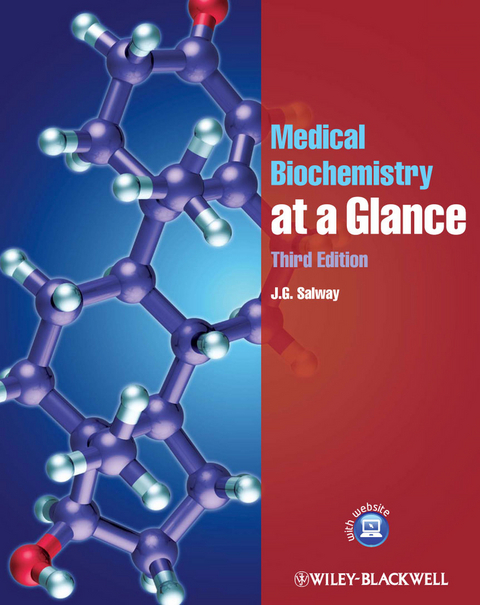
Medical Biochemistry at a Glance (eBook)
John Wiley & Sons (Verlag)
978-1-118-29240-2 (ISBN)
The book is designed as a revision guide for students preparing for examinations and contains topics that have been identified as 'high-yield' facts for the United States Medical Licensing Examination (USMLE), Step 1.
This third edition:
- Has been thoroughly revised and updated and is now in full colour throughout
- Is written by the author of the hugely successful Metabolism at a Glance (ISBN 9781405107167)
- Features updated and improved clinical correlates
- Expands its coverage with a new section on Molecular Biology
- Includes a brand new companion website of self-assessment questions and answers at www.ataglanceseries.com/medicalbiochemistry
Offering a concise, illustrated summary of biochemistry and its relevance to clinical medicine, Medical Biochemistry at a Glance is intended for students of medicine and the biomedical sciences such as nutrition, biochemistry, sports science, medical laboratory sciences, physiotherapy, pharmacy, physiology, pharmacology, genetics and veterinary science. It also provides a succinct review and reference for medical practitioners and biomedical scientists who need to quickly refresh their knowledge of medical biochemistry. The book is designed as a revision guide for students preparing for examinations and contains topics that have been identified as 'high-yield' facts for the United States Medical Licensing Examination (USMLE), Step 1. This third edition: Has been thoroughly revised and updated and is now in full colour throughout Is written by the author of the hugely successful Metabolism at a Glance (ISBN 9781405107167) Features updated and improved clinical correlates Expands its coverage with a new section on Molecular Biology Includes a brand new companion website of self-assessment questions and answers at www.ataglanceseries.com/medicalbiochemistry
J. G. Salway is the author of Medical Biochemistry at a Glance, 3rd Edition, published by Wiley.
The Author xiIntroduction xiiiPART ONE The Chairs Role and Career Path1. In the Trenches 32. Preparing for the Chairs Role 143. Assessing What Kind of Department Chair You Are 234. Serving as an Untenured Department Chair 345. Coexisting with a Former Chair 416. Creating a Career Plan 497. Returning to the Faculty 588. Seeking Higher Administrative Positions 669. A Scenario Analysis on the Chairs Role and Career Path 75PART TWO Departmental Management and Politics10. Understanding Departmental Ethics and Politics 8511. Chairing Small Departments 9212. Chairing Large Departments 9913. Setting Course Rotations and Schedules 10814. Making Decisions 11415. Setting Annual Themes 12416. Creating Departmental Centers for Excellence in Teaching and Learning 13217. A Scenario Analysis on Departmental Management and Politics 142PART THREE The Chairs Role in Searches, Hiring, and Firing18. Writing Job Descriptions and Position Announcements 15719. Understanding the Chairs Role in the Search Process 16820. Interviewing Candidates 17621. Letting Someone Go 18822. A Scenario Analysis on Hiring and Firing 196PART FOUR Mentoring Challenges and Opportunities for Department Chairs23. Helping Faculty Members Sharpen Their Focus 20524. Coaching Faculty Members to Increase Productivity 21125. Promoting a More Collegial Department 21726. Coping with Passive-Aggressive Behavior 22427. Resolving Chronic Complaints 23128. Addressing Staff Conflicts 24029. Overcoming Conflicts 24730. A Scenario Analysis onMentoring Challenges 257PART FIVE The Chairs Role in Faculty Development31. Facilitating a Positive First-Year Faculty Experience 26732. Coaching Faculty in Writing Effective Resumes 27433. Creating an Effective Professional Development Plan 27934. Creating an Effective Teaching Portfolio 29035. Creating an Effective Course Syllabus 30236. Promoting Creativity in Teaching and Learning 30937. A Scenario Analysis on Faculty Development 317PART SIX Best Practices in Evaluation and Assessment38. Creating Written Evaluations 32739. Conducting Oral Evaluation Sessions 33740. Writing Letters of Recommendation 34341. Doing Assessment Effectively 35242. Conducting Program Reviews 36443. Conducting Posttenure Reviews 38044. A Scenario Analysis on Evaluation and Assessment 389PART SEVEN Essentials of Budgeting and Planning45. Strategic Planning 40146. Planning a Budget 41147. Implementing a Budget 41848. Fundraising 42549. Accounting for Sponsored Research 44050. A Scenario Analysis on Strategic Budgeting and Planning 449Epilogue: A Checklist for the Essential Department Chair 457Index 463TOCUpdater-Profile_27@1326755508925
I have taught biochemistry to medical students and to
undergraduates and graduate students, at both Temple University
School of Medicine and at Case Western Reserve University, since
1968, so that I have had a great deal of experience in the field
and have a feel for what works well for medical students.
Medical Biochemistry at a Glance would be an excellent book
for USMLE Step 1. In my experience, medical students (and
pre-medical students) would greatly benefit from reading it in
preparation for the exam.
This compares very well with Lippincott's Biochemistry - this
has the right price and approach to compete with Lippincott for a
less expensive and more accessible alternative to the larger text
books that are out there.
I like the way it combines the metabolic pathways and principles in
such a creative fashion, and the metabolism sections are among the
best I have read and the easiest to understand. Metabolism is a
very complicated subject and, in my experience, most teachers of
the subject would really benefit from your text. (Richard W.
Hanson, Case Western Reserve University School of Medicine)
28
Diabetes mellitus
The term “diabetes” from the Greek dia, through, and bainen, to go, means “passing through” or “siphon” and describes the excessive production of urine (polyuria) in this condition. Diabetes mellitus (mellitus, honey) refers to the sweet taste of the urine, while in diabetes insipidus the urine is “insipid” (i.e. tasteless). (Don’t worry, you don’t have to taste the urine nowadays!) Diabetes is caused by lack of insulin activity while diabetes insipidus is caused by insufficient vasopressin (antidiuretic hormone) activity.
Diabetes mellitus (DM) is characterised by hyperglycaemia due to defective insulin secretion, defective insulin action or both. The global prevalence in 2010 is 285 million cases and this is projected to be 439 million in 2030. The main types are type 1 DM (T1DM) and type 2 DM (T2DM). There is also gestational DM and other unusual types such as maturity-onset diabetes of the young (MODY).
Type 1 Diabetes Mellitus
T1DM was previously known as “insulin-dependent diabetes mellitus” (IDDM) and “juvenile-onset diabetes” (JOD). It occurs in 0.5% of the population, and is characterised by sudden onset, usually before 25 years of age, and weight loss. The β-cells are destroyed by autoimmune attack following viral infection. “Molecular mimicry” is thought to be the cause. This happens when parts of a virus protein resemble a protein in the host’s β-cells. The body’s immune defences then attack both the virus and the β-cells, which are destroyed: hence insulin secretion ceases causing T1DM.
Type 2 Diabetes Mellitus
T2DM was previously known as “non-insulin-dependent diabetes mellitus” (NIDDM) and “maturity-onset diabetes” (MOD). It occurs in 3–5% of the population, and typically is characterised by slow, insidious and progressive onset until diagnosis in middle age. T2DM is often associated with obesity.
The pathogenesis of T2DM has numerous causes. However, there is general agreement that T2DM involves a combination of diminished insulin secretion from the β-cells and insulin resistance. Insulin resistance means that although insulin is present it does not work effectively. There are probably scores of explanations for why the insulin does not function, hence recent research suggests there are scores of different subtypes of T2DM. For example, insulin resistance could be caused by structural abnormalities of any of the following: the insulin molecule, the insulin receptor on the target tissue, the signalling proteins and enzymes involved in glucose and lipid uptake and metabolism (e.g. Chapters 21, 25, 27).
Gestational Diabetes Mellitus (GDM)
During pregnancy a transient period of insulin resistance is normal, but in about 4% of pregnancies insulin resistance is sufficiently severe to cause hyperglycaemia and GDM ensues. The cause of insulin resistance is not clear. However, raised levels of oestrogen, human placental lactogen and recently low levels of the insulin sensitiser, adiponectin, have been implicated.
Monogenic Diabetes or Maturity-Onset Diabetes of the Young (MODY)
The term “maturity-onset diabetes of the young” was coined in 1974 when “maturity-onset diabetes” described what is now T2DM. MODY is currently being replaced with the nomenclature monogenic diabetes.
MODY occurs in approximately 1–2% of people with diabetes but often is diagnosed as either T1DM or T2DM. It is characterised by early onset. However, a difference from T1DM is that MODY patients are able to secrete insulin from the β-cells albeit at an insufficient rate or amount to control hyperglycaemia (Chapter 24). MODY is an inherited disorder with autosomal dominant inheritance caused by a defect of a single gene. There are at least six subtypes of MODY, which account for ∼87% of cases in the UK. They are due to mutations in the genes encoding glucokinase (GCK-MODY) (Chapter 24) and the transcription factors HNF4A, HNF1A, IPF1, HNF1B and NEUROD1.
Glucose Toxicity
Glucose is an important fuel for all tissues and is essential for red blood cells. Ironically, prolonged exposure of cells to excessive concentrations of glucose can be harmful through the following mechanisms.
Osmotic Effects
The hypertonic effect of high glucose concentrations in the extracellular fluid causes water to be drawn from cells into the extracellular fluid, thence into the blood and excretion in the urine, resulting in dehydration.
β-Cell Damage Caused by Free Radicals
High concentrations of glucose in β-cells result in enhanced oxidative phosphorylation, which generates increased amounts of reactive oxygen species (ROS) causing oxidative stress (Chapters 14, 15) and loss of β-cell function. The consequence is a reduced ability to secrete insulin, resulting in hyperglycaemia, and thus a vicious cycle of hyperglycaemia/ROS/β-cell dysfunction ensues exacerbating the diabetes.
Glycation of Proteins
This describes the non-enzymatic reaction between glucose (and other reducing sugars) with free N-terminal α-amino groups or the ε-amino group of lysyl residues in proteins, which is a normal, but undesirable, ongoing process. NB Although the reactant is glucose, the product is a fructosamine (Fig. 28.1). Hyperglycaemia allows glucose to react with proteins in the plasma and tissues, resulting in the accumulation of glycated products. Over periods of months and years, these form advanced glycation end products (AGEs), which cross-link long-lived proteins, e.g. collagen, resulting in dysfunction and the pathogenesis of diabetic complications such as vascular stiffening, hypertension, nephropathy and retinopathy.
Figure 28.1 Glucose reacts non-enzymatically with free N-terminal α-amino groups and the ε-amino group of lysyl residues of proteins to form fructosamine products.
Access a high quality version of this image at http://booksupport.wiley.com.
NB The nomenclature is confused for glycosylation and glycation. Over the past decades, the terminology has varied. However, the nomenclature currently in favour is: glycosylation applies to carbohydrate reactions with proteins pre-translation; while glycation is reserved for reactions post-translation.
Glycated Plasma Proteins: Fructosamine
HbA1c (see below) is a fructosamine (also known as glycated serum protein (GSP) or glycated albumin); however, in clinical practice the term “fructosamine” is usually reserved for glycated serum proteins. Albumin, the principal protein in plasma, and the other plasma proteins are glycated when exposed to hyperglycaemia, producing fructosamine residues. Since the half-life of albumin is 19 days, the measurement of fructosamine gives an estimation of average glycaemic control over the previous 2–3 weeks.
Haemoglobin A1c (HbA1c)
HbA1c (the best-known glycated protein) is a minor component of haemoglobin, formed during the 17-week lifetime of red blood cells when glucose reacts non-enzymatically with the exposed α-amino group of the N-terminal valine of β-globin, forming a fructosamine residue. The amount of HbA1c formed is determined by the cumulative exposure to the plasma glucose concentration. Therefore, measurement of HbA1c provides an estimation of the time-averaged glucose concentration during the 8-week period prior to testing (Table 28.1).
Table 28.1 Approximate relationship between the Diabetes Control and Complications Trial (DCCT)-aligned HbA1c, HbA1c and the estimated average glucose concentration based on population studies. This should be used with caution in cases of individual patients. (The reporting of SI units of HbA1c was introduced in 2011.)
Diabetic Ketoacidosis (DKA)
Diabetic ketoacidosis is a complication of diabetes that presents as a medical emergency and is potentially fatal if not treated. Recently in England, during a 12-month period, there were 13,465 emergency admissions for DKA with approximately one-quarter of cases in children and young people under 18 years. DKA is a consequence of complete insulin insufficiency, precipitating a catabolic crisis in which amino acids from muscle protein are converted to glucose (gluconeogenesis; Chapter 34) and fatty acids released from adipose tissue are converted to ketoacids (ketone bodies) (Fig. 33.2), resulting in a significant metabolic acidosis. It has been graphically described as “a melting of the flesh into urine”. An exemplary case is shown in Fig. 28.2, where on admission there is...
| Erscheint lt. Verlag | 28.11.2011 |
|---|---|
| Reihe/Serie | At a Glance |
| At a Glance | At a Glance |
| Sprache | englisch |
| Themenwelt | Medizin / Pharmazie ► Medizinische Fachgebiete |
| Studium ► 1. Studienabschnitt (Vorklinik) ► Physiologie | |
| Naturwissenschaften ► Biologie ► Biochemie | |
| Schlagworte | Basic Medical Sciences • biochemistry • biomedical • Book • concise • examinations • glance • Guide • Illustrated • intended • Laboratory • Medical • Medical Science • Medicine • Medizin • Medizinische Grundlagenfächer • Medizinische Grundlagenfächer • Nutrition • Practitioners • Reference • refresh • Review • scientists • students • succinct |
| ISBN-10 | 1-118-29240-5 / 1118292405 |
| ISBN-13 | 978-1-118-29240-2 / 9781118292402 |
| Informationen gemäß Produktsicherheitsverordnung (GPSR) | |
| Haben Sie eine Frage zum Produkt? |
 EPUB (Adobe DRM)
Kopierschutz: Adobe-DRM
Adobe-DRM ist ein Kopierschutz, der das eBook vor Mißbrauch schützen soll. Dabei wird das eBook bereits beim Download auf Ihre persönliche Adobe-ID autorisiert. Lesen können Sie das eBook dann nur auf den Geräten, welche ebenfalls auf Ihre Adobe-ID registriert sind.
Details zum Adobe-DRM
Dateiformat: EPUB (Electronic Publication)
EPUB ist ein offener Standard für eBooks und eignet sich besonders zur Darstellung von Belletristik und Sachbüchern. Der Fließtext wird dynamisch an die Display- und Schriftgröße angepasst. Auch für mobile Lesegeräte ist EPUB daher gut geeignet.
Systemvoraussetzungen:
PC/Mac: Mit einem PC oder Mac können Sie dieses eBook lesen. Sie benötigen eine
eReader: Dieses eBook kann mit (fast) allen eBook-Readern gelesen werden. Mit dem amazon-Kindle ist es aber nicht kompatibel.
Smartphone/Tablet: Egal ob Apple oder Android, dieses eBook können Sie lesen. Sie benötigen eine
Geräteliste und zusätzliche Hinweise
Buying eBooks from abroad
For tax law reasons we can sell eBooks just within Germany and Switzerland. Regrettably we cannot fulfill eBook-orders from other countries.
aus dem Bereich