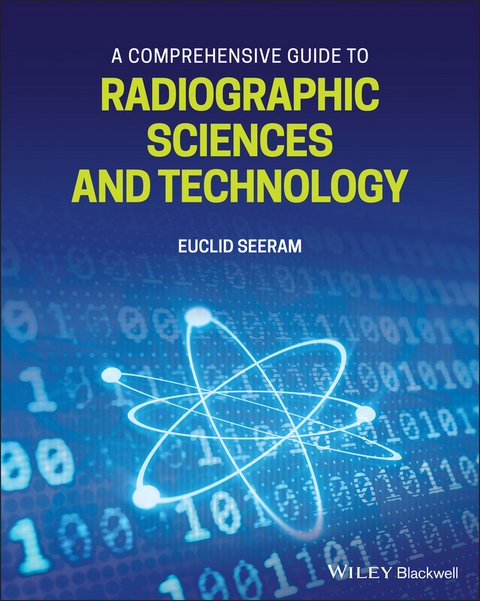
A Comprehensive Guide to Radiographic Sciences and Technology (eBook)
John Wiley & Sons (Verlag)
978-1-119-58185-7 (ISBN)
A comprehensive and succinct guide to radiographic physics and imaging, covering all the core components of the radiographic sciences, including digital imaging production and equipment, radiation protection and safety, and the principles of Computed Tomography.
- Designed to support students preparing to sit certification and board examinations, including the American Registry for Radiologic Technologists (ARRT) and other global radiography certification examinations.
- Addresses the core radiographic science components of the ASRT curriculum, including digital imaging production and equipment, radiation protection and safety, and the principles of Computed Tomography.
- Useful for students and practitioners in diagnostic medical radiation technology, radiography and medical radiation sciences, as well as in biomedical engineering technology.
Dr Euclid Seeram, PhD, MSc, BSc, FCAMRT, currently serves as honorary senior lecturer at the University of Sydney-Faculty of Health Sciences; adjunct associate professor at Monash University-Medicine, Nursing, and Health Sciences; adjunct professor at Charles Sturt University-Faculty of Science; and Adjunct Associate Professor-Faculty of Health, University of Canberra; in Australia.
He has published more than 50 papers in professional radiologic technology journals and has had 20 textbooks published on computed tomography, computers in radiology, radiographic instrumentation, digital radiography, and radiation protection. He is a founding member of the Journal of Medical Imaging and Radiation Sciences and is now on editorial boards for Radiography; Biomedical Imaging and Intervention Journal; Open Journal of Radiology; Journal of Allied Health; Journal of Social Science & Allied Health Professions. Euclid also serves on the international advisory panel for the Journal of Medical Radiation Sciences.
A Comprehensive Guide to Radiographic Sciences and Technology is a concise review of radiographic physics and imaging, perfect for students preparing for certification examinations such as the American Registry for Radiologic Technologists (ARRT). Aligned with the core radiographic science components of the current American Society of Radiologic Technologists (ASRT) curriculum, this up-to-date resource covers topics including radiation production and characteristics, imaging equipment, digital image acquisition and display, radiation protection, basic principles of computed tomography, and quality control. The guide begins with an overview of the radiographic sciences and technology, followed by detailed descriptions of the major components of digital radiographic imaging systems. Subsequent sections discuss the essential aspects of diagnostic radiography and computed tomography, including basic physics, imaging modalities, digital image processing, quality control, imaging informatics, and basic concepts of radiobiology and radiation protection. Throughout the book, concise chapters summarise the critical knowledge required for effective and efficient imaging of the patient while emphasising the important, yet commonly misunderstood, relationship between radiation dose and image quality. Written by an internationally recognised expert in the field, this invaluable reference and guide: Provides easy access to basic physics, techniques, equipment, and safety guidelines for radiographic imaging Reflects the educational requirements of the American Society of Radiologic Technologists (ASRT), the Canadian Association of Medical Radiation Technologists (CAMRT), the College of Radiographers (CoR), and other radiography societies and associations worldwide Offers a range of pedagogical tools such as chapter outlines, key term definitions, bulleted lists, practical examples, and links to current references and additional resources Includes charts, diagrams, photographs, and x-ray images A Comprehensive Guide to Radiographic Sciences and Technology is required reading for students in programs using ionizing radiation, those preparing for the ARRT and other global radiography certification exams, and practising technologists wanting to refresh their knowledge.
Dr Euclid Seeram, PhD, MSc, BSc, FCAMRT, currently serves as honorary senior lecturer at the University of Sydney-Faculty of Health Sciences; adjunct associate professor at Monash University-Medicine, Nursing, and Health Sciences; adjunct professor at Charles Sturt University-Faculty of Science; and Adjunct Associate Professor-Faculty of Health, University of Canberra; in Australia. He has published more than 50 papers in professional radiologic technology journals and has had 20 textbooks published on computed tomography, computers in radiology, radiographic instrumentation, digital radiography, and radiation protection. He is a founding member of the Journal of Medical Imaging and Radiation Sciences and is now on editorial boards for Radiography; Biomedical Imaging and Intervention Journal; Open Journal of Radiology; Journal of Allied Health; Journal of Social Science & Allied Health Professions. Euclid also serves on the international advisory panel for the Journal of Medical Radiation Sciences.
1
Radiographic sciences and technology: an overview
RADIOGRAPHIC IMAGING SYSTEMS: MAJOR MODALITIES AND COMPONENTS
RADIOGRAPHIC PHYSICS AND TECHNOLOGY
Essential physics of diagnostic imaging
Digital radiographic imaging modalities
Radiographic exposure technique
Computed tomography – physics and instrumentation
Imaging informatics at a glance
RADIATION PROTECTION AND DOSE OPTIMIZATION
Radiation protection in diagnostic radiography
Technical factors affecting dose in radiographic imaging
Radiation protection regulations
Optimization of radiation protection
Radiographic Science and Technology have evolved through the years, ever since the discovery and use of x‐rays in 1895. This evolution has resulted in the introduction of physical principles and technology with the major goal of improving the care and management of the patient. Furthermore, a significant benefit of these innovations is focused on reducing the radiation dose to the patient without compromising image quality. Radiographic sciences deal with the physics of various diagnostic imaging modalities (radiography, fluoroscopy, mammography, and computed tomography [CT]) and include x‐ray generation, x‐ray production, x‐ray emission, and x‐ray interaction with tissues. Furthermore, radiographic sciences also address radiation risks and radiation protection. Radiographic technology, on the other hand, addresses the equipment components and how they function to produce diagnostic images, image quality characteristics, and quality control (QC) aspects of these imaging modalities.
The workhorse of radiology has been film‐screen radiography which is now obsolete and has been replaced globally with digital imaging. The scope of digital imaging is extremely wide and now involves a basic understanding of computer sciences, to explain how the new digital imaging modalities work. These modalities include computed radiography (CR), flat‐panel digital radiography (FPDR), digital fluoroscopy (DF), digital mammography (DM), digital tomosynthesis, and CT. In addition, the digital imaging environment now demands that operators understand what has been referred to as “imaging informatics,” an area of study that involves picture archiving and communication systems (PACS), enterprise imaging, Big Data, machine learning (ML), deep learning (DL), and artificial intelligence (AI).
With the above in mind, various professional organizations such as the American Society of Radiologic Technologists (ASRT), the Canadian Association of Medical Radiation Technologists (CAMRT), and other professional medical imaging organizations throughout the world have prescribed curricula for diagnostic imaging programs which provide guiding, principles that assist academic program leaders in designing foundational learning outcomes that are intended to meet the professional standards, and more importantly meet the entry requirements for clinical practice. Institutions offering educational programs in diagnostic imaging should be then able to raise the level of these foundational learning outcomes and content to meet the requirements of degree programs, including graduate degree programs in diagnostic imaging.
A good example of the above is offered by the ASRT curriculum content which is organized around the following subject matter [1]: Introduction to Radiologic Science and Health Care; Ethics and Law in the Radiologic Sciences; Human Anatomy and Physiology; Pharmacology and Venipuncture; Imaging Equipment; Radiation Production and Characteristics; Principles of Exposure and Image Production; Digital Image Acquisition and Display; Image Analysis; Radiation Biology; Radiation Protection; Clinical Practice; Patient Care in Radiologic Sciences; Radiographic Procedures; Radiographic Pathology; Additional Modalities and Radiation Therapy; Basic Principles of Computed Tomography and Sectional Anatomy. Similar content is characteristic of other curricula offered by other medical imaging professional organizations around the world.
Keeping the above ideas in mind, this book will address content that are considered radiographic sciences and technology. Specifically, the chapters included present a summary of the critical knowledge base needed for effective and efficient imaging of the patient, and wise use of the technical factors that play a significant role in optimization of the dose to the patient without compromising the image quality necessary for diagnostic interpretation. Furthermore, the summaries of the technical elements of radiographic sciences and technology will assist the student in preparing to write certification examinations. As such, the major and significant principles and concepts will be reviewed in three sections as follows:
- Section 1: Radiographic imaging systems: major modalities and components
- Section 2: Radiographic physics and technology
- Section 3: Radiation protection and dose optimization
RADIOGRAPHIC IMAGING SYSTEMS: MAJOR MODALITIES AND COMPONENTS
In this book, the following radiographic imaging systems will be reviewed. These include x‐ray imaging modalities such as digital radiography (DR) which includes CR and FPDR, DF, DM, digital radiographic and breast tomosynthesis, and CT. Furthermore, these systems include imaging informatics which has become commonplace since radiology and more importantly hospitals are now all operating in the digital environment; that is, all data acquired from the patient are now in digital form and are stored and communicated using digital technologies. Informatics topics of importance include that nature and scope of PACS, enterprise imaging, cloud computing, Big Data, and the more recent of computer applications in medical imaging: AI. More details of these major technologies and how they work will be presented in Chapter 6 on Digital Imaging Modalities and Chapter 10 on Imaging Informatics.
RADIOGRAPHIC PHYSICS AND TECHNOLOGY
Radiographic physics and technology subject matter include basic physics concepts, and more specifically the physics of diagnostic imaging; technical aspects of the modalities; radiographic exposure technique; image quality, quality assurance (QA), and QC; CT physical principles; imaging informatics; radiobiology and radiation protection.
Essential physics of diagnostic imaging
The physics of diagnostic imaging is an important and vital topic that explains the nature of how these imaging modalities work to produce diagnostic images of the patient. Understanding the fundamental physics will provide the user with the tools not only needed to produce optimum image quality but more importantly to protect the patient from unnecessary radiation. As such, it is now a common characteristic of imaging departments to optimize radiation dose and work within the International Commission on Radiological Protection (ICRP) philosophy of as low as reasonably achievable (ALARA) to reduce the dose to the patient but not compromise the diagnostic quality of the images used to make a diagnosis of the patient's medical condition.
In this book, the topics in physics that will emphasize the imaging modalities are the nature of radiation, x‐ray generation, x‐ray production, x‐ray emission, x‐ray attenuation, and x‐ray interaction with matter. Furthermore, other physics topics of significance are radiation quantities and their associated units and measurement concepts. These topics and more fall in the domain of Health Physics. Three radiation quantities that are important to radiation protection of the patient are exposure, absorbed dose, and effective dose (ED). The units associated with each of these include coulombs per kilogram (C/kg), Grays (Gy), and Sieverts (Sv), respectively. In order to measure radiation, it must first be detected.
Digital radiographic imaging modalities
As listed earlier in this chapter, these modalities include CR, FPDR or DR as it is sometimes referred to, DF, DM, digital radiographic tomosynthesis (DRT), digital breast tomosynthesis (DBT), and last but not least CT. Additionally, since all of the above‐mentioned modalities include image processing using computers, the concepts of Digital Image Processing will be reviewed since it has become an essential tool for technologists, radiologists, and medical physicists working in a digital radiology department.
These imaging modalities include specific physics concepts that must be understood for optimum results. For example, CR is based on the use of photostimulable phosphors (PSP) which are based on the physical principle of photostimulable luminescence (PSL). An example of one such phosphor is barium fluoro halide (BaFX) where the halide (X) can be chlorine (Cl), bromine (Br), iodine (I), or a mixture of them. When the PSP imaging plate (IP) is exposed to x‐rays, electrons are moved from the ground state (valence band) to a higher energy level (conducting band) and are trapped there until the PSP plate is exposed to a laser light and subsequently the electrons in the higher energy state return to their ground state, thus emitting a bluish‐purple...
| Erscheint lt. Verlag | 23.4.2021 |
|---|---|
| Sprache | englisch |
| Themenwelt | Medizin / Pharmazie ► Allgemeines / Lexika |
| Medizin / Pharmazie ► Gesundheitsfachberufe | |
| Medizinische Fachgebiete ► Radiologie / Bildgebende Verfahren ► Radiologie | |
| Schlagworte | ARRT exam prep • ARRT study guide • Gesundheits- u. Sozialwesen • Health & Social Care • <p>radiographic sciences • Medical Science • Medizin • radiographic certification guide • radiographic exam prep • Radiographic Imaging Physics • Radiographic Imaging Systems • radiographic technology • Radiographie • radiography • radiography dose factors </p> • radiography exam guide • Radiologie • Radiologie u. Bildgebende Verfahren • Radiology & Imaging |
| ISBN-10 | 1-119-58185-0 / 1119581850 |
| ISBN-13 | 978-1-119-58185-7 / 9781119581857 |
| Informationen gemäß Produktsicherheitsverordnung (GPSR) | |
| Haben Sie eine Frage zum Produkt? |
 EPUB (Adobe DRM)
Kopierschutz: Adobe-DRM
Adobe-DRM ist ein Kopierschutz, der das eBook vor Mißbrauch schützen soll. Dabei wird das eBook bereits beim Download auf Ihre persönliche Adobe-ID autorisiert. Lesen können Sie das eBook dann nur auf den Geräten, welche ebenfalls auf Ihre Adobe-ID registriert sind.
Details zum Adobe-DRM
Dateiformat: EPUB (Electronic Publication)
EPUB ist ein offener Standard für eBooks und eignet sich besonders zur Darstellung von Belletristik und Sachbüchern. Der Fließtext wird dynamisch an die Display- und Schriftgröße angepasst. Auch für mobile Lesegeräte ist EPUB daher gut geeignet.
Systemvoraussetzungen:
PC/Mac: Mit einem PC oder Mac können Sie dieses eBook lesen. Sie benötigen eine
eReader: Dieses eBook kann mit (fast) allen eBook-Readern gelesen werden. Mit dem amazon-Kindle ist es aber nicht kompatibel.
Smartphone/Tablet: Egal ob Apple oder Android, dieses eBook können Sie lesen. Sie benötigen eine
Geräteliste und zusätzliche Hinweise
Buying eBooks from abroad
For tax law reasons we can sell eBooks just within Germany and Switzerland. Regrettably we cannot fulfill eBook-orders from other countries.
aus dem Bereich