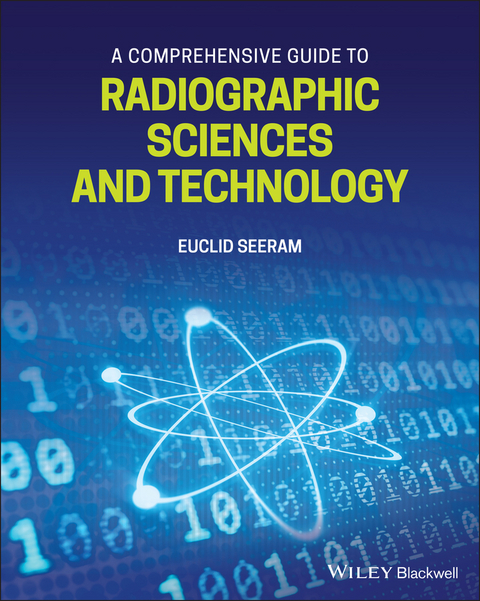
A Comprehensive Guide to Radiographic Sciences and Technology (eBook)
John Wiley & Sons (Verlag)
978-1-119-58183-3 (ISBN)

A Comprehensive Guide to Radiographic Sciences and Technology is a concise review of radiographic physics and imaging, perfect for students preparing for certification examinations such as the American Registry for Radiologic Technologists (ARRT). Aligned with the core radiographic science components of the current American Society of Radiologic Technologists (ASRT) curriculum, this up-to-date resource covers topics including radiation production and characteristics, imaging equipment, digital image acquisition and display, radiation protection, basic principles of computed tomography, and quality control.
The guide begins with an overview of the radiographic sciences and technology, followed by detailed descriptions of the major components of digital radiographic imaging systems. Subsequent sections discuss the essential aspects of diagnostic radiography and computed tomography, including basic physics, imaging modalities, digital image processing, quality control, imaging informatics, and basic concepts of radiobiology and radiation protection. Throughout the book, concise chapters summarise the critical knowledge required for effective and efficient imaging of the patient while emphasising the important, yet commonly misunderstood, relationship between radiation dose and image quality. Written by an internationally recognised expert in the field, this invaluable reference and guide:
- Provides easy access to basic physics, techniques, equipment, and safety guidelines for radiographic imaging
- Reflects the educational requirements of the American Society of Radiologic Technologists (ASRT), the Canadian Association of Medical Radiation Technologists (CAMRT), the College of Radiographers?(CoR), and other radiography societies and associations worldwide
- Offers a range of pedagogical tools such as chapter outlines, key term definitions, bulleted lists, practical examples, and links to current references and additional resources
- Includes charts, diagrams, photographs, and x-ray images
A Comprehensive Guide to Radiographic Sciences and Technology is required reading for students in programs using ionizing radiation, those preparing for the ARRT and other global radiography certification exams, and practising technologists wanting to refresh their knowledge.
Dr Euclid Seeram, PhD, MSc, BSc, FCAMRT, currently serves as honorary senior lecturer at the University of Sydney-Faculty of Health Sciences; adjunct associate professor at Monash University-Medicine, Nursing, and Health Sciences; adjunct professor at Charles Sturt University-Faculty of Science; and Adjunct Associate Professor-Faculty of Health, University of Canberra; in Australia.
He has published more than 50 papers in professional radiologic technology journals and has had 20 textbooks published on computed tomography, computers in radiology, radiographic instrumentation, digital radiography, and radiation protection. He is a founding member of the Journal of Medical Imaging and Radiation Sciences and is now on editorial boards for Radiography; Biomedical Imaging and Intervention Journal; Open Journal of Radiology; Journal of Allied Health; Journal of Social Science & Allied Health Professions. Euclid also serves on the international advisory panel for the Journal of Medical Radiation Sciences.
A Comprehensive Guide to Radiographic Sciences and Technology is a concise review of radiographic physics and imaging, perfect for students preparing for certification examinations such as the American Registry for Radiologic Technologists (ARRT). Aligned with the core radiographic science components of the current American Society of Radiologic Technologists (ASRT) curriculum, this up-to-date resource covers topics including radiation production and characteristics, imaging equipment, digital image acquisition and display, radiation protection, basic principles of computed tomography, and quality control. The guide begins with an overview of the radiographic sciences and technology, followed by detailed descriptions of the major components of digital radiographic imaging systems. Subsequent sections discuss the essential aspects of diagnostic radiography and computed tomography, including basic physics, imaging modalities, digital image processing, quality control, imaging informatics, and basic concepts of radiobiology and radiation protection. Throughout the book, concise chapters summarise the critical knowledge required for effective and efficient imaging of the patient while emphasising the important, yet commonly misunderstood, relationship between radiation dose and image quality. Written by an internationally recognised expert in the field, this invaluable reference and guide: Provides easy access to basic physics, techniques, equipment, and safety guidelines for radiographic imaging Reflects the educational requirements of the American Society of Radiologic Technologists (ASRT), the Canadian Association of Medical Radiation Technologists (CAMRT), the College of Radiographers (CoR), and other radiography societies and associations worldwide Offers a range of pedagogical tools such as chapter outlines, key term definitions, bulleted lists, practical examples, and links to current references and additional resources Includes charts, diagrams, photographs, and x-ray images A Comprehensive Guide to Radiographic Sciences and Technology is required reading for students in programs using ionizing radiation, those preparing for the ARRT and other global radiography certification exams, and practising technologists wanting to refresh their knowledge.
Dr Euclid Seeram, PhD, MSc, BSc, FCAMRT, currently serves as honorary senior lecturer at the University of Sydney-Faculty of Health Sciences; adjunct associate professor at Monash University-Medicine, Nursing, and Health Sciences; adjunct professor at Charles Sturt University-Faculty of Science; and Adjunct Associate Professor-Faculty of Health, University of Canberra; in Australia. He has published more than 50 papers in professional radiologic technology journals and has had 20 textbooks published on computed tomography, computers in radiology, radiographic instrumentation, digital radiography, and radiation protection. He is a founding member of the Journal of Medical Imaging and Radiation Sciences and is now on editorial boards for Radiography; Biomedical Imaging and Intervention Journal; Open Journal of Radiology; Journal of Allied Health; Journal of Social Science & Allied Health Professions. Euclid also serves on the international advisory panel for the Journal of Medical Radiation Sciences.
| Erscheint lt. Verlag | 6.4.2021 |
|---|---|
| Sprache | englisch |
| Themenwelt | Medizin / Pharmazie ► Allgemeines / Lexika |
| Medizin / Pharmazie ► Gesundheitsfachberufe | |
| Medizinische Fachgebiete ► Radiologie / Bildgebende Verfahren ► Radiologie | |
| Schlagworte | ARRT exam prep • ARRT study guide • Gesundheits- u. Sozialwesen • Health & Social Care • <p>radiographic sciences • Medical Science • Medizin • radiographic certification guide • radiographic exam prep • Radiographic Imaging Physics • Radiographic Imaging Systems • radiographic technology • Radiographie • radiography • radiography dose factors </p> • radiography exam guide • Radiologie • Radiologie u. Bildgebende Verfahren • Radiology & Imaging |
| ISBN-10 | 1-119-58183-4 / 1119581834 |
| ISBN-13 | 978-1-119-58183-3 / 9781119581833 |
| Informationen gemäß Produktsicherheitsverordnung (GPSR) | |
| Haben Sie eine Frage zum Produkt? |
 PDF (Adobe DRM)
Kopierschutz: Adobe-DRM
Adobe-DRM ist ein Kopierschutz, der das eBook vor Mißbrauch schützen soll. Dabei wird das eBook bereits beim Download auf Ihre persönliche Adobe-ID autorisiert. Lesen können Sie das eBook dann nur auf den Geräten, welche ebenfalls auf Ihre Adobe-ID registriert sind.
Details zum Adobe-DRM
Dateiformat: PDF (Portable Document Format)
Mit einem festen Seitenlayout eignet sich die PDF besonders für Fachbücher mit Spalten, Tabellen und Abbildungen. Eine PDF kann auf fast allen Geräten angezeigt werden, ist aber für kleine Displays (Smartphone, eReader) nur eingeschränkt geeignet.
Systemvoraussetzungen:
PC/Mac: Mit einem PC oder Mac können Sie dieses eBook lesen. Sie benötigen eine
eReader: Dieses eBook kann mit (fast) allen eBook-Readern gelesen werden. Mit dem amazon-Kindle ist es aber nicht kompatibel.
Smartphone/Tablet: Egal ob Apple oder Android, dieses eBook können Sie lesen. Sie benötigen eine
Geräteliste und zusätzliche Hinweise
Buying eBooks from abroad
For tax law reasons we can sell eBooks just within Germany and Switzerland. Regrettably we cannot fulfill eBook-orders from other countries.
aus dem Bereich