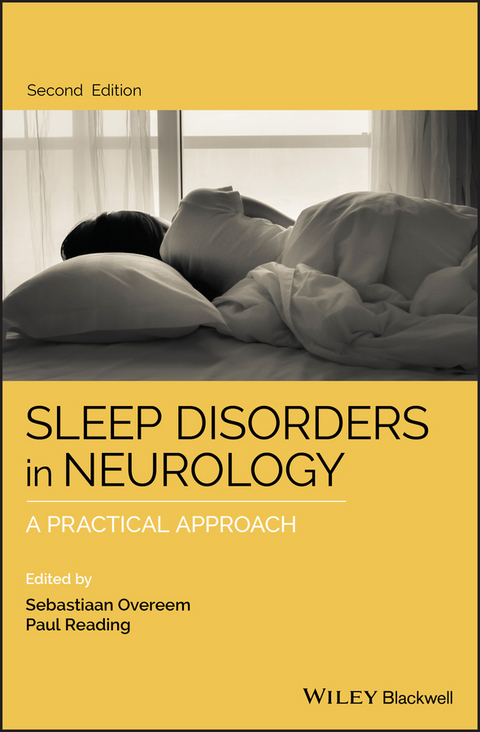
Sleep Disorders in Neurology (eBook)
John Wiley & Sons (Verlag)
978-1-118-77724-4 (ISBN)
The acclaimed guide to quickly and confidently diagnosing and treating sleep disorders in neurological disease-now with more algorithms and tables
The diagnosis and treatment of sleep disorders can be extremely challenging for physicians, especially when there is underlying neurological disease. In addition to the primary sleep disorders, there is a growing clinical interest in sleep disturbances associated with common neurological disorders such as Parkinson's disease. This updated and expanded edition of the critically acclaimed Sleep Disorders in Neurology: A Practical Approach provides doctors with expert recommendations and clear guidance on identifying sleep disorders in patients suffering from neurological diseases and providing effective treatment plans.
In creating this Second Edition doctors Overeem and Reading made every effort to further enhance the practical approach of the first edition by adding additional algorithms and tables to assist physicians in more rapid decision making. In addition, they expanded the content to include greater coverage of primary sleep disorders. Classification and diagnosis chapters have been revamped to follow the 3rd International Classification of Sleep Disorders.
- Offers physicians, with a practical approach to diagnosing and treating complex sleep disorders
- Draws on the expertise of neurologists who specialize in the disorders under discussion
- Features quick-access algorithms that help physicians rapidly diagnose and treat primary and secondary sleep disorders with confidence
- Provides guidance on when to consult a sleep specialist in managing a particular sleep disorder and
- Written by a multinational author team who provide a wider perspective and range of clinical experience
Sleep Disorders in Neurology: A Practical Approach, Second Edition is an essential resource for sleep medicine specialists, as well as clinicians and health care professionals not specifically trained in sleep medicine, but who nevertheless need to manage neurologically damaged patients with increasingly recognized sleep/wake disturbances.
Sebastiaan Overeem, MD, PhD is on staff at the Centre for Sleep Medicine 'Kempenhaeghe', Heeze and Eindhoven University of Technology, Eindhoven, The Netherlands.
Paul Reading, MA, MB B Chir., PhD, FRCP is Consultant Neurologist in the Department of Neurology, James Cook University Hospital, Middlesbrough, UK and recent President of the British Sleep Society.
The acclaimed guide to quickly and confidently diagnosing and treating sleep disorders in neurological disease now with more algorithms and tables The diagnosis and treatment of sleep disorders can be extremely challenging for physicians, especially when there is underlying neurological disease. In addition to the primary sleep disorders, there is a growing clinical interest in sleep disturbances associated with common neurological disorders such as Parkinson's disease. This updated and expanded edition of the critically acclaimed Sleep Disorders in Neurology: A Practical Approach provides doctors with expert recommendations and clear guidance on identifying sleep disorders in patients suffering from neurological diseases and providing effective treatment plans. In creating this Second Edition doctors Overeem and Reading made every effort to further enhance the practical approach of the first edition by adding additional algorithms and tables to assist physicians in more rapid decision making. In addition, they expanded the content to include greater coverage of primary sleep disorders. Classification and diagnosis chapters have been revamped to follow the 3rd International Classification of Sleep Disorders. Offers physicians, with a practical approach to diagnosing and treating complex sleep disorders Draws on the expertise of neurologists who specialize in the disorders under discussion Features quick-access algorithms that help physicians rapidly diagnose and treat primary and secondary sleep disorders with confidence Provides guidance on when to consult a sleep specialist in managing a particular sleep disorder and Written by a multinational author team who provide a wider perspective and range of clinical experience Sleep Disorders in Neurology: A Practical Approach, Second Edition is an essential resource for sleep medicine specialists, as well as clinicians and health care professionals not specifically trained in sleep medicine, but who nevertheless need to manage neurologically damaged patients with increasingly recognized sleep/wake disturbances.
Sebastiaan Overeem, MD, PhD is on staff at the Centre for Sleep Medicine "Kempenhaeghe", Heeze and Eindhoven University of Technology, Eindhoven, The Netherlands. Paul Reading, MA, MB B Chir., PhD, FRCP is Consultant Neurologist in the Department of Neurology, James Cook University Hospital, Middlesbrough, UK and recent President of the British Sleep Society.
Title Page 5
Copyright Page 6
Contents 7
List of Contributors 9
Preface 13
Part One General Sleep Medicine 15
Chapter 1 The Sleep History 17
Introduction 17
Excessive Daytime Sleepiness 18
Insomnia 21
Nocturnal Disturbances 22
Conclusions 24
References 25
Chapter 2 Polysomnography: Recording, Analysis and Interpretation 27
Introduction 27
The Use of Polysomnography: Considerations and Indications 28
Standardisation of Video?polysomnography 28
Scoring Sleep Stages 32
Sleep Related Movement Patterns 33
Sound Registration 36
Cardiac Function 36
Respiratory Scoring 36
A General Approach to Analysis and Interpretation 38
Some Additional Pointers and Pitfalls 40
References 43
Further Reading 43
Chapter 3 Daytime Tests for Sleepiness and Vigilance: Indications, Interpretation and Pitfalls 45
Introduction 45
The MSLT 46
The MWT 47
Sustained Attention to Response Task 49
Normative Data 52
Diagnostic Criteria 54
Recommendations for Use and Interpretation 56
References 57
Chapter 4 Diagnostic Strategies and Classification 61
Introduction 61
Classifications 62
Sleep Questionnaires 62
Reaching a Diagnosis 67
References 72
Chapter 5 Pharmacological Treatment of Insomnia and Parasomnias 75
Introduction 75
Sleep-onset and Sleep-maintenance Insomnia 75
Parasomnias 81
References 84
Chapter 6 Pharmacological Treatment of Excessive Daytime Sleepiness 87
Introduction 87
General Aspects of Treatment 88
Indications 89
Amphetamine Derivatives 90
Modafinil 91
Caffeine 92
Sodium Oxybate 92
Pitolisant 92
Selegiline 93
Mazindol 93
Alerting Antidepressants 93
Acknowledgement 93
References 94
Chapter 7 The Effects of Medication on Sleep and Wakefulness 97
Introduction 97
Neuropharmacology of Waking and Rapid Eye Movement Sleep 99
Neuropharmacology of Non?REM Sleep 110
Further Reading 140
Part Two Primary Sleep Disorders 141
Chapter 8 Narcolepsy and Other Central Disorders of Hypersomnolence 143
Introduction 143
Diagnostic Categories 144
General Aspects of Symptoms, Diagnosis and Management 144
Narcolepsy 146
Idiopathic Hypersomnia 150
Kleine–Levin Syndrome 151
Insufficient Sleep Syndrome 153
References 154
Chapter 9 Insomnia 157
Introduction 157
Insomnia in Neurology 157
Clinical Pathophysiology 158
Assessment of the Insomniac 160
Management of Insomnia 162
References 165
Chapter 10 Two Sleep-related Breathing Disorders 169
Sleep-disordered Breathing 169
Obstructive Sleep Apnoea 169
Central Sleep Apnoea 176
Conclusions 180
References 180
Chapter 11 Circadian Rhythm Sleep Disorders 183
Introduction 183
Changes in Circadian Rhythm with Age 184
Circadian Rhythm Sleep–Wake Disorders 184
History and Investigations 185
Sleep Diaries 185
Actigraphy 186
Polysomnography 186
Delayed Sleep Phase Syndrome 186
Advanced Sleep Phase Syndrome 188
Shift Work Disorder 189
Jet Lag Disorder – ‘East is a Beast, West is Best’. 190
Free Running Circadian Rhythm Disorder 191
Irregular Sleep–Wake Rhythm Disorder 192
Conclusion 192
References 194
Chapter 12 Parasomnias and Their Differentiation from Epilepsy 197
Introduction 197
Epileptic and Non?epileptic Conditions Presenting as ‘attacks’ from Sleep 197
Diagnosing Sleep-related Attacks 200
Investigations 203
Video Analysis of Events 204
Conclusion 205
References 206
Chapter 13 Restless Legs Syndrome and Periodic Limb Movement Disorder 207
Introduction 207
Clinical Aspects 208
Pathophysiological Aspects 209
Diagnostic Procedures 211
Management 213
References 219
Part Three Sleep in Neurological Disorders 223
Chapter 14 Sleep Disorders in Parkinson’s Disease and Other Parkinsonian Syndromes 225
Introduction 225
Clinical Epidemiology 226
Signs and Symptoms 227
Diagnostic Procedures 230
Management 231
Conclusions 237
References 238
Chapter 15 Sleep in Dementia and Other Neurodegenerative Diseases 243
Introduction 243
Alzheimer’s Disease 243
Dementia with Lewy Bodies 244
Huntington’s Disease 246
Hereditary Ataxias 247
References 251
Chapter 16 Myotonic Dystrophy 255
Introduction 255
Myotonic Dystrophy Type 1 257
Myotonic Dystrophy Type 2 261
References 263
Chapter 17 Sleep Disorders in Neuromuscular Disease 265
Introduction 265
Sleep and Breathing 265
Initial Clinical Approach 267
Nocturnal Testing 269
Surrogate Markers of Blood Gases 269
Sleep Dysfunction in Specific Neuromuscular Diseases 271
Management of Sleep Dysfunction in Neuromuscular Disorders 273
References 275
Chapter 18 Headache Disorders 279
Introduction 279
Epidemiology 280
Classification 282
Diagnostic Procedures 284
Management 286
Conclusions 288
References 288
Chapter 19 Sleep Epilepsies 291
Introduction 291
The Influence of Sleep Stages on Seizures 291
Clinical Epidemiology 292
Clinical Features 293
Diagnostic Procedures 296
Management 299
References 301
Chapter 20 Sleep–Wake Disorders Following Traumatic Brain Injury 305
Introduction 305
Clinical Epidemiology 305
Excessive Daytime Sleepiness 306
Pleiosomnia 307
Fatigue 309
Insomnia 310
Circadian Sleep–Wake Disorders 311
References 312
Chapter 21 Sleep Disorders Associated with Stroke 315
Introduction 315
Clinical Presentation and Pathophysiological Relevance 315
Diagnosis and Treatment 322
References 327
Chapter 22 Sleep Disorders in Multiple Sclerosis and Related Conditions 333
Introduction 333
Fatigue Versus Sleepiness 333
Clinical Assessment 335
Specific Sleep Disorders in MS and Management Options 335
Secondary Narcolepsy in MS and Neuromyelitis Optica 337
References 338
Chapter 23 Tumours and Paraneoplastic Syndromes 341
Sleep in Patients with Systemic Tumours 341
Sleep in Patients with Brain Tumors 343
Sleep in Paraneoplastic Syndromes 346
References 352
Index 357
EULA 375
| Erscheint lt. Verlag | 25.6.2018 |
|---|---|
| Sprache | englisch |
| Themenwelt | Medizin / Pharmazie ► Medizinische Fachgebiete ► Neurologie |
| Schlagworte | cerebral tumors and sleep disorders • head trauma and sleep disorders • Insomnia • <p>sleep disorders • Medical Science • Medizin • migraine and sleep disorders • neurogenerative disease and sleep disorders</p> • Neurological Disease • neurological disease and sleep disorders • neurological sleep disorders • Neurologie • Neurology • nocturnal polysomnography • parasomnia • Parkinson’s disease • paul reading, md • pharmacological treatment of nocturnal sleep disturbances • primary neurological sleep disorders • Psychiatrie • Psychiatry • sebastiaan overeem • Sleep Apnea • sleep disorder diagnosis • sleep disorder drugs • sleep disorder in neuromuscular disease • sleep disorder neurology • sleep disorders diagnosis • sleep disorder treatment plans • sleep epilepsies • sleep medicine • stroke and sleep disorders • treating sleep disorders • treatment of excessive daytime sleepiness |
| ISBN-10 | 1-118-77724-7 / 1118777247 |
| ISBN-13 | 978-1-118-77724-4 / 9781118777244 |
| Informationen gemäß Produktsicherheitsverordnung (GPSR) | |
| Haben Sie eine Frage zum Produkt? |
 PDF (Adobe DRM)
Kopierschutz: Adobe-DRM
Adobe-DRM ist ein Kopierschutz, der das eBook vor Mißbrauch schützen soll. Dabei wird das eBook bereits beim Download auf Ihre persönliche Adobe-ID autorisiert. Lesen können Sie das eBook dann nur auf den Geräten, welche ebenfalls auf Ihre Adobe-ID registriert sind.
Details zum Adobe-DRM
Dateiformat: PDF (Portable Document Format)
Mit einem festen Seitenlayout eignet sich die PDF besonders für Fachbücher mit Spalten, Tabellen und Abbildungen. Eine PDF kann auf fast allen Geräten angezeigt werden, ist aber für kleine Displays (Smartphone, eReader) nur eingeschränkt geeignet.
Systemvoraussetzungen:
PC/Mac: Mit einem PC oder Mac können Sie dieses eBook lesen. Sie benötigen eine
eReader: Dieses eBook kann mit (fast) allen eBook-Readern gelesen werden. Mit dem amazon-Kindle ist es aber nicht kompatibel.
Smartphone/Tablet: Egal ob Apple oder Android, dieses eBook können Sie lesen. Sie benötigen eine
Geräteliste und zusätzliche Hinweise
Buying eBooks from abroad
For tax law reasons we can sell eBooks just within Germany and Switzerland. Regrettably we cannot fulfill eBook-orders from other countries.
aus dem Bereich