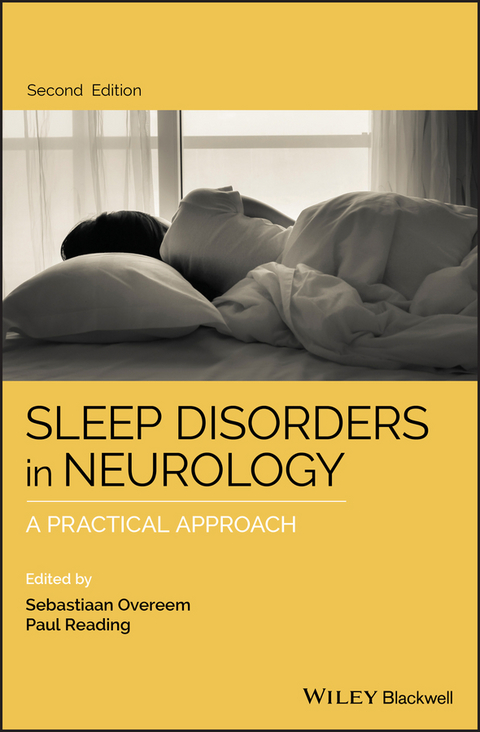
Sleep Disorders in Neurology (eBook)
John Wiley & Sons (Verlag)
978-1-118-77722-0 (ISBN)
The acclaimed guide to quickly and confidently diagnosing and treating sleep disorders in neurological disease-now with more algorithms and tables
The diagnosis and treatment of sleep disorders can be extremely challenging for physicians, especially when there is underlying neurological disease. In addition to the primary sleep disorders, there is a growing clinical interest in sleep disturbances associated with common neurological disorders such as Parkinson's disease. This updated and expanded edition of the critically acclaimed Sleep Disorders in Neurology: A Practical Approach provides doctors with expert recommendations and clear guidance on identifying sleep disorders in patients suffering from neurological diseases and providing effective treatment plans.
In creating this Second Edition doctors Overeem and Reading made every effort to further enhance the practical approach of the first edition by adding additional algorithms and tables to assist physicians in more rapid decision making. In addition, they expanded the content to include greater coverage of primary sleep disorders. Classification and diagnosis chapters have been revamped to follow the 3rd International Classification of Sleep Disorders.
- Offers physicians, with a practical approach to diagnosing and treating complex sleep disorders
- Draws on the expertise of neurologists who specialize in the disorders under discussion
- Features quick-access algorithms that help physicians rapidly diagnose and treat primary and secondary sleep disorders with confidence
- Provides guidance on when to consult a sleep specialist in managing a particular sleep disorder and
- Written by a multinational author team who provide a wider perspective and range of clinical experience
Sleep Disorders in Neurology: A Practical Approach, Second Edition is an essential resource for sleep medicine specialists, as well as clinicians and health care professionals not specifically trained in sleep medicine, but who nevertheless need to manage neurologically damaged patients with increasingly recognized sleep/wake disturbances.
Sebastiaan Overeem, MD, PhD is on staff at the Centre for Sleep Medicine 'Kempenhaeghe', Heeze, the Netherlands and at the Department of Neurology, Donders Institute for Neuroscience, Radboud University Nijmegen Medical Centre.
Paul Reading, MA, MB B Chir., PhD, FRCP is Consultant Neurologist in the Department of Dept. of Neurology, James Cook University Hospital, Middlesbrough, UK and recent President of the British Sleep Society.
The acclaimed guide to quickly and confidently diagnosing and treating sleep disorders in neurological disease now with more algorithms and tables The diagnosis and treatment of sleep disorders can be extremely challenging for physicians, especially when there is underlying neurological disease. In addition to the primary sleep disorders, there is a growing clinical interest in sleep disturbances associated with common neurological disorders such as Parkinson's disease. This updated and expanded edition of the critically acclaimed Sleep Disorders in Neurology: A Practical Approach provides doctors with expert recommendations and clear guidance on identifying sleep disorders in patients suffering from neurological diseases and providing effective treatment plans. In creating this Second Edition doctors Overeem and Reading made every effort to further enhance the practical approach of the first edition by adding additional algorithms and tables to assist physicians in more rapid decision making. In addition, they expanded the content to include greater coverage of primary sleep disorders. Classification and diagnosis chapters have been revamped to follow the 3rd International Classification of Sleep Disorders. Offers physicians, with a practical approach to diagnosing and treating complex sleep disorders Draws on the expertise of neurologists who specialize in the disorders under discussion Features quick-access algorithms that help physicians rapidly diagnose and treat primary and secondary sleep disorders with confidence Provides guidance on when to consult a sleep specialist in managing a particular sleep disorder and Written by a multinational author team who provide a wider perspective and range of clinical experience Sleep Disorders in Neurology: A Practical Approach, Second Edition is an essential resource for sleep medicine specialists, as well as clinicians and health care professionals not specifically trained in sleep medicine, but who nevertheless need to manage neurologically damaged patients with increasingly recognized sleep/wake disturbances.
Sebastiaan Overeem, MD, PhD is on staff at the Centre for Sleep Medicine "Kempenhaeghe", Heeze and Eindhoven University of Technology, Eindhoven, The Netherlands. Paul Reading, MA, MB B Chir., PhD, FRCP is Consultant Neurologist in the Department of Neurology, James Cook University Hospital, Middlesbrough, UK and recent President of the British Sleep Society.
List of Contributors vii
Preface xi
Part One General Sleep Medicine 1
1 The Sleep History 3
Paul Reading and Sebastiaan Overeem,
2 Polysomnography 13
Pieter Jan Simons and Sebastiaan Overeem,
3 Daytime Tests for Sleepiness and Vigilance 31
Gert Jan Lammers, Mojca van Schie and J. Gert van Dijk
4 Diagnostic Strategies and Classification 47
Geert Mayer and Dirk Pevernagie
5 Pharmacological Treatment of Insomnia and Parasomnias 61
Paul Reading and Sue J. Wilson
6 Pharmacological Treatment of Excessive Daytime Sleepiness 73
Karel Sonka
7 The Effects of Medication on Sleep and Wakefulness 83
Gé S.F. Ruigt and Joop van Gerven
Part Two Primary Sleep Disorders 127
8 Narcolepsy and Other Central Disorders of Hypersomnolence 129
Sebastiaan Overeem, and Paul Reading
9 Insomnia 143
Ingrid Verbeek and Angelique Pijpers
10 Sleep?]related Breathing Disorders 155
Timothy G. Quinnell
11 Circadian Rhythm Sleep Disorders 169
Kirstie N. Anderson
12 Parasomnias and Their Differentiation from Epilepsy 183
Chris Derry
13 Restless Legs Syndrome and Periodic Limb Movement Disorder 193
Thomas C. Wetter and Christine Norra
Part Three Sleep in Neurological Disorders 209
14 Sleep Disorders in Parkinson's Disease and Other Parkinsonian Syndromes 211
Isabelle Arnulf, Valérie Cochen De Cock, Paul Reading and Marie Vidailhet
15 Sleep in Dementia and Other Neurodegenerative Diseases 229
Alex Iranzo
16 Myotonic Dystrophy 241
Bart Willem Smits and José Enrique Martínez?]Rodríguez
17 Sleep Disorders in Neuromuscular Disease 251
Sushanth Bhat and Johan Verbraecken
18 Headache Disorders 265
Jeanetta C. Rains and J. Steven Poceta
19 Sleep Epilepsies 277
Luigi Ferini?]Strambi
20 Sleep-Wake Disorders Following Traumatic Brain Injury 291
Christian R. Baumann
21 Sleep Disorders Associated with Ischaemic Stroke 301
Dirk M. Hermann, Markus H. Schmidt and Claudio L. Bassetti
22 Sleep Disorders in Multiple Sclerosis and Related Conditions 319
Jeroen J.J. van Eijk, Thom P.J. Timmerhuis, Brigit A. de Jong and Paul Reading
23 Tumours and Paraneoplastic Syndromes 327
Alex Iranzo
Index
1
The Sleep History
Paul Reading1 and Sebastiaan Overeem2,3
1 Department of Neurology, James Cook University Hospital, Middlesbrough, UK
2 Centre for Sleep Medicine ‘Kempenhaeghe’, Heeze, The Netherlands
3 Eindhoven University of Technology, Eindhoven, The Netherlands
Introduction
It is a commonly held misperception that practitioners of sleep medicine are highly dependent on sophisticated investigative techniques to diagnose and treat sleep‐disordered patients. However, it is relatively rare for detailed tests to add indispensable diagnostic information, provided a detailed, credible and accurate 24‐hour sleep–wake history is available. In fact, there can be few areas of medicine where a good, directed history is of more diagnostic importance. In some situations, this can be extremely complex due to interacting social, environmental, medical and psychological factors. Furthermore, obtaining an accurate sleep history often requires collateral or corroborative information from bed partners or close relatives, especially in the assessment of parasomnias.
In sleep medicine, neurological patients can present particular diagnostic challenges. It can often be difficult to determine whether a given sleep–wake symptom arises from the underlying neurological disorder and perhaps its treatment or whether an additional primary sleep disorder is the main contributor. The problem is compounded by the relative lack of formal training in sleep medicine received by the majority of neurology trainees that often results in reduced confidence when faced with sleep‐related symptoms. However, it is difficult to underestimate the potential importance of disordered sleep in many chronic and diverse neurological conditions such as epilepsy, migraine, multiple sclerosis and parkinsonism.
The following framework is a personal view on how to approach sleep–wake complaints from a neurological perspective. Although the focus is on individual or particular symptoms, it should be realised that several conditions can produce a variety of symptoms across the full 24‐hour sleep–wake period. In Chapters 2 and 3, the various ways in which sleep and sleepiness can be recorded are discussed. Then, in Chapter 4, an ‘integrative’ approach to diagnosis is outlined, illustrated by case examples.
Excessive Daytime Sleepiness
Excessive daytime sleepiness (EDS) is an increasingly recognised symptom that is deemed worthy of assessment. It is relatively prevalent and disabling both in general and neurological populations [1]. Many excessively sleepy patients may present to the medical profession indirectly, most often due to adverse indirect effects on cognition, motivation or mood. Indeed, the inability to focus or maintain concentration is often the most disabling aspect of conditions causing EDS, described as ‘brain fog’ or even masquerading as dementia. A not uncommon question posed to general neurologists is whether a sleepy patient might have narcolepsy or a similar primary, presumed ‘central’ sleep disorder. Furthermore, ‘secondary’ or ‘symptomatic’ narcolepsy is evolving as a valid concept given recent major advances in unravelling the neurobiology of sleep regulation. In particular, a variety of pathologies predominantly affecting the hypothalamus can mimic elements of idiopathic (primary) narcolepsy [2].
It is widely perceived that EDS is a normal phenomenon associated with the ageing process. In fact, objective measures of sleepiness suggest that healthy elderly subjects are actually less prone to falling asleep when unoccupied during the day compared with their younger counterparts. Although afternoon planned naps are probably a normal phenomenon with many elderly people in all cultures, evidence for EDS beyond this level should be taken seriously in all age groups.
In the initial assessment of EDS, it is essential to gain an impression of the severity of symptoms and how they are impacting on an individual subject. It is also crucial to confirm that the complaint is that of true excessive somnolence rather than simple fatigue or lethargy. Although sleepiness questionnaires are widely used and can act as an effective screening tool in this respect (Chapter 4), they rarely help with actual diagnosis. Directly asking a subject about particularly unusual, unplanned or inappropriate sleep episodes can therefore provide valuable insight. Habitual mid‐afternoon or late evening naps when unoccupied could be considered normal phenomena whereas regularly dropping to sleep mid‐morning or in public places usually indicates a problem. A history of invariably napping as a car passenger for journeys of over an hour may suggest pathological levels of sleepiness as may a complete inability to watch any film all the way through. In narcolepsy, the subject may describe sleep onset even whilst engaged in physical activities such as writing or standing. Furthermore, in severe EDS, the subject may report awakening from naps unaware of any prior imperative to sleep. So‐called ‘sleep attacks’ are recognised in narcolepsy and have been widely reported in sleepy parkinsonian patients. Regarding the latter population, recent evidence suggests that they may be particularly poor at monitoring their levels of subjective sleepiness, making the history from relatives particularly important [3].
The commonest causes of mild and severe EDS are probably insufficient sleep and poor quality overnight sleep, respectively. A directed history, perhaps backed by a sleep diary, usually helps in diagnosing the former and can indicate causes of the latter. If a subject regularly and reliably reports at least seven or eight hours of continuous sleep, yet remains significantly somnolent during the day, it is most likely that there is a disturbance of sleep architecture and, usually, that insufficient deep or restorative sleep is being obtained. An overabundance of light (stage N2) sleep compared with deep non‐rapid eye movement (REM) sleep (stage N3) is frequently seen in sleep‐related breathing disorders and periodic limb movement disorder. These diagnoses can easily be missed from the history if the subject is not a typical phenotype for the former or if they sleep alone. However, leading questions such as ‘do you invariably awake with a dry mouth?’ or ‘are the bed clothes usually disrupted on waking?’ can provide diagnostic pointers. Morning headaches or general sensations of ‘heaviness’ are traditionally associated with obstructive sleep apnoea although are equally common in a variety of sleep disorders.
A drug history including alcohol habit is also clearly relevant in assessing EDS as numerous agents given before bed may appear to induce drowsiness and aid sleep onset but actually worsen nocturnal sleep quality overall. Tricyclic preparations and benzodiazepines are frequently associated with unrefreshing sleep yet are frequently given primarily as hypnotic agents. It is worth noting that most antidepressants will potentially worsen restless legs syndrome or periodic limb movement disorder (Chapter 13).
Less recognised causes of disturbed nocturnal sleep may be picked up by a focused history. Nocturnal pain, frequent nocturia, persistent wheeze and acid reflux are usually fairly obvious ‘toxins’ to sleep and are generally readily reported. However, more subtle phenomena such as teeth grinding (bruxism) may not be recognised by the subject and only suspected if direct questions are asked about teeth wear, temporomandibular joint dysfunction or jaw pain, especially on waking.
A number of primary neurological disorders, including narcolepsy, disrupt the continuity of nocturnal sleep, most likely as a result of pathology in various brain regions intimately involved in sleep–wake control. A new symptom of sleep fragmentation and daytime somnolence in a patient with inflammatory brain disease such as multiple sclerosis, for example, might sometimes suggest inflammatory pathology in the pontomedullary area [4] or around the hypothalamus [5]. Idiopathic Parkinson’s disease is strongly associated with EDS, especially in the advanced stages. Although there are many potential causes, including dopaminergic medication, primary Lewy body brainstem pathology itself is a likely substrate for most of the sleep–wake dysregulation, especially with regards to REM sleep [6]. If a neurological patient complains of significant EDS and no obvious cause such as Parkinson’s disease is determined after a detailed history and subsequent sleep investigations, magnetic resonance brain imaging can be justified to exclude unexpected inflammatory or even structural pathology. This may particularly apply to sleepy, overweight children, for example [7].
There are usually sufficient clues from a patient’s history to suggest a specific diagnosis of narcolepsy, the quintessential primary disorder of sleep–wake dysregulation (Chapter 8). Typically, narcolepsy causes symptoms from early adolescence and profound delays in receiving a diagnosis are still commonplace. A detailed history, therefore, exploring issues of excessive sleepiness around schooling can be illuminating. Apart from its severity, the nature of sleepiness is not particularly exceptional or unique in narcolepsy. However, even short naps, planned or unplanned, tend to be restorative, allowing a ‘refractory’ wakeful period of...
| Erscheint lt. Verlag | 25.6.2018 |
|---|---|
| Sprache | englisch |
| Themenwelt | Medizin / Pharmazie ► Medizinische Fachgebiete ► Neurologie |
| Schlagworte | cerebral tumors and sleep disorders • head trauma and sleep disorders • Insomnia • <p>sleep disorders • Medical Science • Medizin • migraine and sleep disorders • neurogenerative disease and sleep disorders</p> • Neurological Disease • neurological disease and sleep disorders • neurological sleep disorders • Neurologie • Neurology • nocturnal polysomnography • parasomnia • Parkinson’s disease • paul reading, md • pharmacological treatment of nocturnal sleep disturbances • primary neurological sleep disorders • Psychiatrie • Psychiatry • sebastiaan overeem • Sleep Apnea • sleep disorder diagnosis • sleep disorder drugs • sleep disorder in neuromuscular disease • sleep disorder neurology • sleep disorders diagnosis • sleep disorder treatment plans • sleep epilepsies • sleep medicine • stroke and sleep disorders • treating sleep disorders • treatment of excessive daytime sleepiness |
| ISBN-10 | 1-118-77722-0 / 1118777220 |
| ISBN-13 | 978-1-118-77722-0 / 9781118777220 |
| Informationen gemäß Produktsicherheitsverordnung (GPSR) | |
| Haben Sie eine Frage zum Produkt? |
 EPUB (Adobe DRM)
Kopierschutz: Adobe-DRM
Adobe-DRM ist ein Kopierschutz, der das eBook vor Mißbrauch schützen soll. Dabei wird das eBook bereits beim Download auf Ihre persönliche Adobe-ID autorisiert. Lesen können Sie das eBook dann nur auf den Geräten, welche ebenfalls auf Ihre Adobe-ID registriert sind.
Details zum Adobe-DRM
Dateiformat: EPUB (Electronic Publication)
EPUB ist ein offener Standard für eBooks und eignet sich besonders zur Darstellung von Belletristik und Sachbüchern. Der Fließtext wird dynamisch an die Display- und Schriftgröße angepasst. Auch für mobile Lesegeräte ist EPUB daher gut geeignet.
Systemvoraussetzungen:
PC/Mac: Mit einem PC oder Mac können Sie dieses eBook lesen. Sie benötigen eine
eReader: Dieses eBook kann mit (fast) allen eBook-Readern gelesen werden. Mit dem amazon-Kindle ist es aber nicht kompatibel.
Smartphone/Tablet: Egal ob Apple oder Android, dieses eBook können Sie lesen. Sie benötigen eine
Geräteliste und zusätzliche Hinweise
Buying eBooks from abroad
For tax law reasons we can sell eBooks just within Germany and Switzerland. Regrettably we cannot fulfill eBook-orders from other countries.
aus dem Bereich