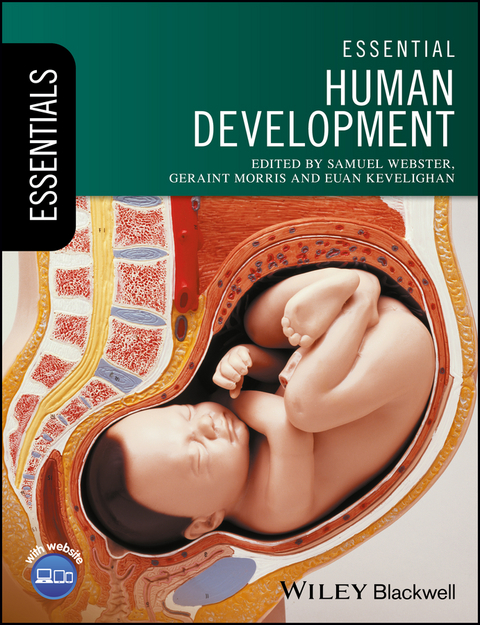
Essential Human Development (eBook)
John Wiley & Sons (Verlag)
978-1-118-52860-0 (ISBN)
As our understanding of the human body broadens, so does the need for a comprehensive text that encompasses all aspects of human development. Essential Human Development is a great course companion that focuses on the human life cycle, ideal for the undergraduate student new to these fields, or for qualified practitioners looking for a reference guide.
Featuring key information points and self-test assessments in each chapter, the book is organised in an accessible manner, beginning with fertilisation and embryology, then moving on to obstetric medicine, neonatal care and child health, with the final section exploring gynaecological medicine.
Ensuring that information is placed in context to aid understanding, Essential Human Development is the perfect support for the modern medical school curriculum, as well as a vital reminder of the core information needed whilst on a women or child health clinical placement.
Dr Samuel Webster, Lecturer in Anatomy, Swansea University, Swansea, UK
Dr Geraint Morris, Consultant in Neonatology, Swansea University, Swansea, UK
Mr Euan Kevelighan, Consultant in Obstetrics & Gynaecology, Singleton Hospital, Swansea, UK
As our understanding of the human body broadens, so does the need for a comprehensive text that encompasses all aspects of human development. Essential Human Development is a great course companion that focuses on the human life cycle, ideal for the undergraduate student new to these fields, or for qualified practitioners looking for a reference guide. Featuring key information points and self-test assessments in each chapter, the book is organised in an accessible manner, beginning with fertilisation and embryology, then moving on to obstetric medicine, neonatal care and child health, with the final section exploring gynaecological medicine. Ensuring that information is placed in context to aid understanding, Essential Human Development is the perfect support for the modern medical school curriculum, as well as a vital reminder of the core information needed whilst on a women or child health clinical placement.
Dr Samuel Webster, Lecturer in Anatomy, Swansea University, Swansea, UK Dr Geraint Morris, Consultant in Neonatology, Swansea University, Swansea, UK Mr Euan Kevelighan, Consultant in Obstetrics & Gynaecology, Singleton Hospital, Swansea, UK
Essential Human Development 1
Contents 7
List of Contributors 11
Preface 13
How to use your textbook 14
About the companion website 15
Part 1: Fertilisation 17
CHAPTER 1: Principles of development 19
Case 19
Learning outcomes 19
Chromosomes 20
Mitosis 20
Meiosis 22
Spermatogenesis 23
Oogenesis 24
Growth 25
Differentiation 26
Signalling 26
Organisation 26
Morphogenesis 26
CHAPTER 2: The female reproductive system 28
Case 28
Learning outcomes 28
Anatomy 29
Bones of the pelvis 29
The pelvic floor 31
Internal reproductive organs 32
External genitalia 35
Pituitary gland 36
Physiology 37
Menstrual cycle 37
CHAPTER 3: The malereproductive system 40
Case 40
Learning outcomes 40
Anatomy 41
Bones of the pelvis 41
Anterior abdominal wall and the inguinal canal 41
Testes 42
Ductus deferens and glands 44
Penis 45
Embryology 45
Physiology 46
Erection, emission and ejaculation 46
CHAPTER 4: Fertilisation 48
Case 48
Learning outcomes 48
Anatomy 49
Cell biology 49
Physiology of fertilisation and theendometrium 51
CHAPTER 5: Embryology: zygoteto blastocyst 54
Case 54
Learning outcomes 54
Zygote 55
Decidualisation 55
Implantation 56
Placenta 57
Sacs of the embryo 57
CHAPTER 6: Embryonic stem cells 59
Case 59
Learning outcomes 59
Embryonic stem cells 60
Stem cells in medicine 61
Ethical arguments 62
Law 62
Part 2: Pregnancy 65
CHAPTER 7: Embryology 67
Case 67
Learning outcomes 67
Embryological development 68
Gastrulation 68
Embryology of the gastrointestinalsystem 68
Neuroembryology 69
Cardiovascular embryology 70
Respiratory embryology 71
Musculoskeletal embryology 72
Urogenital embryology 72
CHAPTER 8: Physiologyof pregnancy 75
Case 75
Learning outcomes 75
Systemic changes during pregnancy 76
Hormonal changes 76
Reproductive system 76
Cardiovascular system 77
Respiratory system 77
Gastrointestinal tract 78
Renal 78
Metabolism 78
Placenta 78
CHAPTER 9: Antenatal care 80
Case 80
Learning outcomes 80
Assessment of risk 81
History 81
Symptoms of early pregnancy 81
Index pregnancy 81
Obstetric history 81
Gynaecological history 81
Medical history 82
Examination and investigations 83
First trimester 83
Second trimester 83
Third trimester 84
CHAPTER 10: Antenatal screeningand prenataldiagnosis 87
Case 87
Learning outcomes 87
Obstetric ultrasound screening for fetalanomaly 88
First-trimester ultrasound 88
Second-trimester ultrasound 88
CNS anomalies 89
Cardiac anomalies 89
Thoracic anomalies 89
GI anomalies 89
Urogenital anomalies 89
Skeletal dysplasias 90
Multiple anomalies 90
Normal variants 90
Audit 90
Screening for chromosomal anomalies 90
Invasive tests 90
Amniocentesis 91
Chorionic villus sampling (CVS) 92
Interpreting the results 92
Infection in pregnancy 92
Screening for infection 92
Infections not screened in routine antenatal care 93
Rashes in pregnancy 96
CHAPTER 11: Hypertensivedisorders ofpregnancy 98
Case 98
Learning outcomes 98
Introduction 99
Definitions 99
Risks of hypertension in pregnancy 99
Pathology of pre-eclampsiaand eclampsia 99
Clinical picture 101
Symptoms 101
Signs 101
Investigations 101
Management 102
Prevention 102
Pre-existing disease 102
Gestational hypertension 102
Pre-eclampsia 102
Severe pre-eclampsia 103
Eclampsia 103
Care during delivery 103
Care after delivery 103
CHAPTER 12: Diseasesin pregnancy I 105
Case 105
Learning outcomes 105
Diabetes in pregnancy 106
Pre-existing diabetes 106
Medical management of blood glucose 106
Delivery 107
Implications of diabetes for the fetus 107
Neonatal complications 107
Gestational diabetes mellitus (GDM) 107
Rhesus disease 108
Pathology 108
Signs of active rhesus disease 108
Diagnostic test for rhesus disease 108
Treatment 109
Prophylaxis 109
CHAPTER 13: Diseasesin pregnancy II 110
Case 110
Learning outcomes 110
Connective tissue disorders 111
Systemic lupus erythematosus 111
Marfan syndrome 112
Ehlers–Danlos syndrome 113
Symphysis pubis dysfunction 113
Backache 113
Carpal tunnel syndrome 113
Hyperemesis gravidarum 113
Gastroesophageal reflux disease (GORD) 114
Constipation 114
Haemorrhoids 114
Varicose veins, varicosities 114
Dermatological conditions in pregnancy 114
Specific pregnancy-related conditions 115
Psychiatric disease in pregnancy 115
Screening 116
Medication in pregnancy 116
CHAPTER 14: Multiple pregnancyand other antenatalcomplications 119
Case 119
Learning outcomes 119
Incidence of twins and chorionicity 120
Identification of twin conception 121
Risks to the fetus 121
Risks to the mother 122
CHAPTER 15: Problems in latepregnancy 125
Case 125
Learning outcomes 125
Antepartum haemorrhage 126
Placenta praevia 126
Incidence and risk factors 126
Presentation and diagnosis 126
Management 127
Adherent placenta 127
Diagnosis 128
Management 128
Abruptio placentae 128
Sher and Statland classification of abruption 128
Incidence and risk factors 128
Presentation and diagnosis 128
Management 129
Complications of abruptio placentaa 129
Vasa praevia 129
Other causes of antepartum haemorrhage 130
Reduced fetal movements 130
Management 130
Prolonged pregnancy 130
Incidence and risk factors 131
Management 131
CHAPTER 16: Fetal growthand tests of fetalwellbeing 133
Case 133
Learning outcomes 133
Definition and types of fetal growthrestriction 134
Diagnosis of fetal growth restriction 134
Screening for fetal growth restriction 134
Fetal surveillance 134
Umbilical Doppler 134
Amniotic fluid volume 135
Cardiotocography (CTG) 135
Management of fetal growth restriction 136
CHAPTER 17: The eye in pregnancyand the newborn 138
Part 1: The white pupil (leucocoria) 138
Case 138
Learning outcome 138
Differential diagnosis of paediatricleucocoria 139
Retinoblastoma 139
Congenital cataract 139
Retinopathy of prematurity (ROP) 140
Coats disease 140
Toxocariasis 141
Persistent fetal vasculature (PFV) 141
Retinal astrocytoma 141
Familial exudative vitreoretinopathy (FEVR) 142
Coloboma 142
Myelinated nerve fibres 142
Vitreoretinal dysplasia 143
References 144
Part 2: The eye during pregnancy 145
Case 145
Learning outcome 145
Introduction 146
Physiological changes 146
Cornea and crystalline lens 146
Intraocular pressure 146
Ocular adnexa 146
Pregnancy-specific ocular disease 146
Pre-eclampsia and eclampsia 146
Central serous retinopathy (CSR) 146
Occlusive vasculopathies 147
Pre-existing ocular disease duringpregnancy 147
Diabetic retinopathy 147
Uveitis 148
Glaucoma 148
Sheehan’s syndrome 148
Hyperthyroidism 148
Idiopathic intracranial hypertension 149
Toxoplasmosis 149
Part 3: Birth 153
CHAPTER 18: Normal labour 155
Case 155
Learning outcomes 155
Labour 156
Definitions 156
Mechanism of normal labour 157
Management of labour 158
The partogram and its importance 158
Analgesia in labour 160
Useful drugs in obstetrics and theiractions 161
CHAPTER 19: Abnor mal labour 162
Case 162
Learning outcomes 162
Definitions 163
Diagnosis 163
Causes of abnormal labour 163
Passages 163
Passenger 164
Powers 164
Patient 165
Practitioner 165
Types of abnormal labour 165
Prolongation problems 165
Arrest problems 166
Effects of prolonged labour 166
Preterm labour 166
Introduction 166
Risk factors/aetiology 166
Management of preterm labour 167
Delivery 167
Prevention and prediction of pretermlabour 167
Transvaginal ultrasound scanning (TVS ) cervicalassessment 168
Fetal fibronectin 168
Induction of labour 168
Methods of induction of labour 168
Complications of induction of labour 168
CHAPTER 20: The puerperium 171
Case study 171
Learning outcomes 171
Physiological changes 172
Week 1 172
Week 2 172
Week 6 172
Week 12 172
Postnatal care 172
Examination 172
Postnatal exercise 172
Psychological wellbeing 173
Lactation and breastfeeding 173
Physiology of breastfeeding 174
Secondary postpartum haemorrhage(PPH) 175
Sepsis 175
Thrombotic conditions 176
Peripartum cardiomyopathy 176
CHAPTER 21: Obstetricemergencies 178
Case 178
Learning outcomes 178
Initial management of obstetricemergencies 179
Approach to obstetric emergencies 179
Resuscitation 179
Causes of maternal collapse 179
Massive obstetric haemorrhage 180
Management 180
Venous thromboembolism 182
Pathophysiology 182
Symptoms 182
Prevention of VTE 183
Investigation and management of deep veinthrombosis (DVT) 183
Investigation and management of suspectedpulmonary embolism (PE) 183
Shoulder dystocia 184
Pathophysiology 184
Complications 184
Management 184
Cord prolapse 185
Management 185
Amniotic fluid embolism 185
Pathophysiology 186
Management 186
Uterine inversion 186
Pathophysiology 186
Management 186
Fetal distress in the second twin 186
Risks to the second twin 186
Pathophysiology 187
Management 187
Part 4: Neonatology 189
CHAPTER 22: Newborn resuscitationand newbornexamination 191
Case 191
Learning outcomes 191
Newborn resuscitation 192
Differences from adult resuscitation 192
Physiology of perinatal hypoxia 192
Assessment and care at birth 193
Resuscitation at birth 193
Airway 193
Airway manoeuvres 194
Chest compressions 194
Drugs 195
Other scenarios 195
Post-resuscitation care 195
Therapeutic hypothermia 195
Examination of the newborn 196
Timing of examination 196
Who should examine the baby? 196
Aims of newborn examination 196
Birth injuries 198
CHAPTER 23: Newborn feeding,jaundice andmaternal diabetes 200
Case 200
Learning outcomes 200
Introduction 201
Breastfeeding 201
Formula feeding 201
Vitamin D 201
Weaning and milk feeding in older infants 201
Neonatal jaundice 202
Haemolytic disease of the newborn (HDN) 202
Prevention 203
Treatment 203
Normal growth and maturity 203
Infants of mothers with diabetes 203
CHAPTER 24: The preterm infant 205
Case 205
Learning outcomes 205
Introduction 206
Preterm labour 206
Antenatal steroid therapy 206
Care at birth 206
Respiratory distress syndrome 207
Apnoea of prematurity 207
Management 207
Fluid management and nutrition 208
Patent ductus arteriosus 208
Bronchopulmonary dysplasia (BPD) 208
Management 208
Necrotising enterocolitis (NEC) 208
Clinical presentation 208
Staging 209
Management 209
Preterm brain injury/cerebral haemorrhage 209
White matter injury 209
Retinopathy of prematurity (ROP) 210
Outcomes following extreme pretermbirth 210
Discharge of the preterm baby fromhospital 210
CHAPTER 25: Congenitaland perinatal infection 212
Case 212
Learning outcomes 212
Introduction 213
Congenital infection 213
Cytomegalovirus (CMV) 213
Rubella 214
Toxoplasmosis 215
Syphilis 215
Other viral infections 216
Parvovirus B19 216
Varicella (chickenpox) 216
Herpes simplex virus (HSV) 216
Hepatitis B 216
Hepatitis C 216
Human immunodeficiency virus (HIV) 216
Early-onset sepsis 217
Management 217
Group B streptococcal (GBS) infection 217
Gram-negative infection 217
Umbilical infection 217
Eye infections 218
Late-onset sepsis 218
Part 5: Childhood and adolescence 221
CHAPTER 26: History and examination inchildhood 223
Case 223
Learning outcomes 223
Introduction 224
Setting 224
Background information 224
Approach to the child 224
Who to address – child or parent/carer? 224
The paediatric history 224
Presenting complaint 224
History of presenting complaint 224
Past medical history 225
Pregnancy and birth history 225
Feeding and dietary history 225
Growth and developmental history 225
Medications 225
Immunisation 225
Family history 225
Social history 225
The paediatric examination 225
Cardiovascular examination 226
Respiratory examination 226
Gastrointestinal examination 227
Neurological examination 227
Ear and throat examination 227
Skin and musculoskeletal system 227
CHAPTER 27: Normal growthand developmentalmilestones 229
Case 229
Learning outcomes 229
Growth 230
Physiology of growth 230
Periods of growth 230
Fetal phase 230
Infantile phase 231
Childhood phase 231
Pubertal phase 231
Measuring growth 231
Development 232
Primitive reflexes 233
CHAPTER 28: Developmental delay 257
Case 257
Learning outcomes 257
Normal development 258
Developmental delay 258
Assessing development 258
Investigations 260
Education 262
CHAPTER 29: Genetics 265
Case 265
Learning outcomes 265
Introduction 266
Clinical genetics and genetic tests 266
Ethics 267
Dysmorphology 267
Genetic mutations 267
Genetic disorders 268
Chromosomal disorders 268
Single gene defects (Mendelian inheritance) 269
Multifactorial inheritance 270
Mitochondrial disorders 270
Factors affecting inheritance patterns 270
Techniques used for genetic testing 270
Chromosomal testing 270
Molecular techniques 271
CHAPTER 30: Neurodevelopmental disorders 272
Case 272
Learning outcomes 272
Learning disability/intellectual disability(LD/ID) 273
Terminology 273
Definition 273
Sub-classification and epidemiology of LD 273
Aetiology 273
Signs and symptoms 273
Comorbidities 273
Assessment of a child with LD 273
Investigations 274
Management 274
Prognosis 274
Autism spectrum disorder (ASD) 274
Prevalence 274
Aetiology 274
Signs and symptoms of ASD 274
Comorbidities 275
Diagnosis 275
Investigations 275
Management 275
Prognosis 275
Attention deficit hyperactivity disorder(ADHD) 275
Definition 275
Prevalence 276
Aetiology 276
Clinical features 276
Comorbidities 276
Assessment 276
Management 276
Prognosis 277
Developmental coordination disorder 277
Definition 277
Prevalence 277
Aetiology 277
Clinical features 277
Comorbidities 277
Assessment 277
Management 277
Prognosis 277
CHAPTER 31: Puberty 279
Case history 279
Learning outcomes 279
Introduction 280
Normal puberty 280
Assessment of puberty 280
Abnormal puberty 282
Early puberty 282
Delayed puberty 283
The psychology of adolescence 284
Tasks of adolescence 284
Anatomy of the teenage brain 285
Adolescent healthcare 285
CHAPTER 32: Non-accidental injury and neglect 287
Case 287
Learning outcomes 287
Introduction 288
Incidence 288
Important legislation 288
Vulnerable groups 288
Types of abuse 288
Physical abuse 288
Fabricated and induced illness (FII) 290
Sexual abuse 290
Neglect 291
Emotional abuse 291
Actions required if you are concernedabout a child 292
Child in Need 292
Further Reading 293
References 293
CHAPTER 33: Neurologicalproblems 294
Case 294
Learning outcomes 294
Headache 295
Migraine headaches 295
Tension-type headaches 295
Secondary headaches 295
Investigation 295
Management 295
Fits, faints and funny turns 297
The epilepsies 297
Seizure types 297
Epilepsy syndromes 298
Causes of epilepsy 299
Diagnosis of epilepsy 299
Investigation of seizures 300
Management 300
Prognosis 300
Febrile convulsions 300
Cerebral palsy 301
Causation 301
Clinical presentation 301
Investigation 303
Management 303
Outlook 303
Neuromuscular diseases in children 303
Clinical features 304
Investigations 304
Muscle disorders 304
The muscular dystrophies 304
Management 305
Congenital myopathies 305
Metabolic myopathies 305
Inflammatory myopathies 305
Myotonic disorders 305
The floppy infant 305
Neural tube defects and hydrocephalus 306
Hydrocephalus 306
CHAPTER 34: Infections andimmunodeficiency 308
Case 308
Learning outcomes 308
Measles 309
Treatment 309
Prevention 309
Mumps 309
Human herpes virus 310
Gingivostomatitis 310
Eye disease 310
Encephalitis 310
Varicella zoster (chickenpox) 310
Epstein–Barr virus (EBV) 311
Parvovirus B19 311
Meningitis and meningococcalsepticaemia 311
Prevention 312
Immune deficiencies in children 312
Severe combined immunodeficiency (SCID) 312
Major immunoglobulin deficiencies 313
Chronic granulomatous disease 313
Human immunodeficiency virus (HIV) infection inchildhood 313
CHAPTER 35: Haematologyand oncology 315
Case 315
Learning outcomes 315
Introduction 316
Haematological changes after birth 316
Anaemia in children 316
Associated features and clues to diagnosis 316
Iron deficiency anaemia (IDA) 316
How do children with IDA present? 316
Diagnosis 316
Treatment 317
Megaloblastic anaemia 317
Typical features 317
Treatment 317
Anaemia caused by increased red celldestruction (haemolytic anaemia) 317
Hereditary spherocytosis 317
Glucose-6-phosphate dehydrogenase (G6PD)deficiency 317
Haemoglobinopathies 317
Sickle cell disease 318
Thalassaemia 318
Typical features 318
Treatment 319
Typical features 319
Treatment 319
Bleeding disorders 319
General considerations 319
Thrombocytopenia 319
Immune thrombocytopenic purpura (ITP) 320
Inherited disorders of coagulation 320
Inherited disorders of coagulation 320
Oncology 321
Leukaemia 321
Lymphomas 321
Brain tumours 322
CHAPTER 36: Congenital andacquired heartdisease 323
Case 323
Learning outcomes 323
The fetal circulation 324
Changes at birth 324
Heart disease in children 325
Ventricular septal defect (VSD). 325
Presentation 325
Examination findings 325
Investigation findings in a child with a VSD 326
Pulmonary hypertension 326
Treatment 326
Endocarditis 326
Other ‘left-to-right’ heart lesions 327
Patent ductus arteriosus (PDA) 327
Atrial septal defect (ASD) 327
Atrioventricular septal defect (AVSD) 328
Pulmonary stenosis (PS) 328
Coarctation of the aorta 329
Aortic stenosis 329
Cyanotic heart lesions 329
Tetralogy of Fallot 330
Treatment 330
Transposition of the great arteries (TGA) 330
Total anomalous pulmonary venousconnection 331
Tricuspid atresia 331
Hypoplastic left heart syndrome 331
Truncus arteriosus 331
Arrhythmias 332
Supraventricular tachycardia 332
Long QT syndrome 332
Congenital complete heart block 332
The innocent heart murmur 333
Still’s murmur 333
Venous hum 333
Aortic and pulmonary flow murmurs 333
Branch pulmonary artery stenosis 333
Diagnosis of innocent murmurs 333
CHAPTER 37: Metabolic andendocrine disorders 335
Case 335
Learning outcomes 335
Introduction to endocrinology 336
Obesity 336
Evaluation and investigations 336
Diabetes mellitus 337
Insulin-dependent (type 1) diabetes 337
Type 2 diabetes mellitus 339
Hypoglycaemia 339
Fasting causes of hypoglycaemia 339
Non-fasting causes of hypoglycaemia 340
Treatment 340
The thyroid gland 340
Congenital hypothyroidism 340
Acquired hypothyroidism 341
Hyperthyroidism 341
Calcium homeostasis 341
Parathyroid hormone 342
Hypocalcaemia 342
Rickets 342
Hypercalcaemia 342
Clinical features 342
Parathyroid disorders 342
Multiple endocrine neoplasias 343
von Hippel–Lindau syndrome 343
The adrenal gland 343
Adrenocortical insufficiency 343
Cushing’s syndrome 344
Hypopituitarism 344
Diabetes insipidus 344
Syndrome of inappropriate ADH 345
Metabolic disease 345
Inborn errors of metabolism 345
Disorders of amino acid metabolism 345
Disorders of organic acid metabolism 345
Urea cycle disorders 346
Disorders of carbohydrate metabolism 346
Lysosomal storage diseases 346
Disorders of fatty acid oxidation 346
Mitochondrial disorders 347
Peroxisomal disorders 347
Disorders of nucleotide metabolism 347
Disorders of porphyrin metabolism 347
Disorders of metal metabolism 347
CHAPTER 38: Respiratory problems 349
Case 349
Learning outcomes 349
Introduction 350
Why children are different 350
Assessment of the respiratory system in children 350
Upper airway disorders 350
Upper respiratory tract infections 350
Wheeze in childhood 351
Asthma 351
Bronchiolitis 353
Clinical features 353
Diagnosis of bronchiolitis 353
Management 354
Pneumonia 354
Causes 354
Clinical features 354
Investigations 354
Treatment 354
Complications of pneumonia 354
Prognosis 355
Cystic fibrosis 355
Presentation of cystic fibrosis 355
Diagnosis of cystic fibrosis 355
Management of cystic fibrosis 355
CHAPTER 39: Gastroenterology,nutrition and falteringgrowth 357
Case 357
Learning outcomes 357
Introduction 358
Vomiting 358
Posseting 358
Gastro-oesophageal reflux disease (GORD) 358
Pyloric stenosis 358
Malabsorption 360
Coeliac disease 360
Cow’s milk protein allergy (CMPA) 360
Post-gastroenteritis syndrome 361
Inflammatory bowel disease (IBD) 361
Ulcerative colitis (UC) 361
Crohn’s disease 362
Gastroenteritis 362
Treatment 363
Investigation 363
Role of antidiarrhoeal drugs and antibiotics 363
Other causes of diarrhoea 363
Osmotic diarrhoea 363
Secretory diarrhoea 363
Motility disorders 364
Immunisation 364
Toddler diarrhoea 364
Constipation 364
Management 364
Hirschsprung’s disease 364
Abdominal pain 365
Investigations 365
Chronic abdominal pain 365
Alarm symptoms when a child presents withchronic abdominal pain 365
Gastrointestinal bleeding 365
Meckel’s diverticulum 366
Faltering growth 366
Causes of faltering growth 366
Investigation and management 367
Treatment 367
Malnutrition 367
Marasmus 367
Kwashiorkor 367
Complications of malnutrition 368
Management 368
Vitamin D deficiency 368
Vitamin A deficiency 368
Zinc deficiency 368
CHAPTER 40: Renal and urinaryproblems 369
Case 369
Learning outcomes 369
Urinary tract infections 370
Clinical features 370
Urine analysis and microscopy 370
Organisms 370
Predisposing factors 370
Management and prevention 370
Investigations 371
Abnormalities of the urinary tract 371
Vesicoureteric reflux (VUR) 371
Posterior urethral valves 372
Bladder abnormalities 372
Other obstructions 372
Antenatal detection of renal abnormalities 372
Cystic renal disease 373
Haematuria 374
Glomerulonephritis 374
Post-streptococcal GN 374
Henoch–Schönlein purpura (HSP) 374
Proteinuria 374
Nephrotic syndrome 375
Acute renal failure (ARF) 375
Management 375
Haemolytic-uraemic syndrome (HUS) 377
Chronic renal failure (CRF) 377
Hypertension 377
CHAPTER 41: Dermatology 379
Case 379
Learning outcomes 379
How to describe skin lesions 380
Dermatological conditions in infants andchildren 380
Inflammatory skin conditions 380
Dermatitis 380
Acne vulgaris 381
Psoriasis 382
Bacterial skin infections 383
Impetigo 383
Cellulitis 383
Staphylococcal scaled skin syndrome (SSSS) 383
Scarlet fever 383
Viral skin infections 384
Hand-foot-and-mouth syndrome 384
Molluscum contagiosum (MC) 384
Warts (human papillomavirus) 384
Skin manifestations of viral illnesses 384
Rubella 384
Roseola (human herpesvirus 6) 384
Human parvovirus B19 (erythema infectiosum) 385
Herpes simplex (human herpesvirus 1 and 2) 385
Zoster infection (shingles) 385
Fungal skin infections 385
Tinea capitis (scalp infection) 385
Tinea corporis 386
Candidiasis 386
Skin infestations 386
Scabies 386
Head lice 386
Neonatal skin conditions 386
Cradle cap 386
Neonatal acne 386
Erythema toxicum neonatorum 386
Milia 386
Haemangiomas 386
Port wine stain 387
Hair disorders 387
Alopecia areata 387
Skin manifestations of systemicconditions 388
Erythema multiforme (EM) 388
Stevens–Johnson syndrome (SJS) and toxicepidermal necrolysis (TEN) 388
Erythema nodosum 388
Kawasaki’s disease 388
Dermatomyositis 388
Henoch–Schönlein purpura 388
Bullous skin disorders 388
Epidermolysis bullosa (EB) 388
CHAPTER 42: Rheumatologyand orthopaedics 390
Case 390
Learning outcomes 390
Introduction 391
Bone structure and anatomy 391
Variations of normal bone anatomy 391
Paediatric orthopaedic and rheumatologyconditions 391
The limping child 391
Hip conditions 392
Irritable hip (transient synovitis) 392
Perthes (Legg–Calvé–Perthes) disease 392
Slipped capital femoral epiphysis (SCFE) 392
Leg pain 392
Growing pains 392
Shin splints 392
Hypermobility 392
Osgood–Schlatter disease 393
Complex regional pain syndrome (CRPS reflexsympathetic dystrophy, or RSD)
Back pain 393
Ankylosing spondylitis 393
Scoliosis 393
Fractures in non-accidental injury (NAI) 394
Juvenile idiopathic arthritis (JIA) 394
Oligoarticular arthritis 394
Polyarticular arthritis 394
Systemic disease (previously Still’s disease) 394
Enthesis-related arthritis 395
Psoriatic arthritis 395
Undifferentiated arthritis 395
Treatment of JIA 395
Bone tumours 396
Benign bone tumours 396
Malignant tumours of the bone 396
Infections 396
Osteomyelitis 396
Acute osteomyelitis 396
Neonatal osteomyelitis 396
Chronic osteomyelitis 397
Septic arthritis 397
Neonatal problems 397
Developmental dysplasia of the hip (DDH) 397
Talipes 398
Craniosynostosis 398
Torticollis/sternocleidomastoid tumour 398
Arthrogryposis 399
Inherited disorders 399
Achondroplasia 399
Osteogenesis imperfecta (‘brittle bone disease’) 399
CHAPTER 43: Paediatric surgery 401
Case 401
Learning outcomes 401
Gastrointestinal conditions 402
Neonatal conditions 402
Infants/older children 404
Urological conditions 404
Hypospadias 404
Phimosis 405
Circumcision 405
Testicular torsion 405
Hydrocele 405
Undescended testes (cryptorchidism) 405
Orchidoplexy 406
Inguinal hernias 406
CHAPTER 44: Paediatricpharmacology 407
Case 407
Learning outcomes 407
Introduction 408
Pharmacokinetics 408
Absorption and administration 408
Distribution 408
Drug factors 408
Patient factors 408
Metabolism and excretion 409
Pharmacodynamics 409
Intravenous fluids 409
Calculating the deficit in dehydration 409
NPSA Alert (National Patient Safety Agency) 409
Part 6: Gynaecology 411
CHAPTER 45: Problems in earlypregnancy 413
Case 413
Learning outcomes 413
Introduction 414
Embryology 414
Cleavage stage 414
Embryonic period 414
Development of placenta and membranes 414
Relevant endocrinology 414
Human chorionic gonadotrophin (HCG) 414
Progesterone 415
Miscarriage 415
Definition 415
Incidence 415
Classification 415
Risk factors 415
Symptoms 415
Signs 415
Investigations for bleeding in early pregnancy 415
Management 417
Recurrent miscarriage 417
Ectopic pregnancy 417
Definition 417
Clinical significance 418
Aetiology 418
Symptoms 418
Clinical assessment 419
Investigations 419
Management 419
Hyperemesis gravidarum 420
Definition 420
Aetiology 420
Clinical significance 420
Management 420
Gestational trophoblastic disease 421
Definitions 421
Clinical significance 422
Incidence 422
Pathology 422
Risk factors 422
Symptoms 422
Diagnosis 422
Management 422
Management of subsequent pregnancies 422
Predictors of development of GTN requiringtreatment 422
Summary of approach to commonproblems in early pregnancy 422
CHAPTER 46: Subfertility 425
Case 425
Learning outcomes 425
Introduction 426
History of assisted reproduction 426
Changing reproductive behaviour 426
Prevalence 426
The hypothalamo-pituitary-gonadal axis 426
The female hypothalamo-pituitary-ovarian axis 427
The hypothalamo-pituitary-testicular axis 427
Factors affecting fertility 428
Age 428
Duration of subfertility 428
Obesity 429
Low body weight 429
Smoking 429
Occupation 429
Recreational drugs 429
Alcohol 429
Types of subfertility 429
Ovulatory disorders 429
Tubal factor subfertility 431
Endometriosis 432
Uterine factor infertility 432
Unexplained subfertility 433
Male factor subfertility 433
CHAPTER 47: Vaginal discharge,pelvic pain andendometriosis 435
Case 435
Learning outcomes 435
Vaginal discharge 436
Physiological discharge 436
Infective causes of vaginal discharge 436
Pelvic inflammatory disease (PID) 438
Malignant causes of vaginal discharge 439
Fistulae 439
Other causes of vaginal discharge 440
Endometriosis 440
Pathology, histology and aetiology 440
Presentation (history and examination) 440
Investigation and diagnosis 441
Management 441
Support 442
Prognosis 442
CHAPTER 48: Termination ofpregnancy 444
Case 444
Learning outcomes 444
Introduction 445
Legal considerations 445
Ethical considerations 445
Termination for fetal abnormalities 445
Termination of pregnancy: the global view 446
Indications for termination of pregnancy 446
The process for termination of pregnancy 446
Pre-abortion management 446
Complications of medical and surgicaltermination of pregnancy 446
Common physical symptoms aftertermination of pregnancy (TOP) 447
Complications of TOP 447
Most common 447
Uncommon complications 447
Focus on infection 447
Psychological sequelae of termination ofpregnancy 448
CHAPTER 49: Contraception 449
Case 449
Learning outcomes 449
Natural family planning (or ‘rhythmmethods’) 450
Withdrawal method 450
Counting days 450
Temperature chart 450
Mucus method 450
Advantages and disadvantages 450
Barrier methods 450
Male and female condoms 450
Caps and diaphragms 450
Advantages and disadvantages 451
Combined oral methods 451
Advantages and disadvantages 452
Progesterone-only pills 452
Advantages and disadvantages 452
Long-acting reversible contraception(larc) 452
Injection contraception 452
Implants 452
Coils 453
Emergency/postcoital contraception 454
Sterilisation 454
CHAPTER 50: Obstetric andgynaecologicaloperations 456
Case 456
Learning outcomes 456
Episiotomy 457
Definition 457
Prevalence 457
Technique 457
Complications 457
Operative or assisted vaginal delivery 457
Definition 457
Indications 457
Contraindications 457
Prerequisites for operative vaginal delivery 457
Forceps delivery 458
Ventouse delivery 458
Caesarean section 459
Definition 459
Preparation 460
Operative procedure 460
Postmortem caesarean section 460
Complications 460
Hysteroscopy 460
Definition 460
Indications 460
Complications 461
Laparoscopy 461
Definition 461
Indications for operative laparoscopy 461
Complications 461
Abdominal and vaginal hysterectomy 461
Definition 461
Procedure 461
Indications for abdominal hysterectomy 461
Indications for vaginal hysterectomy 462
Complications 462
Surgical prolapse procedure 462
Anterior repair 462
Posterior repair 462
Uterovaginal prolapse surgeries 462
Surgery for stress incontinence 462
Tension-free vaginal tape (TVT) 462
Trans-obturater tape (TVT-O) 462
Colposuspension operation 462
Other surgeries 462
CHAPTER 51: The menopause 464
Case 464
Learning outcomes 464
Introduction 465
History taking 465
Investigations 465
Diagnosis 465
Premature ovarian failure (POF) 465
Resistant ovarian syndrome 465
Assessment of women for hormonereplacement therapy (HRT) 465
Cyclical/sequential HRT 466
Continuous combined HRT (no bleed HRT) 466
Oestrogen-only HRT (unopposed oestrogen) 466
Other HRT options 466
Side effects of HRT 466
Alternative therapies 468
Contraception and pregnancy with HRT 468
FURTHER READING 469
References 469
Index 471
End User License Agreement 495
| Erscheint lt. Verlag | 5.2.2018 |
|---|---|
| Reihe/Serie | Essentials |
| Essentials | Essentials |
| Sprache | englisch |
| Themenwelt | Medizin / Pharmazie ► Medizinische Fachgebiete ► Gynäkologie / Geburtshilfe |
| Medizin / Pharmazie ► Medizinische Fachgebiete ► Pädiatrie | |
| Studium ► 1. Studienabschnitt (Vorklinik) ► Histologie / Embryologie | |
| Schlagworte | Basic Medical Sciences • Birth • Cell theory • Child Health • Contraception • Embryologie • Embryology • Female Reproductive system • Fertilisation • foetus • Gynaecology • Gynäkologie • Gynäkologie u. Geburtshilfe • Human Development • Infertility • Labor • Labour • Life Cycle • male reproductive system • Medical Science • Medizin • Medizinische Grundlagenfächer • Neonatology • Obstetrics • Obstetrics & Gynecology • Paediatrics • Pregnancy • Reproduction • Sexual Health • women's health |
| ISBN-10 | 1-118-52860-3 / 1118528603 |
| ISBN-13 | 978-1-118-52860-0 / 9781118528600 |
| Informationen gemäß Produktsicherheitsverordnung (GPSR) | |
| Haben Sie eine Frage zum Produkt? |
 PDF (Adobe DRM)
Kopierschutz: Adobe-DRM
Adobe-DRM ist ein Kopierschutz, der das eBook vor Mißbrauch schützen soll. Dabei wird das eBook bereits beim Download auf Ihre persönliche Adobe-ID autorisiert. Lesen können Sie das eBook dann nur auf den Geräten, welche ebenfalls auf Ihre Adobe-ID registriert sind.
Details zum Adobe-DRM
Dateiformat: PDF (Portable Document Format)
Mit einem festen Seitenlayout eignet sich die PDF besonders für Fachbücher mit Spalten, Tabellen und Abbildungen. Eine PDF kann auf fast allen Geräten angezeigt werden, ist aber für kleine Displays (Smartphone, eReader) nur eingeschränkt geeignet.
Systemvoraussetzungen:
PC/Mac: Mit einem PC oder Mac können Sie dieses eBook lesen. Sie benötigen eine
eReader: Dieses eBook kann mit (fast) allen eBook-Readern gelesen werden. Mit dem amazon-Kindle ist es aber nicht kompatibel.
Smartphone/Tablet: Egal ob Apple oder Android, dieses eBook können Sie lesen. Sie benötigen eine
Geräteliste und zusätzliche Hinweise
Buying eBooks from abroad
For tax law reasons we can sell eBooks just within Germany and Switzerland. Regrettably we cannot fulfill eBook-orders from other countries.
aus dem Bereich