The Strategic Management of Health Care Organizations (eBook)
John Wiley & Sons (Verlag)
978-1-119-34971-6 (ISBN)
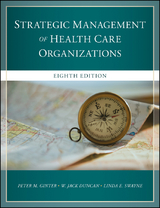
A comprehensive guide to effective strategic management of health care organizations.
Strategic Management of Health Care Organizations provides essential guidance for leading health care organizations through strategic management. This structured approach to strategic management examines the processes of strategic thinking, consensus building and documentation of that thinking into a strategic plan, and creating and maintaining strategic momentum - all essential for coping with the rapidly evolving health care industry. Strategic Management of Health Care Organizations fully explains how strategic managers must become strategic thinkers with the ability to evaluate a changing industry, analyze data, question assumptions, and develop new ideas. The book guides readers through the strategic planning process demonstrating how to incorporate strategic thinking and create and document a clear and coherent plan of action. In addition, the all-important processes of creating and maintaining the strategic momentum of the organization are fully described. Finally, the text demonstrates how strategic managers in carrying out the strategic plan, must evaluate its success, learn more about what works, and incorporate new strategic thinking into operations and subsequent planning.
This strategic management approach has become the de facto standard for health care management as leadership and strategic management are more critical than ever in coping with an industry in flux. This book provides heath care management students as well as health care administrators with foundational guidance on strategic management concepts and practices, tailored to the unique needs of the health care industry. Included are a clear discussion of health services external analysis, organizational internal analysis, the development of directional strategies, strategy alternative identification and evaluation, and the development and management of implementation strategies providing an informative and insightful resource for anyone in the field.
This new eighth edition has been fully updated to reflect new insights into strategic thinking, new methods to conceptualize and document critical environmental issues, practical steps for carrying out each of the strategic management processes, industry and management essentials for strategic thinkers , and new case studies for applying the strategic management processes. More specifically, readers of this edition will be able to:
- Create a process for developing a strategic plan for a health care organization.
- Map and analyze external issues, trends, and events in the general environment, the health care system, and the service area.
- Conduct a comprehensive service area competitor analysis.
- Perform an internal analysis and determine the competitive advantages and competitive disadvantages.
- Develop directional strategies.
- Identify strategic alternatives and make rational strategic decisions for a health care organization.
- Develop a comprehensive strategy for a health care organization.
- Create effective value-adding service delivery and support strategies.
- Translate service delivery and support plans into specific action plans.
The health care industry's revolutionary change remains ongoing and organizational success depends on leadership. Strategic management has become the single clearest manifestation of effective leadership of health care organizations and the strategic management framework's strengths are needed now more than ever. The Strategic Management of Health Care Organizations provides comprehensive guidance and up-to-date practices to help leaders keep their organizations on track.
Peter Ginter is the lead author for this project (and the one who I have had the most contact with so far). Peter M. Ginter (Ph.D., University of North Texas; M.B.A., B.S., Auburn University) is a Professor in The Department of Health Care Organization and Policy and Director of the Preparedness and Emergency Response Learning Center. He is also a Senior Scholar in the Lister Hill Center for Health Policy in the School of Public Health at the University of Alabama at Birmingham. Dr. Ginter is active in research in strategic management, leadership, and health care organizations. He is the author or co-author of sixteen books including Strategic Management of Health Care Organizations, 7th edition. (2013), Public Health Leadership and Management (2002) and The Physician Strategist (1996). W. Jack Duncan is Professor of Management Emeritus & University Scholar Emeritus in the Graduate School of Management at the University of Alabama at Birmingham. He also holds appointments as Professor of Health Care Organization & Policy in the School of Public Health and Professor of Health Services Administration in the School of Health Professions. Duncan is a Senior Scholar in the Lister Hill Center for Health Policy. He received his Ph.D. from Louisiana State University in Baton Rouge. Linda Swayne joined the faculty of the Belk College of Business, UNC Charlotte in 1981 and is now Professor of Marketing. She has served as president of the Charlotte Chapter of the American Marketing Association, Southern Marketing Association and Southwestern Federation of Administrative Disciplines. Dr. Swayne has written eleven textbooks.
Preface xiii
Features of the Text xiv
Organization of the Text xvi
To the Students: Why This Book About Strategic Management Is Important xviii
The Author Team xviii
Acknowledgments xix
Chapters
Chapter 1 The Nature of Strategic Management 1
Chapter 2 External Analysis 37
Chapter 3 Service Area Competitor Analysis 79
Chapter 4 Internal Analysis and Competitive Advantage 121
Chapter 5 Directional Strategies 163
Chapter 6 Identifying Strategic Alternatives 205
Chapter 7 Evaluation of Alternatives and Strategic Choice 259
Chapter 8 Value-Adding Service Delivery Strategies 313
Chapter 9 Value-Adding Support Strategies 359
Chapter 10 Communicating Strategy and Developing Action Plans 401
Resources for Strategic Thinkers
Resource 1 Analyzing Strategic Health Care Cases 431
Resource 2 Health Care Organization Accounting, Finance, and Performance Analysis 443
Resource 3 Health Care Acronyms 463
Resource 4 Glossary of Strategic Management Terms 471
Cases in the Health Care Sector
Case 1 Cottage Senior Living
Case 2 Asian Health Services: Rediscovering a Blue Ocean
Case 3 Community Blood Center of the Carolinas: Building for a Better Community
Case 4 Navigating Change at Alaska's Southcentral Foundation
Case 5 LINET Americas: This Bed Is Just Right!
Case 6 West Kendall Baptist Hospital: Meeting the Demand of Community- Based Health Care in the New (and Stormy) Regulatory Environment
Case 7 Humana's Bold Goal: 20 Percent Healthier by 2020
Case 8 Pricing the EpiPen: This Is Going to Sting
Case 9 Cavalier Hospital
Case 10 Pleasant Bluffs Hospital: Launching a Home-Based Hospital Program
Case 11 Kaiser Permanente: Creating a No-Wait Emergency Department
Case 12 ExAblate Neuro
Case 13 Huntington Hospital
Case 14 Valley Health
Index 495
CASES
For book adopters, the following cases from the health care sector are available on the book’s website, www.wiley.com/go/ginter8e.
Case 1Cottage Senior Living
Andrew C. Rucks, PhD
School of Public Health, University of Alabama Birmingham
Cottage Senior Living (CSL) was a family owned assisted-living company headquartered in Huntsville, Alabama. CSL had developed or acquired nine continuing care retirement communities (CCRCs) in seven locations in Alabama and one each in Mississippi and Tennessee. CSL operated in a highly-controlled environment with regulations stipulating staffing and building requirements. The leadership team of CSL assembled at a strategic planning retreat to move the business “to the next level.” The purpose of the retreat was to answer three questions: (1) How to grow? (2) Where to grow? and (3) Do we have the organizational capacity to grow?
Case 2 Asian Health Services: Rediscovering a Blue Ocean
Ken Chung, PhD and Wendell N. Chin, MBA
California State University at Eastbay
Asian Health Services (AHS) is a not-for-profit community health care provider that focuses on serving ethnic Asians in Oakland, California. With the advent of the Affordable Care Act (ACA or “Obamacare”), AHS had been preparing vigorously for significant changes. Now that the initial operational systems were in place, AHS’s CEO Sherry Hirota must decide what proposals to include in a coherent blue ocean strategy presentation at the upcoming board meeting that balanced AHS’s dual mission of social benefit against generating more revenues than costs. Looming threats included payments moving from pay-for-service to pay-per-patient or even pay-for-value. As the original founders had identified a blue ocean (i.e. uncontested markets) in the health care environment 40 years ago, now Hirota must find another blue ocean.
Case 3Community Blood Center of the Carolinas: Building for a Better Community
Linda E. Swayne, PhD
Belk College of Business, The University of North Carolina at Charlotte
In early 2010, Martin Grable, President of the Community Blood Center of the Carolinas (CBCC), was ready to move the first community blood center in North Carolina to a new level. In a strategic planning retreat, he asked the Board of Directors to evaluate seven strategic options for CBCC. Although all of the alternatives were needed by the community, CBCC did not have unlimited resources. Further, health care reform loomed on the horizon. Clearly, to serve the community, CBCC needed not only to survive, but to thrive in the near term. Which of the alternatives would allow achievement of that goal for the newest FDA-licensed community blood center?
Case 4Navigating Change at Alaska’s Southcentral Foundation
Erin E. Sullivan, PhD, and Jessica L. Alpert
Center for Primary Care, Harvard Medical School
Long-time president and CEO Katherine Gottlieb reflected on a recent meeting of Southcentral Foundation’s (SCF) board of directors where CEO succession planning was discussed as she contemplated retirement. The case provides background information about Alaska, the American Indian and Alaska Native (AIAN) health care system, and reviews SCF’s mission, vision, and key tenets of the organization’s culture: customer-ownership, core concepts, and continuous improvement. SCF’s approach to hiring and developing its workforce and its governance structure are highlighted as background for Gottlieb’s concerns in choosing the next CEO: maintaining SCF’s culture, choosing an internal or external CEO, and identifying the top three qualities that SCF’s next leader must embody.
Case 5LINET Americas: This Bed Is Just Right!
Linda E. Swayne, PhD
Belk College of Business, The University of North Carolina at Charlotte and Colin Bain, President and CEO, LINET Americas
LINET was the leading manufacturer of ICU (intensive care unit) beds in Europe. In 2010 LINET Americas began competing with the two largest U.S. bed manufacturers, Hill-Rom and Stryker, by marketing to smaller hospitals based on lower prices and better safety features for caregivers. Hill-Rom and Stryker noticed and head-to-head competition began. Hill-Rom lowered its prices and extended its warranty to match two of LINET Americas’ competitive advantages; however, the innovative design was much harder to match. President and CEO Colin Bain needed to determine how he could continue to grow LINET Americas, especially when the company was blocked out of the largest group purchasing organization (GPO) that was offering Hill-Rom or Stryker ICU beds.
Case 6West Kendall Baptist Hospital: Meeting the Demand of Community-Based Health Care in the New (and Stormy) Regulatory Environment
Miriam Weismann, PhD, and students Javier Hernandez Lichtl, Heather Pierce, Denise Harris, Lourdes Boue, and Cathy Campbell
Florida International University
The first three years of operation of the West Kendall Baptist Hospital in Miami provided a “poster child” for efficient and cost-effective health care delivery to the West Kendall community. The 133-bed facility’s mission was to promote the preservation of life by improving the health and well-being of its constituents. WKBH exceeded every budget prediction and showed a profit in year 3; however, with the passage of the Affordable Care Act, the situation changed almost overnight. By the first quarter 2016, WKBH started to lose money in excess of budget predictions, despite its increased patient admissions, careful financial planning, expense reductions, quality service, and excellence in patient care delivery. A serious financial crisis loomed with little relief in sight; the management team was searching for solutions.
Case 7Humana’s Bold Goal: 20 Percent Healthier by 2020
Nancy M. Kane, DBA with the assistance of Deborah Milstein
Harvard T.H. Chan School of Public Health
Humana, Inc., headquartered in Louisville, Kentucky, was the fourth largest U.S. health insurance firm with annual revenues of $54.3 billion, membership of 14.2 million, and 50,100 employees in 2015. The company served members in 17 states plus the military. Under the leadership of CEO Bruce Broussard, Humana was attempting to shift its focus from paying claims to improving the health of beneficiaries. Humana set an “aspirational Bold Goal of improving the health of the communities we serve by 20 percent by 2020 because we make it easy for people to achieve their best health.” Dr. Andrew Renda, hired as Director, Bold Goal Measurement, knew that senior leaders understood that it would take time to change population health, yet they wanted to see some results quickly.
Case 8Pricing the EpiPen: This Is Going to Sting
Thomas J. Steenburgh, PhD
The Darden School of Business, University of Virginia
Mylan Inc., a generic drug manufacturer, bought the EpiPen product line from Merck, invested in marketing, and dramatically increased the price from $100 to $600 per two-pack, igniting consumer anger and provoking a media firestorm. Congress was compelled to step in, demanding to know how Heather Bresch, CEO of the company, could justify the high price of EpiPens. Such health care companies face a tension between doing good in the world and making a profit. Is it fair for drug prices to vary so dramatically across countries (as the EpiPen is priced at $85 in France)? How should such a public controversy be resolved?
Case 9Cavalier Hospital
Kenan W. Yount, MD MBA under the supervision of Michael J. Schill, PhD
The Darden School of Business, University of Virginia
A midsize (650-bed) community not-for-profit hospital, located in south central Virginia, chose an expansion strategy in 2008 by bringing all its cardiology under one roof in a new comprehensive care center. Impressive results drew the attention of several insurers who approached Cavalier Hospital, each hoping to include the hospital in its network of physician providers. In preparation for his first board meeting, the physician director wanted to assess the hospital’s overall financial condition to determine which strategies should be pursued next: focusing on acquiring patient volume, expanding investment into integrated care, setting the reimbursement structure for revenue collection, or moving to a capitation-based payment system. The evaluation of revenue models would help him understand which alternatives could best be supported for the business strategy.
Case 10Pleasant Bluffs: Launching a Home-Based Hospital Program
Laura Erskine, PhD
Ivey Business School, University of Western Ontario
Pleasant Bluffs Health System was a Level I Trauma Center with 400+ licensed beds that provided outpatient care, acute and subacute care, biomedical research, and graduate and undergraduate education. Pleasant Bluffs wanted to create a pilot program for home-based hospital care. Graft Salot, as the director of the hospital’s Performance Improvement (PI) department, was asked to recommend the pilot program’s location, duration, eligible population, and possible changes to the intake process. Salot must consider issues related to an educational program about home-based care and an implementation strategy for it as well as a cost/profit comparison for providing care in the...
| Erscheint lt. Verlag | 16.1.2018 |
|---|---|
| Sprache | englisch |
| Themenwelt | Medizin / Pharmazie ► Gesundheitswesen |
| Medizin / Pharmazie ► Pflege ► Pflegemanagement / Qualität / Recht | |
| Wirtschaft ► Betriebswirtschaft / Management ► Unternehmensführung / Management | |
| Schlagworte | Business & Management • dynamic management framework • effective health care management • Gemeinnützige Organisationen / Management u. Führung • Health Care • health care administration textbook • health care environment analysis • health care leadership • health care management approaches • health care management framework • health care management structure • health care management training • health care organizations • implementing strategy • Krankenpflege • Leitungstätigkeit u. Management i. d. Krankenpflege • Linda E. Swayne</p> • <p>health care management • Management • Non-Profit Organizations / Management Leadership • nursing • Nursing Management & Leadership • Peter M. Ginter • strategic health care management • Strategic Management • Strategic management principles • Strategic Planning • Strategisches Management • structured strategic management • The Strategic Management of Health Care Organizations, 8<sup>th</sup> Edition • Wirtschaft u. Management • W. Jack Duncan |
| ISBN-10 | 1-119-34971-0 / 1119349710 |
| ISBN-13 | 978-1-119-34971-6 / 9781119349716 |
| Informationen gemäß Produktsicherheitsverordnung (GPSR) | |
| Haben Sie eine Frage zum Produkt? |
 EPUB (Adobe DRM)
Kopierschutz: Adobe-DRM
Adobe-DRM ist ein Kopierschutz, der das eBook vor Mißbrauch schützen soll. Dabei wird das eBook bereits beim Download auf Ihre persönliche Adobe-ID autorisiert. Lesen können Sie das eBook dann nur auf den Geräten, welche ebenfalls auf Ihre Adobe-ID registriert sind.
Details zum Adobe-DRM
Dateiformat: EPUB (Electronic Publication)
EPUB ist ein offener Standard für eBooks und eignet sich besonders zur Darstellung von Belletristik und Sachbüchern. Der Fließtext wird dynamisch an die Display- und Schriftgröße angepasst. Auch für mobile Lesegeräte ist EPUB daher gut geeignet.
Systemvoraussetzungen:
PC/Mac: Mit einem PC oder Mac können Sie dieses eBook lesen. Sie benötigen eine
eReader: Dieses eBook kann mit (fast) allen eBook-Readern gelesen werden. Mit dem amazon-Kindle ist es aber nicht kompatibel.
Smartphone/Tablet: Egal ob Apple oder Android, dieses eBook können Sie lesen. Sie benötigen eine
Geräteliste und zusätzliche Hinweise
Buying eBooks from abroad
For tax law reasons we can sell eBooks just within Germany and Switzerland. Regrettably we cannot fulfill eBook-orders from other countries.
aus dem Bereich