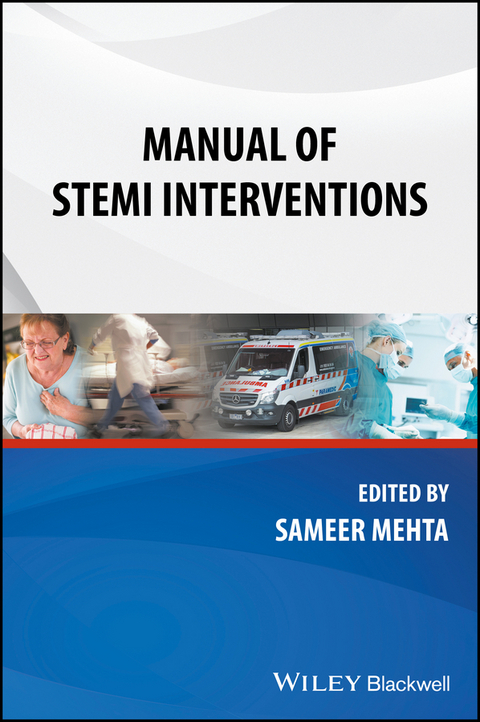
Manual of STEMI Interventions (eBook)
John Wiley & Sons (Verlag)
978-1-119-09543-9 (ISBN)
- Understand the varied pharmacological options available in managing STEMI patients, including newer anti-coagulants
- Improve your STEMI procedure technique through expert guidance, including stent choice, and other techniques such as trans radial procedures
- Provides an overview of STEMI networks internationally and how to set up a STEMI program
- Reviews future perspectives for STEMI and the role of telemedicine for STEMI procedures
Sameer Mehta, MD, FACC, MBA
Voluntary Associate Clinical Professor of Medicine, University of Miami Miller School of Medicine; Chairman, Lumen Foundation, Miami, FL, USA
Benefit from this concise yet comprehensive manual, designed to improve the practice and process of STEMI interventions Understand the varied pharmacological options available in managing STEMI patients, including newer anti-coagulants Improve your STEMI procedure technique through expert guidance, including stent choice, and other techniques such as trans radial procedures Provides an overview of STEMI networks internationally and how to set up a STEMI program Reviews future perspectives for STEMI and the role of telemedicine for STEMI procedures
Sameer Mehta, MD, FACC, MBA Voluntary Associate Clinical Professor of Medicine, University of Miami Miller School of Medicine; Chairman, Lumen Foundation, Miami, FL, USA
Title Page 5
Copyright Page 6
Contents 7
List of Contributors 11
Preface 15
Part I Guidelines, Thrombolytic Therapy, Pharmacology 17
Chapter 1 Compendium of STEMI Clinical Trials 19
Introduction 19
References 44
Chapter 2 European Society of Cardiology and American College of Cardiology STEMI Guidelines 51
Introduction 51
References 65
Chapter 3 The Role of Thrombolytic Therapy in the Era of STEMI Interventions 71
Introduction 71
Thrombolytic Therapy: Clinical Benefit, Risks and Contraindications 71
Primary PCI: Overview of Randomized Clinical Trials 74
Clinical Impact of Time to Reperfusion 75
Facilitated PCI and the Pharmacoinvasive Strategy 76
Conclusions 78
References 79
Chapter 4 Anticoagulants in STEMI Interventions 81
Introduction 81
Anticoagulants 81
Discussion 86
How to Choose: The Eternal Dilemma Between Bleeding and Ischemic Risk 88
References 89
Chapter 5 New Oral and Intravenous Adenosine Diphosphate Blockers in STEMI Intervention 91
Introduction 91
Physiology 91
Aspirin in STEMI 96
ADP Blockers in ACS, PCI and STEMI Intervention 97
Other Important Issues 108
Future Directions 112
Summary 113
References 113
Part II The STEMI Procedure 121
Chapter 6 The Role of Acute Circulatory Support in STEMI 123
Introduction 123
Intra-Aortic Balloon Counterpulsation 124
Impella Use in STEMI 126
The TandemHeart Device in STEMI 128
Venoarterial Extracorporeal Membrane Oxygenation 128
Right Ventricular Myocardial Infarction 129
Time for a Paradigm Shift: From Primary Reperfusion to Primary Unloading in STEMI 130
References 131
Chapter 7 Thrombus Management for STEMI Interventions 135
Introduction 135
Pathophysiology of Thrombus 135
Thrombus and STEMI 136
Mehta Strategy 137
Global Strategies of Thrombectomy and Recent Trials 149
Conclusions 158
References 158
Chapter 8 Transradial Techniques to Improve STEMI Outcomes 161
Introduction and Historical Perspective 161
The Transradial Approach and STEMI Interventions 161
Rationale for Using the Transradial Route for STEMI Interventions 164
Developing a Transradial Acute Myocardial Infarction Program 166
Limitations 170
Conclusions 170
References 171
Chapter 9 Management of Cardiogenic Shock 175
Diagnosis and Pathophysiology 175
Incidence and Prognosis 175
Interventional Management 177
Treatment of Mechanical Complications 178
Intensive Care Unit Treatment 180
Mechanical Support 181
Summary 184
References 184
Chapter 10 Present Role of Thrombectomy in STEMI Interventions 187
Rationale for Thrombectomy in Acute Myocardial Infarction 187
Thrombectomy Devices 187
Evidence for Manual Thrombectomy 189
Evidence for Mechanical Thrombectomy 195
Conclusions 199
References 199
Chapter 11 Choice of Stent in STEMI Interventions 203
Introduction 203
Historical Perspective 203
Stents in STEMI Interventions: How it all Started 204
Re-stenosis 205
Great Expectations: First-Generation Drug-Eluting Stents in STEMI 206
Dawn of a New Era: Second-Generation Drug?Eluting Stents 211
The Emperor’s New Clothes 216
Bioresorbable Vascular Scaffold in acute Myocardial Infarction 218
Conclusion 218
References 219
Chapter 12 Illustrated STEMI Procedures I – Basic STEMI Skills 223
Introduction 223
Case 1 224
Case 2 227
Case 3 229
Case 4 231
Case 5 235
Chapter 13 Illustrated STEMI Procedures II – Basic STEMI Skills 239
Introduction 239
Case 6 240
Case 7 242
Case 8 246
Case 9 249
Case 10 252
References 254
Chapter 14 Illustrated STEMI Procedures III – Basic STEMI Skills 255
Introduction 255
Case 11 257
Case 12 259
Case 13 263
Case 14 267
Case 15 269
Chapter 15 Remote Ischemic Conditioning for Acute Myocardial Infarction 271
Introduction 271
The Concepts of Ischemic Conditioning 272
Mechanisms of Remote Ischemic Conditioning 274
Measuring Myocardial Injury in the Clinic 276
Effect of Remote Ischemic Conditioning in Acute Myocardial Infarction 276
Confounding Factors in Remote Ischemic Conditioning 279
Alternative Methods to Achieve Cardioprotection 281
Introducing Remote Ischemic Conditioning as Standard Adjuvant Therapy in STEMI 281
Conclusions 281
References 282
Part III The STEMI Process 289
Chapter 16 Reducing Door-to-Balloon Times 291
Introduction 291
Early Initiatives and Quality?of?Care Measures to Minimize Door?to?Balloon Time 293
Regional STEMI Systems to Further Reduce Door?to?Balloon Time 294
Limitations of Door?to?Balloon Time 295
Future Directions 296
References 296
Chapter 17 Pre-hospital Triage and Management 301
Introduction 301
The STEMI Receiving Center Network 302
Essential Roles for the Emergency Medical Services 302
Supplemental Roles for the Emergency Medical Services 303
Emergency Medical Services Transport Logistics 307
Quality Improvement for Emergency Medical Services: Three Key Time Intervals 308
Pre-hospital Medications 310
STEMI Complicated by Out of Hospital Cardiac Arrest 310
Conclusions 311
References 311
Chapter 18 Creating Networks for Optimal STEMI Management 315
Introduction 315
Transfer for PPCI Trials 315
Growth and Success of STEMI Systems of Care Within the United States 316
Organizing A System for Inter?Hospital Transfer 321
Key Components of a STEMI System of Care 322
Challenges to Implementing and Maintaining a Regional STEMI System of Care 326
Conclusions 327
References 328
Chapter 19 Pharmacoinvasive Management of STEMI 331
Introduction 331
Fibrinolytic Therapy 331
Pharmacoinvasive Therapy 332
Trials Comparing Routine Early PCI After Fibrinolysis With Standard Therapy and Primary PCI Alone 332
Current Guidelines for Pharmacoinvasive Therapy 334
Guideline Recommendations 334
Discussion 334
References 337
Part IV Global STEMI Initiatives 341
Chapter 20 Stent for Life: The European Perspective on STEMI Interventions 343
Introduction 343
Stent for Life Initiative 344
Summary 345
References 345
Chapter 21 Urban Combined Pharmacoinvasive Management of STEMI Patients as Antidote to Traffic in Large Metropolitan Cities 349
Introduction 349
The Role of Coronary Thrombosis in Pathogenesis of STEMI 350
The Experience of Moscow 351
Conclusions 356
References 356
Chapter 22 Lessons from the Puerto Rico Infarction National Collaborative Experience Initiative 359
Introduction and Background 359
Inspired to Make Changes 361
Executing the Plan 362
The Ultimate Goal: Total Ischemia Time 368
Summary 369
Acknowledgements 370
References 370
Chapter 23 The STEMI Care Program in China 373
Introduction 373
Current Status of STEMI Reperfusion in China 373
China STEMI Care Program 374
Conclusions 377
References 377
Chapter 24 STEMI INDIA 379
Introduction 379
Beginnings 380
Aims and Goals 380
Developing a STEMI System of Care: The STEMI INDIA Model 380
The Prototype Statewide STEMI Project: The Pilot Tamilnadu STEMI Project 382
Framework for a Statewide STEMI Program 383
Other Important Activities of STEMI INDIA 384
References 384
Chapter 25 The Role of Telemedicine in STEMI Interventions 387
Definition of Telemedicine 387
Computer Power 387
Artificial Intelligence 388
Cloud Computing 389
Pervasive Computing, Ubiquitous Computing or the Internet of Things 390
Socioeconomic Disparities 390
Healthcare Disparities 390
Time as a Strong Predictor of Outcomes 391
LATIN, A Cloud Computing STEMI Network Supported by Artificial Intelligence 391
Conclusions 392
References 392
Chapter 26 Innovative Telemedicine STEMI Protocols 395
Introduction 395
Methods 399
Results 402
Discussion 405
Conclusions 407
References 408
Part V Future Perspectives 411
Chapter 27 STEMI Interventions, Beyond the Culprit Lesion 413
Introduction 413
The Clinical Conundrum 413
Current Evidence 414
Special Circumstances 417
Conclusions 420
References 421
Chapter 28 Promising Technologies for STEMI Interventions 425
Introduction 425
Endothelial Progenitor Cell Capture Stent 425
Potential Advantages of the EPC Capture Stent in STEMI 425
EPC Capture Stent in STEMI 426
The Combo Stent: A Combined DES and EPC Capture Stent 429
Bioresorbable Vascular Scaffold 430
Conclusions 432
References 432
Index 437
EULA 448
| Erscheint lt. Verlag | 17.7.2017 |
|---|---|
| Sprache | englisch |
| Themenwelt | Medizin / Pharmazie ► Allgemeines / Lexika |
| Medizinische Fachgebiete ► Innere Medizin ► Kardiologie / Angiologie | |
| Schlagworte | Acute Coronary Syndrome • Acute myocardial infarction • acute stent thrombosis • anti-coagulant drugs • Bleeding • Cardiovascular Disease • coronary artery disease • hemodynamics • Interventional cardiology • Invasive Kardiologie • Kardiovaskuläre Erkrankungen • Kardiovaskuläre Erkrankungen • Manual of STEMI Interventions • Mechanical Circulatory Support • Medical Science • Medizin • Myocardial Infarction • Primary PCI • primary percutaneous coronary intervention • revascularization • Sameer Mehta • ST-elevation myocardial infarction • STEMI |
| ISBN-10 | 1-119-09543-3 / 1119095433 |
| ISBN-13 | 978-1-119-09543-9 / 9781119095439 |
| Informationen gemäß Produktsicherheitsverordnung (GPSR) | |
| Haben Sie eine Frage zum Produkt? |
 PDF (Adobe DRM)
Kopierschutz: Adobe-DRM
Adobe-DRM ist ein Kopierschutz, der das eBook vor Mißbrauch schützen soll. Dabei wird das eBook bereits beim Download auf Ihre persönliche Adobe-ID autorisiert. Lesen können Sie das eBook dann nur auf den Geräten, welche ebenfalls auf Ihre Adobe-ID registriert sind.
Details zum Adobe-DRM
Dateiformat: PDF (Portable Document Format)
Mit einem festen Seitenlayout eignet sich die PDF besonders für Fachbücher mit Spalten, Tabellen und Abbildungen. Eine PDF kann auf fast allen Geräten angezeigt werden, ist aber für kleine Displays (Smartphone, eReader) nur eingeschränkt geeignet.
Systemvoraussetzungen:
PC/Mac: Mit einem PC oder Mac können Sie dieses eBook lesen. Sie benötigen eine
eReader: Dieses eBook kann mit (fast) allen eBook-Readern gelesen werden. Mit dem amazon-Kindle ist es aber nicht kompatibel.
Smartphone/Tablet: Egal ob Apple oder Android, dieses eBook können Sie lesen. Sie benötigen eine
Geräteliste und zusätzliche Hinweise
Buying eBooks from abroad
For tax law reasons we can sell eBooks just within Germany and Switzerland. Regrettably we cannot fulfill eBook-orders from other countries.
aus dem Bereich