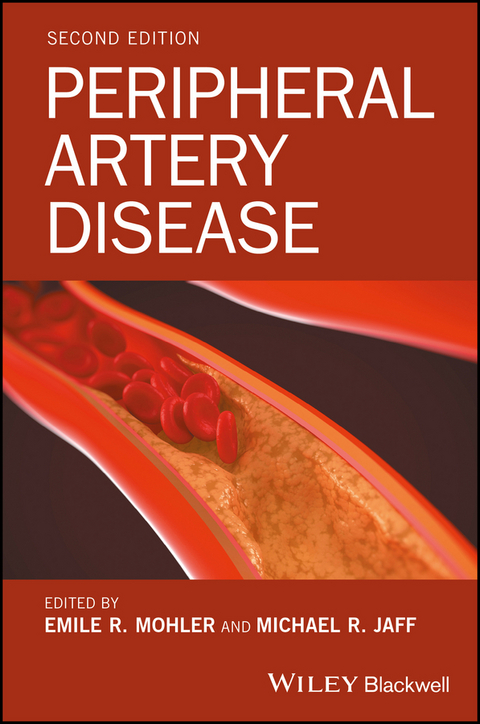
Peripheral Artery Disease (eBook)
John Wiley & Sons (Verlag)
978-1-118-77608-7 (ISBN)
Emile R. Mohler, MD, MSVM, FACC, FAHA is Director of Vascular Medicine for the University of Pennsylvania Health System, and Professor of Medicine for the Perelman School of Medicine at the University of Pennsylvania, Philadelphia Pennsylvania, USA
Michael R. Jaff, DO, FACP, FACC, FAHA, MSVM is Professor of Medicine, Harvard Medical School and President of Newton-Wellesley Hospital in Newton, Massachusetts, USA.
A comprehensive, quick-reference guide to the diagnosis and management of peripheral artery disease for non-specialists With an aging population subject to an increasing number of health risks, peripheral artery disease (PAD) is on the rise throughout the world. Because of PAD's direct links to heart attack and stroke, it is critical that internists, surgeons, cardiologists, radiologists, gerontologists, GPs, and family practitioners know how to recognize it and make the best treatment recommendations for their patients. This book provides all the expert, practical information and guidance they need to do just that. Edited by two thought leaders in PAD diagnosis and treatment, and comprising chapters written by subject matter experts, Peripheral Artery Disease, Second Edition provides clinicians with guidance on how to diagnose and treat one of the most under-diagnosed conditions affecting millions of patients. This updated and revised edition of the popular guide distills the complexities of PAD into clear, actionable advice for busy medical practitioners, providing them with the information they need when they need it. Provides clinicians with essential information for recognizing and treating this under-diagnosed condition that affects millions of patients Distills the complexities of PAD, from diagnosis to traditional and emerging treatment options, into clear, actionable advice for clinicians Covers PAD epidemiology, office examination, imaging, laboratory evaluation, medical therapy, surgical interventions, endovascular treatments, and much more Reflects the latest PAD Guidelines and Performance Measures established by leading specialty societies Features contributions from internists and surgeons, all recognized experts in PAD Peripheral Artery Disease, Second Edition is an important working reference for internists, cardiologists, radiologists, and surgeons, as well as fellows and residents in those fields.
Emile R. Mohler, MD, MSVM, FACC, FAHA is Director of Vascular Medicine for the University of Pennsylvania Health System, and Professor of Medicine for the Perelman School of Medicine at the University of Pennsylvania, Philadelphia Pennsylvania, USA Michael R. Jaff, DO, FACP, FACC, FAHA, MSVM is Professor of Medicine, Harvard Medical School and President of Newton-Wellesley Hospital in Newton, Massachusetts, USA.
Chapter 1
Epidemiology of Peripheral Artery Disease
Wobo Bekwelem and Alan T. Hirsch
Lillehei Heart Institute and Cardiovascular Division, University of Minnesota Medical School, Minneapolis, MN, USA
This chapter describes the epidemiology of peripheral artery disease (PAD). The definitions used to describe PAD and PAD syndromes are discussed. The prevalence and incidence, risk factors, progression and outcomes of PAD are summarized. Finally, the low awareness of PAD in the community is highlighted.
Definitions
Peripheral artery disease is an all-encompassing term used to describe disorders of the structure (including stenosis and aneurysms) and function of all non-coronary arteries [1]. Peripheral artery disorders include atherosclerosis, plaque rupture, abnormal vascular reactivity, vasospasm, inflammation, arterial wall dysplasia, and thrombus formation leading to occlusion. In the past, a range of other terms have been used, including peripheral vascular disease (PVD), peripheral artery occlusive disease (PAOD), lower extremity arterial disease (LEAD), and arteriosclerosis obliterans. The term “PVD” is not synonymous as it is less specific, potentially signify venous, arterial or lymphatic disease. PAD is preferred as it communicates the accurate anatomic disease site, is accepted in all current practice guidelines, and better communicates the disease site to patients and other health care professionals.
Lower extremity atherosclerotic PAD is a marker of systemic atherosclerosis which begins in childhood [2] as deposits of cholesterol and cholesterol esters called “fatty streaks” begin to line the intima of large and medium-sized arteries. At this stage, atherosclerosis is subclinical, but it can be quantified using arterial ultrasound imaging in other vascular beds (e.g., the extracranial carotid arteries) to measure carotid intima media thickness (cIMT). Various cohort studies have demonstrated a higher prevalence of cardiovascular disease and increased incidence of poor cardiovascular outcomes in individuals with increased cIMT. This relationship of early atherosclerosis defined by cIMT measurements has been established in the Atherosclerosis in Communities (ARIC) study [3], the Osaka Follow-Up Study for Carotid Atherosclerosis 2 [4], the Cardiovascular Health Study (CHS) [5], the Rotterdam Study [6], the Tromsø study [7], and the Second Manifestations of ARTerial disease (SMART) study [8]. Progression of these fatty streaks by increased lipid accumulation, followed by development of a fibromuscular cap, lead to formation of a fibrous plaque. Risk factor exposure (e.g., smoking, diabetes, hypertension, diabetes, low high-density lipoprotein [HDL]-cholesterol concentrations, elevated non-HDL-cholesterol concentrations and obesity), lead to further progression of these atherosclerotic lesions and increase the risk of clinically manifest PAD and other atherosclerotic diseases [9]. Clinical PAD is detected when at least one infra-diaphragmatic stenosis leads to a measurable decrease in pedal systolic pressure measurements, with or without clinically recognized limb ischemic symptoms.
In this chapter, the term “PAD” is used exclusively to refer to partial or complete atherosclerotic obstruction of one or more lower extremity peripheral arteries.
PAD Clinical Syndromes
There are five recognized clinical syndromes of PAD that are characterized by distinct presentations. These syndromes are useful both in describing the epidemiology of PAD and in clinical care. They include:
- asymptomatic PAD
- classic claudication
- atypical leg pain
- acute limb ischemia (ALI)
- critical limb ischemia (CLI).
Approximately one-half of individuals with PAD may be asymptomatic, defined by the absence of self-reported leg symptoms [10–14], and this has important implications in estimating the accurate PAD prevalence. PAD in these individuals is defined by a low (≤⃒0.9) ankle–brachial index (ABI). The diagnosis of PAD is discussed in detail in Chapter 2. Claudication, which is the hallmark symptom of PAD, occurs in 10–35% [10–13] of individuals with PAD, and refers to the discomfort, pain, ache or fatigue in limb muscles that reproducibly occurs with exercise (e.g., walking) and is consistently relieved by rest [15]. Atypical leg pain is defined in individuals with objective evidence of PAD and who experience any leg symptom that is not classic claudication [16–18]. Up to 30–50% of individuals with PAD present with atypical pain [13, 15, 16]. ALI is defined by the clinical symptoms that arise with a sudden decrease in limb perfusion and that threatens the viability of the limb. While ALI is presumed to be an immediate vascular emergency, “acute” has been variably defined as occurring within 2 weeks of the initial ischemic presentation. ALI is usually due to thrombosis or embolism [19] and is clinically recognized by the “six Ps”: pain, paresthesia, pallor, pulselessness, poikilothermia, and paralysis. It is estimated that 0.1–1% of PAD patients may experience an episode of ALI [20, 21]. CLI manifests as chronic (>2 weeks) ischemic rest pain, non-healing ulcer or gangrene in 1–2% of PAD patients [22].
Prevalence and Incidence
There are an estimated 202 million people living with PAD globally, with almost 70% of them residing in low- and middle-income countries. Current data suggest that the global prevalence of PAD may be increasing, from 164 million individuals in the decade beginning in 2000–2010, representing an overall 23.5% rise in PAD prevalence (28.7% in low- to medium-income countries [LMICs] and 13.1% in high-income countries [HICs]) [23]. PAD affects most adult populations worldwide irrespective of socioeconomic or national developmental status [24, 25]. Fowkes et al. [23] recently collated the global prevalence of PAD using data from 34 studies (12 from LMICs and 22 from HICs). In women aged 45–89 years old, PAD prevalence ranged from 2.7% to 24.2% in HICs, and from 3.96% to 18.65% in LMICs. In men aged 45–89 years old, PAD prevalence ranged from 2.76% to 24.77% in HICs, and from 1.21% to 21.5% in LMICs.
Overall, PAD incidence and prevalence rates are similar in high- and low- to middle-income countries. PAD is as much a problem in HICs as it is in LMICs. Although the rates are similar, due to the greater population of people that live in LMICs compared with HICs, the number of individuals with PAD in LMICs exceed that in HICs (140.8 vs. 61.2 million people) (Figure 1.1). PAD is much more prevalent than common cardiovascular diseases, such as heart failure and atrial fibrillation [23, 26, 27] (Figure 1.2). Various studies have estimated the prevalence of PAD using the presence of claudication, identification of low ABI in asymptomatic individuals, or evidence of advanced forms of PAD (ALI or CLI). It is important to note that the prevalence of PAD in a given population depends on the characteristics of the population studied (i.e., age, ethnicity, socioeconomic status, and risk factors) and the method of diagnosis. In 2007, Allison et al. [28] summarized race- and ethnicity-specific estimates of PAD prevalence. They used data from seven community-based studies (the Cardiovascular Health Study, Honolulu Heart Program, Multiethnic Study of Atherosclerosis, US National Health and Nutrition Examination Survey, San Diego PAD, San Diego Population Study and the Strong Heart Study). They found that with increasing age, the prevalence rates of PAD in men lay in the range 1.4–22.6% in non-Hispanic whites, 1.2–59% in blacks, 0.2–22.5% in Hispanics, 1.2–21.5% in Asians, and 2.6–28.7% in American Indians. PAD prevalence rates in women were in the range 1.9–18.2% in non-Hispanic whites, 3.0–65.1% in blacks, 0.3–18.2% in Hispanics, 0–18.2% in Asians, and 3.2–33.8% in American Indians. Eraso et al. [29] performed a multivariable age-, gender- and race/ethnicity-adjusted stratified analysis in this population, where the effect of each additional risk factor on the prevalence of PAD was measured. Non-Hispanic blacks (odds ratio [OR] = 14.7, 95% CI: 2.1–104.1) and women (OR = 18.6, 95% CI: 7.1–48.7) had the highest odds of PAD as a result of this cumulative effect (Figure 1.3).
Figure 1.1 Prevalence of peripheral artery disease by age in men and women in high-income countries (HICs) and low- to middle-income countries (LMICs).
Source: adapted from Fowkes et al. [23].
Figure 1.2 Comparison of the global and US prevalence of peripheral artery disease (PAD) and two other common cardiovascular diseases (congestive heart failure [CHF] and atrial fibrillation [AF]).
Figure 1.3 Ethnic-specific prevalence of peripheral arterial disease: (a) men; (b) women. AA, African American; AI, American Indian; AS, Asian American; HS, Hispanic; NHW, non-Hispanic white.
Source: adapted with permission from Allison et al. [28].
Due to the time and resources required to periodically retest study subjects for incident disease, fewer studies have evaluated the incidence of PAD. In 1970, Kannel et al. [30] assessed claudication incidence in the Framingham study. They reported the age-specific annual incidence of claudication for ages 30 to 44 years as 6/10 000 in men and 3/10 000 in women. The incidence increased...
| Erscheint lt. Verlag | 17.7.2017 |
|---|---|
| Sprache | englisch |
| Themenwelt | Medizin / Pharmazie ► Allgemeines / Lexika |
| Medizinische Fachgebiete ► Innere Medizin ► Kardiologie / Angiologie | |
| Schlagworte | Cardiovascular Disease • Endovascular Medicine • Endovaskuläre Medizin • Interventional cardiology • Invasive Kardiologie • Kardiologie • Kardiovaskuläre Erkrankungen • Medical Science • Medizin • non-atherosclerosis pad • non-atherosclerosis peripheral artery disease • PAD • pad ct imaging • pad diagnosis • pad endovascular treatment • pad epidemiology • pad examination strategies • pad imaging • pad invasive imaging • pad medical therapy • pad mri imaging • pad office examination • pad surgical treatment • pad treatments • Peripheral Artery Disease • peripheral artery disease CT imaging • peripheral artery disease diagnosis • peripheral artery disease endovascular treatment • peripheral artery disease epidemiology • peripheral artery disease examination strategies • peripheral artery disease imaging • peripheral artery disease invasive imaging • peripheral artery disease medical therapy • peripheral artery disease mri imaging • peripheral artery disease office examination • peripheral artery disease surgical treatment • peripheral artery disease treatments • what is pad |
| ISBN-10 | 1-118-77608-9 / 1118776089 |
| ISBN-13 | 978-1-118-77608-7 / 9781118776087 |
| Informationen gemäß Produktsicherheitsverordnung (GPSR) | |
| Haben Sie eine Frage zum Produkt? |
 EPUB (Adobe DRM)
Kopierschutz: Adobe-DRM
Adobe-DRM ist ein Kopierschutz, der das eBook vor Mißbrauch schützen soll. Dabei wird das eBook bereits beim Download auf Ihre persönliche Adobe-ID autorisiert. Lesen können Sie das eBook dann nur auf den Geräten, welche ebenfalls auf Ihre Adobe-ID registriert sind.
Details zum Adobe-DRM
Dateiformat: EPUB (Electronic Publication)
EPUB ist ein offener Standard für eBooks und eignet sich besonders zur Darstellung von Belletristik und Sachbüchern. Der Fließtext wird dynamisch an die Display- und Schriftgröße angepasst. Auch für mobile Lesegeräte ist EPUB daher gut geeignet.
Systemvoraussetzungen:
PC/Mac: Mit einem PC oder Mac können Sie dieses eBook lesen. Sie benötigen eine
eReader: Dieses eBook kann mit (fast) allen eBook-Readern gelesen werden. Mit dem amazon-Kindle ist es aber nicht kompatibel.
Smartphone/Tablet: Egal ob Apple oder Android, dieses eBook können Sie lesen. Sie benötigen eine
Geräteliste und zusätzliche Hinweise
Buying eBooks from abroad
For tax law reasons we can sell eBooks just within Germany and Switzerland. Regrettably we cannot fulfill eBook-orders from other countries.
aus dem Bereich