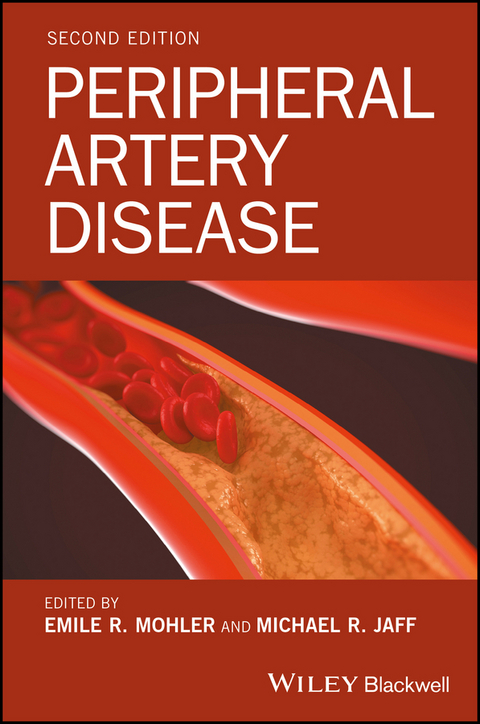
Peripheral Artery Disease (eBook)
John Wiley & Sons (Verlag)
978-1-118-77607-0 (ISBN)
A comprehensive, quick-reference guide to the diagnosis and management of peripheral artery disease for non-specialists
With an aging population subject to an increasing number of health risks, peripheral artery disease (PAD) is on the rise throughout the world. Because of PAD's direct links to heart attack and stroke, it is critical that internists, surgeons, cardiologists, radiologists, gerontologists, GPs, and family practitioners know how to recognize it and make the best treatment recommendations for their patients. This book provides all the expert, practical information and guidance they need to do just that.
Edited by two thought leaders in PAD diagnosis and treatment, and comprising chapters written by subject matter experts, Peripheral Artery Disease, Second Edition provides clinicians with guidance on how to diagnose and treat one of the most under-diagnosed conditions affecting millions of patients. This updated and revised edition of the popular guide distills the complexities of PAD into clear, actionable advice for busy medical practitioners, providing them with the information they need-when they need it.
- Provides clinicians with essential information for recognizing and treating this under-diagnosed condition that affects millions of patients
- Distills the complexities of PAD, from diagnosis to traditional and emerging treatment options, into clear, actionable advice for clinicians
- Covers PAD epidemiology, office examination, imaging, laboratory evaluation, medical therapy, surgical interventions, endovascular treatments, and much more
- Reflects the latest PAD Guidelines and Performance Measures established by leading specialty societies
- Features contributions from internists and surgeons, all recognized experts in PAD
Peripheral Artery Disease, Second Edition is an important working reference for internists, cardiologists, radiologists, and surgeons, as well as fellows and residents in those fields.
Emile R. Mohler, MD, MSVM, FACC, FAHA is Director of Vascular Medicine for the University of Pennsylvania Health System, and Professor of Medicine for the Perelman School of Medicine at the University of Pennsylvania, Philadelphia Pennsylvania, USA
Michael R. Jaff, DO, FACP, FACC, FAHA, MSVM is Professor of Medicine, Harvard Medical School and President of Newton-Wellesley Hospital in Newton, Massachusetts, USA.
A comprehensive, quick-reference guide to the diagnosis and management of peripheral artery disease for non-specialists With an aging population subject to an increasing number of health risks, peripheral artery disease (PAD) is on the rise throughout the world. Because of PAD's direct links to heart attack and stroke, it is critical that internists, surgeons, cardiologists, radiologists, gerontologists, GPs, and family practitioners know how to recognize it and make the best treatment recommendations for their patients. This book provides all the expert, practical information and guidance they need to do just that. Edited by two thought leaders in PAD diagnosis and treatment, and comprising chapters written by subject matter experts, Peripheral Artery Disease, Second Edition provides clinicians with guidance on how to diagnose and treat one of the most under-diagnosed conditions affecting millions of patients. This updated and revised edition of the popular guide distills the complexities of PAD into clear, actionable advice for busy medical practitioners, providing them with the information they need when they need it. Provides clinicians with essential information for recognizing and treating this under-diagnosed condition that affects millions of patients Distills the complexities of PAD, from diagnosis to traditional and emerging treatment options, into clear, actionable advice for clinicians Covers PAD epidemiology, office examination, imaging, laboratory evaluation, medical therapy, surgical interventions, endovascular treatments, and much more Reflects the latest PAD Guidelines and Performance Measures established by leading specialty societies Features contributions from internists and surgeons, all recognized experts in PAD Peripheral Artery Disease, Second Edition is an important working reference for internists, cardiologists, radiologists, and surgeons, as well as fellows and residents in those fields.
Emile R. Mohler, MD, MSVM, FACC, FAHA is Director of Vascular Medicine for the University of Pennsylvania Health System, and Professor of Medicine for the Perelman School of Medicine at the University of Pennsylvania, Philadelphia Pennsylvania, USA Michael R. Jaff, DO, FACP, FACC, FAHA, MSVM is Professor of Medicine, Harvard Medical School and President of Newton-Wellesley Hospital in Newton, Massachusetts, USA.
Cover 1
Title Page 5
Copyright 6
Contents 7
Contributors 13
Preface 15
Chapter 1 Epidemiology of Peripheral Artery Disease 17
Definitions 17
PAD Clinical Syndromes 18
Prevalence and Incidence 19
Asymptomatic PAD 24
Claudication 26
Atypical Leg Pain 28
Critical Limb Ischemia 28
Acute Limb Ischemia 29
Risk Factors for Development of PAD 29
Tobacco Use 30
Diabetes Mellitus 31
Dyslipidemia 31
Hypertension 32
Homocysteinemia 32
C?Reactive Protein and Fibrinogen 33
Obesity 33
Other Risk Factors 34
Awareness of PAD in the Community 36
Progression, Natural History, and Outcomes of PAD 36
Progression 36
Natural History and Outcomes 38
Summary 40
References 42
Chapter 2 Office Evaluation of Peripheral Artery Disease – History and Physical Examination Strategies 53
Introduction 53
Identifying At-Risk Individuals 53
Regional Symptom Analysis 54
Neurologic Symptoms 54
Thoracic Symptoms 56
Abdominal Pain 57
Extremity Pain 58
Skin Manifestations 60
Physical Examination 62
General Appearance 62
Head and Neck Examination 62
Chest 64
Abdominal Examination 64
Lower Extremity Examination 65
Palpating for Pulses 66
Auscultation 68
References 69
Chapter 3 Vascular Laboratory Evaluation of Peripheral Artery Disease 73
Introduction 73
Anatomic 73
Hemodynamic 73
Functional 74
Physiological Testing 74
Background/History 74
Physiological Invasive Testing 74
Physiological Non?Invasive Testing 74
Vascular Laboratory 75
Doppler 75
Motion Detection 75
Waveform Analysis 76
Plethysmography 76
PVR Amplitude 77
PVR Contour 78
Ankle–Brachial Index (ABI) and Segmental Pressures 79
Tissue Perfusion 81
Transcutaneous Oximetry (TcPO2) 82
Duplex Scanning 83
Background/History 83
Imaging (Anatomy) 83
Doppler (Hemodynamic) 84
Vascular Laboratory Accreditation 85
References 85
Chapter 4 Magnetic Resonance, Computed Tomographic, and Angiographic Imaging of Peripheral Artery Disease 89
Introduction 89
Computed Tomography Angiography 89
Basics 89
Image Acquisition and Interpretation 90
Protocol 90
Advantages 92
Pitfalls 92
Calcification 92
Artifacts 92
Radiation Exposure 92
Contrast?Induced Nephropathy 92
Anaphylaxis 93
Magnetic Resonance Angiography 93
Basics 93
Image Acquisition and Interpretation 93
Protocol 93
Non?Contrast?Enhanced MRA 93
Contrast?Enhanced MRA (CE?MRA) 94
Post?Processing and Interpretation 94
Advantages 94
Pitfalls 96
Time 96
Nephrogenic Systemic Fibrosis 96
Bolus Timing 96
Artifacts 96
Other Pitfalls 96
Conventional Angiography 97
Basics 97
Image Acquisition and Interpretation 97
Pre?Procedure Patient Care 97
Protocol 97
Advantages 98
Pitfalls 98
Contrast?Induced Nephropathy and Anaphylaxis 98
Artifacts 100
Other Disadvantages 100
Intravascular Ultrasonography 100
Basics 100
Advantages 101
Pitfalls 101
Results 101
Aortoiliac 101
CTA 101
MRA 102
Runoff 102
CTA 102
MRA 102
Pedal 103
CTA 103
MRA 103
Conclusion 103
References 103
Chapter 5 Non-atherosclerotic Peripheral Artery Disease 107
Introduction – Presentation of Peripheral Artery Disease 107
When Should Non-atherosclerotic Causes of PAD Be Suspected? 108
Entities that Make up Non-atherosclerotic PAD 110
Popliteal Artery Entrapment Syndrome 110
External Iliac Artery Endofibrosis 114
Fibromuscular Dysplasia 115
Cystic Adventitial Disease 116
Vasculitis 117
Idiopathic Mid?aortic Syndrome 118
Arterial Manifestations of Pseudoxanthoma Elasticum 118
Chronic Exertional Compartment Syndrome 119
Musculoskeletal Pathology 119
Diagnostic Evaluation of Patients with Leg Pain with Exertion 120
Treatment Considerations 121
Conclusions 121
References 121
Chapter 6 Medical Therapy of Peripheral Artery Disease 127
Introduction 127
Atherosclerotic Risk Factor Management 127
Hypertension 128
Diabetes Mellitus 129
Hyperlipidemia 130
Tobacco Cessation 130
Antiplatelet Agents 132
Management of Claudication 133
Claudication Pharmacotherapy 134
Cilostazol 134
Exercise Therapy 134
Claudication Management Strategies: A Comparison 135
Lower Extremity Wound Care 136
Summary 137
References 137
Chapter 7 Endovascular Treatment of Peripheral Artery Disease 145
Introduction 145
Clinical Background 145
Intermittent Claudication 145
Critical Limb Ischemia 147
Limb Prognosis/Overall Survival 147
Typical Anatomy in Patients with CLI 147
Patency Issues 147
Indications for Endovascular Therapy for CLI 147
Background for Endovascular Therapy 148
Anatomy 148
Technical Background 152
Preprocedural Imaging 152
Access 154
Anticoagulation 155
Antiplatelet Management 157
Radiation 159
Chronic Total Occlusions 159
Clinical Evidence for Peripheral Intervention 161
Aorto?Iliac Interventions 161
Angioplasty vs. Stent 162
Polytetrafluoroethylene (PTFE)?Covered Versus Bare Metal Balloon?Expandable Stents 163
Femoropopliteal Interventions 163
Angioplasty versus Stenting 165
Drug?Eluting Stents in Femoropopliteal Arteries 165
Drug?Coated Balloon (DCB) Therapy in Femoropopliteal Disease 166
Covered Stents in Femoropopliteal Disease 167
Atherectomy 168
Specialty Balloons 169
Tibioperoneal and Pedal Interventions 169
Post-procedural Care 171
Conclusion 171
References 172
Chapter 8 Surgical Management of Peripheral Artery Disease 179
When to Refer Patients with Claudication 179
When to Refer Patients with CLI 180
Revascularization Options and Results 182
Iliac Revascularizations 182
Femoropopliteal Disease 185
Tibioperoneal Disease 187
Complications of Revascularization 189
Preoperative Evaluation and Management 191
Conclusion 191
References 192
Index 195
EULA 206
| Erscheint lt. Verlag | 13.7.2017 |
|---|---|
| Sprache | englisch |
| Themenwelt | Medizin / Pharmazie ► Allgemeines / Lexika |
| Medizinische Fachgebiete ► Innere Medizin ► Kardiologie / Angiologie | |
| Schlagworte | Cardiovascular Disease • Endovascular Medicine • Endovaskuläre Medizin • Interventional cardiology • Invasive Kardiologie • Kardiologie • Kardiovaskuläre Erkrankungen • Medical Science • Medizin • non-atherosclerosis pad • non-atherosclerosis peripheral artery disease • PAD • pad ct imaging • pad diagnosis • pad endovascular treatment • pad epidemiology • pad examination strategies • pad imaging • pad invasive imaging • pad medical therapy • pad mri imaging • pad office examination • pad surgical treatment • pad treatments • Peripheral Artery Disease • peripheral artery disease CT imaging • peripheral artery disease diagnosis • peripheral artery disease endovascular treatment • peripheral artery disease epidemiology • peripheral artery disease examination strategies • peripheral artery disease imaging • peripheral artery disease invasive imaging • peripheral artery disease medical therapy • peripheral artery disease mri imaging • peripheral artery disease office examination • peripheral artery disease surgical treatment • peripheral artery disease treatments • what is pad |
| ISBN-10 | 1-118-77607-0 / 1118776070 |
| ISBN-13 | 978-1-118-77607-0 / 9781118776070 |
| Informationen gemäß Produktsicherheitsverordnung (GPSR) | |
| Haben Sie eine Frage zum Produkt? |
 PDF (Adobe DRM)
Kopierschutz: Adobe-DRM
Adobe-DRM ist ein Kopierschutz, der das eBook vor Mißbrauch schützen soll. Dabei wird das eBook bereits beim Download auf Ihre persönliche Adobe-ID autorisiert. Lesen können Sie das eBook dann nur auf den Geräten, welche ebenfalls auf Ihre Adobe-ID registriert sind.
Details zum Adobe-DRM
Dateiformat: PDF (Portable Document Format)
Mit einem festen Seitenlayout eignet sich die PDF besonders für Fachbücher mit Spalten, Tabellen und Abbildungen. Eine PDF kann auf fast allen Geräten angezeigt werden, ist aber für kleine Displays (Smartphone, eReader) nur eingeschränkt geeignet.
Systemvoraussetzungen:
PC/Mac: Mit einem PC oder Mac können Sie dieses eBook lesen. Sie benötigen eine
eReader: Dieses eBook kann mit (fast) allen eBook-Readern gelesen werden. Mit dem amazon-Kindle ist es aber nicht kompatibel.
Smartphone/Tablet: Egal ob Apple oder Android, dieses eBook können Sie lesen. Sie benötigen eine
Geräteliste und zusätzliche Hinweise
Buying eBooks from abroad
For tax law reasons we can sell eBooks just within Germany and Switzerland. Regrettably we cannot fulfill eBook-orders from other countries.
aus dem Bereich