


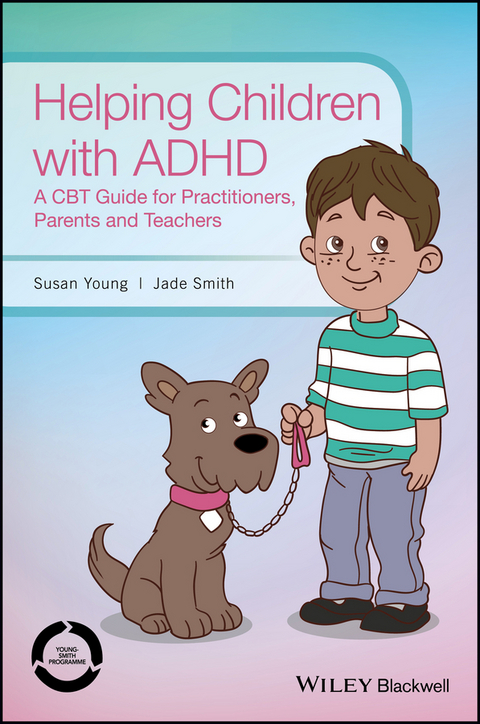
Helping Children with ADHD (eBook)
John Wiley & Sons (Verlag)
978-1-118-90316-2 (ISBN)
Combining the latest research evidence with the authors' practical expertise, Helping Children with ADHD offers a complete intervention programme for flexibly delivering behavioural and cognitive interventions to children aged 6-12 with ADHD and associated conditions.
- Redefines and develops best practice in the application of cognitive and behavioural techniques to help children aged 6-12 with ADHD and associated comorbid conditions, including learning difficulties
- Offers a range of engaging resources within a pragmatic and practically-focused approach; modular structure allows the interventions to be selected and tailored according to the particular age, ability and needs of the individual child
- An appendix of entertaining stories about Buzz, a boy with ADHD, provides structural narrative while also teaching core skills in areas such as keeping calm, planning, managing impulsivity and dealing with anxiety
- Straightforward, accessible language allows the techniques to be used by those without expert clinical training; dedicated sections provide advice for using the approach in school, home and group contexts
- A companion website provides downloadable materials including illustrated patient worksheets to accompany the narrative stories
Susan Young is a clinical academic working at the Centre for Mental Health, Imperial College London, UK, and Visiting Professor at Reykjavik University, Iceland. She was previously employed as a Clinical Neuropsychologist at the Maudsley Hospital, where she set up and developed the psychology service at the first adult ADHD service in the UK. She is the author of over 100 publications in peer reviewed journals, four books and three manualised CBT programmes that are in use internationally; numerous chapters, and the ADHD Child Evaluation [ACE].
Jade Smith is a Cinical Psychologist who has worked in a range of Child and Adolescent Mental Health, Neurodevelopmental and Paediatric Services providing assessment and treatment for young people with complex neurodevelopmental disorders and associated emotional, behavioural and mental health needs. She designed and implemented an ADHD pathway as well as contributing to ADHD assessments in National & Specialist children's Services in London. She currently works with children with learning disabilities and long term conditions.
Combining the latest research evidence with the authors practical expertise, Helping Children with ADHD offers a complete intervention programme for flexibly delivering behavioural and cognitive interventions to children aged 6-12 with ADHD and associated conditions. Redefines and develops best practice in the application of cognitive and behavioural techniques to help children aged 6-12 with ADHD and associated comorbid conditions, including learning difficulties Offers a range of engaging resources within a pragmatic and practically-focused approach; modular structure allows the interventions to be selected and tailored according to the particular age, ability and needs of the individual child An appendix of entertaining stories about Buzz, a boy with ADHD, provides structural narrative while also teaching core skills in areas such as keeping calm, planning, managing impulsivity and dealing with anxiety Straightforward, accessible language allows the techniques to be used by those without expert clinical training; dedicated sections provide advice for using the approach in school, home and group contexts A companion website provides downloadable materials including illustrated patient worksheets to accompany the narrative stories
Susan Young is a clinical academic working at the Centre for Mental Health, Imperial College London, UK, and Visiting Professor at Reykjavik University, Iceland. She was previously employed as a Clinical Neuropsychologist at the Maudsley Hospital, where she set up and developed the psychology service at the first adult ADHD service in the UK. She is the author of over 100 publications in peer reviewed journals, four books and three manualised CBT programmes that are in use internationally; numerous chapters, and the ADHD Child Evaluation [ACE]. Jade Smith is a Cinical Psychologist who has worked in a range of Child and Adolescent Mental Health, Neurodevelopmental and Paediatric Services providing assessment and treatment for young people with complex neurodevelopmental disorders and associated emotional, behavioural and mental health needs. She designed and implemented an ADHD pathway as well as contributing to ADHD assessments in National & Specialist children's Services in London. She currently works with children with learning disabilities and long term conditions.
Title Page 5
Copyright Page 6
Contents 7
About the Authors 9
Foreword 11
Acknowledgements 15
Preface 17
About the Companion Website 21
Chapter 1 Introduction 23
ADHD Across the Lifespan 24
ADHD and Comorbidity 24
ADHD and the Family 25
ADHD and School 25
Promoting Resilience 26
Cognitive Behavioural Therapy 27
The Young–Smith Programme 29
References 31
Chapter 2 The Young–Smith Programme 33
Programme Content 33
Format of Modules 35
Resources 36
Style of Delivery 36
Psychoeducation 37
Agenda 38
CBT Worksheets 38
Mid-Session Break 41
Feedback and Rewards 42
Home Missions 43
Preparing for Termination of Treatment 46
Joint Working with Parents/Carers and Teachers 46
Working With Parents/Carers 47
House Rules 48
Expectations 48
Rewards, Praise and Motivators 48
Star Chart 49
Strategy Monitoring 50
Working With Teachers 51
Expectations 53
Rewards, Praise and Motivators 53
Routine and Novel Occupations 54
A Direct Resource for Parents/Carers and Teachers 54
Chapter 3 Introduction to Buzz and His Family 57
Agenda 57
Introducing the Folder 58
Feedback and Rewards 65
Working with Parents/Carers and Teachers 66
What Can We Do As Parents/Carers and Teachers? 66
Chapter 4 Attention 67
Presentation 68
Behavioural Functioning 69
Academic Functioning 69
Interpersonal Functioning 70
Coping 71
Assessment 71
Measures 72
Clinical Interview 73
Thoughts 73
Feelings and Physiology 74
Behaviours 74
Behaviour Diary 75
CBT Interventions for Attention 76
Agenda 76
Folder Review 77
Mid-session Break 82
Feedback and Rewards 83
Working with Parents/Carers 83
Behaviour Diary 84
Chunk Information 84
Use the Child’s Name 84
Summarizing and Concept Checking 84
Change the Environment 85
Visual Cues and Prompts 85
Rewards and Praise 86
Goals, Steps and Check?points 86
Self-talk 87
What Can We Do As Parents/Carers? 87
Working with Teachers and Schools 88
Chunk Information 89
Use the Child’s Name 89
Summarizing and Concept Checking 90
Ask for Help or Clarification 90
Verbal Prompts 90
Visual Cues and Prompts 91
Change the Environment 91
‘Time Out’ Space 91
Rewards and Praise 91
Goals, Steps and Check?points 92
Self-talk 92
Fiddle Toys 93
Activity Breaks 93
What Can We Do As Teachers? 93
References 95
Chapter 5 Hyperactivity 97
Presentation 97
Behavioural Functioning 98
Academic Functioning 98
Interpersonal Functioning 99
Coping 99
Sleep 99
Assessment 100
Measures 100
Clinical Interview 100
Thoughts 101
Feelings and Physiology 101
Behaviour 102
Behaviour Diary 103
CBT Interventions for Hyperactivity 104
Agenda 105
Folder Review 105
Mid-session Break 108
Feedback and Rewards 110
Working with Parents/Carers 110
Behaviour Diary 111
Physical Activity 111
Wiggle Space 112
Breaks 112
Positive Requests and Reinforcement 112
Calm Breathing 112
Sleep Routines 113
Games 113
Self-talk 113
Signs and Places 114
Beliefs and Feelings 114
What Can We Do As Parents/Carers? 114
Working with Teachers and Schools 115
Physical Activity 116
Wiggle Space 116
Breaks 117
Positive Requests and Reinforcement 117
Calm Breathing 117
Responses of Others 117
Self-talk 118
Signs and Places 118
Beliefs and Feelings 118
What Can We Do As Teachers? 118
References 120
Chapter 6 Impulsivity 121
Presentation 122
Behavioural Functioning 122
Academic Functioning 122
Interpersonal Functioning 123
Coping 123
Assessment 124
Measures 124
Clinical Interview 125
Thoughts 125
Feelings and Physiology 125
Behaviours 126
Behaviour Diary 127
CBT Interventions for Impulsivity 128
Agenda 128
Folder Review 129
Mid-session Break 131
Feedback and Rewards 133
Working with Parents/Carers 134
Behaviour Diary 134
Planning Ahead 134
Managing Risk 135
STOP and THINK 135
Alternatives and Distractions 136
Graded Practice 136
Small Steps 137
Double-checking 137
What Can We Do As Parents/Carers? 137
Working with Teachers and Schools 138
Planning Ahead 139
Managing Risk 139
STOP and THINK 140
Alternatives and Distractions 140
Answering Questions and Taking Turns 140
Small Steps 140
Double-checking 140
What Can We Do As Teachers? 141
References 142
Chapter 7 Anxiety 143
Presentation 143
Behavioural Functioning 145
Academic Functioning 146
Interpersonal Functioning 146
Coping 147
Assessment 147
Measures 148
Clinical Interview 148
Thoughts 149
Feelings and Physiology 149
Behaviours 150
Creative Methods 151
CBT Interventions For Anxiety 151
Agenda 152
Folder Review 152
Mid-session Break 155
Feedback and Rewards 157
Working with Parents/Carers 158
Realistic Expectations 159
Facing not Avoiding (Graded Hierarchy) 159
Restlessness 159
Breathing and Relaxation 160
Problem-solving 160
Self-talk 160
Role Model 161
What Can We Do As Parents/Carers? 161
Working with Teachers and Schools 162
Realistic Expectations 164
Facing not Avoiding (Graded Hierarchy) 164
Restlessness 165
Breathing and Relaxation 165
Problem-solving 165
Self-talk 165
What Can We Do As Teachers? 166
References 167
Chapter 8 Frustration and Anger 169
Presentation 170
Behavioural Functioning 170
Academic Functioning 171
Interpersonal Functioning 172
Coping 172
Assessment 173
Measures 173
Clinical Interview 174
Thoughts 175
Feelings and Physiology 175
Behaviours 176
Creative Methods 176
Behaviour Diary 177
CBT Interventions for Frustration and Anger 178
Agenda 179
Folder Review 179
Mid-session Break 183
Feedback and Rewards 186
Working with Parents/Carers 186
Consistent, Firm and Fair 188
Identify Triggers 188
Behaviour Diary 189
Identify Warning Signals 189
Avoid Escalation 189
Body Sensations and Anger 190
Withdrawal 190
Address Negative Thinking 191
Self-talk 191
Problem-solving 191
Visualization 191
Breathing and Relaxation 192
What Can We Do As Parents/Carers? 192
Working with Teachers and Schools 194
Identify Triggers 195
Identify Warning Signals 196
Avoid Escalation 196
Address Negative Thinking 196
Self-talk 197
Peer Role Models 197
Problem-solving 197
Breathing and Relaxation 197
Teacher Control 197
What Can We Do As Teachers? 197
References 199
Chapter 9 Social Skills and Relationships 201
Presentation 202
Behavioural Functioning 203
Academic Functioning 203
Interpersonal Functioning 204
Coping 205
Assessment 205
Measures 206
Clinical Interview 207
Thoughts 207
Feelings and Physiology 208
Behaviour 208
Creative Methods 208
Behaviour Diary 209
CBT Interventions for Social Skills 209
Agenda 210
Folder Review 210
Mid-session Break 213
Feedback and Rewards 215
Working with Parents/Carers 215
Behaviour Diary 216
Role Model 216
Opportunity 217
Role-Play and Rehearsal 217
Notice Positive Social Skills and Give Praise 218
Notice the Behaviour of Others 218
Managing Stress and Interpersonal Conflict 218
Assertiveness 218
What Can We Do As Parents/Carers? 219
Working with Teachers and Schools 220
Role-Model 221
Prompts 221
Role-Play and Rehearsal 221
Notice Positive Social Skills and Give Praise 221
Managing Stress and Interpersonal Conflict 222
Bullying 222
Assertiveness 222
New Social Situations 222
What Can We Do As Teachers? 223
References 225
Chapter 10 Setting Goals and Planning Ahead 227
Presentation 227
Behavioural Functioning 228
Academic Functioning 228
Interpersonal Functioning 229
Coping 229
Assessment 229
Measures 230
Clinical Interview 230
Thoughts 231
Feelings and Physiology 232
Behaviour 232
CBT Interventions for Setting Goals and Planning Ahead 232
Agenda 233
Folder Review 233
Mid-session Break 236
Feedback and Rewards 238
Working with Parents/Carers 238
Teach the Planning Process 239
Verbal Prompts 239
Alarm Prompts 239
Calendars/Diaries 240
Visual Symbols 240
Lists 240
Routines 240
Rewards and Self?praise 241
What Can We Do As Parents/Carers? 241
Working with Teachers and Schools 242
Teach the Planning Process 243
Verbal Prompts 243
Alarms Prompts 243
Calendars/Diaries 243
Visual Symbols 243
Lists 244
Rewards and Self-praise 244
What Can We Do As Teachers? 244
References 245
Chapter 11 Problem-solving 247
Presentation 248
Behavioural Functioning 248
Academic Functioning 248
Interpersonal Functioning 249
Coping 250
Assessment 250
Measures 250
Clinical Interview 251
Thoughts 253
Feelings and Physiology 253
Behaviours 253
CBT Interventions For Problem?Solving 253
Agenda 254
Folder Review 255
Mid-session Break 257
Feedback and Rewards 259
Working with Parents/Carers 260
Define the Problem 260
Teach the Problem-Solving Process 261
Stop Maladaptive Strategies 261
Encourage Autonomy 262
Stop and Think 262
Worries and Anxiety 262
Role-Model 262
What Can We Do As Parents/Carers? 262
Working with Teachers and Schools 264
Define the Problem 265
Teach the Problem-Solving Process 265
Stop Maladaptive Strategies 265
Encourage Autonomy 266
Stop and Think 266
Worries and Anxiety 266
What Can We Do As Teachers? 266
References 268
Chapter 12 Mood and Self-Esteem 269
Presentation 270
Behavioural Functioning 270
Academic Functioning 270
Interpersonal Functioning 271
Coping 271
Assessment 271
Measures 272
Clinical Interview 272
Thoughts 273
Feelings and Physiology 273
Behaviours 274
Creative Methods 274
CBT Interventions for Mood and Self-Esteem 275
Agenda 275
Folder Review 276
Mid-session Break 278
Feedback and Rewards 281
Working with Parents/Carers 281
Realistic Expectations 281
Watch Out for Mood Dips 282
Help the Child to Learn and Succeed 282
Avoid Negative Feedback 282
Praise the Child’s Efforts 283
Foster a Positive Environment 283
Out-of-School Clubs 283
What Can We Do As Parents/Carers? 283
Working with Teachers and Schools 285
Realistic Expectations 286
Watch out for Mood Dips 286
Note Negative Interactions 286
Help the Child to Learn and Succeed 287
Praise the Child’s Efforts 287
Extra-curricular Activities 287
What Can We Do As Teachers? 287
References 289
Index 291
EULA 307
"This book is recommended to all professionals wanting to increase their skills in working with children affected by ADHD. It presents a detailed and practical scheme based on cognitive-behavioural therapy, with well-worked-out sessions and advice. Teachers and clinicians will find good ideas for promoting resilience and overcoming disability." -- Professor Eric Taylor, Retired Head of the Child & Adolescent Psychiatry Department, Institute of Psychiatry, King's College London, UK
"Finally a comprehensive resource applying research proven principles to address the myriad of co-occurring problems children with ADHD frequently experience. Drs. Young and Smith are to be commended for providing clinicians with this thorough guide filled with practical ideas and strategies for the novice and experienced clinician." -- Sam Goldstein, Ph.D., Editor in Chief, Journal of Attention Disorders, University of Utah School of Medicine
"This is a valuable resource for parents, carers and school staff, and fills an important gap in the in the support available for children diagnosed with ADHD. Most important of all, it addresses the criticism often levelled at current services, in that it places the child at the heart of the treatment process, and helps them to understand how best to minimise the difficulties that they may face at home and in school, and how best to make the most of their potential. The programme will help increase skills, planning, organisation, and personal resilience, and so lead to more positive outcomes for this vulnerable population." -- Bill Colley, Educational Consultant, The UK ADHD Partnership, London, UK
"Drs. Young and Smith's CBT Guide to working therapeutically with children is a must have for any CBT therapist or children's counsellor who is involved in supporting young people with ADHD. Providing clear and effective strategies that offer the child a framework to learn how to understand and live successfully with ADHD, this guide is long overdue." -- Dr. Tony Lloyd, CEO, ADHD Foundation
| Erscheint lt. Verlag | 25.4.2017 |
|---|---|
| Sprache | englisch |
| Themenwelt | Geisteswissenschaften ► Psychologie ► Entwicklungspsychologie |
| Geisteswissenschaften ► Religion / Theologie | |
| Medizin / Pharmazie ► Medizinische Fachgebiete ► Psychiatrie / Psychotherapie | |
| Schlagworte | ADHD • adhd and children • ADHS • Anger • Anxiety • attention • Aufmerksamkeitsdefizit-/Hyperaktivitätsstörung • Aufmerksamkeitsdefizitsyndrom • Beziehungen, Kindererziehung u. Familienleben • CBT • CBT practitioners • CBT Strategies • Child & Adolescent Clinical Psychology • children with adhd • Cognitive behavioral therapy (CBT) • Educational & School Psychology • Educational Psychology • Erziehungs- u. Schulpsychologie • Frustration • Health Psychology • Hyperactivity • Hyperaktivitätsstörung • IAPT therapy • Impulsivity • Kinderpsychologie • Klinische Psychologie / Kinder u. Jugendliche • Kognitive Verhaltenstherapie • neurodevelopment • Neuropsychiatry • Psychiatry • Psychologie • Psychology • Relationships, Parenting & Family Life • Religion & Theology • Religion u. Theologie • self-esteem • YBP • YSP |
| ISBN-10 | 1-118-90316-1 / 1118903161 |
| ISBN-13 | 978-1-118-90316-2 / 9781118903162 |
| Informationen gemäß Produktsicherheitsverordnung (GPSR) | |
| Haben Sie eine Frage zum Produkt? |
 PDF (Adobe DRM)
Kopierschutz: Adobe-DRM
Adobe-DRM ist ein Kopierschutz, der das eBook vor Mißbrauch schützen soll. Dabei wird das eBook bereits beim Download auf Ihre persönliche Adobe-ID autorisiert. Lesen können Sie das eBook dann nur auf den Geräten, welche ebenfalls auf Ihre Adobe-ID registriert sind.
Details zum Adobe-DRM
Dateiformat: PDF (Portable Document Format)
Mit einem festen Seitenlayout eignet sich die PDF besonders für Fachbücher mit Spalten, Tabellen und Abbildungen. Eine PDF kann auf fast allen Geräten angezeigt werden, ist aber für kleine Displays (Smartphone, eReader) nur eingeschränkt geeignet.
Systemvoraussetzungen:
PC/Mac: Mit einem PC oder Mac können Sie dieses eBook lesen. Sie benötigen eine
eReader: Dieses eBook kann mit (fast) allen eBook-Readern gelesen werden. Mit dem amazon-Kindle ist es aber nicht kompatibel.
Smartphone/Tablet: Egal ob Apple oder Android, dieses eBook können Sie lesen. Sie benötigen eine
Geräteliste und zusätzliche Hinweise
Buying eBooks from abroad
For tax law reasons we can sell eBooks just within Germany and Switzerland. Regrettably we cannot fulfill eBook-orders from other countries.
aus dem Bereich


