


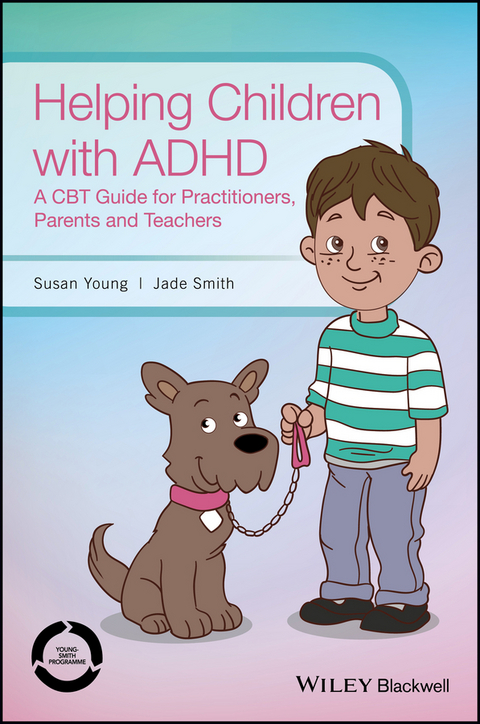
Helping Children with ADHD (eBook)
John Wiley & Sons (Verlag)
978-1-118-90317-9 (ISBN)
Susan Young is a clinical academic working at the Centre for Mental Health, Imperial College London, UK, and Visiting Professor at Reykjavik University, Iceland. She was previously employed as a Clinical Neuropsychologist at the Maudsley Hospital, where she set up and developed the psychology service at the first adult ADHD service in the UK. She is the author of over 100 publications in peer reviewed journals, four books and three manualised CBT programmes that are in use internationally; numerous chapters, and the ADHD Child Evaluation [ACE].
Jade Smith is a Cinical Psychologist who has worked in a range of Child and Adolescent Mental Health, Neurodevelopmental and Paediatric Services providing assessment and treatment for young people with complex neurodevelopmental disorders and associated emotional, behavioural and mental health needs. She designed and implemented an ADHD pathway as well as contributing to ADHD assessments in National & Specialist children's Services in London. She currently works with children with learning disabilities and long term conditions.
Combining the latest research evidence with the authors practical expertise, Helping Children with ADHD offers a complete intervention programme for flexibly delivering behavioural and cognitive interventions to children aged 6-12 with ADHD and associated conditions. Redefines and develops best practice in the application of cognitive and behavioural techniques to help children aged 6-12 with ADHD and associated comorbid conditions, including learning difficulties Offers a range of engaging resources within a pragmatic and practically-focused approach; modular structure allows the interventions to be selected and tailored according to the particular age, ability and needs of the individual child An appendix of entertaining stories about Buzz, a boy with ADHD, provides structural narrative while also teaching core skills in areas such as keeping calm, planning, managing impulsivity and dealing with anxiety Straightforward, accessible language allows the techniques to be used by those without expert clinical training; dedicated sections provide advice for using the approach in school, home and group contexts A companion website provides downloadable materials including illustrated patient worksheets to accompany the narrative stories
Susan Young is a clinical academic working at the Centre for Mental Health, Imperial College London, UK, and Visiting Professor at Reykjavik University, Iceland. She was previously employed as a Clinical Neuropsychologist at the Maudsley Hospital, where she set up and developed the psychology service at the first adult ADHD service in the UK. She is the author of over 100 publications in peer reviewed journals, four books and three manualised CBT programmes that are in use internationally; numerous chapters, and the ADHD Child Evaluation [ACE]. Jade Smith is a Cinical Psychologist who has worked in a range of Child and Adolescent Mental Health, Neurodevelopmental and Paediatric Services providing assessment and treatment for young people with complex neurodevelopmental disorders and associated emotional, behavioural and mental health needs. She designed and implemented an ADHD pathway as well as contributing to ADHD assessments in National & Specialist children's Services in London. She currently works with children with learning disabilities and long term conditions.
About the Authors vii
Foreword ix
Acknowledgements xiii
Preface xv
About the Companion Website xix
1 Introduction 1
2 The Young-Smith Programme 11
3 Introduction to Buzz and His Family 35
4 Attention 45
5 Hyperactivity 75
6 Impulsivity 99
7 Anxiety 121
8 Frustration and Anger 147
9 Social Skills and Relationships 179
10 Setting Goals and Planning Ahead 205
11 Problem?-solving 225
12 Mood and Self?-Esteem 247
Index 269
"This book is recommended to all professionals wanting to increase their skills in working with children affected by ADHD. It presents a detailed and practical scheme based on cognitive-behavioural therapy, with well-worked-out sessions and advice. Teachers and clinicians will find good ideas for promoting resilience and overcoming disability." -- Professor Eric Taylor, Retired Head of the Child & Adolescent Psychiatry Department, Institute of Psychiatry, King's College London, UK
"Finally a comprehensive resource applying research proven principles to address the myriad of co-occurring problems children with ADHD frequently experience. Drs. Young and Smith are to be commended for providing clinicians with this thorough guide filled with practical ideas and strategies for the novice and experienced clinician." -- Sam Goldstein, Ph.D., Editor in Chief, Journal of Attention Disorders, University of Utah School of Medicine
"This is a valuable resource for parents, carers and school staff, and fills an important gap in the in the support available for children diagnosed with ADHD. Most important of all, it addresses the criticism often levelled at current services, in that it places the child at the heart of the treatment process, and helps them to understand how best to minimise the difficulties that they may face at home and in school, and how best to make the most of their potential. The programme will help increase skills, planning, organisation, and personal resilience, and so lead to more positive outcomes for this vulnerable population." -- Bill Colley, Educational Consultant, The UK ADHD Partnership, London, UK
"Drs. Young and Smith's CBT Guide to working therapeutically with children is a must have for any CBT therapist or children's counsellor who is involved in supporting young people with ADHD. Providing clear and effective strategies that offer the child a framework to learn how to understand and live successfully with ADHD, this guide is long overdue." -- Dr. Tony Lloyd, CEO, ADHD Foundation
1
Introduction
Attention deficit hyperactivity disorder (ADHD) is a neurodevelopmental disorder characterized by symptoms of inattention, impulsivity and hyperactivity that are inconsistent with a child’s developmental level and cause impairment to their functioning.
The prevalence of ADHD is around 5 % in children and 2.5 % in adults (American Psychiatric Association, 2013). In childhood, boys are diagnosed with ADHD up to four times more than girls, whereas in adulthood, females are just as likely to be diagnosed as males (Ford, Goodman & Meltzer, 2003; Kessler et al., 2006). This may be because young boys present with greater hyperactivity than girls, with girls presenting as more inattentive, and thus boys may be more likely to be noticed and referred for assessment.
ADHD is highly heritable and it is believed to be caused by a complex mixture of genetic and environmental factors including: genes associated with the dopamine and serotonin systems in the brain (Stergiakouli & Thapar, 2010); a variety of prenatal and perinatal factors such as smoking, substance use, pre‐term birth, low birth weight, birth trauma and maternal depression (Thapar, Cooper, Jefferies & Stergiakouli, 2012); and the degree of nurture and stimulation that a child receives in early life (Rutter, 2005).
Due to the cognitive and behavioural impact of ADHD, there is an association between ADHD and a variety of problems, including academic underachievement, conduct problems and interpersonal relationship difficulties (Shaw et al., 2012). Boys are at greater risk of developing behavioural and conduct difficulties than girls, and such problems may increase the rate of referral and assessment for boys. The behaviour of young people presenting with comorbid disruptive behavioural problems is especially challenging for both parents/carers and teachers, and the demands of managing these problems can often lead to stress.
ADHD Across the Lifespan
As children grow and develop, their brains and behaviour are constantly adjusting and evolving; they will refine their cognitive abilities, learn to cope with challenges and learn to overcome obstacles. However, there are key transitions in an individual’s life when ADHD may become more prominent. Children with ADHD are often first recognized when demands at primary school begin to move away from play and academic expectations increase. The child may present as being unable to stay seated on the carpet, listen to a story and/or complete a short task on their own without getting up and/or becoming distracted. Their behaviour is noticeably different to that of their peers.
The transition to secondary school may also be a trigger for referral due to changes in the curriculum, with a greater need to plan and organize, longer days, fewer breaks and higher expectations for sustained periods of concentration. At this time, children are expected to navigate new peer groups, manage their own time and belongings, and organize themselves at home and school whilst receiving reduced adult support and direction. In parallel, they are also coping with the changes that puberty brings and managing new feelings and body changes.
For some individuals, symptoms and impairments will persist into adulthood. Most typically this includes inattention and restlessness, whilst overt hyperactive and impulsive symptoms may reduce.
ADHD and Comorbidity
It is widely observed that coexisting conditions are the rule rather than the exception, with up to two‐thirds of children with ADHD having one or more coexisting conditions. Common comorbidities include oppositional defiance and conduct disorder, anxiety and mood disorders, as well as emotional regulation difficulties (Biederman, Newcorn & Sprich, 1991; Goldman, Genel, Bezman & Slanetz, 1998; Pliszka, 1998; Elia, Ambrosini & Berrettini, 2008). Other comorbid conditions include autism spectrum disorders, tic disorders, social problems, sleep difficulties, generalized intellectual impairment and/or specific learning difficulties such as dyslexia.
Gifted children may also develop ADHD. In these cases, impairment is relative to intellectual ability, as the child doesn’t reach its potential. Gifted children often develop compensatory strategies that mask their problems; however, this may become challenging with increasing academic demands and feelings of stress.
ADHD and the Family
Greater parenting stress has been associated with the families of children with ADHD, especially in the presence of oppositional behaviour and/or maternal depression (Theule, Weiner, Tannock & Jenkins, 2013). Whilst there may be many positive and fun times, it is not always easy bringing up a child with ADHD, and parents/carers need support too, especially at times when they feel weary, fatigued and emotionally drained. This highlights the need to stand back from the condition and the child, and take into account what is going on within the family. Hence, the therapist must not only focus on the needs of the child, but also on the needs of other family members and consider whether these are being met. It is important to note family dynamics and gain an understanding of how reciprocal relationships operate within the family, as the behaviour of one will influence the behaviour of another. Whilst negative cycles within the family have been reported, there is a potential positive here: change in the behaviour of one may influence change in the behaviour of another.
When taking a family perspective, it is important that siblings are not forgotten. This may reinforce what is happening in everyday life, with the needs of the child with ADHD demanding so much attention that the relatively fewer needs of the non‐ADHD sibling are often deferred. Whilst siblings may be caring and supportive (Kendall, 1999), they may feel minimized or overlooked and resent or envy the attention received by their brother or sister (Mikami & Pfiffner, 2008). It is important that parents/carers maintain positive family relationships by ensuring that the needs of all siblings are met, and that rewards and sanctions are fair.
ADHD and School
Classrooms are rich and stimulating environments. For a child with ADHD they are also places with a mass of distractions; for example, teachers speaking, children chatting, outside noise from sport or lawnmowers, other classes/people coming and going, the scribble of pencils, rustling papers, bells ringing and chairs scraping. For a child with ADHD it can be an overwhelming sensation, leading them to lose focus, go off‐task and miss important information. In addition, teachers have many competing demands in the classroom, hence it is important that they have a good understanding about the difficulties experienced by children with ADHD and the potential methods that can be applied to minimize problems and maximize effort. Additional demand is put on teachers when ADHD is combined with oppositional behaviours, conduct problems and/or social communication impairments (Greene et al., 2002). This emphasizes the need for early and targeted interventions to help promote skills for children with ADHD and the people around them.
Some children will access additional support in schools to enhance learning, self‐monitoring and staying on task. For children with high levels of self‐doubt or low self‐efficacy, such learning support can make a wealth of difference by encouraging them to take achievable steps, and by receiving recognition and reward for effort.
Promoting Resilience
All children have their own unique skills, talents, qualities and priorities. The difference between a child with ADHD and a child without ADHD is that the former needs more guidance and nurture during their journey to learn how to overcome life’s hurdles and reach their potential. It is important that they focus on the positive and learn to embrace what makes them unique. Children with ADHD often have fast and creative minds, which helps them to be innovative and to develop new and exciting ideas. They may be sociable, funny, extroverted and intuitive. They may channel their energy into sports and seek out novel and interesting ways of doing things. However, they also need to learn how to cope with challenges and difficult times. They must develop skills to cope with setbacks, promote interpersonal skills, set goals and work toward their aspirations.
Resilience is a quality that draws upon a person’s inner strength as well as their skill set. It is a lifelong characteristic that requires a person to have developed confidence, skills and competencies across life domains. Early intervention is important for promoting strength and resilience and reducing risk factors, such as low self‐esteem, which may impact on the child’s future development and wellbeing. With resilience, a person can adapt and bounce back from stressful or adverse incidents. As research adds to our knowledge about ADHD as a lifespan condition, the contribution of early interventions in building psychological resilience will become better understood. The aim is not to solely promote skill development, but to also strengthen coping and support mechanisms, which may protect children from emotional distress, behavioural problems and academic underachievement. Early intervention may prevent the development of maladaptive patterns that lead a child to become entrenched or stuck.
We are strongly influenced by those who are around us. Children are like sponges; they soak up what they see and hear. As a child...
| Erscheint lt. Verlag | 25.4.2017 |
|---|---|
| Sprache | englisch |
| Themenwelt | Geisteswissenschaften ► Psychologie ► Entwicklungspsychologie |
| Geisteswissenschaften ► Religion / Theologie | |
| Medizin / Pharmazie ► Medizinische Fachgebiete ► Psychiatrie / Psychotherapie | |
| Schlagworte | ADHD • adhd and children • ADHS • Anger • Anxiety • attention • Aufmerksamkeitsdefizit-/Hyperaktivitätsstörung • Aufmerksamkeitsdefizitsyndrom • Beziehungen, Kindererziehung u. Familienleben • CBT • CBT practitioners • CBT Strategies • Child & Adolescent Clinical Psychology • children with adhd • Cognitive behavioral therapy (CBT) • Educational & School Psychology • Educational Psychology • Erziehungs- u. Schulpsychologie • Frustration • Health Psychology • Hyperactivity • Hyperaktivitätsstörung • IAPT therapy • Impulsivity • Klinische Psychologie / Kinder u. Jugendliche • Kognitive Verhaltenstherapie • neurodevelopment • Neuropsychiatry • Psychiatry • Psychologie • Psychology • Relationships, Parenting & Family Life • Religion & Theology • Religion u. Theologie • self-esteem • YBP • YSP |
| ISBN-10 | 1-118-90317-X / 111890317X |
| ISBN-13 | 978-1-118-90317-9 / 9781118903179 |
| Informationen gemäß Produktsicherheitsverordnung (GPSR) | |
| Haben Sie eine Frage zum Produkt? |
 EPUB (Adobe DRM)
Kopierschutz: Adobe-DRM
Adobe-DRM ist ein Kopierschutz, der das eBook vor Mißbrauch schützen soll. Dabei wird das eBook bereits beim Download auf Ihre persönliche Adobe-ID autorisiert. Lesen können Sie das eBook dann nur auf den Geräten, welche ebenfalls auf Ihre Adobe-ID registriert sind.
Details zum Adobe-DRM
Dateiformat: EPUB (Electronic Publication)
EPUB ist ein offener Standard für eBooks und eignet sich besonders zur Darstellung von Belletristik und Sachbüchern. Der Fließtext wird dynamisch an die Display- und Schriftgröße angepasst. Auch für mobile Lesegeräte ist EPUB daher gut geeignet.
Systemvoraussetzungen:
PC/Mac: Mit einem PC oder Mac können Sie dieses eBook lesen. Sie benötigen eine
eReader: Dieses eBook kann mit (fast) allen eBook-Readern gelesen werden. Mit dem amazon-Kindle ist es aber nicht kompatibel.
Smartphone/Tablet: Egal ob Apple oder Android, dieses eBook können Sie lesen. Sie benötigen eine
Geräteliste und zusätzliche Hinweise
Buying eBooks from abroad
For tax law reasons we can sell eBooks just within Germany and Switzerland. Regrettably we cannot fulfill eBook-orders from other countries.
aus dem Bereich


