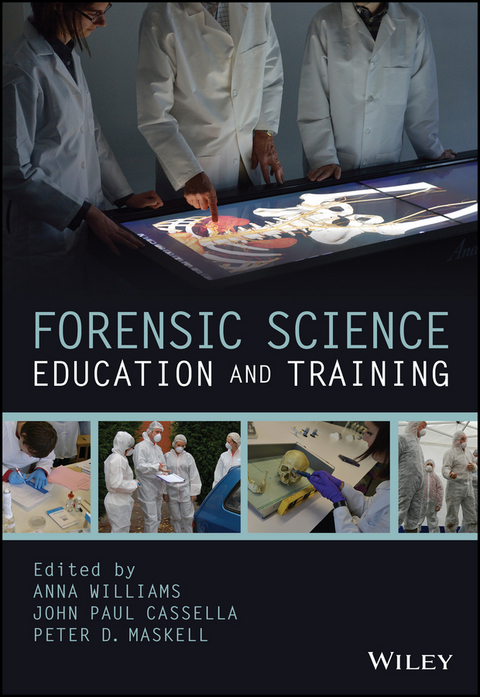
Forensic Science Education and Training (eBook)
John Wiley & Sons (Verlag)
978-1-118-68916-5 (ISBN)
A comprehensive and innovative guide to teaching, learning and assessment in forensic science education and practitioner training
- Includes student exercises for mock crime scene and disaster scenarios
- Addresses innovative teaching methods including apps and e-gaming
- Discusses existing and proposed teaching methods
Anna Williams School of Applied Sciences, University of Huddersfield, UK
John Paul Cassella Department of Forensic Science and Crime Science, Staffordshire University, UK
Peter D. Maskell School of Science, Engineering and Technology, Abertay University, UK
A comprehensive and innovative guide to teaching, learning and assessment in forensic science education and practitioner training Includes student exercises for mock crime scene and disaster scenarios Addresses innovative teaching methods including apps and e-gaming Discusses existing and proposed teaching methods
Anna Williams School of Applied Sciences, University of Huddersfield, UK John Paul Cassella Department of Forensic Science and Crime Science, Staffordshire University, UK Peter D. Maskell School of Science, Engineering and Technology, Abertay University, UK
Forensic Science Education and Training 3
Contents 9
List of Contributors 15
Foreword 17
Acknowledgements 21
1 Forensic Science Education – The Past and the Present In and Out of the Classroom 23
Introduction 23
Conclusions and Implications for Teaching and Practice 38
References 38
Further Resources 40
2 Forensic Anthropology Teaching Practice 41
Introduction 41
Practical Teaching Methods 42
Basic Anatomy Teaching 42
Forensic Anthropology Basic Techniques 44
Teaching Equipment 46
Use Of Human Skeletal Material For Teaching Purposes 46
Access to Skeletal Collections 46
Health and Safety Considerations 48
Correct Handling and Storage of Skeletal Remains 48
Student Sensibilities 49
Alternatives to Human Skeletal Material 49
Teaching Forensic Anthropology Theory 51
Forensic Cases as Training 51
Assessment Methods 52
Spotter Tests 52
Laboratory Reports 53
Post-Mortem Examinations 54
Ethics 55
Health and Safety Considerations 55
Student Sensibilities 56
Conclusions 57
References 58
Further Resources 60
3 Considerations in Using a Crime Scene House Facility for Teaching and Learning 61
References 66
4 Taphonomy Facilities as Teaching Aids 67
Introduction 67
History of Taphonomic Research in Forensic Science 67
Taphonomy Research Facilities 69
Teaching Forensic Taphonomy 70
Establishment of a Taphonomy Facility for Teaching and Research 72
The Future of Taphonomy Facilities 74
Conclusions 74
References 74
5 Forensic Fire Investigation 79
Introduction 79
Fire and Explosion Investigation Module 80
Example Practical Sessions 80
Fire Scene Simulation 82
Conclusions 91
Future Developments 91
Recommended Resources 92
Introductory Textbooks 92
More Detailed Textbooks and Material 92
Case Studies 92
References 92
Further Reading 93
6 Digital Forensics Education 95
Introduction 95
A Brief History of Digital Forensics Education 96
Current Digital Forensic Education 96
Digital Forensics as a Sub-Discipline? 97
Digital Forensics and Traditional Forensic Science Skill Sets 97
Challenges in Digital Forensics Education 98
Different Levels of Study 98
Education versus Training 100
Speed of Technology Change 101
Distance Learning Challenges 102
Challenges in Incorporating Law into the Digital Forensics Curriculum 103
Other Discussions in Digital Forensics Education 104
Programming for Digital Forensics 104
Lab Requirements for Digital Forensics 105
Developing Practical Exercises for Digital Forensics 106
Summary 106
References 107
7 A Strategy for Teaching Forensic Investigation with Limited Resources 109
Introduction 109
Historical Background 109
Methodology 112
Results 116
Analysis 118
Conclusions 119
Acknowledgements 119
Appendix 7.A: Budget Information for Forensic Investigation Scenario 120
Appendix 7.B: Information on Testing Available for Forensic Investigation Scenario 121
Appendix 7.C: Suggested Schedule for Delivery of This Style of Module 122
References 123
8 Improving the PhD Through Provision of Skills Training for Postgraduate Researchers 125
Introduction 125
Study of Student Perception of Training Needs 127
Training Course Attendance and Usefulness 128
Training Course Delivery 131
Conclusions 135
References 137
9 Educational Forensic E-gaming as Effective Learning Environments for Higher Education Students 141
Introduction 141
Background 142
Methodology 144
Results 148
Discussion 153
Conclusions 155
Acknowledgements 155
Glossary 155
References 156
Further Resources 158
10 Virtual Anatomy Teaching Aids 159
Introduction 159
Virtual Anatomy in Healthcare Education 159
Anatomage Virtual Anatomy as a Teaching Aid 162
Anatomy Labs 162
Forensic and Virtual Autopsy Imaging 162
Advanced Clinical and Procedural Training 163
Conclusions 165
References 167
11 Online Teaching Aids 169
Introduction 169
Employability and Transferrable Skills 170
Online Learning Management Systems 172
iTunes U 172
Note-taking Apps – The Age of Evernote and OneNote 173
Scientific Demonstration Apps 173
Within the Forensic Curriculum 174
Practical Guidance for Using Online Tools 175
Online, electronic and video games 175
Virtual Learning Environments (VLEs) 176
Blogs 176
Podcast 176
RSS 176
Wikis 176
Creative Commons 176
Folksonomy 177
Social Networks and Forums 177
Twitter 177
Facebook 177
Academia.edu or Similar 178
LinkedIn 178
Deciding Which Technology to Use 178
Openness for Participation 179
Transient Versus Permanent Solutions 179
Conclusions 181
References 181
12 Simulation, Immersive Gameplay and Virtual Realities in Forensic Science Education 185
Introduction 185
Terms of Reference 186
Serious Games 187
Simulation-based Real Environment Learning in Professional Forensic Training 188
Hydra Augmented Reality 189
Virtual Reality 190
Crime Science Investigators (CSIs) 194
Augmented Reality 194
Augmented Virtuality 194
Virtual Reality 195
Conclusions 196
References 197
13 Training Forensic Practitioners in DNA Profiling 199
Introduction 199
Prior Knowledge 199
Setting the Scene: Expectations 200
Preconceptions and Common Misconceptions 200
Introductory Concepts 201
DNA Structure and Function 201
The Profiling Process 201
Extraction 201
Quantification 202
Amplification 202
Separation and Detection 202
Anti-Contamination 203
Intermediate Concepts 204
Partial Profiles 204
Introduction to Mixtures 205
Database Searches 206
Statistical Interpretation 207
Advanced Concepts 208
Activity Level Interpretation 208
Modes of Transfer 209
DNA Mixtures 210
Specialist Techniques 211
Low Template Techniques 211
Relationship Testing 212
Mitochondrial DNA and Y Chromosome STRs 212
Familial Database Searches 213
Ethnic Inferencing 213
Phenotypic Markers 213
In The Court of Appeal 213
R v Deen, 1994 214
R v Dennis Adams, 1996 and 1997 214
R v Doheny and R v Adams, 1997 214
R v Bates and Garside, 2006 214
R v Hoey, 2007 215
R v Reed and Reed, 2009 R v Garmson, 2010
R v T, 2010 216
R v Weller, 2010 216
R v Thomas, 2011 217
R v Dlugosz, R v Pickering and R v MDS, 2013 217
Teaching Principles 217
Appendix 13.A: Low Level Profile Examples 219
Example 13.A.1 219
Example 13.A.2 220
Example 13.A.3 221
Example 13.A.4 222
Example 13.A.5 223
References 223
14 The Forensic Investigation of Sexual Offences: Practitioner Course Design and Delivery 229
Introduction 229
Starting Points 229
Evidence Types 230
The Body as a Crime Scene: Information from the Forensic Medical Examination 231
The Persistence Distribution 231
The FME is a Source of Information 232
The Speculum Issue 233
Why Take Control Swabs? 233
Setting the Strategy 234
Case Assessment and Interpretation 234
The Hierarchy of Propositions 235
Dealing with Uncertainty 236
Interpretation of Findings 236
The Reporter–Examiner Relationship 237
Stain Selection and Body Fluid Attribution 237
Dealing with Unexpected Results 238
Negative Findings 238
Writing the Statement 238
Writing for the Lay Person 238
Technical Explanations 239
The Inclusion of Conditioning Information 240
Choice of Words 240
Transparency of Interpretation 240
Cognitive Bias 241
Training to Other Audiences 241
Legal Professionals 241
Police Officers 242
Medical Professionals 242
Conclusions 242
Appendix 14.A: Sexual Offence Case Training Scenarios 243
Suggested Tutorial Structure 243
Scenario 1 243
Scenario 2 245
Scenario 3 247
Appendix 14.B: Templates for Use in Statement Writing Exercises 248
EXPERT WITNESS DECLARATION FORM 250
FORENSIC EXAMINATION RECORD 251
Witness Statement 252
Qualifications and Experience 252
Items Received 252
Purpose of Examination 253
Use of Assistants 253
Technical Issues 253
Examination and Results 253
Interpretation 253
Conclusions 254
References 254
15 The Use of High-Fidelity Simulations in Emergency Management Training 257
The Need for High Fidelity 257
Scenario Design 258
Health and Safety Considerations 259
Deployment Hazards 259
Site Hazards 260
Initial Response 263
Site Management 264
Evidence Collection 266
Media Management 268
The Local Hack 268
The Radio Interview 268
The Television Interview 268
The Press Conference 269
Team Management 269
Witnesses and Interviewing 270
Coaching Techniques 272
Analysis and Reporting 273
Summary 274
Reference 274
16 Police Training in the Twenty-first Century 275
Introduction 275
Training of Future Police Detectives 277
Evaluation of Police Performance 279
Avoiding Miscarriages of Justice 279
Maintaining and Developing the Role of the Senior Investigating Officer (SIO) 280
Expert Witnesses 282
The Compartmentalisation of Investigative Skills 282
Forensic Provision 283
Silverman Report on the Closure of the Forensic Science Service 283
Ethical Issues 284
High Volume Crime 284
New Investigative Challenges 285
Eco-terrorism 285
Cybercrime 286
Domestic Terrorism 286
Passive Data and Social Networking 286
Recommendations 287
Conclusions 288
Glossary 288
References 288
17 The Design and Implementation of Multiple Choice Questions (MCQs) in Forensic Science Assessment 291
Introduction to Multiple Choice Questions (MCQs) 291
The Benefits and Limitations of MCQ Use in Forensic Science Assessment 292
Forensic Science Students Perceptions of MCQs 293
MCQ Testing in Forensic Practitioner Competency Testing 296
Designing MCQs for Forensic Science 297
Basic MCQ Design Principles 298
The Development of More Sophisticated MCQs 302
Creating Whole Tests of MCQs 311
Integrating MCQs into Forensic Science Education and Assessment 311
MCQ Test Formats – The Blended Approach 311
Different Uses for MCQs 312
Positioning MCQ Tests Within a Teaching Programme 313
Methods of Implementation 314
Management and Organisation of MCQs 315
Marking Methods for MCQ Assessments 316
Conclusions 319
References 319
18 The Future of Forensic Science Education 323
Introduction 323
The Teaching Exercise Framework and the Research Exercise Framework 325
Teaching Exercise Framework 325
Research Exercise Framework 325
Accreditation of Forensic Science Providers 327
Accreditation of Academic Forensic Courses 327
Accreditation of Forensic Science Practitioners 328
Employers in the Next Decade 329
The Future of Forensic Science Education and Practitioner Training 330
Conclusions 331
References 331
Further Reading 332
Index 333
Supplemental Images 347
EULA 355
"Overall this book is successful in its aims; it is relevant and places emphasis on the importance of quality and standards within forensic science education"....."This book would be of benefit to forensic educators and trainers providing some beneficial opportunities to enhance teaching material and develop curriculums" Ruth Buckley MCSFS on behalf of The Chartered Society of Forensic Sciences
| Erscheint lt. Verlag | 5.4.2017 |
|---|---|
| Sprache | englisch |
| Themenwelt | Studium ► 2. Studienabschnitt (Klinik) ► Rechtsmedizin |
| Naturwissenschaften ► Chemie | |
| Recht / Steuern ► Strafrecht ► Kriminologie | |
| Sozialwissenschaften ► Pädagogik ► Berufspädagogik | |
| Sozialwissenschaften ► Pädagogik ► Erwachsenenbildung | |
| Technik | |
| Schlagworte | Analytische Chemie / Forensik • Biowissenschaften • Chemie • Chemistry • crime scene houses • Criminal Law • forensic concepts • forensic practitioners • Forensics • Forensic Science • forensic science educators • forensic science learning providers • Forensic Science professional trainers • forensic science students • forensic science teaching • forensic science training course providers • Forensik • Law • Law Enforcement Agencies • Life Sciences • mock crime scenes • Police Forces • professional scientists • Rechtswissenschaft • researchers in forensic science • Strafrecht • taphonomy facilities • Virtopsy • virtual anatomy |
| ISBN-10 | 1-118-68916-X / 111868916X |
| ISBN-13 | 978-1-118-68916-5 / 9781118689165 |
| Informationen gemäß Produktsicherheitsverordnung (GPSR) | |
| Haben Sie eine Frage zum Produkt? |
 PDF (Adobe DRM)
Kopierschutz: Adobe-DRM
Adobe-DRM ist ein Kopierschutz, der das eBook vor Mißbrauch schützen soll. Dabei wird das eBook bereits beim Download auf Ihre persönliche Adobe-ID autorisiert. Lesen können Sie das eBook dann nur auf den Geräten, welche ebenfalls auf Ihre Adobe-ID registriert sind.
Details zum Adobe-DRM
Dateiformat: PDF (Portable Document Format)
Mit einem festen Seitenlayout eignet sich die PDF besonders für Fachbücher mit Spalten, Tabellen und Abbildungen. Eine PDF kann auf fast allen Geräten angezeigt werden, ist aber für kleine Displays (Smartphone, eReader) nur eingeschränkt geeignet.
Systemvoraussetzungen:
PC/Mac: Mit einem PC oder Mac können Sie dieses eBook lesen. Sie benötigen eine
eReader: Dieses eBook kann mit (fast) allen eBook-Readern gelesen werden. Mit dem amazon-Kindle ist es aber nicht kompatibel.
Smartphone/Tablet: Egal ob Apple oder Android, dieses eBook können Sie lesen. Sie benötigen eine
Geräteliste und zusätzliche Hinweise
Buying eBooks from abroad
For tax law reasons we can sell eBooks just within Germany and Switzerland. Regrettably we cannot fulfill eBook-orders from other countries.
aus dem Bereich