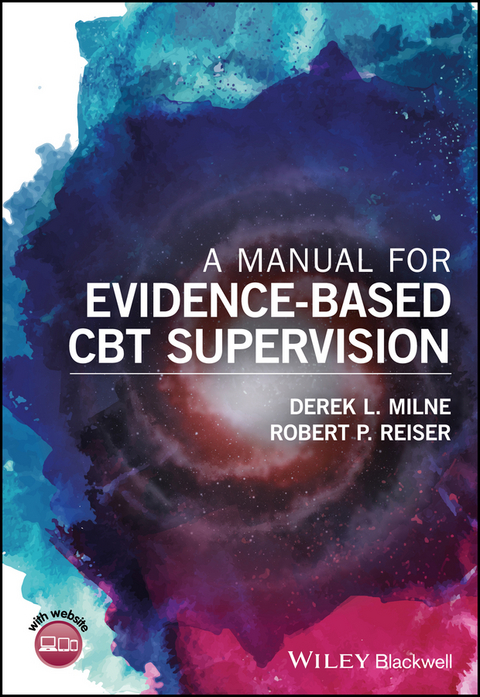
A Manual for Evidence-Based CBT Supervision (eBook)
John Wiley & Sons (Verlag)
978-1-118-97734-7 (ISBN)
The effectiveness of CBT depends on the quality of the supervision and training that is provided to its practitioners. A Manual for Evidence-Based CBT Supervision is intended to significantly strengthen the available resources for training and supporting CBT supervisors. The authors drew on the insights of many accredited CBT supervisors to develop the guidance, and the work is built firmly on an evidence-based approach.
This manual will also be useful for individual supervisors and to those who support and guide trainers and supervisors (e.g., peer groups, consultants, managers, administrators, training directors), as the authors include training supervision guidelines and training materials (e.g., video clips, guidelines and PowerPoint slides).
In summary, this manual provides critical guidance in a number of areas:
- Training resources and evidence based guidance to individual supervisors in a continuing education/professional development workshop format
- Criteria and guidance (including measurement tools and competence standards) to support the certification of supervisors
- Assisting in a 'train the trainers' approach suitable for agency or organization-based training of supervisors
- Coaching and training supervisors and supervisees remotely, through supplementary materials and an interactive website
Derek Milne is a former Director of the Newcastle University Doctorate in Clinical Psychology training programme. In addition to practicing as a clinical psychologist within the National Health Service and teaching within Higher Education, he has been a supervisor, a trainer of supervisors, and a supervision researcher. He wrote Evidence-Based Clinical Supervision (2009) and is the co-editor of The Wiley International Handbook of Clinical Supervision (2014).
Dr. Reiser, a licensed clinical psychologist in California and a Fellow of the Academy of Cognitive Therapy, has been an active clinical supervisor over the past 20 years with 8 years' experience in running a training clinic for an APA approved doctoral program; as a consulting supervisor providing CBT training to Veterans Administration clinicians within the CBT?-D national training program; and, currently, he supervises medical residents in the Department of Psychiatry at the University of California, San Francisco.
The effectiveness of CBT depends on the quality of the supervision and training that is provided to its practitioners. A Manual for Evidence-Based CBT Supervision is intended to significantly strengthen the available resources for training and supporting CBT supervisors. The authors drew on the insights of many accredited CBT supervisors to develop the guidance, and the work is built firmly on an evidence-based approach. This manual will also be useful for individual supervisors and to those who support and guide trainers and supervisors (e.g., peer groups, consultants, managers, administrators, training directors), as the authors include training supervision guidelines and training materials (e.g., video clips, guidelines and PowerPoint slides). In summary, this manual provides critical guidance in a number of areas: Training resources and evidence based guidance to individual supervisors in a continuing education/professional development workshop format Criteria and guidance (including measurement tools and competence standards) to support the certification of supervisors Assisting in a train the trainers approach suitable for agency or organization-based training of supervisors Coaching and training supervisors and supervisees remotely, through supplementary materials and an interactive website
Derek Milne is a former Director of the Newcastle University Doctorate in Clinical Psychology training programme. In addition to practicing as a clinical psychologist within the National Health Service and teaching within Higher Education, he has been a supervisor, a trainer of supervisors, and a supervision researcher. He wrote Evidence-Based Clinical Supervision (2009) and is the co-editor of The Wiley International Handbook of Clinical Supervision (2014). Dr. Reiser, a licensed clinical psychologist in California and a Fellow of the Academy of Cognitive Therapy, has been an active clinical supervisor over the past 20 years with 8 years' experience in running a training clinic for an APA approved doctoral program; as a consulting supervisor providing CBT training to Veterans Administration clinicians within the CBT?-D national training program; and, currently, he supervises medical residents in the Department of Psychiatry at the University of California, San Francisco.
Title Page 5
Copyright Page 6
Contents 9
About the Authors 10
Foreword 12
Preface 13
Acknowledgments 18
Chapter 1 Introduction and Overview of Evidence-Based CBT Supervision 21
What a State We’re in 21
Now You’re Talking! 21
Getting Our Act Together 22
How Can We Act Together? 23
Is This Manual For You? 23
Will it Work? 25
Watch Your Language! 25
What’s New or Different? 27
Where Next? 27
How Do We Get There? 28
Six CBT Supervision Guidelines 28
Guideline Design and Rating of Evidence 28
“Evidence” Includes Research Plus Relevant Theory Plus Expert Consensus 30
Six PowerPoint Slideshows 30
Suggestions about Using the 18 Appended Video Clips with the Manual 31
A Note of Thanks to the 11 Video Participants 31
A disclaimer 31
References 32
Chapter 2 Guiding Principles behind Our CBT Supervision Manual 34
Principle 1: Conceptualize Carefully 34
Definition of CBT Supervision (Part 1) 34
The CBT Supervision Model 35
Definition of CBT Supervision (Part 2) 37
Principle 2: Operationalize Systematically 37
Principle 3: Utilize the Best Available Evidence 39
Relevant Theory 40
Research Evidence 40
Expert Advice 40
Principle 4: Interpret in a Wider Context 41
Principle 5: Disseminate Freely 43
Principle 6: Utilize Correctly 44
Supporting Utilization through Supervision Guidelines and Workshop Manuals 45
Summary and Conclusion 47
References 48
Chapter 3 The Context for CBT Supervision 52
Context Defined 52
A Helpful History of the Role of Context in Effective Training 53
Our Approach to the Training Context 55
The Supervisor Training Taxonomy 57
Train in the Right Transfer Context 57
Train the Right Supervisors 59
Provide the Right Training 61
Supervise the Right Supervisees 63
Get the Training Formula Right: B?=?ƒ(P1, P2, E, I) 69
Conclusion 71
References 72
Chapter 4 Training CBT Supervisors 77
Introduction 77
Background 77
Definition 79
Plan 79
Process Map 80
Recommendation 1: Clarify the Training Goals 80
Relevant Theory 80
Research Evidence 81
Expert Advice 82
Recommendation 2: Provide Structure and Support, So that Training is Properly Managed 83
Relevant Theory 84
Research Evidence 84
Expert Advice 85
Recommendation 3: Facilitate Experiential Learning 86
Relevant Theory 86
Research Evidence 86
Expert Advice 87
Recommendation 4: Offer Feedback 87
Relevant Theory 87
Research Evidence 88
Expert Advice 89
Video Clips 90
Recommendation 5: Evaluate the Workshop’s Effectiveness 90
Relevant Theory 90
Research Evidence 90
Expert Advice 91
Conclusion 91
Appendix: A Guideline for Training CBT Supervisors 92
Recommendation 1: Clarify the Training Goals 92
Recommendation 2: Provide Structure and Support, so that Training is Properly Managed 93
Recommendation 3: Facilitate Experiential Learning, Using a Blend of Training Methods in a Responsive Way 93
Recommendation 4: Offer Feedback So That Workshop Participants Can Fully Understand What Represents Competence 94
Recommendation 5: Evaluate the Workshop’s Effectiveness, to Assess Goal Attainment and Identify Improvements 94
References 95
Chapter 5 The Alliance in CBT Supervision 99
Introduction 99
Relevant Theory 99
Definition 103
Plan 103
Process Map 104
Recommendation 1: Clarify a Learning Agreement 104
Relevant Theory 104
Research Evidence 104
Expert Advice 106
Video Clips 107
Recommendation 2: Agree on Tasks and Create Structure 107
Relevant Theory 108
Research Evidence 108
Expert Advice 109
Video Clips 109
Recommendation 3: Build a Collaborative Bond 110
Relevant Theory 110
Research Evidence 110
Expert Advice 112
Video Clips 113
Recommendation 4: Provide a Role?Model 113
Relevant Theory 113
Research Evidence 114
Expert Advice 115
Video Clips 115
Recommendation 5: Place the Supervision Relationship in Context 115
Conclusion 116
Appendix: A Guideline on the CBT Supervision Alliance 116
Recommendation 1: Clarify the Learning Agreement 116
Recommendation 2: Agree on Tasks and Create Structure 117
Recommendation 3: Build a Collaborative Bond 117
Recommendation 4: Provide a Role Model 118
Recommendation 5: Facilitate Reflection 118
Recommendation 6: Provide Formative Feedback 118
Recommendation 7: Setting the Supervision Relationship in Context 119
References 119
Chapter 6 Goal-Setting in CBT Supervision 124
Introduction 124
Background 124
Definitions 125
Effectiveness 125
Recommendation 1: Provide a Consistent Framework, Scaffolding the Entire Supervision Process 128
Relevant Theory 128
Research Evidence 128
Expert Advice 129
Video Clips 130
Recommendation 2: Engage Supervisee in a Collaborative Effort 130
Relevant Theory 130
Research Evidence 132
Expert Advice 132
Video Clips 133
Recommendation 3: Conduct a Learning Needs Assessment of the Supervisee’s Competences to Establish a Baseline 133
Relevant Theory 133
Research Evidence 134
Expert Advice 135
Video Clips 136
Recommendation 4: Collaboratively Agree to SMARTER Supervision Goals 136
Relevant Theory 136
Research Evidence 137
Expert Advice 140
Video Clips 140
Recommendation 5: To Best Judge Your Actions, Take Due Account of the Context – Factors Such as the Host Organization, Culture, Individual Differences, and Learning Styles 141
Conclusion 141
Appendix: A Guideline for Goal-Setting in CBT Supervision 142
Recommendation 1: Provide a Consistent Framework, Scaffolding the Entire Supervision Process 142
Recommendation 2: Engage the Supervisee in a Collaborative Effort 143
Recommendation 3: Conduct a Learning Needs Assessment of the Supervisee’s Competences in Order to Establish a Baseline 143
Recommendation 4: Collaboratively Agree to SMARTER Supervision Goals 144
Recommendation 5: To Best Judge Your Actions, Take Due Account of the Context – Factors Such as the Host Organization, Culture, Individual Differences, and Learning Styles 144
References 145
Chapter 7 Facilitating Learning in CBT Supervision 148
Introduction 148
Definition 149
Plan 150
Recommendation 1: Use Training Methods to Develop Competence 151
Relevant Theory 151
Research Evidence 152
Expert Advice 153
Recommendation 2: Add Educational Approaches to Develop Capability 154
Relevant Theory 154
Research Evidence 155
Expert Advice 158
Video Clips 158
Recommendation 3: Ask More of Your Supervisees 159
Relevant Theory 159
Research Evidence 160
Expert Advice 161
Video Clips 162
Recommendation 4: Acknowledge and Accept Setbacks 162
Relevant Theory 162
Research Evidence 164
Expert Advice 164
Video Clips 165
Recommendation 5: Take Account of the Context 165
Conclusion 165
Appendix: Facilitating Learning in CBT Supervision 165
Recommendation 1: Use Training Methods to Develop Competence 166
Recommendation 2: Add Educational Approaches to Develop Capability 166
Recommendation 3: Ask More of Your Supervisees 167
Recommendation 4: Acknowledge and Accept Setbacks 167
Recommendation 5: Take Account of the Context 168
References 168
Chapter 8 Feedback and Evaluation in CBT Supervision 173
Introduction 173
Background 173
Definition 175
Effectiveness 175
Recommendation 1: Explain the Need for Feedback 177
Relevant Theory 177
Research Evidence 177
Expert Advice 178
Video Clips 178
Recommendation 2: Define the Gap between Current and Desired Proficiency 178
Relevant Theory 179
Research Evidence 179
Expert Advice 180
Video Clip 180
Recommendation 3: Monitor Progress and Provide Frequent Feedback 180
Relevant Theory 180
Research Evidence 181
Expert Advice 182
Video Clips 182
Recommendation 4: Use Various Sources of Feedback 183
Relevant Theory 183
Research Evidence 184
Expert Advice 185
Recommendation 5: Identify Corrections or Areas for Improvement 186
Relevant Theory 187
Research Evidence 187
Expert Advice 187
Video Clips 188
Recommendation 6: Use Suggestions and Demonstrations to Strengthen Skills 188
Relevant Theory 188
Research Evidence 188
Expert Advice 190
Recommendation 7: Learn the Lessons 190
Relevant Theory 190
Research Evidence 191
Expert advice 191
Conclusion 192
Appendix: Feedback and Evaluation in CBT Supervision 192
Recommendation 1: Explain the Need for Feedback 192
Recommendation 2: Define the Gap between Current and Desired (Future) Proficiency 192
Recommendation 3: Monitor Progress and Provide Frequent Feedback 193
Recommendation 4: Use Various Sources of Feedback 193
Recommendation 5: Pinpoint Corrections or Areas for Improvement 193
Recommendation 6: Use Suggestions and Demonstrations to Strengthen Skills 193
Recommendation 7: Learn the Lessons 194
Recommendation 8: Context 194
References 194
Chapter 9 Support and Guidance in CBT Supervision 199
Introduction: Evidence Supporting the Guideline 199
Definition 199
Process Map 200
Recommendation 1: Clarify the Situation 201
Relevant Theory 201
Research Evidence 201
Expert Advice 202
Recommendation 2: Encourage Emotional Processing and Personal Growth 202
Relevant Theory 202
Research Evidence 203
Expert Consensus 204
Video Clips 204
Recommendation 3: Strengthen the Supervisee’s Coping Strategies 205
Relevant Theory 205
Research Evidence 206
Expert Consensus 206
Video Clips 206
Recommendation 4: Boost Morale, Motivation, and Job Satisfaction 207
Relevant Theory 207
Research 207
Expert consensus 208
Recommendation 5: Encourage the Supervisee to Make Use of Social Support from the Supervisor and Peers 208
Relevant theory 208
Research 208
Expert advice 209
Proscribed activity 210
Video clip 210
Conclusion 210
Appendix: Guideline for Support and Guidance in CBT Supervision 211
Recommendation 1: Clarify The Situation: What is it about the Supervisee’s Workplace That is Challenging? 211
Recommendation 2: Encourage Emotional Processing and Personal Growth 212
Recommendation 3: Strengthen the Supervisee’s Coping Strategies 212
Recommendation 4: Boost Morale, Motivation, and Job Satisfaction 213
Recommendation 5: Encourage the Supervisee to Make Use of Social Support from You and from Peers 213
References 214
Chapter 10 Concluding Remarks 218
The Emperor is Surprisingly Scantily Clad! 218
We Now Have a Clearer and Better Validated Procedural Account of CBT Supervision 220
CBT Supervision Is Catching Up 220
Leaning on Neighboring Literatures is a Major Help 220
Empower Your Supervisees: They Are the Most Underutilized Resource 221
The “Modest” Evidence Base Indicates that CBT Supervision is “Probably Efficacious” 221
The Work Goes on with Your Help 222
References 223
Appendix Video Catalogue 225
Index 232
EULA 236
| Erscheint lt. Verlag | 14.3.2017 |
|---|---|
| Sprache | englisch |
| Themenwelt | Geisteswissenschaften ► Psychologie ► Klinische Psychologie |
| Medizin / Pharmazie ► Gesundheitsfachberufe | |
| Medizin / Pharmazie ► Medizinische Fachgebiete ► Psychiatrie / Psychotherapie | |
| Schlagworte | A-B-C Model • Acceptance and Commitment Therapy • Act • activity scheduling • Amt • Anxiety Management Training • Arbitrary Inferences • automatic thoughts • BAT • behavioral psychotherapy • behavior therapy • Behavioural Activation Therapy • Behavioural Psychotherapy • behaviour therapy • CBT • CBT certification • CBT credentials • CBT supervisors • CFT • Clinical psychology • CMT • cognitive behavioral psychotherapy • Cognitive behavioral therapy (CBT) • Cognitive behavior therapy • cognitive behavioural psychotherapy • Cognitive Behaviour Therapy • Cognitive errors • Cognitive Homework • Cognitive restructuring • cognitive therapy • collaborative empiricism • Compassionate Mind Training • compassion focussed therapy • Coping Skills Program • DBT • Dialectical behaviour therapy • Disputational Methods • Distortion of reality • EMDR • ERP • evidence-based approach • Exposure therapy • Exposure with Response Prevention • Eye Movement Desensitisation/Reprocessing • Graded Exercise • Imaginal Exposure Therapy • Internal Dialogue/Inner Speech • Irrational Belief • Klinische Psychologie • Kognitive Verhaltenstherapie • Label and Mislabeling • MBCT • MBSR • Mindfulness based Cognitive Therapy • mindfulness based stress reduction • Musturbation • overgeneralization • personalization • Polarized thinking • Psychologie • Psychology • Rational Emotive Behaviour Therapy • Rational Emotive Therapy • Rationality • REBT • Relational Frame Theory • RET • RFT • role playing • Selective Abstraction • Self-Instructional Therapy • Shame- Attacking Exercises • Sleep Hygiene Training • Stress-Inoculation Training • training CBT supervisors |
| ISBN-10 | 1-118-97734-3 / 1118977343 |
| ISBN-13 | 978-1-118-97734-7 / 9781118977347 |
| Informationen gemäß Produktsicherheitsverordnung (GPSR) | |
| Haben Sie eine Frage zum Produkt? |
 PDF (Adobe DRM)
Kopierschutz: Adobe-DRM
Adobe-DRM ist ein Kopierschutz, der das eBook vor Mißbrauch schützen soll. Dabei wird das eBook bereits beim Download auf Ihre persönliche Adobe-ID autorisiert. Lesen können Sie das eBook dann nur auf den Geräten, welche ebenfalls auf Ihre Adobe-ID registriert sind.
Details zum Adobe-DRM
Dateiformat: PDF (Portable Document Format)
Mit einem festen Seitenlayout eignet sich die PDF besonders für Fachbücher mit Spalten, Tabellen und Abbildungen. Eine PDF kann auf fast allen Geräten angezeigt werden, ist aber für kleine Displays (Smartphone, eReader) nur eingeschränkt geeignet.
Systemvoraussetzungen:
PC/Mac: Mit einem PC oder Mac können Sie dieses eBook lesen. Sie benötigen eine
eReader: Dieses eBook kann mit (fast) allen eBook-Readern gelesen werden. Mit dem amazon-Kindle ist es aber nicht kompatibel.
Smartphone/Tablet: Egal ob Apple oder Android, dieses eBook können Sie lesen. Sie benötigen eine
Geräteliste und zusätzliche Hinweise
Buying eBooks from abroad
For tax law reasons we can sell eBooks just within Germany and Switzerland. Regrettably we cannot fulfill eBook-orders from other countries.
aus dem Bereich