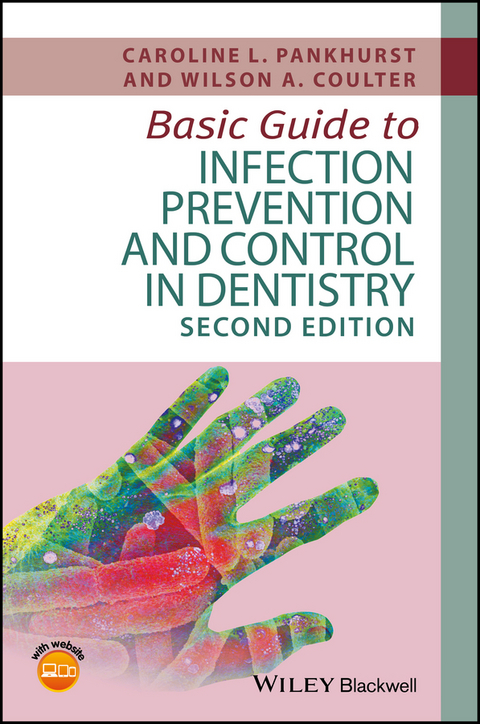
Basic Guide to Infection Prevention and Control in Dentistry (eBook)
John Wiley & Sons (Verlag)
978-1-119-16495-1 (ISBN)
A practical step-by-step guide for all members of the dental team
Thoroughly updated, this new edition ensures all members of the dental team are up to speed on the practical aspects of infection prevention and control. It provides step-by-step guidance on the safe running of a dental practice, clear and concise explanations of the key issues and concepts, an overview of the evidence base, and coverage of legal and regulatory issues about which all staff members need to be aware. With more colour photographs and illustrations than the first edition, it also includes appendices full of useful practical and clinical information, and a companion website offering helpful instructional videos and self-assessment questions.
Key topics include communicable diseases, occupational health and immunization, sharp safe working, hand hygiene, personal protective equipment, disinfection of dental instruments, surface decontamination, dental unit waterlines, clinical waste management, and pathological specimen handling.
An indispensable working resource for the busy dental practice, Basic Guide to Infection Prevention and Control in Dentistry, 2nd Edition is also an excellent primer for dental students.
About the Authors
Dr Caroline L. Pankhurst BSc, BDS, MSc, PhD, MRCPath, is a former Clinical Senior Lecturer in Oral Microbiology at the Dental Institute of King's College London and a Specialist in Oral Microbiology.
Professor Wilson A. Coulter BSc, BDS, PGCert Ed, MSc, PhD, FRCPath, is a Professor of Oral Microbiology at the University of Ulster and former Consultant/Reader in Oral Microbiology at the School of Medicine and Dentistry, Queen's University Belfast.
The authors are dentally qualified medical microbiologists with extensive experience in the field of infection control in dentistry. They have published numerous scientific studies in the field, the findings of which have been presented at conferences around the world. Both authors have served on government advisory bodies on infection control and decontamination, and teach dentists, nurses, therapists and hygienists at both pre- and post-qualification level in the UK and overseas.
Basic Guide to INFECTION PREVENTION AND CONTROL IN DENTISTRY A practical step-by-step guide for all members of the dental team Thoroughly updated, this new edition ensures all members of the dental team are up to speed on the practical aspects of infection prevention and control. It provides step-by-step guidance on the safe running of a dental practice, clear and concise explanations of the key issues and concepts, an overview of the evidence base, and coverage of legal and regulatory issues about which all staff members need to be aware. With more colour photographs and illustrations than the first edition, it also includes appendices full of useful practical and clinical information, and a companion website offering helpful instructional videos and self-assessment questions. Key topics include communicable diseases, occupational health and immunization, sharp safe working, hand hygiene, personal protective equipment, disinfection of dental instruments, surface decontamination, dental unit waterlines, clinical waste management, and pathological specimen handling. An indispensable working resource for the busy dental practice, Basic Guide to Infection Prevention and Control in Dentistry, 2nd Edition is also an excellent primer for dental students.
About the Authors Dr Caroline L. Pankhurst BSc, BDS, MSc, PhD, MRCPath, is a former Clinical Senior Lecturer in Oral Microbiology at the Dental Institute of King's College London and a Specialist in Oral Microbiology. Professor Wilson A. Coulter BSc, BDS, PGCert Ed, MSc, PhD, FRCPath, is a Professor of Oral Microbiology at the University of Ulster and former Consultant/Reader in Oral Microbiology at the School of Medicine and Dentistry, Queen's University Belfast. The authors are dentally qualified medical microbiologists with extensive experience in the field of infection control in dentistry. They have published numerous scientific studies in the field, the findings of which have been presented at conferences around the world. Both authors have served on government advisory bodies on infection control and decontamination, and teach dentists, nurses, therapists and hygienists at both pre- and post-qualification level in the UK and overseas.
"This is a reputable source of infection control and prevention protocols, and this update is necessary to maintain current guidelines on infection control. The book can be used as an additional resource for U.S.-based practices, but it may not be suitable as the sole book because some information is pertinent only to U.K. practice. The book is very thorough if used for proper practice guidelines, but more detail may be necessary based on individual practices" Maria Prassas, RDH, MEd, MOT, University of Illinois at Chicago College of Dentistry on behalf of Doody's
Chapter 1
Essentials of infection control
WHY DO WE NEED INFECTION CONTROL IN DENTISTRY?
Dentists and other members of the dental team are exposed to a wide variety of potentially infectious micro‐organisms in their clinical working environment. The transmission of infectious agents from person to person or from inanimate objects within the clinical environment which results in infection is known as cross‐infection.
The protocols and procedures involved in the prevention and control of infection in dentistry are directed to reduce the possibility or risk of cross‐infection occurring in the dental clinic, thereby producing a safe environment for both patients and staff. In the UK, all employers have a legal obligation under the Health and Safety at Work Act 1974 to ensure that all their employees are appropriately trained and proficient in the procedures necessary for working safely. They are also required by the Control of Substances Hazardous to Health (COSHH) Regulations 2002 to review every procedure carried out by their employees which involves contact with a substance hazardous to health, including pathogenic micro‐organisms. Employers and their employees are also responsible in law to ensure that any person on the premises, including patients, contractors and visitors, is not placed at any avoidable risk, as far as is reasonably practicable.
Thus, management of the risks associated with cross‐infection is important in dentistry. We do not deal in absolutes, but our infection control measures are directed towards reducing, to an acceptable level, the probability or possibility that an infection could be transmitted. This is usually measured against the background infection rate expected in the local population, i.e. the patient, student or member of the dental team is placed at no increased risk of infection when entering the dental environment. Infection control guidance used in dentistry has developed from an assessment of the evidence base, consideration of the best clinical practice and risk assessment (Figure 1.1).
Figure 1.1 Factors influencing the development of infection control guidance in dentistry.
How we manage the prevention of cross‐infection and control the risk of spread of infection in the dental clinic is the subject of this book.
RELATIVE RISK AND RISK PERCEPTION
Risk has many definitions, and the dental profession and general public’s perception of risk can be widely divergent. This difference in interpretation can impact on how safe the general public perceives treatment in a dental clinic to be, especially following sensational media reports of so‐called ‘dirty dentists’ who are accused of failing to sterilize instruments between patients or wash their hands! For example, risks under personal control, such as driving a car, are often perceived as more acceptable than the risks of travelling by airplane or train, where control is delegated to others. Thus, the public often mistakenly perceives travelling by car to be safer than by air, even though the accident statistics do not support this perception. Unseen risks such as those associated with infection, particularly if they are associated with frightening consequences such as AIDS or MRSA, are predictably most alarming to the profession and the public. Risks can be clinical, environmental, financial, economic or political, as well as those affecting public perception and reputation of the dentist or the team.
What makes risks significant? There are a number of criteria which make risks significant and worthy of concern.
- Potential for actual injury to patients or staff
- Significant occupational health and safety hazard
- The possibility of erosion of reputation or public confidence
- Potential for litigation
- Minor incidents which occur in clusters and may represent trends
Understanding what is implied by the term hazard is important when we consider the control of infection. This may be defined as a situation, or substance, including micro‐organisms, with the potential to cause harm. Risk assessment must take into account not only the likelihood or probability that a particular hazard may affect the patient or dental staff, but also the severity of the consequences.
RISK ASSESSMENT AND THE MANAGEMENT DECISION‐MAKING PROCESS
It is the role of managers of dental practices to manage risk. The Management of Health and Safety at Work Regulations 1999 require employers to carry out a risk assessment as an essential part of a risk management strategy. Infection control is an application of risk management to the dental clinical setting.
Risk management involves identification, assessment and analysis of risks and the implementation of risk control procedures designed to eliminate or reduce the risk.
Risk control in dentistry is dependent on a single‐tier approach, in which all patients are treated without discrimination as though they were potentially infectious. The practical interpretation of this concept, known as Standard Infection Control Precautions (SICPs), treats all body fluids, with the exception of sweat, as a source of infection. SICPs are a series of measures and procedures designed to prevent exposure of staff or patients to infected body fluids and secretions. Specifically, dental healthcare workers (HCWs) employ personal barriers and safe behaviours to prevent the two‐way exchange of blood, saliva and respiratory secretions between patient and operator (Box 1.1).
Box 1.1 Summary of standard infection control precautions
- Use of hand hygiene
- Use of gloves
- Use of facial protection (surgical masks, visors or goggles)
- Use of disposable aprons/gowns
- Prevention and management of needlestick and sharps injuries and splash incidents
- Use of respiratory hygiene and cough etiquette
- Management of used surgical drapes and uniforms
- Ensure safe waste management
- Safe handling and decontamination of dental instruments and equipment
Decisions made within an organization, and within practice, should take into account the potential risks that could directly or indirectly affect a patient’s care. If risks are properly assessed, the process can help all healthcare professionals and organizations to set their priorities and improve decision making to reach an optimal balance of risk, benefit and cost. If dental teams systematically identify, assess, learn from and manage all risks and incidents, they will be able to reduce potential and actual risks, and identify opportunities to improve healthcare.
Risk assessment has the following benefits for delivery of dental healthcare.
- Strives for the optimal balance of risk by focusing on the reduction or mitigation of risk while supporting and fostering innovation, so that greatest returns can be achieved with acceptable results, costs and risks.
- Supports better decision making through a solid understanding of all risks and their likely impact.
- Enables dentists to plan for uncertainty, with well‐considered contingency plans which cope with the impact of unexpected events and increase staff, patient and public confidence in the care that is delivered.
- Helps the dentist comply with published standards and guidelines.
- Highlights weakness and vulnerability in procedures, practices and policy changes.
HOW TO PERFORM A RISK ASSESSMENT IN A DENTAL PRACTICE
A risk assessment in dental practice involves the following steps.
- Identify the hazards.
- Decide who might be harmed, and how.
- Evaluate the risks arising from the hazards and decide whether existing precautions are adequate or whether more needs to be done.
- Record your findings, focusing on the controls.
- Review your assessment periodically and revise it if necessary.
Stage 1: Identify the hazards
- Divide your work into manageable categories.
- Concentrate on significant hazards, which could result in serious harm or affect several people.
- Ask your employees for their views; involve the whole dental team.
- Separate activities into operational stages to ensure that there are no hidden hazards.
- Make use of manufacturers’ datasheets to help you spot hazards and put risks in their true perspective.
- Review past accidents and ill health records.
Stage 2: Who might be harmed?
- Identify all members of staff at risk from the significant hazard.
- Do not forget people who only come into contact with the hazard infrequently, e.g. maintenance contractors, visitors, general public and people sharing your workplace.
- Highlight those persons particularly at risk who may be more vulnerable, e.g. trainees and students, pregnant women, immunocompromised patients or staff, people with disabilities, inexperienced or temporary workers and lone workers.
Stage 3: Evaluate the level of risk
- The aim is to eliminate or reduce all risks to a low level.
- For each significant hazard, determine whether the remaining risk, after all precautions have been taken, is high, medium or low.
- Concentrate on the...
| Erscheint lt. Verlag | 9.2.2017 |
|---|---|
| Reihe/Serie | Basic Guide Dentistry Series |
| Basic Guide Dentistry Series | Basic Guide Dentistry Series |
| Sprache | englisch |
| Themenwelt | Medizin / Pharmazie ► Gesundheitsfachberufe |
| Medizin / Pharmazie ► Medizinische Fachgebiete | |
| Studium ► Querschnittsbereiche ► Prävention / Gesundheitsförderung | |
| Medizin / Pharmazie ► Zahnmedizin | |
| Schlagworte | Berufspraxis i. d. Zahnmedizin • Dental Professional Practice • dentistry • Oral Sciences & Technology • Wissenschaft u. Technologie der Mundheilkunde • Zahnmedizin |
| ISBN-10 | 1-119-16495-8 / 1119164958 |
| ISBN-13 | 978-1-119-16495-1 / 9781119164951 |
| Informationen gemäß Produktsicherheitsverordnung (GPSR) | |
| Haben Sie eine Frage zum Produkt? |
 EPUB (Adobe DRM)
Kopierschutz: Adobe-DRM
Adobe-DRM ist ein Kopierschutz, der das eBook vor Mißbrauch schützen soll. Dabei wird das eBook bereits beim Download auf Ihre persönliche Adobe-ID autorisiert. Lesen können Sie das eBook dann nur auf den Geräten, welche ebenfalls auf Ihre Adobe-ID registriert sind.
Details zum Adobe-DRM
Dateiformat: EPUB (Electronic Publication)
EPUB ist ein offener Standard für eBooks und eignet sich besonders zur Darstellung von Belletristik und Sachbüchern. Der Fließtext wird dynamisch an die Display- und Schriftgröße angepasst. Auch für mobile Lesegeräte ist EPUB daher gut geeignet.
Systemvoraussetzungen:
PC/Mac: Mit einem PC oder Mac können Sie dieses eBook lesen. Sie benötigen eine
eReader: Dieses eBook kann mit (fast) allen eBook-Readern gelesen werden. Mit dem amazon-Kindle ist es aber nicht kompatibel.
Smartphone/Tablet: Egal ob Apple oder Android, dieses eBook können Sie lesen. Sie benötigen eine
Geräteliste und zusätzliche Hinweise
Buying eBooks from abroad
For tax law reasons we can sell eBooks just within Germany and Switzerland. Regrettably we cannot fulfill eBook-orders from other countries.
aus dem Bereich