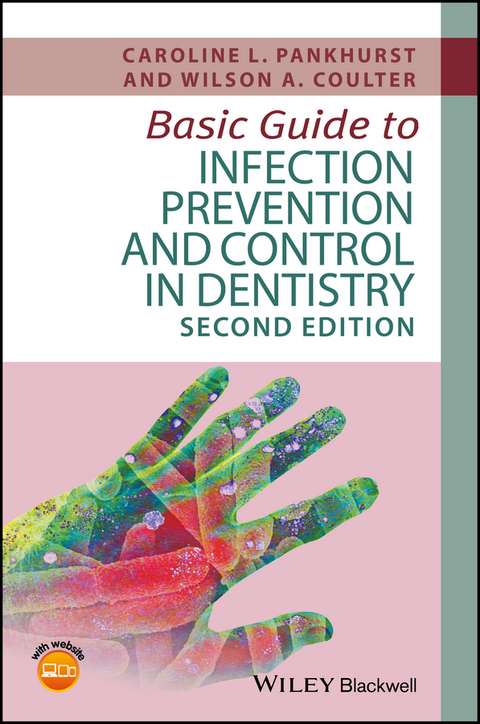
Basic Guide to Infection Prevention and Control in Dentistry (eBook)
John Wiley & Sons (Verlag)
978-1-119-16496-8 (ISBN)
A practical step-by-step guide for all members of the dental team
Thoroughly updated, this new edition ensures all members of the dental team are up to speed on the practical aspects of infection prevention and control. It provides step-by-step guidance on the safe running of a dental practice, clear and concise explanations of the key issues and concepts, an overview of the evidence base, and coverage of legal and regulatory issues about which all staff members need to be aware. With more colour photographs and illustrations than the first edition, it also includes appendices full of useful practical and clinical information, and a companion website offering helpful instructional videos and self-assessment questions.
Key topics include communicable diseases, occupational health and immunization, sharp safe working, hand hygiene, personal protective equipment, disinfection of dental instruments, surface decontamination, dental unit waterlines, clinical waste management, and pathological specimen handling.
An indispensable working resource for the busy dental practice, Basic Guide to Infection Prevention and Control in Dentistry, 2nd Edition is also an excellent primer for dental students.
About the Authors
Dr Caroline L. Pankhurst BSc, BDS, MSc, PhD, MRCPath, is a former Clinical Senior Lecturer in Oral Microbiology at the Dental Institute of King's College London and a Specialist in Oral Microbiology.
Professor Wilson A. Coulter BSc, BDS, PGCert Ed, MSc, PhD, FRCPath, is a Professor of Oral Microbiology at the University of Ulster and former Consultant/Reader in Oral Microbiology at the School of Medicine and Dentistry, Queen's University Belfast.
The authors are dentally qualified medical microbiologists with extensive experience in the field of infection control in dentistry. They have published numerous scientific studies in the field, the findings of which have been presented at conferences around the world. Both authors have served on government advisory bodies on infection control and decontamination, and teach dentists, nurses, therapists and hygienists at both pre- and post-qualification level in the UK and overseas.
Basic Guide to INFECTION PREVENTION AND CONTROL IN DENTISTRY A practical step-by-step guide for all members of the dental team Thoroughly updated, this new edition ensures all members of the dental team are up to speed on the practical aspects of infection prevention and control. It provides step-by-step guidance on the safe running of a dental practice, clear and concise explanations of the key issues and concepts, an overview of the evidence base, and coverage of legal and regulatory issues about which all staff members need to be aware. With more colour photographs and illustrations than the first edition, it also includes appendices full of useful practical and clinical information, and a companion website offering helpful instructional videos and self-assessment questions. Key topics include communicable diseases, occupational health and immunization, sharp safe working, hand hygiene, personal protective equipment, disinfection of dental instruments, surface decontamination, dental unit waterlines, clinical waste management, and pathological specimen handling. An indispensable working resource for the busy dental practice, Basic Guide to Infection Prevention and Control in Dentistry, 2nd Edition is also an excellent primer for dental students.
About the Authors Dr Caroline L. Pankhurst BSc, BDS, MSc, PhD, MRCPath, is a former Clinical Senior Lecturer in Oral Microbiology at the Dental Institute of King's College London and a Specialist in Oral Microbiology. Professor Wilson A. Coulter BSc, BDS, PGCert Ed, MSc, PhD, FRCPath, is a Professor of Oral Microbiology at the University of Ulster and former Consultant/Reader in Oral Microbiology at the School of Medicine and Dentistry, Queen's University Belfast. The authors are dentally qualified medical microbiologists with extensive experience in the field of infection control in dentistry. They have published numerous scientific studies in the field, the findings of which have been presented at conferences around the world. Both authors have served on government advisory bodies on infection control and decontamination, and teach dentists, nurses, therapists and hygienists at both pre- and post-qualification level in the UK and overseas.
Title Page 5
Copyright Page 6
Contents 7
Foreword 10
Preface 11
Acknowledgements 12
About the companion website 13
Chapter 1 Essentials of infection control 15
WHY DO WE NEED INFECTION CONTROL IN DENTISTRY? 15
RELATIVE RISK AND RISK PERCEPTION 16
RISK ASSESSMENT AND THE MANAGEMENT DECISION?MAKING PROCESS 17
HOW TO PERFORM A RISK ASSESSMENT IN A DENTAL PRACTICE 18
Stage 1: Identify the hazards 18
Stage 2: Who might be harmed? 19
Stage 3: Evaluate the level of risk 19
Stage 4: Record your findings 19
Stage 5: Review your assessment 20
HIERARCHY OF RISK MANAGEMENT CONTROL 20
INFECTION CONTROL AND THE LAW 21
LEGAL ACTS UNDER WHICH DENTAL PRACTICE IS CONDUCTED 22
Health and Social Care Act 2008 (Regulated Activities) Regulations 2014 22
Health and Safety at Work Act 1974 23
Control of Substances Hazardous to Health Regulations 2002 24
Reporting of Injuries, Diseases and Dangerous Occurrences (RIDDOR) 2013 25
Pressure Systems Safety Regulations 2000 25
PUBLISHED STANDARDS AND GUIDANCE 26
Policy 26
Procedures 27
Health Technical Memoranda 27
Implementation 27
TEAM APPROACH TO PREVENTION OF INFECTION 27
REFERENCES AND WEBSITES 29
Chapter 2 Communicable diseases in the dental surgery 30
HOW INFECTIONS ARE SPREAD 30
Breaking the chain of infection 31
RESERVOIRS AND SOURCES OF INFECTION 32
INFECTIOUS DISEASES BY ROUTE OF INFECTION IN DENTISTRY 33
INFECTIOUS DISEASE BY ROUTE OF TRANSMISSION IN THE DENTAL SURGERY 34
Direct and indirect contact spread of infection 34
Prevention of person?to?person spread of infection 36
Prevention of indirect spread of infection from equipment 36
Prevention of spread of infection by fluids 36
Percutaneous transmission of infection 36
Hepatitis B virus 36
Hepatitis C virus 37
HIV transmission 38
Spread of infection by air?borne and respiratory secretions 39
Tuberculosis 39
Influenza 40
Pandemic influenza and avian flu 41
EMERGING AND RE-EMERGING PATHOGENS 42
Why do infections emerge? 42
The impact of emerging infections on dentistry 43
Zoonosis and the evolution of novel infections 43
REFERENCES AND WEBSITES 46
Chapter 3 Occupational health and immunization 48
OCCUPATIONAL HEALTH HAZARDS 48
BUILDING A CULTURE OF SAFETY 49
ORGANIZING STAFF HEALTH IN A DENTAL PRACTICE 51
Immunization policy and staff health records 52
Failure to report accidents 52
IMMUNIZATION REQUIREMENTS FOR DENTISTRY 53
PROTECTING WOMEN OF CHILDBEARING AGE 53
MMR vaccine 53
Rubella 55
Varicella immunization 55
Recommendations for varicella vaccination 56
Syphilis 57
OCCUPATIONAL VACCINES TO PROTECT AGAINST HEPATITIS AND TB 57
Hepatitis B vaccine 57
Poor responders and non-responders 58
Non-responders to hepatitis B vaccine 58
BCG vaccine 59
HEALTH CHECKS AND THE CONSEQUENCES OF BLOOD-BORNE VIRUS INFECTION 60
Exposure-prone procedures – ‘bleed-back’ 61
HEALTH CLEARANCE 61
Standard health clearance 61
Additional health checks 62
HIV-infected healthcare workers 64
DUTY OF CARE TO PATIENTS 64
Antidiscrimination legislation 65
REFERENCES AND WEBSITES 65
Chapter 4 Sharp safe working in the dental surgery 67
WHY SHARPS PREVENTION IS IMPORTANT 67
WHEN DO SHARPS INJURIES OCCUR? 69
PREVENTABLE SHARPS INJURIES 70
HOW TO AVOID A SHARPS INJURY 70
Safe handling of sharps 70
Use of safety sharps 72
Sharp safe disposal 73
MANAGING SHARPS INJURIES AND SPLASHES 74
OCCUPATIONAL HEALTH RISK ASSESSMENT FOR BBV EXPOSURE 76
MANAGEMENT OF HEPATITIS C EXPOSURES 76
POSTEXPOSURE PROPHYLAXIS FOR HIV AND HEPATITIS B 78
RECORDING OF SHARPS INJURIES 80
CLINICAL GOVERNANCE AND ACCIDENT RISK ASSESSMENT 80
REFERENCES AND WEBSITES 81
Chapter 5 Hand hygiene 82
HANDS AS A SOURCE OF INFECTION 82
Microbial colonization of the hands 82
Resident and transient bacteria 82
HANDS AS A SOURCE OF HOSPITAL-ACQUIRED INFECTION 83
When to clean your hands 84
HAND HYGIENE AND TEAMWORKING 84
Choosing the correct hand hygiene product 85
Alcohol-based hand rubs 86
HAND HYGIENE TECHNIQUE 90
Remove rings and watches 90
Standard hand hygiene technique 90
Good practice guidance for hand hygiene 94
Hand hygiene technique: hand washing 94
Hand hygiene technique using an alcohol-based hand rub 94
Surgical hand hygiene 95
Consumables and facilities for hand hygiene area 95
HAND CARE AND PREVENTION OF DERMATITIS 96
Protective effect of emollient hand creams 97
REFERENCES AND WEBSITES 98
Chapter 6 Personal protection for prevention of cross?infection 99
WHY WE WEAR PERSONAL PROTECTIVE EQUIPMENT 99
THE ROLE OF GLOVES 100
Good practice guide: safe use of gloves in the dental surgery 101
CHOOSING A SUITABLE GLOVE FOR THE TASK 102
MANAGING AN ALLERGY TO NRL GLOVES 102
Creating a low-latex or latex-free environment 104
MANAGING LATEX ALLERGIES IN PATIENTS 104
Good practice guide: managing latex allergies 104
MASKS AND WHEN TO USE THEM 105
Respiratory protective equipment 105
Surgical masks 105
Good practice guide: how to use a surgical mask 106
Respirator masks 107
Good practice guide: fitting and wearing a respirator mask 108
Respiratory hygiene 109
PROTECTIVE EYEWEAR AND VISORS 109
Good practice guide: goggles and face shields 110
Good practice guide: donning protective equipment 111
Good practice guide: removing protective equipment 111
PROTECTION DURING CARDIOPULMONARY RESUSCITATION 111
TUNICS AND UNIFORMS 113
Uniform styles 113
Working bare below the elbow 113
Good practice guide: wearing and cleaning of workwear 113
PROTECTIVE BARRIERS – PLASTIC APRONS AND SURGICAL GOWNS 116
Plastic aprons 116
Surgical gowns and surgical drapes 118
REFERENCES AND WEBSITES 118
Chapter 7 Sterilization and disinfection of dental instruments 119
DECONTAMINATION CYCLE 119
WHY HAS CLEANING BECOME SO IMPORTANT? 120
LEGAL REQUIREMENTS AND TECHNICAL STANDARDS FOR DECONTAMINATION 121
Complying with the law 121
Technical standards for decontamination 123
WHERE SHOULD INSTRUMENT DECONTAMINATION TAKE PLACE? 124
DESIGN OF DEDICATED DECONTAMINATION UNITS 124
Temporal separation 129
PURCHASING OF DENTAL EQUIPMENT 131
CLEANING OF DENTAL INSTRUMENTS 132
Automated versus manual cleaning 132
Preventing corrosion of instruments 132
Manual cleaning of instruments 133
Passive layer and choice of cleaning agents 133
Personal protective clothing 133
Good practice guide: manual instruments cleaning 134
DISINFECTION OF DENTAL HANDPIECES 135
Automated methods 135
MECHANICAL CLEANING WITH AN ULTRASONIC BATH 138
Good practice guide: using an ultrasonic bath 139
Good practice guide: maintenance and validation of ultrasonic bath 140
THERMAL WASHER DISINFECTORS 140
INSTRUMENT INSPECTION 144
DENTAL INSTRUMENT STERILIZATION 144
SUITABILITY OF STERILIZER FOR DIFFERENT LOADS 144
STERILIZER INSTALLATION AND VALIDATION 145
STEAM PURITY AND MAINTENANCE OF WATER RESERVOIR CHAMBER 146
Types of water and steam purity 146
Problems associated with recycled water 147
Good practice guide: daily maintenance of sterilizer reservoir 147
HOW DO YOU KNOW YOUR STERILIZER IS WORKING? 147
Periodic testing of the sterilizer 147
How to perform the daily automatic control test 148
Test failures 149
Steam penetration test 149
Chemical process indicators 150
LOADING THE STERILIZER 152
Good practice guide: loading the sterilizer 152
STORAGE OF WRAPPED AND UNWRAPPED INSTRUMENTS 152
Instruments sterilized in a non?vacuum sterilizer for immediate use 152
Sterile instrument storage 153
Storage of unwrapped instruments 153
Stock control and instrument traceability 155
Out-of-hours use of instruments 155
SINGLE-USE ITEMS 156
Quality of single-use instruments 157
VARIANT CJD AND RATIONALE FOR SINGLE?USE ITEMS 158
DISINFECTION OF HEAT-SENSITIVE EQUIPMENT AND HARD SURFACES 158
DISINFECTION OF DENTAL IMPRESSIONS 160
Method for disinfection of dental impressions 160
REFERENCES AND WEBSITES 160
Chapter 8 Dental surgery design, surface decontamination and managing aerosols 162
DENTAL SURGERY DESIGN 162
Room size 163
Work surfaces and zoning 163
Flooring 164
Walls 164
Soft furnishings 164
Dental chair 164
Lighting 164
Hand basins and hand hygiene 165
Clinical waste sacks and sharps containers 166
Storage of equipment and chemicals 166
Ventilation 167
Protective clothing 167
SURVIVAL OF MICROBES ON SURGERY SURFACES 167
GENERAL CLEANING 168
Cleaning plan 168
Microfibre cloths 169
Colour coding of cleaning materials 169
Storage of cleaning materials 170
SURFACE DECONTAMINATION IN THE DENTAL SURGERY 170
Zoning of work areas 171
Computer equipment 174
Managing aspirators, suction apparatus and spittoons 175
Saliva ejectors 175
MANAGEMENT OF AEROSOLS AND SPLATTER 176
Control of aerosols and splatter 177
MANAGING LARGE BLOOD OR BODY FLUID SPILLAGES 178
Splashes and spots 179
Small spills (< 30?mL)
Large spills (> 30?mL)
REFERENCES AND WEBSITES 180
Chapter 9 Management of dental unit waterlines 181
WHAT ARE BIOFILMS? 181
RISK TO STAFF AND PATIENT HEALTH FROM DENTAL UNIT WATERLINES 182
Legionellae 184
Pseudomonas 185
Mycobacterium 186
Endotoxin 187
METHODS TO REDUCE THE BIOFILM 187
Value and limitations of flushing 188
Biocides 189
Alternative measures to biocides 190
Type of water used to supply the DUWL 191
Prevention of back-siphonage into the mains 191
Irrigation water for invasive procedures 192
CONTROL OF LEGIONELLAE IN THE DENTAL PRACTICE WATER SUPPLY 194
REFERENCES AND WEBSITES 194
Chapter 10 Healthcare waste management 196
LEGISLATION ON HAZARDOUS WASTE DISPOSAL 196
TYPES OF WASTE 198
WHAT IS HAZARDOUS WASTE? 199
CLINICAL WASTE SEGREGATION AND CLASSIF?ICATION 203
Classification of infectious clinical waste 204
Classification of anatomical waste and teeth 205
Classification of gypsum waste 206
Classification of prescription-only medicines waste 206
Classification of radiographic materials 207
AMALGAM WASTE AND INSTALLATION O?F AMALGAM SEPARATORS 207
MERCURY IN THE ENVIRONMENT 207
Fitting of amalgam separators 208
DISPOSAL AND HANDLING OF HAZARDOUS WASTE IN THE SURGERY 209
Good practice guide: handling of hazardous waste sacks 209
Good practice guide: handling of hazardous waste receptacles 209
SAFE HANDLING OF CLINICAL WASTE PRIOR TO DISPOSAL 211
BULK STORAGE OF WASTE FOR COLLECTION 211
Good practice guide: bulk storage of waste 212
TRANSPORT OF HAZARDOUS WASTE 212
Completing consignment notes for hazardous waste and keeping records 212
BENEFITS OF WASTE SEGREGATION 212
REFERENCES AND WEBSITES 213
Chapter 11 Transport and postage of diagnostic specimens, impressions and equipment for servicing and repair 215
LEGAL FRAMEWORK 215
COLLECTING SPECIMENS 216
Good practice guide: reducing the risk of cross-infection or injury when handling specimens 216
TRANSPORT OF SPECIMENS TO THE LABORATORY 217
Sending non-fixed diagnostic specimens 217
TRANSPORT RESTRICTIONS 218
Public transport 218
Mail and courier services 219
FIXED PATHOLOGICAL SPECIMENS 219
Packaging 219
TRANSPORTING IMPRESSIONS 220
EQUIPMENT TO BE SENT FOR SERVICE OR REPAIR 220
REFERENCES AND WEBSTES 221
Appendix 222
Index 231
EULA 237
"This is a reputable source of infection control and prevention protocols, and this update is necessary to maintain current guidelines on infection control. The book can be used as an additional resource for U.S.-based practices, but it may not be suitable as the sole book because some information is pertinent only to U.K. practice. The book is very thorough if used for proper practice guidelines, but more detail may be necessary based on individual practices" Maria Prassas, RDH, MEd, MOT, University of Illinois at Chicago College of Dentistry on behalf of Doody's
| Erscheint lt. Verlag | 3.2.2017 |
|---|---|
| Reihe/Serie | Basic Guide Dentistry Series | Basic Guide Dentistry Series |
| Sprache | englisch |
| Themenwelt | Medizin / Pharmazie ► Gesundheitsfachberufe |
| Medizin / Pharmazie ► Medizinische Fachgebiete | |
| Studium ► Querschnittsbereiche ► Prävention / Gesundheitsförderung | |
| Medizin / Pharmazie ► Zahnmedizin | |
| Schlagworte | Berufspraxis i. d. Zahnmedizin • Dental Professional Practice • dentistry • Oral Sciences & Technology • Wissenschaft u. Technologie der Mundheilkunde • Zahnmedizin |
| ISBN-10 | 1-119-16496-6 / 1119164966 |
| ISBN-13 | 978-1-119-16496-8 / 9781119164968 |
| Informationen gemäß Produktsicherheitsverordnung (GPSR) | |
| Haben Sie eine Frage zum Produkt? |
 PDF (Adobe DRM)
Kopierschutz: Adobe-DRM
Adobe-DRM ist ein Kopierschutz, der das eBook vor Mißbrauch schützen soll. Dabei wird das eBook bereits beim Download auf Ihre persönliche Adobe-ID autorisiert. Lesen können Sie das eBook dann nur auf den Geräten, welche ebenfalls auf Ihre Adobe-ID registriert sind.
Details zum Adobe-DRM
Dateiformat: PDF (Portable Document Format)
Mit einem festen Seitenlayout eignet sich die PDF besonders für Fachbücher mit Spalten, Tabellen und Abbildungen. Eine PDF kann auf fast allen Geräten angezeigt werden, ist aber für kleine Displays (Smartphone, eReader) nur eingeschränkt geeignet.
Systemvoraussetzungen:
PC/Mac: Mit einem PC oder Mac können Sie dieses eBook lesen. Sie benötigen eine
eReader: Dieses eBook kann mit (fast) allen eBook-Readern gelesen werden. Mit dem amazon-Kindle ist es aber nicht kompatibel.
Smartphone/Tablet: Egal ob Apple oder Android, dieses eBook können Sie lesen. Sie benötigen eine
Geräteliste und zusätzliche Hinweise
Buying eBooks from abroad
For tax law reasons we can sell eBooks just within Germany and Switzerland. Regrettably we cannot fulfill eBook-orders from other countries.
aus dem Bereich