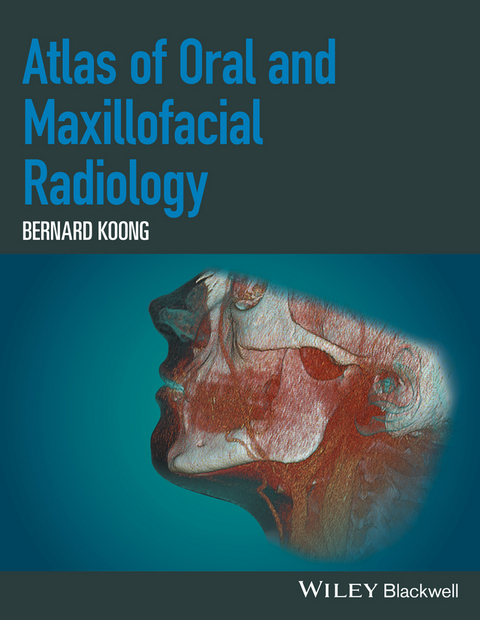
Atlas of Oral and Maxillofacial Radiology (eBook)
John Wiley & Sons (Verlag)
978-1-118-93963-5 (ISBN)
- Unique lesion-based problem solving chapter makes this an easy-to-use reference in a clinical setting
- Includes 2D intraoral radiography, the panoramic radiograph, cone beam CT, multidetector CT and MRI
- Multiple cases are presented in order to demonstrate the variation in the radiological appearances of conditions affecting the jaws and teeth
- Special focus on conditions where diagnostic imaging may substantially contribute to diagnosis
- Features a useful chapter covering the temporomandibular joint
Bernard Koong is a highly experienced oral and maxillofacial radiologist practicing full time multimodality clinical radiology. He is a founding partner of Envision Medical Imaging, a multidisciplinary fully comprehensive private radiology group in Australia and also consults internationally. He has personally reported over 200,000 radiological studies involving a wide variety of imaging techniques.
Having completed his specialist training in oral and maxillofacial radiology at the University of Toronto, Bernard now holds the position of Clinical Professor at the University of Western Australia, where he coordinates and delivers the oral and maxillofacial radiology lectures for the undergraduate and postgraduate courses. He also has a long history of providing oral and maxillofacial radiology courses for other universities as well as surgery and radiology programmes across Australasia. As an invited speaker, Bernard has presented more than 100 lectures to the dental and medical professions internationally, and is a member of the Editorial Board of Clinical Oral Implant Research.
The Atlas of Oral and Maxillofacial Radiology presents an extensive case collection of both common and less common conditions of the jaws and teeth. Focusing on the essentials of radiologic interpretation, this is a go-to companion for clinicians in everyday practice who have radiologically identified a potential abnormality, as well as a comprehensive study guide for students at all levels of dentistry, surgery and radiology. Unique lesion-based problem solving chapter makes this an easy-to-use reference in a clinical setting Includes 2D intraoral radiography, the panoramic radiograph, cone beam CT, multidetector CT and MRI Multiple cases are presented in order to demonstrate the variation in the radiological appearances of conditions affecting the jaws and teeth Special focus on conditions where diagnostic imaging may substantially contribute to diagnosis Features a useful chapter covering the temporomandibular joint
Bernard Koong is a highly experienced oral and maxillofacial radiologist practicing full time multimodality clinical radiology. He is a founding partner of Envision Medical Imaging, a multidisciplinary fully comprehensive private radiology group in Australia and also consults internationally. He has personally reported over 200,000 radiological studies involving a wide variety of imaging techniques. Having completed his specialist training in oral and maxillofacial radiology at the University of Toronto, Bernard now holds the position of Clinical Professor at the University of Western Australia, where he coordinates and delivers the oral and maxillofacial radiology lectures for the undergraduate and postgraduate courses. He also has a long history of providing oral and maxillofacial radiology courses for other universities as well as surgery and radiology programmes across Australasia. As an invited speaker, Bernard has presented more than 100 lectures to the dental and medical professions internationally, and is a member of the Editorial Board of Clinical Oral Implant Research.
Title Page 5
Copyright Page 6
Contents 7
List of Contributors 13
Preface 14
Acknowledgements 15
How to Use This Atlas 16
Chapter 1 Problem Solving Diagrams 17
1.1 Opaque and largely opaque conditions related to the jaws 17
Common conditions 17
Less common conditions 17
1.2 Lucent lesions of the jaws 18
Common conditions 18
Less common conditions 18
1.3 Mixed density lesions of the jaws 19
Common conditions 19
Less common conditions 19
Chapter 2 Radiological Anatomy 20
2.1 The panoramic radiograph 20
2.2 Identification of teeth – FDI (Fédération Dentaire Internationale) World Dental Federation notation 24
2.3 Cone beam computed tomography 27
Axial 27
Sagittal 34
Coronal 38
Chapter 3 Anomalies Related to the Teeth 44
3.1 Supernumerary teeth (Figures 3.1–3.5) 44
3.2 Congenital absence (Figures 3.6 and 3.7) 46
3.3 Delayed and early development/eruption 47
3.4 Ectopic development and eruption (Figures 3.8–3.16) 48
3.5 Impaction (Figures 3.17–3.23) 52
3.6 Macrodontia (Figure 3.24) 56
3.7 Microdontia (Figures 3.25–3.27) 57
3.8 Dilaceration (Figure 3.28) 58
3.9 Enamel pearl (Figure 3.29) 58
3.10 Talon cusp (Figure 3.30) 59
3.11 Dens invaginatus (Figures 3.31 and 3.32) 60
3.12 Dens evaginatus (Figure 3.33) 61
3.13 Taurodontism (Figure 3.34) 61
3.14 Fusion (Figures 3.35 and 3.36) 62
3.15 Gemination (Figure 3.37) 63
3.16 Concrescence (Figure 3.38) 63
3.17 Amelogenesis imperfecta (Figure 3.39) 64
3.18 Dentinogenesis imperfecta (Figure 3.40) 65
3.19 Dentin dysplasia (Figures 3.41 and 3.42) 66
3.20 Secondary and tertiary dentin (Figures 3.43 and 3.44) 67
3.21 Pulp stones (Figure 3.45) 68
3.22 Hypercementosis (Figures 3.46 and 3.47 see also Figure 5.39)
Chapter 4 Conditions Related to Loss of Tooth Structure 70
4.1 Caries (Figures 4.1–4.12) 70
Interproximal caries (Figures 4.1–4.7) 70
Pit and fissure caries (Figures 4.8–4.10 see also Figure 5.4)
Root caries (Figure 4.11) 71
4.2 Attrition (Figure 4.13) 75
4.3 Abrasion (Figure 4.14) 76
4.4 Erosion (Figure 4.15) 77
4.5 Internal resorption (Figures 4.16 and 4.17) 77
4.6 External resorption (Figure 4.18 see also Figures 3.9, 3.11, 3.21, 3.23, 5.8, 5.39, 7.13, 7.16–7.18, 8.15, 10.1,10.5, 10.6, 12.9)
4.7 Fracture related to trauma 79
Chapter 5 Inflammatory Lesions of the Jaws 80
5.1 Periapical inflammatory lesions (Figures 5.1–5.17) 80
Post-treatment appearances of periapical lesions (Figures 5.15–5.17) 81
Re-establishment of normal periapical structures 81
Variant trabecular architecture (Figure 5.16) 81
Fibrous healing (Figure 5.17) 81
Periapical osseous prominence at the maxillary sinus base (Figure 5.15) 82
5.2 Periodontal inflammatory disease (Figures 5.18–5.34) 90
5.3 Pericoronitis (Figures 5.35–5.39) 99
5.4 Osteomyelitis of the jaws (Figures 5.40–5.42) 102
5.5 Dentoalveolar and jaw infections involving the adjacent soft tissues (Figures 5.43–5.46) 104
Chapter 6 Osteoradionecrosis and Osteonecrosis of the Jaws 108
6.1 Osteoradionecrosis of the jaws (Figures 6.1–6.6) 108
6.2 Osteonecrosis of the jaws (Figure 6.7) 112
Chapter 7 Hamartomatous/Hyperplastic Bony Opacities and Prominences Involving the Jaws 113
7.1 Torus palatinus (Figures 7.1 and 7.2) 113
7.2 Torus mandibularis (Figures 7.3 and 7.4) 114
7.3 Exostoses (Figures 7.5–7.7) 116
7.4 Bone island (Figures 7.8–7.19) 117
Chapter 8 Cysts and Cyst?like Lesions Involving the Jaws 124
ODONTOGENIC CYSTS AND CYST-LIKE LESIONS 124
8.1 Radicular cyst (Figures 8.1–8.10) 124
8.2 Residual cyst (Figures 8.11 and 8.12) 130
8.3 Dentigerous cyst (Figures 8.13–8.23) 131
8.4 Buccal bifurcation cyst (Figures 8.24–8.26) 138
8.5 Keratocystic odontogenic tumour (Figures 8.27–8.31) 140
8.6 Basal cell naevus syndrome (Figure 8.32) 143
8.7 Lateral periodontal cyst (Figures 8.33 and 8.34) 144
8.8 Glandular odontogenic cyst (Figure 8.35) 146
NON-ODONTOGENIC CYSTS AND CYST-LIKE LESIONS 146
8.9 Simple bone cyst (Figures 8.36–8.45) 146
8.10 Nasopalatine duct cyst (Figures 8.46–8.48) 152
8.11 Nasolabial cyst (Figure 8.49) 154
Chapter 9 Fibro-osseous Lesions of the Jaws 156
9.1 Fibrous dysplasia (Figures 9.1–9.10 also see Figure 20.17)
9.2 Cemento-osseous dysplasia (Figures 9.11–9.21) 161
9.3 Ossifying fibroma (Figures 9.22 and 9.23) 166
Chapter 10 Benign Tumours Involving the Jaws 169
ODONTOGENIC BENIGN TUMOURS 169
10.1 Ameloblastoma (Figures 10.1–10.9) 169
10.2 Calcifying epithelial odontogenic tumour (Figure 10.10) 175
10.3 Odontoma (Figures 10.11–10.14) 176
10.4 Ameloblastic fibroma (Figure 10.15) 178
10.5 Ameloblastic fibro?odontoma (Figures 10.16–10.18) 179
10.6 Adenomatoid odontogenic tumour (Figure 10.19) 181
10.7 Calcifying cystic odontogenic tumour (Figure 10.20) 182
10.8 Odontogenic myxoma (Figures 10.21 and 10.22) 183
10.9 Cementoblastoma (Figure 10.23) 185
NON-ODONTOGENIC BENIGN TUMOURS INVOLVING THE JAWS 186
10.10 Osteoma (Figures 10.24–10.29) 186
10.11 Gardner syndrome (Figures 10.30–10.32) 189
10.12 Osteochrondroma 190
10.13 Schwannoma (within the jaws) (Figure 10.33) 190
10.14 Osteoblastoma 191
10.15 Osteoid osteoma (Figure 10.34) 192
10.16 Desmoplastic fibroma (Figure 10.35) 193
Chapter 11 Malignant Tumours Involving the Jaws 194
11.1 Imaging of malignancies involving the jaws 194
11.2 Radiological features of malignancies involving the jaws (Figures 11.1–11.18) 194
11.3 Features of some malignancies which more commonly involve the jaws 195
Chapter 12 Vascular Anomalies of the Mid? and Lower Face 207
VASCULAR TUMOURS (PROLIFERATIVE NEOPLASMS) 207
12.1 Haemangioma (Figures 12.1 and 12.2) 207
12.2 Other lesions included in this grouping 209
VASCULAR MALFORMATIONS 209
12.3 Low-flow lesions 209
Venolymphatic malformations or lymphangiomas (Figure 12.3) 209
Capillary malformations 209
Venocavernous malformations (Figures 12.4–12.8) 210
12.4 High-flow lesions 213
Arteriovenous malformations (Figure 12.9) 213
Chapter 13 Other Diseases Affecting the Jaws 215
13.1 Central giant cell granuloma (Figures 13.1–13.5) 215
13.2 Cherubism (Figure 13.6) 219
13.3 Aneurysmal bone cyst (Figure 13.7) 220
13.4 Langerhans cell histiocytosis (Figures 13.8–13.12 see also Figure 20.16)
13.5 Paget disease of bone (Figure 13.13 see also Figure 20.18)
Chapter 14 Other Morphological Anomalies Involving the Jaws 226
14.1 Hemimandibular hyperplasia (Figures 14.1–14.3) 226
14.2 Acromegaly 228
14.3 Mandibular and hemimandibular hypoplasia (Figures 14.4–14.6) 228
14.4 Stafne defect (Figures 14.7–14.9) 230
14.5 Cleft lip and palate (Figures 14.10–14.13) 232
Chapter 15 Other Systemic Disorders that may Involve the Jaws 235
15.1 Osteopenic appearance of the jaws (Figure 15.1) 235
15.2 Increased density of the jaws 237
15.3 Alterations in jaw size 237
15.4 Changes to jaw morphology 237
15.5 Dentoalveolar alterations 237
Chapter 16 Common Opacities in the Orofacial Soft Tissues 238
16.1 Tonsillar calcifications (Figures 16.1–16.3) 238
16.2 Lymph node calcifications (Figures 16.4–16.6) 240
16.3 Stylohyoid ligamentous ossification (Figures 16.7 and 16.8) 241
16.4 Thyroid and triticeous cartilage calcifications (Figures 16.9–16.11) 242
16.5 Arterial calcifications related to arteriosclerosis (Figures 16.12–16.16) 244
16.6 Phlebolith (see Figure 12.7) 247
16.7 Sialoliths (Figures 16.17–16.22 see also Figures 16.23–16.26)
16.8 Paranasal and nasal calcifications (see Figure 19.19) 252
16.9 Myositis ossificans (Figure 16.27) 252
Chapter 17 Trauma and Fractures 254
TEETH AND SUPPORTING STRUCTURES 254
17.1 Subluxation (Figure 17.1 see Figure 17.6)
17.2 Luxation (Figures 17.2–17.4) 255
17.3 Avulsion (Figure 17.5) 256
17.4 Fracture of teeth (Figures 17.6–17.13) 257
17.5 Mandibular fractures (Figures 17.15–17.18) 261
17.6 Nasal fracture (Figure 17.19) 263
17.7 Zygomaticomaxillary complex fracture (Figure 17.20) 264
17.8 Orbital blow?out fracture (Figure 17.21) 264
17.9 Le Fort fractures 265
Le Fort I 265
Le Fort II 265
Le Fort III 265
17.10 Other complex facial fractures (Figure 17.22) 265
Chapter 18 Temporomandibular Joints 266
18.1 Imaging the temporomandibular joints 266
Panoramic radiograph 266
Other plain film studies and dedicated conventional tomography 266
Cone beam computed tomography (CBCT) 266
Multidetector (multislice) computed tomography (MDCT) 266
Magnetic resonance imaging (MRI) 266
18.2 Condylar hyperplasia (Figures 18.1 and 18.2 see also Figures 14.1–14.3 and 15.3)
18.3 Coronoid hyperplasia (Figure 18.3) 268
18.4 Condylar hypoplasia (Figures 18.4–18.6) 269
18.5 Bifid condyle (Figure 18.7) 271
18.6 Internal derangements of the temporomandibular joint (Figures 18.8–18.17) 272
18.7 Ganglion cysts (Figures 18.18 and 18.19) 277
18.8 Degenerative joint disease (Figures 18.20–18.30) 278
18.9 Inflammatory and erosive arthropathies (Figures 18.31–18.34) 284
18.10 Osteochrondroma (Figure 18.35) 286
18.11 Malignant tumours (Figures 18.36–18.38 see also Figures 11.3 and 11.4)
18.12 Synovial chondromatosis (Figure 18.39) 288
18.13 Calcium pyrophosphate deposition disease (Figure 18.40) 289
18.14 Ankylosis (Figures 18.41 and 18.42) 290
18.15 Other lesions affecting the temporomandibular joints 291
18.16 Other non-temporomandibular joint conditions contributing to pain/dysfunction in the region of the temporomandibular joint and related structures (Figures 18.43 and 18.44 see also Figures 18.38 and 16.27)
Chapter 19 Nasal Cavity, Paranasal Sinuses and Upper Aerodigestive Tract Impressions 293
NASAL CAVITY AND PARANASAL SINUSES 293
19.1 Normal variations and developmental anomalies 293
Variations in pneumatisation (Figures 19.1–19.4) 293
Accessory ethmoid air cells (Figure 19.5) 293
Aberrant transiting structures 293
Accessory ostia (Figure 19.6) 293
Aberrant anatomical position 293
Others 293
19.2 Odontogenic conditions and dentoalveolar lesions 296
19.3 Findings related to dental procedures 296
Oroantral communication (Figures 19.7–19.11) 296
Tooth displacement (Figures 19.10 and 19.11) 296
Dental implants (Figures 19.12–19.15) 298
Periapical osseous healing 298
19.4 Inflammatory paranasal sinus disease 300
Acute rhinosinusitis (Figures 19.16 and 19.17) 300
Chronic rhinosinusitis (Figure 19.18) 302
Silent sinus syndrome (Figure 19.18) 303
Mucous retention cysts (Figure 19.19) 303
Sinonasal mucoceles (Figure 19.20) 304
Fungal rhinosinusitis 305
Allergic fungal rhinosinusitis (Figure 19.21) 305
Sinonasal mycetoma (Figure 19.22) 306
Invasive fungal rhinosinusitis (Figure 19.23) 307
Sinonasal polyposis (Figure 19.24) 308
Antrochoanal polyps (Figure 19.25) 309
Granulomatous sinonasal inflammatory disease 309
Granulomatosis with polyangiitis (previously known as Wegener granulomatosis) (Figure 19.26) 310
Sarcoidosis 310
Nasal cocaine necrosis (Figure 19.27) 311
19.5 Neoplastic disease 312
Benign tumours 312
Juvenile angiofibroma (Figure 19.28) 312
Sinus osteoma 312
Sinonasal inverting papilloma (Figure 19.29) 313
Sinonasal cancers 313
Sinonasal adenocarcinoma (Figure 19.32) 316
Minor salivary gland adenoid cystic carcinoma 316
Sinonasal undifferentiated carcinoma 316
Esthesioneuroblastoma or olfactory neuroblastoma (Figure 19.33) 317
Lymphoma (Figure 19.34) 318
PHARYNGEAL AIRWAY IMPRESSIONS 319
19.6 Summary of causes of nasopharyngeal narrowing 319
19.7 Summary of causes of oropharyngeal narrowing 319
19.8 Malignant disease 319
Nasopharyngeal carcinoma (NPC) (Figure 19.35) 319
Oropharyngeal squamous cell carcinoma (Figure 19.36) 320
19.9 Benign entities 321
Tornwald cyst (Figure 19.37) 321
Tortuous carotid arteries (Figure 19.38) 321
Lingual thyroid (Figure 19.39) 321
Foreign body ingestion 323
19.10 Inflammatory lesions 323
Tonsil hypertrophy and adenoid hypertrophy (Figure 19.40) 323
Retention cysts 323
Tonsillitis (Figure 19.41) 324
Tonsillar and peritonsillar abscess (Figure 19.42) 325
Retropharyngeal space abscess (Figure 19.43) 326
Acute longus colli tendinitis (Figure 19.44) 326
19.11 Retropharyngeal adenopathy (Figures 19.35 and 19.43b) 327
Chapter 20 The Skull Base 328
CONSTITUTIONAL AND DEVELOPMENTAL VARIATIONS 328
20.1 Ossification of the interclinoid ligaments (Figure 20.1) 328
20.2 Benign notochordal cell tumour (ecchordosis physaliphora) (Figure 20.2) 329
20.3 Persistence of the craniopharyngeal canal (Figure 20.3) 330
20.4 Arrested pneumatisation of the skull base (Figure 20.4) 331
20.5 Meningoencephaloceles (Figure 20.5) 332
20.6 Nasolacrimal duct mucocele (dacryocystocele) (Figure 20.6) 333
20.7 Empty sella syndrome (Figure 20.7) 334
LESIONS OF THE SKULL BASE 335
20.8 Pituitary macroadenoma (Figure 20.8) 335
20.9 Clival chordoma (Figure 20.9) 336
20.10 Skull base meningioma (Figures 20.10 and 20.11) 337
20.11 Skull base metastasis (Figure 20.12) 339
20.12 Chondrosarcoma (Figure 20.13 see also Figure 11.12)
20.13 Lymphoma (Figure 20.14) 341
20.14 Skull base plasmacytoma/multiple myeloma (Figure 20.15) 342
20.15 Langerhans cell histiocytosis (Figure 20.16) 343
20.16 Fibrous dysplasia (Figure 20.17) 343
20.17 Paget disease (Figure 20.18) 344
20.18 Petrous apex lesions (Figures 20.5 and 20.19–20.22) 345
EXPANSION OF SKULL BASE FORAMINA 347
20.19 Nerve sheath tumours (Figure 20.23) 347
20.20 Perineural metastatic disease 348
Chapter 21 The Cervical Spine 349
CONGENITAL VARIATIONS (Figures 21.1–21.5) 349
DEGENERATIVE DISEASE 352
21.1 Cervical spondylosis (Figure 21.6) 352
21.2 Diffuse idiopathic hyperostosis (Figure 21.7) 353
21.3 Ossification of the posterior longitudinal ligament (Figure 21.8) 354
INFLAMMATORY AND DEPOSITIONAL CONDITIONS 355
21.4 Rheumatoid arthritis (Figure 21.9) 355
21.5 Ankylosing spondylitis (Figure 21.10) 356
21.6 Osteomyelitis/discitis/facetal septic arthritis, including tuberculosis (Figure 21.11) 357
TUMOURS AND TUMOUR?LIKE LESIONS 358
21.7 Metastatic tumours (Figure 21.12) 358
21.8 Multiple myeloma 360
21.9 Aneurysmal bone cysts (Figure 21.13) 360
21.10 Peripheral nerve sheath tumours (Figure 21.14) 361
Index 363
EULA 371
| Erscheint lt. Verlag | 26.1.2017 |
|---|---|
| Sprache | englisch |
| Themenwelt | Medizin / Pharmazie ► Gesundheitsfachberufe |
| Medizinische Fachgebiete ► Radiologie / Bildgebende Verfahren ► Radiologie | |
| Medizin / Pharmazie ► Zahnmedizin | |
| Schlagworte | 2D intraoral radiography • cone beam CT • Dental radiology • dentistry • Dentistry Special Topics • diagnostic imaging • intraoral imaging • Medical Science • Medizin • MRI • Multidetector CT • OMFR • OMR • oral and maxillofacial imaging • Oral and Maxillofacial Radiology • Oralpathologie • Oral Pathology • Panoramic radiograph • Radiologie • Radiologie u. Bildgebende Verfahren • Radiology & Imaging • Spezialthemen Zahnmedizin • temporo-mandibular joint • Zahnmedizin |
| ISBN-10 | 1-118-93963-8 / 1118939638 |
| ISBN-13 | 978-1-118-93963-5 / 9781118939635 |
| Informationen gemäß Produktsicherheitsverordnung (GPSR) | |
| Haben Sie eine Frage zum Produkt? |
 PDF (Adobe DRM)
Kopierschutz: Adobe-DRM
Adobe-DRM ist ein Kopierschutz, der das eBook vor Mißbrauch schützen soll. Dabei wird das eBook bereits beim Download auf Ihre persönliche Adobe-ID autorisiert. Lesen können Sie das eBook dann nur auf den Geräten, welche ebenfalls auf Ihre Adobe-ID registriert sind.
Details zum Adobe-DRM
Dateiformat: PDF (Portable Document Format)
Mit einem festen Seitenlayout eignet sich die PDF besonders für Fachbücher mit Spalten, Tabellen und Abbildungen. Eine PDF kann auf fast allen Geräten angezeigt werden, ist aber für kleine Displays (Smartphone, eReader) nur eingeschränkt geeignet.
Systemvoraussetzungen:
PC/Mac: Mit einem PC oder Mac können Sie dieses eBook lesen. Sie benötigen eine
eReader: Dieses eBook kann mit (fast) allen eBook-Readern gelesen werden. Mit dem amazon-Kindle ist es aber nicht kompatibel.
Smartphone/Tablet: Egal ob Apple oder Android, dieses eBook können Sie lesen. Sie benötigen eine
Geräteliste und zusätzliche Hinweise
Buying eBooks from abroad
For tax law reasons we can sell eBooks just within Germany and Switzerland. Regrettably we cannot fulfill eBook-orders from other countries.
aus dem Bereich