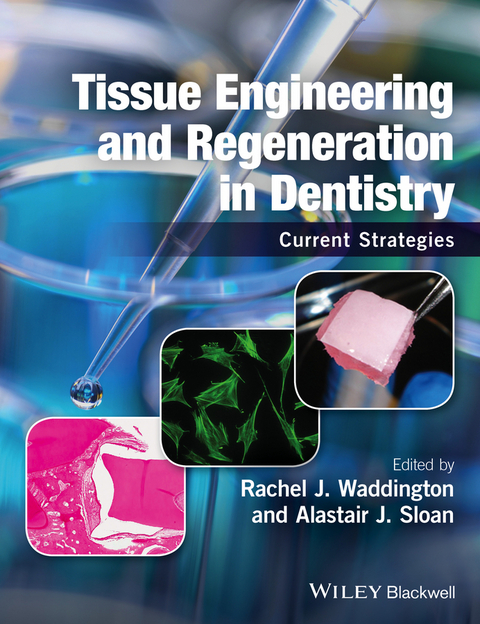
Tissue Engineering and Regeneration in Dentistry (eBook)
John Wiley & Sons (Verlag)
978-1-118-74107-8 (ISBN)
This pioneering book is uniquely dedicated to the science of Tissue Engineering and Regeneration in Dentistry. It presents the growth of knowledge and advancement in this specialist field along with laboratory considerations for the dental researcher. Furthermore it offers detailed coverage of the basic underlying principles and scientific evidence as well as highlighting the practical applications via 'protocol' boxes throughout.
A must-have read for researchers and specialist clinicians in tissue engineering, oral biology, dental materials science, periodontology and oral surgery.
Tissue Engineering and Regeneration in Dentistry: Current Strategies presents a thorough update on the current advances, methods and understanding in tissue engineering in dentistry. It offers invaluable tools, case studies, and methodologies for undertaking research, including important biological and practical considerations to facilitate successful migration of research from the bench to the clinic. Offers detailed coverage of the basic underlying principles and scientific evidence, and includes protocols to highlight practical applications Written by an internationally renowned team of expert contributors A must-have read for researchers and specialist clinicians in tissue engineering, oral biology, dental materials science, periodontology and oral surgery
Rachel J. Waddington is Professor in Oral Biochemistry and current Associate Dean for Engagement and Enterprise at the School of Dentistry, Cardiff University, UK. Her research interests centre on the cellular and matrix biology of bone and dentine and applying this research to improved diagnosis, management, and treatment in clinical dentistry, with crossover to orthopaedic medicine. She has published more than 80 papers in peer-reviewed journals, and supervised over 20 PhD students. During her career Rachel has been awarded the Senior Colgate Prize (1990) and the Mineralised Tissue Group Travel Award (1996), both awarded by the British Society for Oral and Dental Research (BSODR), and a Royal Society overseas study award. She is an active member of the BSODR, currently sitting on the Management Committee as Chair of the Awards Committee. Alastair J. Sloan is Professor in Bone Biology and Tissue Engineering and current Vice-Dean of Research and International at the School of Dentistry, Cardiff University, UK. His research focuses on the repair and regeneration of mineralized tissues and the behaviour and therapeutic use of dental pulp stem cells. His research has been widely published in peer-reviewed journals. Alastair currently sits on the Management Committee of the British Society for Oral and Dental Research (BSODR) and the Board of the Tissue and Cell Engineering Society UK (TCES), and is Chair of the Cardiff Institute of Tissue Engineering and Repair (CITER). In 2011 Alastair was awarded the International Association for Dental Research Distinguished Scientist - Young Investigator Award.
List of contributors, vi
Preface, viii
1 Induced pluripotent stem cell technologies for tissue engineering, 1
George T.-J. Huang, Ikbale El Ayachi, and Xiao-Ying Zou
2 Immunomodulation by adult stem cells: Mechanisms of action and clinical applications, 20
Lindsay C. Davies and Katarina Le Blanc
3 Research advances in tissue regeneration by dental pulp stem cells, 50
Rachel J. Waddington and Alastair J. Sloan
4 Assessing the potential of mesenchymal stem cells in craniofacial bone repair and regeneration, 69
Rachel J. Waddington, S. Quentin Jones, and Ryan Moseley
5 Tissue culture models and approaches for dental tissue regeneration, 96
Alastair J. Sloan, John Colombo, Jessica Roberts, Rachel J. Waddington, and Wayne Nishio Ayre
6 Industrial translation requirements for manufacture of stem cell-derived and tissue-engineered products, 110
Ivan Wall, David de Silva Thompson, Carlotta Peticone, and Roman Perez
7 Periodontal tissue engineering, 124
Saso Ivanovski, P. Mark Bartold, Stan Gronthos, and Dietmar W. Hutmacher
8 Clinical strategies for dental and periodontal disease management: A way forward, 145
Anibal Diogenes, Vanessa Chrepa, and Nikita B. Ruparel
Index, 169
CHAPTER 1
Induced pluripotent stem cell technologies for tissue engineering
George T.‐J. Huang1, Ikbale El Ayachi1, and Xiao‐Ying Zou2
1 Department of Bioscience Research, College of Dentistry, University of Tennessee Health Science Center, Memphis, TN, USA
2 Department of Cariology, Endodontology and Operative Dentistry, Peking University School and Hospital of Stomatology, Beijing, China
Induced pluripotent stem cells (iPSCs) were first established by delivering the four factors c‐Myc/Klf4/Oct4/Sox2 or Lin28/Nanog/Oct4/Sox2 into dermal fibroblasts via a viral vector‐based approach (Takahashi et al., 2007; Takahashi and Yamanaka, 2006; Yu et al., 2007). To avoid permanent integration of these introduced exogenous genes, plus the vector that carries them, significant efforts have been put into removing the transgenes and vectors from cells after they have been reprogrammed into iPSCs (Gonzalez et al., 2009; Kaji et al., 2009; Soldner et al., 2009; Woltjen et al., 2009; Yu et al., 2009a). Because of the reactivation of endogenous pluripotent genes that function to maintain the pluripotent state after reprogramming, these exogenous transgenes can be removed without affecting the reprogrammed status. In fact, removing these exogenous transgenes renders iPSCs more similar to human embryonic stem cells (hESCs) (Soldner et al., 2009). Besides using viral vector systems to reprogram cells, other methods that can completely circumvent the use of vectors have been utilised, including delivery of recombinant protein‐based or synthetic mRNAs of the four factors to generate iPSCs (reviewed by Rao and Malik, 2012). There are many applications that iPSCs can contribute to; among others, this chapter focuses on (1) cell‐based tissue regeneration and (2) generation of patient‐specific iPSCs to study disease mechanisms.
With respect to the source of cells for human iPSC generation, various cell types are capable of converting into iPSCs, although dermal fibroblasts are most commonly used due to their relative ease of access and availability (Aasen et al., 2008; Giorgetti et al., 2009; Giorgetti et al., 2010; Li et al., 2009; Loh et al., 2009; Miyoshi et al., 2010a; Nakagawa et al., 2008; Park et al., 2008b; Sun et al., 2009; Takahashi et al., 2007; Yan et al., 2010). In general it is easier to reprogram more immature cells than more differentiated cells. From the perspective of clinical applications, cells that are not easily accessible, such as neural stem cells, are not a suitable cell source for iPSC generation. The oral cavity harbours a rich source of mesenchymal stem cells (MSCs), including those from various dental tissues, gingival/mucosal tissues, and alveolar bone (Huang et al., 2009; Morsczeck et al., 2013). Extracted teeth are considered biomedical waste and gingival/mucosal tissues are easily accessible and available. Oral MSCs are also relatively robust in respect to cell proliferation and population doubling (Huang et al., 2009); therefore, these cells may be one of the best sources for generating iPSCs.
While many aspects of iPSCs require investigation concerning their clinical safety, utilising iPSCs for cell therapy is anticipated to take place in the future. Studies focusing on guiding iPSCs to differentiate into various cell types for regeneration purposes have been rigorously undertaken. This chapter will overview current progress in this area, particularly emphasising neurogenesis. Additionally, utilising iPSCs as a tool for studying genetics and disease mechanisms will also be reviewed.
Overview of iPSCs
iPSC derivation
While various approaches or conditions may lead to the derivation of pluripotent stem cells in mammals (Cowan et al., 2005; Gómez et al., 2006; Miyashita et al., 2002; Oh et al., 2009; Thuan et al., 2010; Wilmut et al., 1997; Yu et al., 2006), attempts to generate human (h) ESCs by somatic cell nuclear transfer continues to be unsuccessful. Human triploid blastocysts have been generated and are capable of giving rise to ESCs (Noggle et al., 2011); however, triploid hESCs are an unlikely or favorable cell source for clinical applications. Cells that have potential clinical value are hESCs derived from the parthenogenetic approach (Revazova et al., 2007; Revazova et al., 2008). Nonetheless, such a technology is inconvenient and difficult to perform. Yamanaka and his team utilised a Fbx15βgeo/βgeo mouse model and found that by introducing 4 factors, c‐Myc, Klf4, Oct4 and Sox2 were sufficient to reverse fibroblasts to ES‐like cells, termed “induced pluripotent cells (iPSCs)” (Takahashi and Yamanaka, 2006). These mouse (m) iPSCs demonstrate the features resembling ES cells. These include similar morphology in cultures, growth rate, key pluripotent genes, global gene profiles, epigenetic profiles, and capability of embryoid body (EB) formation. In addition, differentiation into cells of all germ layers is observed in EBs in vitro, as well as formation of teratomas in vivo containing tissues of all germ layers, and above all, the formation of chimeras after iPSCs were injected into blastocysts in an animal system. Subsequently, Yamanaka’s group further demonstrated that the same four factors c‐Myc, Klf4, Oct4 and Sox2 were also effective in humans in reprogramming fibroblasts into iPSCs, exhibiting similar features mentioned above for miPSCs, except the formation of chimeras which cannot be tested for the human system (Takahashi et al., 2007). Thomson’s group independently identified a core set of 4 genes, Oct4, Sox2, Nanog and Lin28 that were also able to reprogram human fibroblasts into iPSCs (Yu et al., 2007).
The successful rate of iPS generation is generally low; the highest was at 0.1% in a mouse system using embryonic fibroblasts as the cell source (Smith et al., 2009). With a single lentiviral vector expressing all four Yamanka’s factors, Sommer et al. (2009) were able to demonstrate a reprogramming efficiency of 0.5% using mouse tail‐tip fibroblasts. In human systems, adipose tissue stem cells can reach a successful reprogramming rate of 0.2% (Sun et al., 2009). In general, it is difficult to assess the absolute efficiency as different laboratories are using various vector systems and the viral activities can vary widely as well. Compared to other means of deriving human pluripotent stem cells, iPSCs appear to be the desired method for potential clinical utilisation.
Characteristics of iPSCs
One critically important hallmark of ESCs as pluripotent stem cells is the capability to form embryos and be born into live animals via a tetraploid‐complementation procedure. Using a mouse system, such cell characteristics can be demonstrated and the generation of live pups by iPSCs, some of which lived to adulthood, has been demonstrated (Boland et al., 2009; Kang et al., 2009; Zhao et al., 2009). The successful rate of giving rise to tetraploid complementation by iPSCs is similar to that by ESCs; however, there are variables in iPSC lines. Some iPSC lines showed early termination of fetal development at the embryonic stage (Zhao et al., 2009). Generally, iPSCs are functionally similar if not identical to ESCs. One drawback is the variability among different iPSC clones. hiPSCs cannot be tested by such methodologies; therefore, characterisation at genetic and epigenetic levels should be carried out to establish the molecular basis of the reprogrammed hiPSC clones.
In the human system, the global gene‐expression patterns and epigenetic profiles between iPS and ES cells were shown to be similar (Takahashi et al., 2007; Yu et al., 2007). Regarding the telomere regaining length in iPSCs, this was addressed in the reprogramming of cells from patients with Dyskeratosis congenita (DC), a disorder of telomere maintenance (Agarwal et al., 2010). Reprogramming can restore telomere elongation in DC cells despite genetic lesions affecting telomerase (Agarwal et al., 2010).
Examining the whole‐genome profiles of DNA methylation at single‐base resolution of hiPSC lines revealed that there is reprogramming variability, including somatic memory and aberrant reprogramming of DNA methylation (Lister et al., 2011). iPSCs are thought to harbor a residual DNA methylation signature related to their cell of origin, termed “epigenetic memory”. This predisposes them toward differentiation along lineages related to that cell type and restricts differentiation to alternative cell fates (Kim et al., 2010; Polo et al., 2010). Epigenetic memory can also be correlated with a residual transcriptional profile in iPSCs that is related to the cell from which it was originally reprogrammed (Ghosh et al., 2010). Epigenetic analysis of the iPSC clones may be needed to provide a critical baseline for studying cellular changes occurring during the controlled in vitro differentiation concerning the utility of these cells for future therapies. There are also reprogramming‐associated mutations that occur during or after reprogramming. It is suggested that extensive genetic screening should become a standard procedure to ensure hiPSC safety before clinical use (Gore et al., 2011). Despite these caveats, efforts have been made to produce pure, stable, and good manufacturing practice (GMP)–grade hiPSCs potentially suited for clinical purposes (Durruthy‐Durruthy et al., 2014).
While mutations may occur during reprogramming, whether hiPSCs cause tumors has yet to be fully investigated. Neural precursor cells derived from miPSCs have been shown...
| Erscheint lt. Verlag | 18.11.2016 |
|---|---|
| Sprache | englisch |
| Themenwelt | Medizin / Pharmazie ► Allgemeines / Lexika |
| Medizin / Pharmazie ► Zahnmedizin | |
| Schlagworte | craniofacial bone • Dental materials science • dental pulp • Dental Technology & Materials Science • Dental Traumatology • dentistry • Oral Biology • Oral surgery • orofacial medicine • Parodontologie • Periodontal Disease • Periodontology • stem cell technologies • Tissue engineering • Traumatologie i. d. Zahnheilkunde • Zahnheilkunde • Zahnheilkunde / Technologie u. Materialwissenschaft • Zahnmedizin |
| ISBN-10 | 1-118-74107-2 / 1118741072 |
| ISBN-13 | 978-1-118-74107-8 / 9781118741078 |
| Informationen gemäß Produktsicherheitsverordnung (GPSR) | |
| Haben Sie eine Frage zum Produkt? |
 EPUB (Adobe DRM)
Kopierschutz: Adobe-DRM
Adobe-DRM ist ein Kopierschutz, der das eBook vor Mißbrauch schützen soll. Dabei wird das eBook bereits beim Download auf Ihre persönliche Adobe-ID autorisiert. Lesen können Sie das eBook dann nur auf den Geräten, welche ebenfalls auf Ihre Adobe-ID registriert sind.
Details zum Adobe-DRM
Dateiformat: EPUB (Electronic Publication)
EPUB ist ein offener Standard für eBooks und eignet sich besonders zur Darstellung von Belletristik und Sachbüchern. Der Fließtext wird dynamisch an die Display- und Schriftgröße angepasst. Auch für mobile Lesegeräte ist EPUB daher gut geeignet.
Systemvoraussetzungen:
PC/Mac: Mit einem PC oder Mac können Sie dieses eBook lesen. Sie benötigen eine
eReader: Dieses eBook kann mit (fast) allen eBook-Readern gelesen werden. Mit dem amazon-Kindle ist es aber nicht kompatibel.
Smartphone/Tablet: Egal ob Apple oder Android, dieses eBook können Sie lesen. Sie benötigen eine
Geräteliste und zusätzliche Hinweise
Buying eBooks from abroad
For tax law reasons we can sell eBooks just within Germany and Switzerland. Regrettably we cannot fulfill eBook-orders from other countries.
aus dem Bereich