Pediatric Dentistry (eBook)
John Wiley & Sons (Verlag)
978-1-118-91364-2 (ISBN)
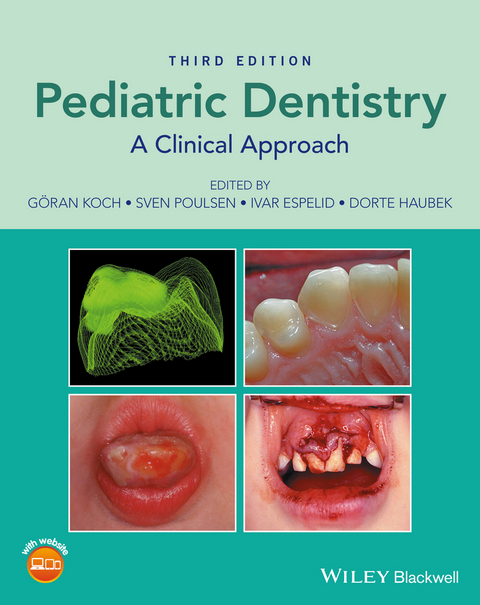
Pediatric Dentistry: A Clinical Approach, Third Edition provides a uniquely clear, comprehensive, and clinical approach to the dental treatment of children and adolescents.
- Offers systematic coverage of all clinical, scientific and social topics relating to pediatric dentistry
- Thoroughly revised and updated new edition, with an increased focus on evidence based care
- Includes three new chapters on genetics, child abuse and neglected children, and ethics
- Pedodontic endodontics is now covered by two chapters - one on primary teeth and one on young permanent teeth
- Features a companion website with interactive self-assessment questions
Göran Koch is Professor Emeritus at the Department of Pediatric Dentistry, The Institute for Postgraduate Dental Education, Jönköping, Sweden.
Sven Poulsen is Professor Emeritus at the Section for Paediatric Dentistry, Department of Dentistry and Oral Health, Aarhus University, Aarhus, Denmark.
Ivar Espelid is Professor at the Department of Paediatric Dentistry and Behavioral Science, Institute of Clinical Dentistry, University of Oslo, Oslo, Norway.
Dorte Haubek is Professor at the Section for Paediatric Dentistry, Department of Dentistry and Oral Health, Aarhus University, Aarhus, Denmark.
Pediatric Dentistry: A Clinical Approach, Third Edition provides a uniquely clear, comprehensive, and clinical approach to the dental treatment of children and adolescents. Offers systematic coverage of all clinical, scientific and social topics relating to pediatric dentistry Thoroughly revised and updated new edition, with an increased focus on evidence based care Includes three new chapters on genetics, child abuse and neglected children, and ethics Pedodontic endodontics is now covered by two chapters one on primary teeth and one on young permanent teeth Features a companion website with interactive self-assessment questions
Göran Koch is Professor Emeritus at the Department of Pediatric Dentistry, The Institute for Postgraduate Dental Education, Jönköping, Sweden. Sven Poulsen is Professor Emeritus at the Section for Paediatric Dentistry, Department of Dentistry and Oral Health, Aarhus University, Aarhus, Denmark. Ivar Espelid is Professor at the Department of Paediatric Dentistry and Behavioral Science, Institute of Clinical Dentistry, University of Oslo, Oslo, Norway. Dorte Haubek is Professor at the Section for Paediatric Dentistry, Department of Dentistry and Oral Health, Aarhus University, Aarhus, Denmark.
About the Editors, vii
Contributors, viii
Preface to the Second Edition, xi
Preface to the Third Edition, xii
About the Companion Website, xiii
1 Pediatric Oral Health and Pediatric Dentistry: The Perspectives, 1
Sven Poulsen, Göran Koch, Ivar Espelid, and Dorte Haubek
2 Growth and Pubertal Development, 4
Anders Juul, Sven Kreiborg, and Katharina M. Main
3 Child and Adolescent Psychological Development, 15
Anders G. Broberg and Gunilla Klingberg
4 Tooth Development and Disturbances in Number and Shape of Teeth, 28
Göran Koch, Irma Thesleff, and Sven Kreiborg
5 Eruption and Shedding of Teeth, 40
Göran Koch, Sven Kreiborg, and Jens O. Andreasen
6 Dental Fear and Behavior Management Problems, 55
Gunilla Klingberg and Kristina Arnrup
7 Case History and Clinical Examination, 66
Sven Poulsen, Hans Gjørup, and Dorte Haubek
8 Radiographic Examination and Diagnosis, 75
Hanne Hintze and Ivar Espelid
9 Pain, Pain Control, and Sedation, 87
Gro Haukali, Stefan Lundeberg, Birthe Høgsbro Østergaard, and Dorte Haubek
10 Dental Caries in Children and Adolescents, 102
Marit Slåttelid Skeie, Anita Alm, Lill?-Kari Wendt, and Sven Poulsen
11 Caries Prevention, 114
Göran Koch, Sven Poulsen, Svante Twetman, and Christina Stecksén?]Blicks
12 Diagnosis and Management of Dental Caries, 130
Annika Julihn, Margaret Grindefjord, and Ivar Espelid
13 Dental Erosion, 161
Ann-Katrin Johansson, Inga B. Arnadottir, Göran Koch, and Sven Poulsen
14 Periodontal Conditions, 174
Bengt Sjödin and Dorte Haubek
15 Oral Soft Tissue Lesions and Minor Oral Surgery, 193
Göran Koch and Dorte Haubek
16 Endodontic Management of Primary Teeth, 207
Monty S. Duggal and Hani Nazzal
17 Pulp Therapy of Immature Permanent Teeth, 215
Hani Nazzal and Monty S. Duggal
18 Traumatic Dental Injuries: Examination, Diagnosis, and Immediate Care, 227
Eva Fejerskov Lauridsen, Simon Storgård Jensen, and Jens O. Andreasen
19 Traumatic Dental Injuries: Follow?]Up and Long?]Term Prognosis, 248
Eva Fejerskov Lauridsen, Simon Storgård Jensen, and Jens O. Andreasen
20 Developmental Defects of the Dental Hard Tissues and their Treatment, 261
Ivar Espelid, Dorte Haubek and Birgitta Jälevik
21 Occlusal Development, Malocclusions, and Preventive and Interceptive Orthodontics, 291
Bengt Mohlin, Anna Westerlund, Maria Ransjö, and Jüri Kurol
22 Temporomandibular Disorders, 309
Tomas Magnusson and Martti Helkimo
23 Children with Chronic Health Conditions: Implications for Oral Health, 316
Göran Dahllöf, Pernille Endrup Jacobsen, and Luc Martens
24 Dental Care for the Child and Adolescent with Disabilities, 334
Gunilla Klingberg, June Nunn, Johanna Norderyd, and Pernille Endrup Jacobsen
25 Genetics in Pediatric Dentistry, 351
Sven Kreiborg, Flemming Skovby, and Irma Thesleff
26 Child Abuse and Neglect: The Dental Professionals' Role in Safeguarding Children, 362
Göran Dahllöf, Therese Kvist, Anne Rønneberg, and Birgitte Uldum
27 Ethics in Pediatric Dentistry, 371
Gunilla Klingberg, Ivar Espelid, and Johanna Norderyd
Index, 377
"The best characteristics of the book are the illustrations, x-rays and photographs, and case studies. The book is unique in that it comes with a companion website that allows students to test their knowledge of each topic using interactive self-assessment questions. This well-written update includes the latest developments in the field with new photographs and illustrations. 100% score-5 stars!" (Doody Enterprises 28/04/2017)
CHAPTER 2
Growth and Pubertal Development
Anders Juul, Sven Kreiborg, and Katharina M. Main
The evaluation of growth charts and pubertal development in children and adolescents is an important tool for any clinician in the assessment of health status. Optimal thriving and height attainment in accordance with family potential can only be achieved in an environment providing optimal socioeconomic conditions, health care, and psychosocial support. Thus, failure to thrive or to grow may be the first indication of an underlying problem that may need attention. In turn, treatment of children may need to consider the specific growth and developmental windows in order not to disturb this delicate balance.
Measurement of growth in different phases of life
The current concept of prenatal and postnatal growth suggests that there are distinct growth phases, which should be considered separately.
Prenatal growth
Prenatal growth is divided into three trimesters (by convention). The first trimester is characterized by organogenesis and tissue differentiation, whereas the second and third trimesters are characterized by rapid growth and maturation of the fetus. Fetal growth can be assessed by serial ultrasonography in the second and third trimesters. Abdominal circumference, head circumference, and femoral length of the fetus can be determined, and from these parameters fetal weight can be estimated using different algorithms [1]. The fetal weight estimate should be related to normative data. Some reference curves for fetal growth are based on children born prematurely [2], and hence such curves tend to underestimate normal fetal weights from healthy pregnancies. Alternatively, reference curves based on ultrasound studies of normal healthy infants exist [1] and should preferably be used. Based on the changes in fetal weight estimates over time, the fetus can be considered as having a normal fetal growth rate, or alternatively as experiencing intrauterine growth restriction (IUGR) [3]. Children born at term (gestational age 37–42 weeks) are considered mature. Children born before 37 weeks of gestation are premature, and children born after 42 weeks of gestation are postmature. At birth, weight and length can be measured and compared to normative data correcting for gestational age at birth. Based on these comparisons, a newborn child can be classified as either appropriate for gestational age (AGA), small for gestational age (SGA), or large for gestational age (LGA).
IUGR fetuses will often end up being SGA at birth, but not necessarily so. Thus, IUGR infants may end up lighter than their genetic potential but remain within normal ranges (i.e., AGA). Therefore, IUGR and SGA are not synonymous entities, although they are often referred to as such in the literature (Figure 2.1). Height velocity in utero is higher than at any time later in life, leading to an average birth length of 50–52 cm and birth weight of 3.5–3.6 kg after 37–42 weeks of gestation. It is therefore not surprising that growth disturbances during this phase may have long‐lasting effects on growth and health later in life. Whereas the first trimester is dominated by tissue differentiation and organ formation, the second and especially third trimesters show a rapid gain first in length and then in weight. Fetal and placental endocrinology is highly complex and hormones such as insulin, leptin, placental growth hormone, insulin‐like growth factor (IGF)‐2, and thyroid hormone are only some of the many growth factors involved in the regulation of fetal growth.
Figure 2.1 Reference ranges for fetal weight according to gestational age during pregnancy denoted by the blue lines (10th, 50th, and 90th percentiles) (8). Panel (a) shows examples of children with normal birth weights at term; a normally growing fetus ending with a birth weight which is appropriate for gestational age (AGA) and (▪) a fetus with third trimester intrauterine growth restriction (IUGR) ending with a birth weight below the genetic potential but within normal limits (AGA). Panel (b) shows examples of fetuses with intrauterine growth retardation (IUGR) ending up AGA (□) or SGA (▪).
Postnatal growth
Postnatally, height can be determined by measuring length in the supine position in the first 2–3 years of life. After 2–3 years of age standing height can be measured, preferably using a wall‐mounted stadiometer. Height is determined without shoes, shoulders towards the wall, arms hanging down, and the face straight forward (Figure 2.2). The eyes should be horizontally aligned with the external ear opening. The means of three measurements are recorded. The stadiometer should be calibrated on a daily basis.
Figure 2.2 Standing height determined by a wall‐mounted stadiometer (a). Height is recorded as the mean of three measurements. Sitting height is determined by a specifically designed chair (b). Head circumference is determined using a measuring tape (c). Arm span is determined by measuring the distance from fingertips to fingertips (d).
Importantly, the body proportions (such as head circumference, facial appearance, sitting height, and arm span) may be helpful in the differential diagnosis of growth disorders (Figure 2.1). This can simply be done by assessing the sitting height with subsequent calculation of the sitting height to standing height ratio. This enables quantification of whether or not a growth failure is proportional or disproportional (such as in hypochondroplasia). Reference ranges for this ratio exist [4].
Changes in height can be separated into infant, childhood, and pubertal growth phases according to the infancy–childhood–puberty (ICP) model described by Karlberg [5]. The majority of children will follow the distinct growth patterns of these phases.
Infancy
After a brief initial weight loss of up to 10% of the birth weight, growth during the first months postnatally follows to a large extent fetal growth rate during the third trimester with 30 g/day and 3.5 cm/month. After that a rapid decline in growth rate occurs, in both weight and height. However, this period still represents a major growth phase during the lifetime with a three‐fold increase in weight over 6 months. Very little is known about the regulatory factors of growth during this period of life, but nutrition and living conditions play a major role. In 2006, the World Health Organization (WHO) published a new growth chart reference for infancy based on breastfed infants from different countries and ethnic origins living under optimal socioeconomic conditions. This chart did not find significant differences in growth patterns between these children, which indicates that genetic differences may first become evident later in life [6].
Childhood
In this phase growth is relatively constant, with a gradual decline in growth velocity over time. From 2 to 4 years children grow approximately 7 cm and 2 kg/year. Beyond 5–6 years of age this rate has decreased to approximately 5 cm/year. This growth phase is highly dependent on growth and thyroid hormones.
Puberty
During the pubertal growth spurt, which typically stretches over 4–5 years, total height gain is on average 20–25 cm for girls and 25–30 cm for boys with large interindividual variations. There is some tendency that early maturers obtain a higher peak height velocity compared to late maturers (Figure 2.3). Sex steroids increase the pulsatile growth hormone secretion, which in turn increases IGF‐1. Weight gain is highly individual and may occur both before and after peak height velocity.
Figure 2.3 (a) Three examples for height curves and (b) height velocity curves from children with early puberty (●), normally timed puberty (□) and delayed puberty (▲). Note that final height is almost the same (a) and that peak height velocity is higher in earlier puberty (b).
Final height has increased over the past century in developed countries due to major improvements of socioeconomic status and health care, a phenomenon which is now predominantly observed in developing countries. However, earlier onset of pubertal development and increased prevalence of childhood obesity has influenced the trajectory of childhood growth within the last one or two generations, and recently, new Danish reference charts for height, weight, and body mass index have been established [7].
In girls, the onset of the growth spurt is early and may even precede the development of secondary sexual characteristics in some. Typically, breast buds appear before pubic hair at 10–11 years of age, but occasionally this succession may be reversed [1]. Both breast development and pubic hair attainment are graded into five stages (B1–B5 and PH1–PH5) according to Tanner and Whitehouse [8]. The first menstruation, menarche, is a sign of adult‐level estradiol production and follicle maturation and occurs late during the growth spurt at approximately 13 years of age. Height attainment after menarche is small, with 4–8 cm over 1.5–2 years.
In boys, the pubertal growth spurt occurs relatively late during development. Puberty commences with enlargement of testis size from 3 to 4 mL at...
| Erscheint lt. Verlag | 19.10.2016 |
|---|---|
| Sprache | englisch |
| Themenwelt | Medizin / Pharmazie ► Medizinische Fachgebiete ► Pädiatrie |
| Medizin / Pharmazie ► Zahnmedizin | |
| Schlagworte | Berufspraxis i. d. Zahnmedizin • caries • Dental Professional Practice • Dental Traumatology • dentistry • Kinderzahnheilkunde • <p>Pediatric dentistry • Oral health • paediatric dentistry • Pediatric Dentistry • pedodontic endodontics • pedodontics • Primary Teeth • Traumatologie i. d. Zahnheilkunde • young permanent teeth</p> • Zahnmedizin |
| ISBN-10 | 1-118-91364-7 / 1118913647 |
| ISBN-13 | 978-1-118-91364-2 / 9781118913642 |
| Informationen gemäß Produktsicherheitsverordnung (GPSR) | |
| Haben Sie eine Frage zum Produkt? |
 EPUB (Adobe DRM)
Kopierschutz: Adobe-DRM
Adobe-DRM ist ein Kopierschutz, der das eBook vor Mißbrauch schützen soll. Dabei wird das eBook bereits beim Download auf Ihre persönliche Adobe-ID autorisiert. Lesen können Sie das eBook dann nur auf den Geräten, welche ebenfalls auf Ihre Adobe-ID registriert sind.
Details zum Adobe-DRM
Dateiformat: EPUB (Electronic Publication)
EPUB ist ein offener Standard für eBooks und eignet sich besonders zur Darstellung von Belletristik und Sachbüchern. Der Fließtext wird dynamisch an die Display- und Schriftgröße angepasst. Auch für mobile Lesegeräte ist EPUB daher gut geeignet.
Systemvoraussetzungen:
PC/Mac: Mit einem PC oder Mac können Sie dieses eBook lesen. Sie benötigen eine
eReader: Dieses eBook kann mit (fast) allen eBook-Readern gelesen werden. Mit dem amazon-Kindle ist es aber nicht kompatibel.
Smartphone/Tablet: Egal ob Apple oder Android, dieses eBook können Sie lesen. Sie benötigen eine
Geräteliste und zusätzliche Hinweise
Buying eBooks from abroad
For tax law reasons we can sell eBooks just within Germany and Switzerland. Regrettably we cannot fulfill eBook-orders from other countries.
aus dem Bereich