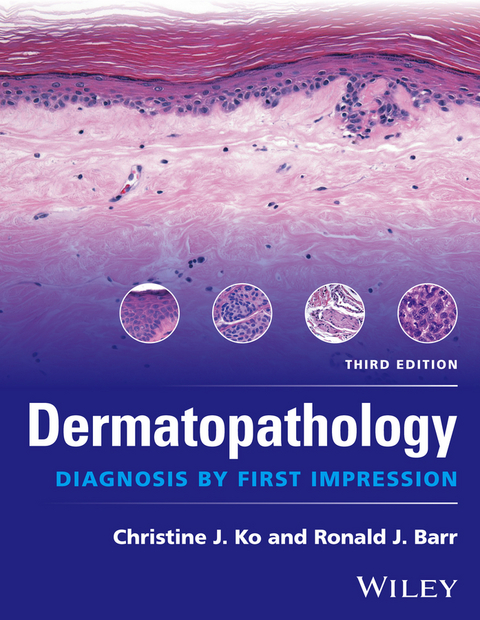
Dermatopathology (eBook)
John Wiley & Sons (Verlag)
978-1-119-14947-7 (ISBN)
Christine J. Ko is a Professor of Dermatology and Pathology at Yale University School of Medicine. She trained in dermatology at University of California, Irvine, where she was strongly influenced by Dr. Barr. She subsequently completed a fellowship in dermatopathology under Dr. Scott Binder at University of California, Los Angeles. She lectures nationally and internationally; and has published numerous book chapters, journal articles, and five textbooks/atlases in the fields of dermatology and dermatopathology.
Ronald J. Barr is Professor Emeritus of Dermatology and Pathology at the University of California, Irvine. He is a nationally and internationally recognized dermatopathologist with board certification in dermatology, anatomic pathology, and dermatopathology. He received the Founders' Award from the American Society of Dermatopathology for his myriad contributions to the field of dermatopathology and the Society's Walter Nickel Award for excellence in teaching dermatopathology. He has authored over 150 original articles and book chapters. He is also past president of the American Society of Dermatopathology and past president of the American Board of Dermatology.
The atlas that helps you differentiate visually similar diseases Written with the dermatology trainee in mind, Dermatopathology: Diagnosis by First Impression uses more than 800 high resolution color images to introduce a simple and effective way to defuse the confusion caused by dermatopathology slides. Focused on commonly tested entities, and using low- to high-power views, this atlas emphasizes the key differences between visually similar diseases by using appearance as the starting point for diagnosis. The Third Edition provides: 800 high resolution and annotated photographs, now all fully downloadable 'Key Differences' to train the eye on distinctive diagnostic features Disease-based as well as alphabetical indexes 75 new interactive self-assessment questions to perfect your diagnostic skills Brand new algorithms for pattern analysis Dermatopathology: Diagnosis by First Impression, Third Edition, once again provides simple and effective guidance to help you approach dermatopathology and accurate diagnosis of skin disease.
Christine J. Ko is a Professor of Dermatology and Pathology at Yale University School of Medicine. She trained in dermatology at University of California, Irvine, where she was strongly influenced by Dr. Barr. She subsequently completed a fellowship in dermatopathology under Dr. Scott Binder at University of California, Los Angeles. She lectures nationally and internationally; and has published numerous book chapters, journal articles, and five textbooks/atlases in the fields of dermatology and dermatopathology. Ronald J. Barr is Professor Emeritus of Dermatology and Pathology at the University of California, Irvine. He is a nationally and internationally recognized dermatopathologist with board certification in dermatology, anatomic pathology, and dermatopathology. He received the Founders' Award from the American Society of Dermatopathology for his myriad contributions to the field of dermatopathology and the Society's Walter Nickel Award for excellence in teaching dermatopathology. He has authored over 150 original articles and book chapters. He is also past president of the American Society of Dermatopathology and past president of the American Board of Dermatology.
Preface, vi
Acknowledgments, vii
About the Companion Website, viii
Introduction, 1
Chapter 1 Shape on Low Power, 23
Epidermis
Regular acanthosis, 25
Lobular proliferation, 29
Reticulated proliferation, 35
Central pore, 42
Epidermal perforation, 46
Dermis
Circular islands, 49
Cords/tubules and comma shapes, 53
Space with a lining, 59
Papillations, 70
Polypoid (dome-shaped), 77
Square/rectangular, 82
Palisading reactions, 88
Pseudoepitheliomatous hyperplasia above abscesses, 93
Pink ball, (see Chapter 6)
Chapter 2 Gestalt: Rash/inflammatory, 97
Epidermal changes
Parakeratosis, 99
Spongiosis, 102
Papulosquamous (psoriasiform), 106
Interface (vacuolar), 112
Interface (lichenoid), 117
Inflammation: Specific patterns and Cell Type Epidermal eosinophils, 123
Perivascular, 127
Band-like dermal/papillary dermal infiltrate, 131
Diffuse/nodular, 137
Subcutaneous, 144
Chapter 3 Cell Type, 153
Melanocytic, 155
Spindle cells, 164
Endothelial, 178
Giant, 192
Clear, 202
Chapter 4 "Top-Down", 219
Hyperkeratosis/parakeratosis, 221
Upper epidermal change, 228
Acantholysis, 238
Subepidermal space/cleft, 248
Granular "material" in cells, 255
"Busy" dermis, 260
Dermal material, 263
Fat necrosis, 276
Chapter 5 Color - Blue, 279
Blue tumor, 281
Mucin and glands or ducts, 291
Mucin, 295
Chapter 6 Color - Pink, 303
Pink ball of spindle cells, 305
Pink material, 308
Pink dermis, 315
Epidermal necrosis, 317
Index (Pattern), 323
Index (Histological Category), 329
Index (Alphabetical), 333
1
Shape on Low Power
- Epidermis
- Regular acanthosis, 25
- Lobular proliferation, 29
- Reticulated proliferation, 35
- Central pore, 42
- Epidermal perforation, 46
- Dermis
- Circular islands, 49
- Cords/tubules and comma shapes, 53
- Space with a lining, 59
- Papillations, 70
- Polypoid (dome-shaped), 77
- Square/rectangular, 82
- Palisading reactions, 88
- Pseudoepitheliomatous hyperplasia above abscesses, 93
- Pink ball (see Chapter 6)
Bowen disease
- Epidermal acanthosis
- Parakeratosis
- Full-thickness disorder of keratinocytes with atypical cells and mitoses
- Basal layer may focally appear normal (“eyeliner” sign) (arrow)
Clear cell acanthoma
- Epidermal acanthosis
- Clear cells well-demarcated from the normal epidermis and adnexal keratinocytes
- Parakeratosis above clear cells
Psoriasis
- Epidermal acanthosis
- Parakeratosis
- Neutrophils in stratum corneum (asterisk)
- Hypogranulosis
- Thinned suprapapillary plates (long arrow)
- Dilated vessels in papillary dermis (short arrows)
Key differences
(a)
(b)
(c)
- Bowen disease: disordered keratinocytes and atypical mitoses
- Clear cell acanthoma: pale/clear keratinocytes well-demarcated from normal epidermis
- Psoriasis: confluent parakeratosis above thickened epidermis, neutrophils in stratum corneum, normal keratinocytes, thin suprapapillary plates, dilated vessels
Inverted follicular keratosis
- Lobular proliferation
- Normal-appearing keratinocytes with some arranged in squamous eddies
Molluscum contagiosum
- Lobular proliferation
- Blue-gray hue to some of the keratinocytes
- Large, pink cytoplasmic inclusions (Henderson-Paterson bodies)
Poroma
- Lobular proliferation (can be reticulated)
- Uniform blue cells with interspersed ducts (arrows)
- Fibrotic or hyalinized stroma with dilated vessels
Seborrheic keratosis, acanthotic
- Lobular proliferation
- Acanthosis of epidermis
- Pseudohorn cysts
- No ducts
Trichilemmoma
- Lobular proliferation
- Proliferation composed of pale/clear cells
- Peripheral palisading (long arrow) with thickened basement membrane (short arrow)
Key differences
(a)
(b)
(c)
(d)
(e)
- Inverted follicular keratosis: squamous eddies of normal keratinocytes
- Molluscum contagiosum: intracytoplasmic pink inclusions (Henderson-Paterson bodies)
- Poroma: uniform blue cells with interspersed ducts, hyalinized stroma
- Seborrheic keratosis: pseudohorn cysts
- Trichilemmoma: pale/clear keratinocytes with peripheral palisading and thickened basement membrane
Fibroepithelioma of Pinkus
- Reticulated proliferation
- Strands of basaloid cells in a fibrovascular stroma
- Some hints of palisading of cells (arrow)
Fibrofolliculoma
- Reticulated proliferation
- Fibrotic stroma adjacent to the hair follicle has reticulated strands of epithelium
- This entity has overlap with trichodiscoma (most consider these a spectrum of the same entity)
Nevus sebaceus of Jadassohn
- Reticulated proliferation
- Sebaceous glands, basaloid proliferations (arrow) connect to the epidermis
- Apocrine glands may be seen deep
- Absent terminal hairs in mature stage
Seborrheic keratosis, reticulated
- Reticulated proliferation
- Strands of banal keratinocytes, often pigmented
- Interspersed pseudohorn cysts
Syringofibroadenoma
- Reticulated proliferation
- Strands of banal, round cells
- Interspersed ducts
Tumor of the follicular infundibulum
- Reticulated proliferation
- Pale cells in columns with “windows” of dermis in between
- Peripheral palisading
Key differences
(a)
(b)
(c)
(d)
(e)
(f)
- Fibroepithelioma of Pinkus: strands of basaloid epithelium in fibrovascular stroma
- Fibrofolliculoma: hair follicle with adjacent fibrotic stroma and reticulated epithelium
- Nevus sebaceus: proliferation of epidermis connecting to sebaceous lobules and basaloid proliferations
- Seborrheic keratosis, reticulated: reticulated strands of banal keratinocytes, often pigmented; interspersed pseudohorn cysts
- Syringofibroadenoma: strands of uniform, round cells with interspersed ducts
- Tumor of the follicular infundibulum: pale cells in columns with “windows” of dermis in between
Dilated pore of Winer
- Central pore
- Invaginated epidermis is acanthotic
Pilar sheath acanthoma
- Central pore
- Invaginated epidermis is acanthotic and has areas resembling outer root sheath with peripheral palisading around slightly pale cells
Trichofolliculoma
- Central pore
- Invaginated epidermis connects to a primary hair follicle
- Multiple secondary hair follicles radiating away from the central follicle
Key differences
(a)
(b)
(c)
- Dilated pore of Winer: acanthotic epidermis
- Pilar sheath acanthoma: epidermal acanthosis and areas resembling outer root sheath
- Trichofolliculoma: primary follicle and surrounding secondary follicles
Elastosis perforans serpiginosa
- Epidermal perforation
- Elongated claw (epidermal rete) gripping thin, glassy, eosinophilic elastic fibers and debris
- Altered elastic fibers are thinner than the collagen fibers in the dermis
Reactive perforating collagenosis
- Epidermal perforation
- Shallow cup-shaped architecture
- Pink collagen fibers extend vertically through epidermis
Key differences
(a)
(b)
(c)
(d)
- Elastosis perforans serpiginosis: elongated rete forming a claw (tortuous channel); case courtesy of Whitney High, MD, JD
- Reactive perforating collagenosis: shallow, broad cup-shaped architecture
- Calcinosis cutis, perforating: chunky, bluish material (see page 264) at the base of an ulcer
-
Granuloma annulare, perforating: palisading histiocytes around collagen with mucin (see page 89)
Note Other entities may also perforate the epidermis, for example, chondrodermatitis nodularis helicis, pseudoxanthoma elasticum.
Adenoid cystic carcinoma
- Circular dermal islands
- Islands contain basaloid cells with a cribriform pattern of duct-like spaces filled with amorphous material
Cylindroma
- Circular dermal islands
- Islands contain basaloid cells surrounded by a thick pink basement membrane (arrow)
- Islands arranged like a “jigsaw puzzle”
Trichoadenoma
- Circular dermal islands
- Islands of epithelium with central flaky keratin (horn cysts)
- Interspersed basaloid cords
Key differences
(a)
(b)
(c)
- Adenoid cystic carcinoma: cribriform pattern of duct-like structures
- Cylindroma: puzzle-like arrangement, thick/pink basement membrane
- Trichoadenoma: numerous horn cysts
Desmoplastic trichoepithelioma
- Cords/tubules and comma shapes in dermis
- Numerous horn cysts (long arrow) in fibrotic stroma
- Tubules of two-layered epithelium (short arrow)
- Calcification often present
- Confined to dermis
Metastatic breast carcinoma
- Cords/tubules and comma shapes in dermis and below
- Tubules of single-layered (“Indian filing” – long arrow) and multi-layered epithelium
- Some cells forming gland-like structures (short arrow)
- Other metastatic carcinomas may look like this – need clinical history; immunohistochemistry may be helpful
Microcystic adnexal carcinoma
- Cords/tubules and comma shapes in dermis
- Comma shapes with duct-like spaces
- Deeply infiltrative (fills dermis)
- Perineural involvement
Morpheaform basal cell carcinoma
- Cords/tubules and comma shapes in dermis
- Tubules of epithelium composed of basaloid cells with hints of peripheral palisading
- New collagen forming around islands (arrow)
- Deeply...
| Erscheint lt. Verlag | 6.9.2016 |
|---|---|
| Sprache | englisch |
| Themenwelt | Medizin / Pharmazie ► Gesundheitsfachberufe |
| Medizin / Pharmazie ► Medizinische Fachgebiete ► Dermatologie | |
| Studium ► 2. Studienabschnitt (Klinik) ► Pathologie | |
| Schlagworte | Appearance • Between • Color • commonly • Dermatologie • Dermatology • Dermatopathologie • Dermatopathology • dermatopathology diagnosis • Diagnosis • differences • Diseases • Edition • emphasizes • First Impression • Highresolution • images • Low • Medical Science • Medizin • Pathologie • Pathology • Point • similar • Simple • Third • Trainee • uses • Views |
| ISBN-10 | 1-119-14947-9 / 1119149479 |
| ISBN-13 | 978-1-119-14947-7 / 9781119149477 |
| Informationen gemäß Produktsicherheitsverordnung (GPSR) | |
| Haben Sie eine Frage zum Produkt? |
 EPUB (Adobe DRM)
Kopierschutz: Adobe-DRM
Adobe-DRM ist ein Kopierschutz, der das eBook vor Mißbrauch schützen soll. Dabei wird das eBook bereits beim Download auf Ihre persönliche Adobe-ID autorisiert. Lesen können Sie das eBook dann nur auf den Geräten, welche ebenfalls auf Ihre Adobe-ID registriert sind.
Details zum Adobe-DRM
Dateiformat: EPUB (Electronic Publication)
EPUB ist ein offener Standard für eBooks und eignet sich besonders zur Darstellung von Belletristik und Sachbüchern. Der Fließtext wird dynamisch an die Display- und Schriftgröße angepasst. Auch für mobile Lesegeräte ist EPUB daher gut geeignet.
Systemvoraussetzungen:
PC/Mac: Mit einem PC oder Mac können Sie dieses eBook lesen. Sie benötigen eine
eReader: Dieses eBook kann mit (fast) allen eBook-Readern gelesen werden. Mit dem amazon-Kindle ist es aber nicht kompatibel.
Smartphone/Tablet: Egal ob Apple oder Android, dieses eBook können Sie lesen. Sie benötigen eine
Geräteliste und zusätzliche Hinweise
Buying eBooks from abroad
For tax law reasons we can sell eBooks just within Germany and Switzerland. Regrettably we cannot fulfill eBook-orders from other countries.
aus dem Bereich