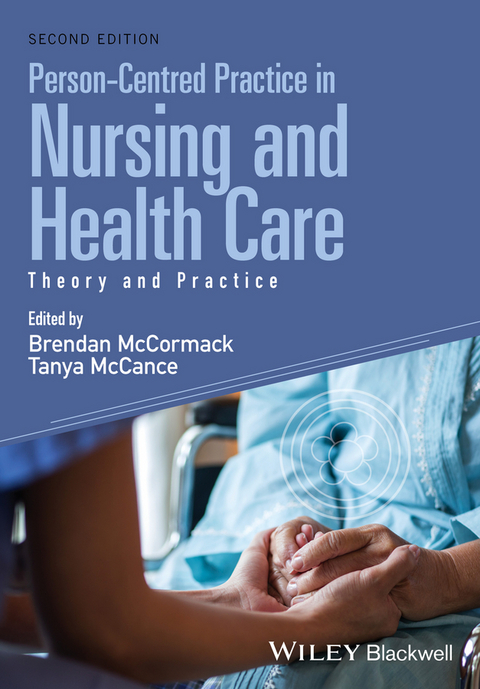
Person-Centred Practice in Nursing and Health Care (eBook)
John Wiley & Sons (Verlag)
978-1-118-99057-5 (ISBN)
Person-centred Practice in Nursing and Health Care is a comprehensive and practical resource for all nurses and healthcare practitioners who want to develop person-centred ways of working. This second edition which builds on the original text Person Centred Nursing, has been significantly revised and expanded to provide a timely and topical exploration of an important subject which underpins all nursing and healthcare, edited by internationally renowned experts in the field.
Person-centred Practice in Nursing and Health Care looks at the importance of person-centred practice (PCP) from a variety of practice, strategic, and policy angles, exploring how the principles of PCP underpin a variety of perspectives, including within leadership and in the curriculum. The book explores not only a range of methodologies, but also covers a variety of different healthcare settings and contexts, including working within mental health services, acute care, nursing homes, the community, and working with children and people with disabilities.
Key features:
- Significantly updated and expanded since the previous edition, taking into account the considerable changes in recent health care advancements, including the 'Francis' report
- Builds on previous perspectives of person-centredness in nursing and applies them in a broader nursing and health care context
- Includes a stronger exploration on the role of the service-user
- Shows the use of life-story and narrative approaches as a way of putting the individual's identity at the heart of the care relationship
- Includes learning features such as links to current practice developments and reflective questions
Professor Brendan McCormack is Head of the Division of Nursing at the School of Health Sciences, Queen Margaret University, Scotland. He is Editor-in-Chief of The International Journal of Older People Nursing and a member of the editorial board of: The Journal of Applied Gerontology; International Practice Development Journal; Online Journal of Issues in Nursing; Worldviews on Evidence-Based Nursing; Educational Action Research: an international journal; and, the Journal of Compassionate Care.
Tanya McCance is Mona Grey Professor for Nursing Research and Development at the Institute of Nursing Research/School of Nursing, University of Ulster & Co-Director - Nursing R&D, Belfast Health & Social Care Trust, Northern Ireland.
Person-centred Practice in Nursing and Health Care is a comprehensive and practical resource for all nurses and healthcare practitioners who want to develop person-centred ways of working. This second edition which builds on the original text Person Centred Nursing, has been significantly revised and expanded to provide a timely and topical exploration of an important subject which underpins all nursing and healthcare, edited by internationally renowned experts in the field. Person-centred Practice in Nursing and Health Care looks at the importance of person-centred practice (PCP) from a variety of practice, strategic, and policy angles, exploring how the principles of PCP underpin a variety of perspectives, including within leadership and in the curriculum. The book explores not only a range of methodologies, but also covers a variety of different healthcare settings and contexts, including working within mental health services, acute care, nursing homes, the community, and working with children and people with disabilities. Key features: Significantly updated and expanded since the previous edition, taking into account the considerable changes in recent health care advancements, including the Francis report Builds on previous perspectives of person-centredness in nursing and applies them in a broader nursing and health care context Includes a stronger exploration on the role of the service-user Shows the use of life-story and narrative approaches as a way of putting the individual s identity at the heart of the care relationship Includes learning features such as links to current practice developments and reflective questions
Professor Brendan McCormack is Head of the Division of Nursing at the School of Health Sciences, Queen Margaret University, Scotland. He is Editor-in-Chief of The International Journal of Older People Nursing and a member of the editorial board of: The Journal of Applied Gerontology; International Practice Development Journal; Online Journal of Issues in Nursing; Worldviews on Evidence-Based Nursing; Educational Action Research: an international journal; and, the Journal of Compassionate Care. Tanya McCance is Mona Grey Professor for Nursing Research and Development at the Institute of Nursing Research/School of Nursing, University of Ulster & Co-Director - Nursing R&D, Belfast Health & Social Care Trust, Northern Ireland.
Cover 1
Title Page 5
Copyright 6
Dedication 7
Contents 9
List of contributors 11
Foreword 15
Acknowledgements 17
Chapter 1 Introduction 19
The Person-Centred Nursing Framework and its evolution 23
Structure of the book 25
References 26
Section I A framework for person-centred practice 29
Chapter 2 Underpinning principles of person-centred practice 31
Introduction 31
The core value of personhood 31
Person-centredness 35
Person-centred practice 38
Essential principles for person-centred practice 41
Conclusions 51
References 51
Chapter 3 The Person-centred Practice Framework 54
Introduction 54
Development of the framework: the story so far... 54
From person-centred nursing to the Person-centred Practice Framework 59
Summary 79
References 79
Section II The building blocks to enable person-centredness 83
Chapter 4 Person-centred approaches: a policy perspective 85
Integrated care (structural/systems level) 86
Compassionate care (organisational level) 89
Personalisation (individual level) 90
Summary 92
Further reading and resources 93
References 93
Chapter 5 Person-centredness in nursing strategy and policy 95
Current context of health care 95
Health-care strategy 96
Building leadership capabilities within the health workforce 97
Building a safe, competent professional workforce: leadership development capabilities - 'Our Journey' 98
Engaging stakeholders 99
Person-centred care example from practice 100
Conclusion 102
References 103
Chapter 6 Person-centred nursing leadership 104
The leadership dance 104
The relational domain 106
The contextual domain 112
Conclusion 114
References 114
Chapter 7 Person-centred nursing education 117
How is person-centredness manifest in nursing curricula? 117
Educational philosophy 119
Constructing and sequencing the Person-centred Nursing curriculum 120
Designing the learning and teaching culture and experience 124
Vision 124
Purpose 124
Values and behaviours framework 125
Practice learning in the curriculum 126
Developing and sustaining the curriculum 127
Framework for learning in practice 128
Mentorship and partnership 132
Conclusion 132
References 134
Chapter 8 Person-centred research 136
Introduction 136
What is appreciative action research? 136
Appreciative action research as a relational practice 139
Core principles of appreciative action research 140
Conclusion 145
References 146
Section III Developing person-centred cultures: a practice development approach 149
Chapter 9 An overview of practice development 151
Introduction 151
Practice development: a methodology for developing person centred cultures 152
Becoming person-centred, ethical, knowing self and others 153
Clarifying focus, values, culture 153
Developing common direction through collaboration, inclusion and participation 153
Facilitating reflection, ideas, transitions and incentives 153
Using effective strategies for communication, sharing and dissemination 153
Evaluation 153
Current evidence base underpinning practice development 156
Direction for practitioners with a range of experiences 160
Conclusion 164
References 164
Chapter 10 Creating flourishing workplaces 168
Introduction 168
Person-centredness and human flourishing 168
What is a flourishing organisation? 171
The Compliance, Service Improvement and Innovation Model (CoSII) 171
Summary 177
References 178
Chapter 11 Helping health-care practitioners to flourish: critical companionship at work 180
Opening space 180
Preparing the ground for critical companionship 181
Becoming critical companions 183
Bounding and framing the turbulence of practice change 184
Postscript 188
References 189
Chapter 12 Navigating organisational change: being a person-centred facilitator 190
Person-centred facilitation 190
Working with the person-centred framework 191
Moving along with context and self 195
Summary 197
References 197
Section IV Adapting the principles of person-centred practice 199
Chapter 13 A narrative approach to person-centredness with older people in residential long-term care 201
Introduction 201
Placing the study in context 201
The relationship between narrative and person-centredness 202
Aims and objectives 203
Operationalising the study methodology 203
Implementing the framework in practice 204
Key outcomes 205
Implications from the findings in the context of person-centredness 208
References 209
Chapter 14 Person-centred health services for children 211
Introduction 211
The practice setting 211
Models of care 212
Developing the nursing vision 213
Person-centred aims and goals 214
Prerequisites: person-centred leadership development 214
The care environment: the secret garden 216
Person-centred care processes: taking just 15 steps 218
Evaluation 220
Moving forwards 220
References 221
Chapter 15 Meeting the challenges of person-centredness in acute care 223
Introduction 223
Person-centredness within acute care 223
Aim 224
Context 224
The programme 225
Outcomes 225
Aim 225
Context 225
The programme 226
Outcomes 226
Aim 226
Context 227
The programme 227
Outcomes (to date) 227
Exploring the case studies - understanding the key challenges 227
Concluding comments 230
References 231
Chapter 16 Person-centredness, recovery and user involvement in mental health services 233
Introduction 233
The person in mental health contexts 233
Setting the scene 234
Recovery, person-centredness and user involvement 235
The person in a person-centred practice 239
References 241
Chapter 17 Weathering the seasons of practice development: moving towards a person-centred culture in complex continuing care 243
Introduction 243
The work in context 243
Overview of the work 244
Reflection on using the Person-centred Nursing Framework 250
Conclusion 252
Acknowledgements 253
References 253
Chapter 18 Person-centred community nursing 254
Introduction 254
Person-centred outcomes 254
An exploration of 'specialisation' 255
Care processes 256
Care environment 258
Prerequisites 259
A people-centred framework to promote healthy populations. 260
Reflection on using the Person-centred Nursing Framework 262
Acknowledgements 263
References 263
Chapter 19 Person-centredness in palliative care 266
Introduction 266
Cultures of person-centred palliative care 267
Emotion work in palliative care 267
Enabling well-being and human flourishing in palliative care 267
Emotional engagement 268
Discussion 270
Palliative care and the Person-centred Nursing Framework 271
Summary 274
References 274
Chapter 20 A considered reflection and re-presenting the Person-centred Practice Framework 277
Introduction 277
Validation of the Framework 277
Developing the workforce 278
Influence of culture and context (practice, organisational and political) 278
Demonstrating outcomes 279
Being political and strategic 280
The Framework re-presented 280
Final note 282
Index 283
Supplemental Images 288
EULA 290
"The book is a simple and easy read. However, it clearly states the importance of patient-centered practice and is filled with pertinent examples of how readers can use this framework in every nursing/healthcare setting." (Doody Enterprises, 2016)
| Erscheint lt. Verlag | 21.7.2016 |
|---|---|
| Sprache | englisch |
| Themenwelt | Medizin / Pharmazie ► Pflege |
| Schlagworte | Acute • Altenpflege • geriatric medicine • Geriatrie • Health • individual care plan • Krankenpflege • <p>Dementia • Medical Science • Medizin • Mental • nursing • Nursing Older People • Older people • person-centred</p> • Therapeutic |
| ISBN-10 | 1-118-99057-9 / 1118990579 |
| ISBN-13 | 978-1-118-99057-5 / 9781118990575 |
| Informationen gemäß Produktsicherheitsverordnung (GPSR) | |
| Haben Sie eine Frage zum Produkt? |
 PDF (Adobe DRM)
Kopierschutz: Adobe-DRM
Adobe-DRM ist ein Kopierschutz, der das eBook vor Mißbrauch schützen soll. Dabei wird das eBook bereits beim Download auf Ihre persönliche Adobe-ID autorisiert. Lesen können Sie das eBook dann nur auf den Geräten, welche ebenfalls auf Ihre Adobe-ID registriert sind.
Details zum Adobe-DRM
Dateiformat: PDF (Portable Document Format)
Mit einem festen Seitenlayout eignet sich die PDF besonders für Fachbücher mit Spalten, Tabellen und Abbildungen. Eine PDF kann auf fast allen Geräten angezeigt werden, ist aber für kleine Displays (Smartphone, eReader) nur eingeschränkt geeignet.
Systemvoraussetzungen:
PC/Mac: Mit einem PC oder Mac können Sie dieses eBook lesen. Sie benötigen eine
eReader: Dieses eBook kann mit (fast) allen eBook-Readern gelesen werden. Mit dem amazon-Kindle ist es aber nicht kompatibel.
Smartphone/Tablet: Egal ob Apple oder Android, dieses eBook können Sie lesen. Sie benötigen eine
Geräteliste und zusätzliche Hinweise
Buying eBooks from abroad
For tax law reasons we can sell eBooks just within Germany and Switzerland. Regrettably we cannot fulfill eBook-orders from other countries.
aus dem Bereich